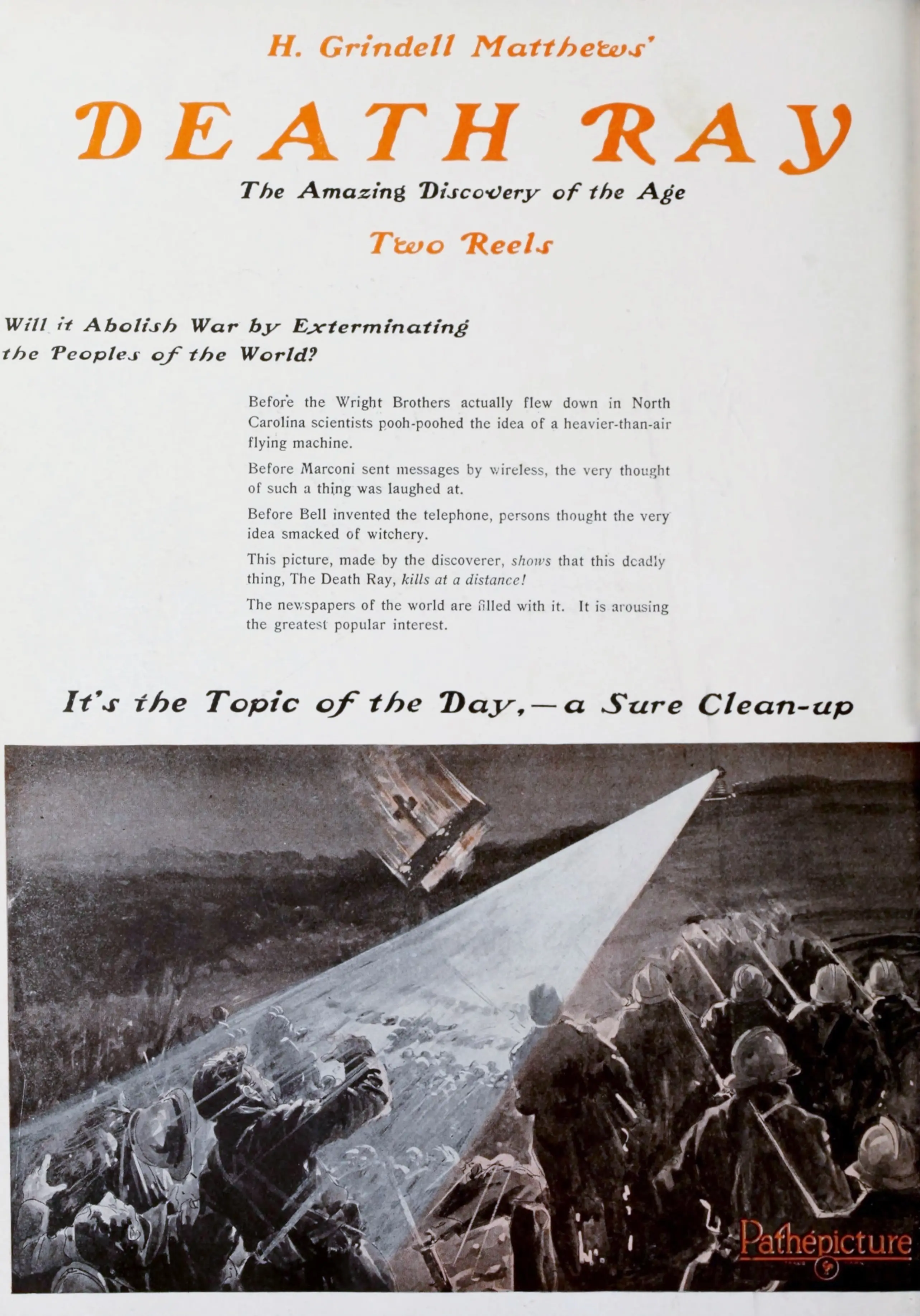
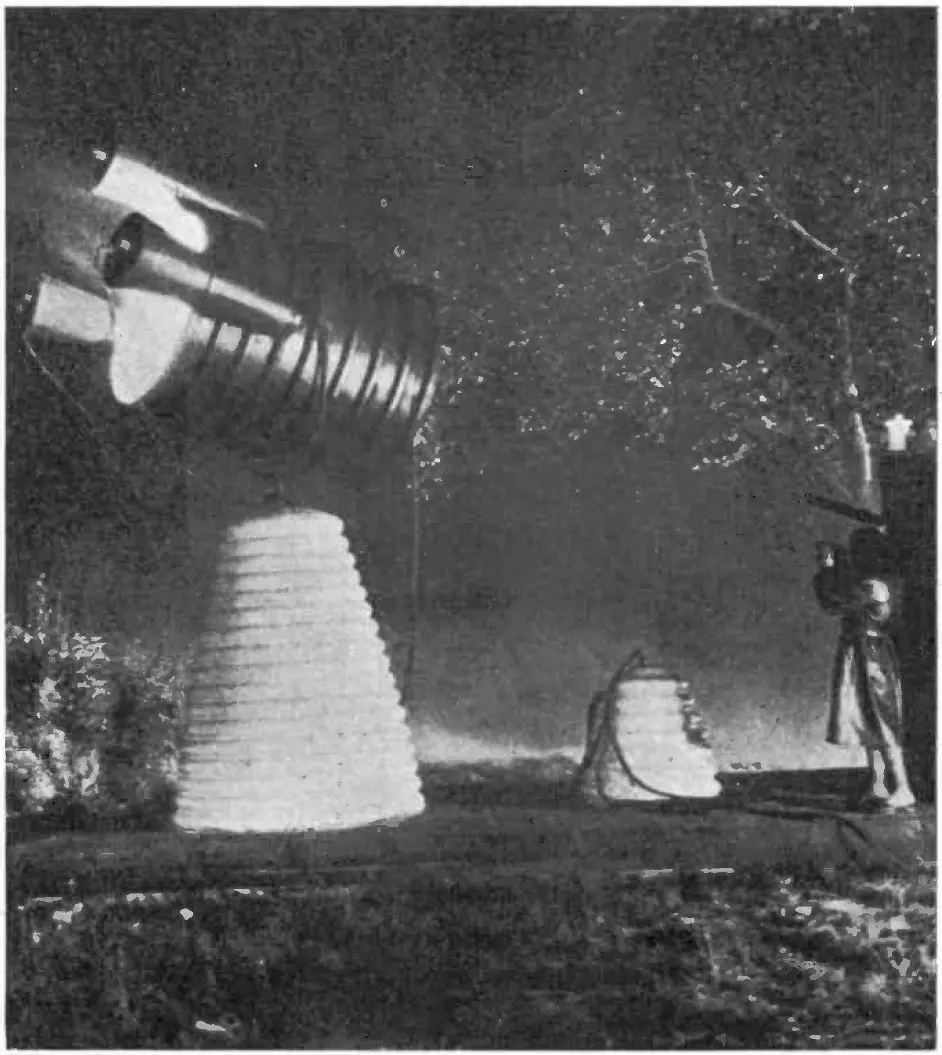
Englishman inventor Harry Grindell Matthews shows off his "Death Ray" energy weapon, what he declared to be a focused invisible energy weapon which had the possibility to change warfare forever..
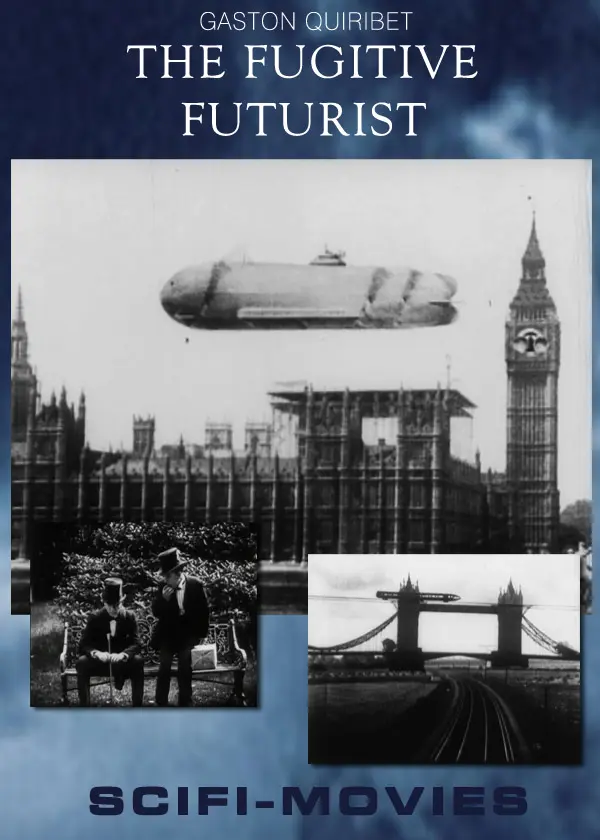
Gaston Quiribet
United Kingdom
The year 1924 occupied a peculiar, liminal space in the collective consciousness of the West. The visceral scars of the trenches were still fresh, yet a feverish, almost desperate technological optimism began to permeate the cultural fabric. It is within this volatile atmosphere that The Death Ray emerges, not merely a...
behind_the_scenes
Comparing the cinematic DNA and archive impact of two defining moments in cult history.
Gaston Quiribet
Eduardo Notari
Community
Log in to comment.
"The year 1924 occupied a peculiar, liminal space in the collective consciousness of the West. The visceral scars of the trenches were still fresh, yet a feverish, almost desperate technological optimism began to permeate the cultural fabric. It is within this volatile atmosphere that The Death Ray emerges, not merely as a film, but as a provocative manifesto of martial audacity. Directed by the astute Gaston Quiribet, the film serves as a visual vessel for Harry Grindell Matthews, a man whose re..."
1920 · IMDb —
Eduardo Notari