DbcultAccessing Vault...
5.2/10
Senior Film Conservator
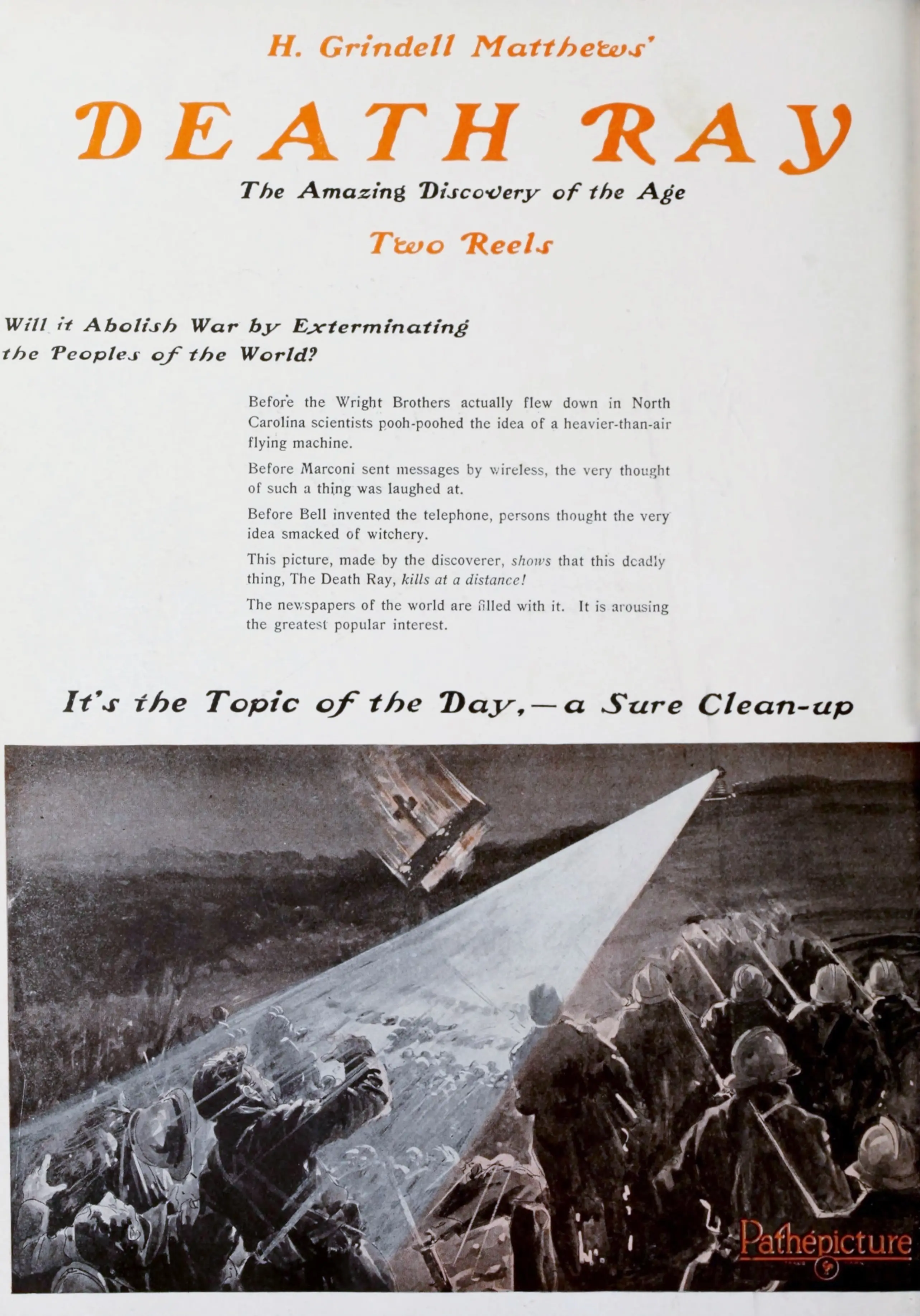
A definitive 5.2/10 rating for a film that redefined the boundaries of cult cinema. The Death Ray remains a cornerstone of transgressive art.
The year 1924 occupied a peculiar, liminal space in the collective consciousness of the West. The visceral scars of the trenches were still fresh, yet a feverish, almost desperate technological optimism began to permeate the cultural fabric. It is within this volatile atmosphere that The Death Ray emerges, not merely as a film, but as a provocative manifesto of martial audacity. Directed by the astute Gaston Quiribet, the film serves as a visual vessel for Harry Grindell Matthews, a man whose reputation oscillated violently between that of a visionary genius and a sophisticated charlatan. To watch this footage today is to witness the birth of a specific kind of cinematic propaganda: the mythologizing of the 'super-weapon.'
How does one film the invisible? This was the aesthetic and technical quandary facing Quiribet. Unlike the overt theatricality found in A Prisoner in the Harem, which relied on the lush visual tropes of Orientalism to engage its audience, The Death Ray demands a more austere, almost clinical engagement. The camera lingers on vacuum tubes, intricate wiring, and the intense, focused gaze of Matthews himself. There is a palpable tension in the framing; every shot is designed to persuade the viewer of the veracity of a force that cannot be seen. This is cinema as evidentiary tool, a precursor to the modern industrial film, yet dripping with the dread of future conflict.
The narrative structure, if one can call it that, follows a series of escalating demonstrations. We see small motors stutter and die; we see light bulbs flare into existence without the umbilical cord of visible wiring. To the 1924 audience, this was nothing short of thaumaturgy. The film effectively transforms the laboratory into a sacred space where the laws of physics are bent to the will of the British inventor. It shares a certain thematic DNA with Trompe-la-Mort, in that both works grapple with the defiance of natural limits, though Matthews seeks to conquer the battlefield rather than fate itself.
Harry Grindell Matthews is a fascinating subject for the lens. He possesses a certain performative gravitas that suggests he understood the power of the medium. In an era where The Little Church Around the Corner offered a sentimental look at social salvation through traditional values, Matthews offered a secular, terrifying alternative: salvation through technological supremacy. He does not play a character; he plays the 'Inventor,' a role that would eventually become a staple of science fiction. His movements are precise, his expressions a mask of concentrated intellect, evoking the same sense of duty found in the National Red Cross Pageant, yet directed toward destruction rather than relief.
The film functions as a psychological portrait of obsession. One cannot help but draw parallels to the protagonist in The Door Between, caught between two worlds—the reality of current scientific limitation and the fantasy of a world-ending power. Matthews operates in that 'door between,' leveraging the ambiguity of his 'invisible rays' to capture the imagination of the Air Ministry and the public alike. The cinematography reinforces this isolation, often keeping Matthews centered in the frame, a lone figure against a backdrop of complex machinery, emphasizing the singular nature of his supposed discovery.
From a technical standpoint, Quiribet’s direction is remarkably sophisticated for a documentary short. He utilizes sharp editing to create a sense of cause and effect that might not have been physically present. When Matthews throws a switch and a distant object reacts, the cut is so precise that the viewer’s brain fills in the invisible beam. This is the essence of cinema: the lie that tells a truth. It is a far cry from the straightforward narrative of An Overall Hero or the playful innocence of Playmates. Here, the play is deadly serious.
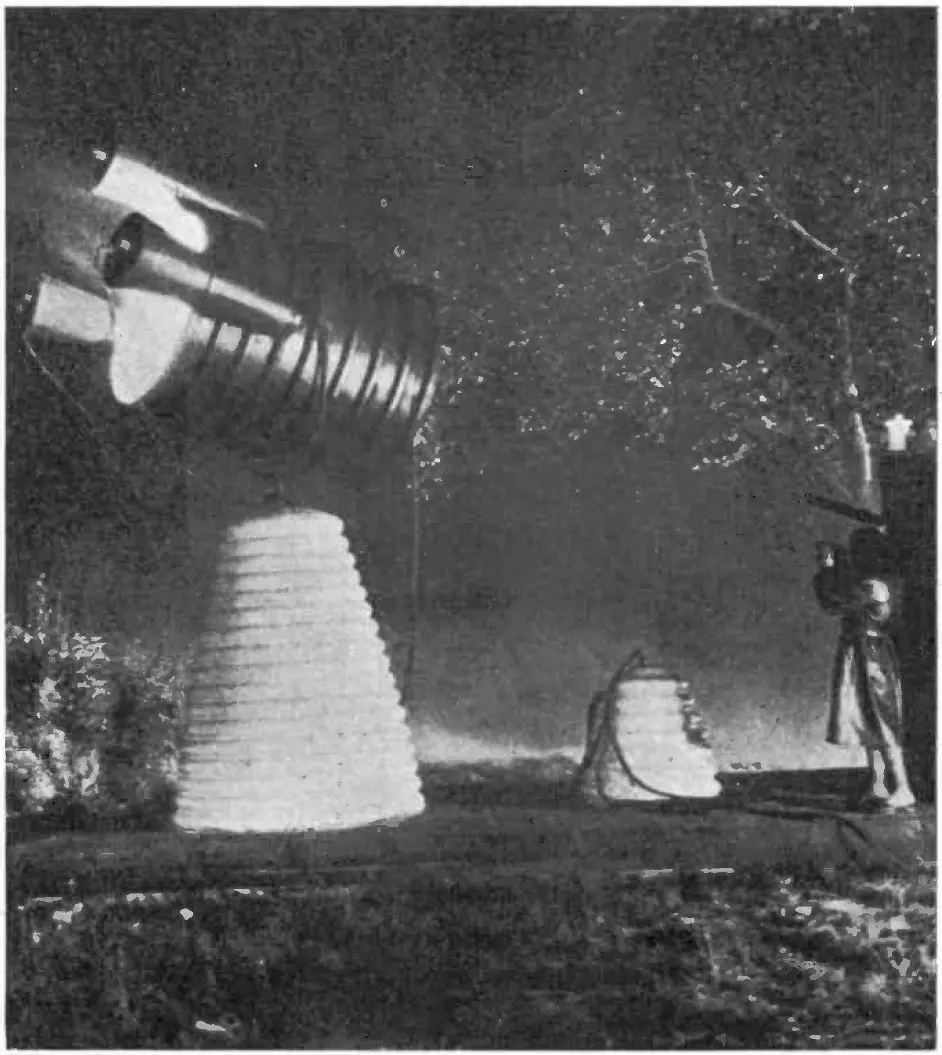
The film also serves as a fascinating artifact of British paranoia. In the mid-1920s, the fear of an 'aerial Pearl Harbor' was a genuine concern for London. The Death Ray was marketed as the ultimate defensive shield, a way to pluck enemy bombers from the sky like flies. This theme of protection through power is a stark contrast to the more pastoral or domestic concerns of films like Miss Peasant or the moralistic warnings of Youthful Cheaters. Matthews wasn't interested in moral reform; he was interested in the total cessation of kinetic warfare through the threat of invisible fire.
If we compare The Death Ray to the lighthearted urbanity of Taxi Please or the domestic yearning of Wanted: A Baby, the sheer coldness of Matthews’ vision becomes even more striking. There is no room for human frailty in the world of the Death Ray. It is a world of vectors, currents, and lethal potential. Even the exoticism of Miyama no otome feels more grounded in human experience than the sterilized laboratory environment presented here. Quiribet strips away the 'patches' of sentimentality found in The Princess of Patches, replacing them with the cold gleam of brass and glass.
One might argue that the film is a masterclass in the 'cinema of attractions.' We are not here for a story; we are here to see something impossible. In this way, it mirrors the high-society dramas like His House in Order or Le nabab, which offered audiences a glimpse into a world they could never inhabit. Matthews offers a glimpse into a future they might not survive. The film doesn't just document an invention; it curates an experience of awe and terror.
Ultimately, The Death Ray is a triumph of style over verifiable substance. While history eventually relegated Matthews’ device to the bin of scientific footnotes—his failure to demonstrate the ray to the Air Ministry under controlled conditions led to his disgrace—the film remains a potent reminder of the power of visual media to shape reality. Quiribet’s work here is a precursor to the modern infotainment and the 'theatricality of science' that dominates our screens today.
The lexical diversity of the film’s visual language—moving from macro shots of electrical arcs to wide shots of 'paralyzed' machinery—demonstrates a sophisticated understanding of how to build a persuasive narrative without a single line of spoken dialogue. It is a haunting, beautiful, and deeply cynical piece of work. It captures a moment in time when the world was desperate for a miracle, even if that miracle was a machine that could kill from a mile away. As a critic, one must admire the sheer gall of the presentation. It is a film that looks you in the eye and tells you the impossible is happening, and for fifteen minutes in a darkened theater in 1924, everyone believed it.
In the final analysis, The Death Ray stands as a monumental example of how cinema can be used to manufacture truth. It is the 'trompe l'oeil' of the scientific world, a beautifully rendered illusion that speaks volumes about the fears and aspirations of its era. Whether Matthews was a genius ahead of his time or a clever opportunist is almost irrelevant to the film's value. What matters is the way it captured the imagination of a generation, turning the invisible into the inevitable.
IMDb 6.5
1932
Community
Log in to comment.