Summary
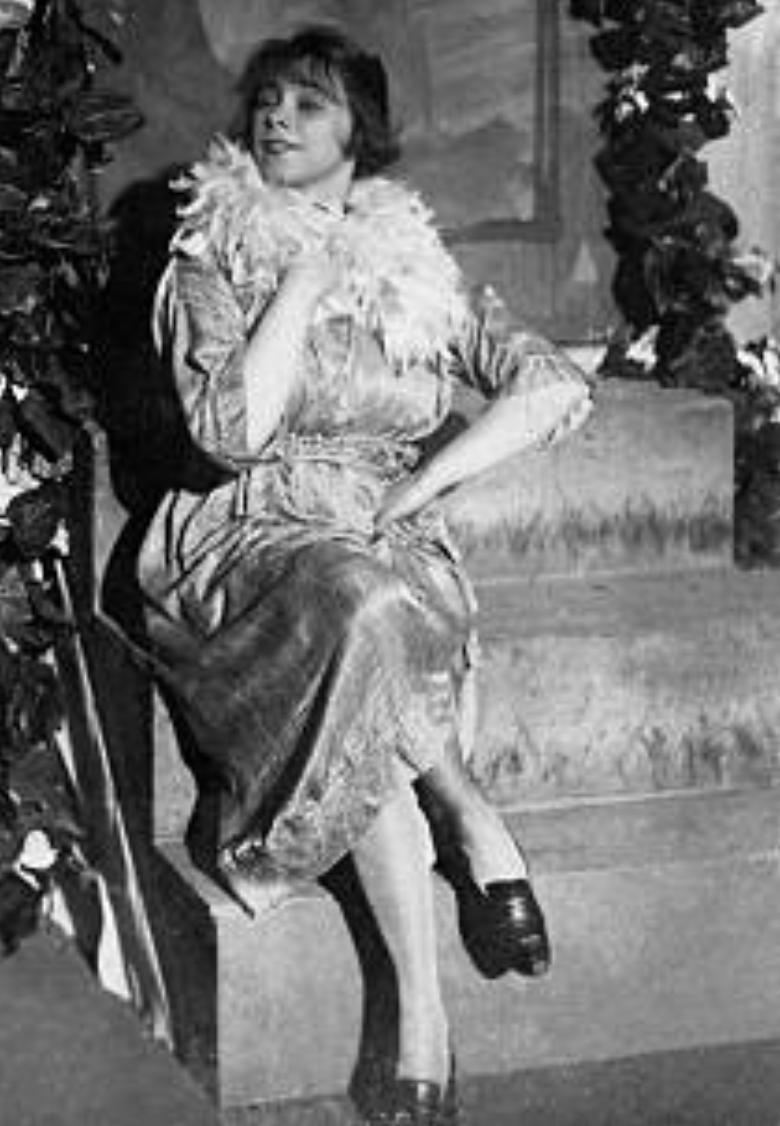
High in the thin air of the Ecuadorian cordillera, where the wind carves ice roses on basalt spires, Dulce Alvarez—last ember of a once-proud hacienda dynasty—twirls beneath the shadow of Cotopaxi like a sacrificial mariposa. Her crinolines snap against the volcanic grit while her mother, a widow still wearing the black lace of perpetual mourning, counts silver coins that once bled from conquistador coffers. Beside them, Pancho—half-Quechua, half-myth—worships Dulce with the mute devotion of a stone cherub, his guitar moaning Quechua laments that taste of copper and ash. Into this diorama of decay storms Burke, a Yanqui renegade whose Stetson is as wide as his sins, trailing Gatling-gun laughter and the stench of kerosene. One crimson dusk he scatters the coins with a boot, lifts his Colt, and turns the widow’s breastbone into a chalice of smoke; the echo rolls down the scree like a funeral drum. Dulce, splattered with maternal blood, damns the trembling Pancho as a gelded cur and swears by the Virgin del Carmen to salt the earth with Burke’s marrow. She flees to Quito’s half-lit boîte, La Gata de Fuego, where electric bulbs buzz like hornets above the mahogany bar; there she liquefies grief into the slow whip of her waists, hypnotizing miners, diplomats, and dock-rats alike. Burke reappears, gold teeth glinting like cathedral geld, and tosses a fistful of stolen ore onto the stage as if buying the Andes themselves. A ruined American engineer, David Ross—his eyes the bleached turquoise of glacier melt—interposes his broken body between dancer and predator, absorbing the brute’s backhand applause. Dulce spits on both men, yet a tremor of gratitude cracks her obsidian mask. Meanwhile Cotopaxi grumbles, its crater a cauldron of pagan orange; the mountain, jealous guardian of Inca treasure, readies a baptism of fire. Burke’s gang descends into the sulfuric veins to loot the mother-lode, their pickaxes ticking like infernal clocks. Dulce descends after them, a silhouette against the magma glow, hair unbraided like a comet’s tail. When the volcano erupts, the world becomes a fresco of apocalypse: rivers of glassy lava braid around stalactites of ruby, condors plummet ablaze, and the mine tunnels exhale dragons. Burke, ankle-deep in molten ore, shrieks his own name as if to command the elements; the mountain answers by folding him into igneous rock, a fossil for future geologists. Dulce drags the unconscious Ross through a cataract of pumice, her palms seared to the bone, and emerges beneath an ash moon that resembles a cracked communion wafer. She does not smile; she simply breathes, and the breath is the first stanza of a new, nameless life.
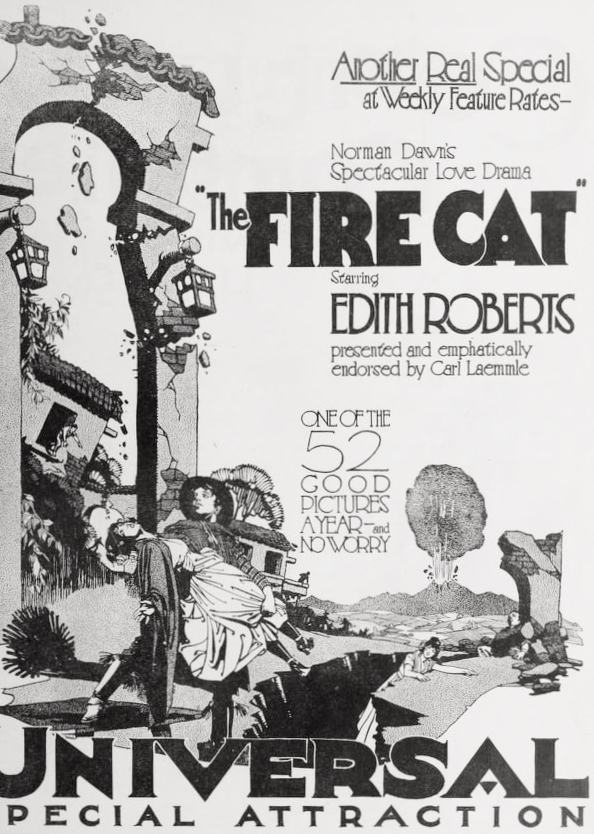
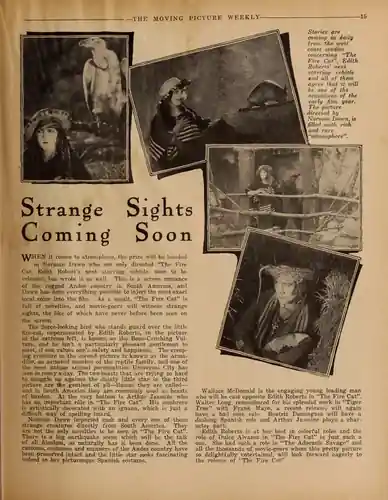
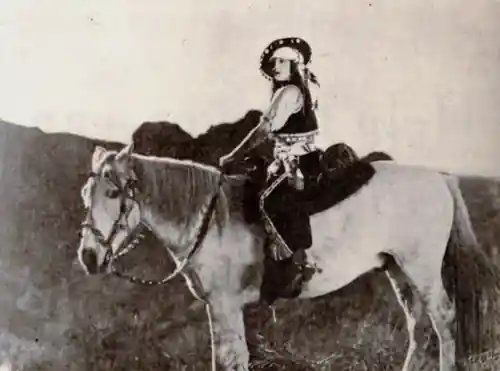
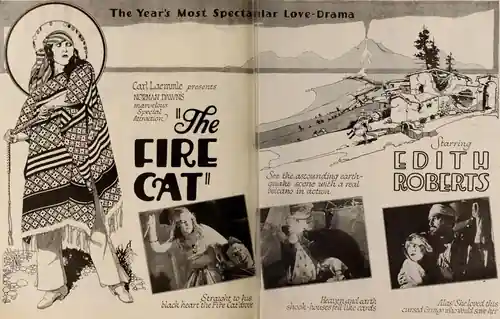
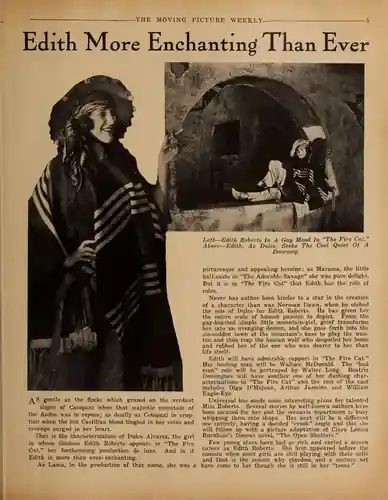
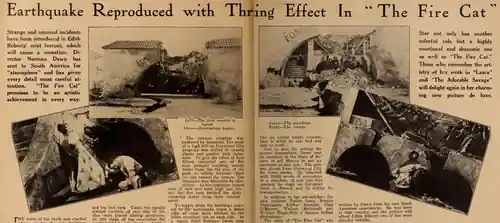
Dulce, last of the Alvarez family, lives with her mother in the Andes and is worshiped by Pancho, a half-caste. Gringo Burke, an American renegade, robs and kills her mother. Accusing Pancho of cowardice, Dulce vows to seek revenge. As a cafe dancer she meets Burke, and American derelict David Ross defends her against him. The eruption of Cotopaxi finishes off Burke and his gang, who have come to steal ore in the mines, and Dulce saves Ross from the burning lava.
Review Excerpt
"
Lava, lace, and loathing—three ingredients Norman Dawn folds into every hand-tinted frame of The Fire Cat, a 1921 one-reel wonder that feels as if someone shoved The Wrath of the Gods into a tango bar and set the counter on fire.
Dawn, who also photographed Chop Suey & Co. and the snow-blinded western Rimrock Jones, here trades sushi slapstick and sagebrush for sulfurous Ecuadorian noir. The result is a fever dream that hisses like fat on a branding iron yet somehow never topples into camp; i..."