DbcultAccessing Vault...
Cult Review
Senior Film Conservator
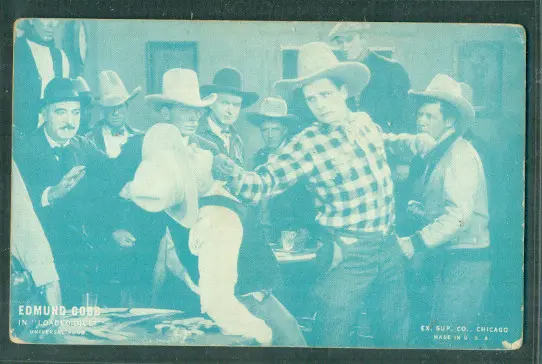
Is 'Loaded Dice' (1925) a film worth unearthing in the modern era of streaming? Short answer: yes, but with significant caveats that demand a certain viewing disposition.
This silent Western is tailor-made for enthusiasts of early cinema, particularly those with a fondness for moralistic frontier tales and the raw, often unpolished charm of the 1920s. It is decidedly not for viewers seeking fast-paced action, complex character studies, or polished contemporary storytelling.
This film works because of its earnest performances and its surprisingly coherent narrative, which manages to build genuine stakes within its simple premise.
This film fails because of its occasionally glacial pacing and a reliance on melodramatic tropes that feel dated even for its era, often sacrificing nuance for broad emotional strokes.
You should watch it if you appreciate the historical context of early Hollywood, enjoy silent Westerns, or are curious about the foundational elements that would later define the genre.
'Loaded Dice' (1925) offers a narrative that, while straightforward by today's standards, was a robust framework for silent-era storytelling. It plunges us into the world of Bob, a 'square-playing gambler' – a delightful oxymoron that immediately establishes his moral compass, distinguishing him from the typical saloon shark. His initial quiet existence is disrupted by a classic Western trope: the damsel in distress, albeit one whose distress is self-inflicted by her father's poor choices at the card table.
The film leans heavily into the idea of a hero who must prove his worth not through brute force, but through a combination of skill and integrity. Bob's decision to use his card-playing prowess to win back the ranch money is a compelling setup, offering a subtle subversion of the 'bad gambler' stereotype. It frames gambling not as an inherent evil, but as a tool that can be wielded for good, or ill, depending on the hand that holds it.
The subsequent robbery and beating are pivotal, serving as the dramatic crucible for Bob. This act of violence isn't just a plot device; it's the catalyst for the heroine's misjudgment, a moment of profound injustice that tests Bob's resolve and the audience's empathy. Her suspicion, while frustrating, grounds the story in a relatable human failing – the tendency to believe the worst when faced with incomplete information.
The narrative's resolution, hinging on a horse race, is a familiar but effective trope for the genre. It allows for a grand, public spectacle of redemption, moving beyond the quiet, enclosed world of the card table to the wide-open spaces of the Western landscape. The stakes are clear: the ranch, the heroine's trust, and Bob's honor. It's a testament to the film's foundational simplicity that these clear stakes remain engaging, even a century later.
However, the plot's reliance on the heroine's eventual 'learning the truth' feels a little too convenient, a sudden narrative shift that perhaps sacrifices organic character development for expediency. While essential for the plot's progression, a more gradual realization on her part could have imbued her character with greater depth. Despite this, the story maintains a sturdy, if predictable, arc, delivering on the promise of frontier justice and romantic resolution.
In the silent era, acting was a delicate balance of exaggerated gesture and nuanced facial expression. Edmund Cobb, as Bob, embodies the stoic Western hero with commendable grace. His performance is less about overt emoting and more about conveying inner turmoil through subtle shifts in his gaze and posture. During the intense card game, for instance, Cobb's eyes, usually steady, flicker with a calculated intensity that speaks volumes about his focus and control, a silent language understood by the audience.
Cobb manages to make Bob's inherent goodness believable, even when the plot throws him into situations that could easily render him a caricature. His quiet dignity after being robbed and beaten, despite the injustice and suspicion, resonates more powerfully than any spoken line could have. It's a performance built on restraint, a quality often undervalued in silent cinema.
The supporting cast, including Harry Todd and Ben Corbett, fill their roles with the expected archetypes of the genre. Todd, likely playing the gambling father, conveys his character's desperation with broad, expressive gestures that were standard for the period. While effective in communicating the immediate emotional state, these performances sometimes lack the subtle layers that Cobb brings to the forefront. Corbett, in his role, likely provides the necessary antagonism or camaraderie, fitting neatly into the established Western mold.
It's worth noting that the collective performances, while varying in subtlety, contribute to the film's overall authenticity. They are products of their time, certainly, but they deliver the emotional beats necessary for the story to land. One particularly striking moment is the heroine's eventual realization of Bob's innocence; her change from suspicion to remorse is conveyed through a swift, almost jarring shift in her body language, a common but effective silent film technique to denote a sudden epiphany. This directness, while lacking modern psychological depth, served its purpose for the audience of 1925.
Directed by Carl Krusada, 'Loaded Dice' showcases a directorial hand that, while not revolutionary, is certainly competent in its visual storytelling. Krusada understands the power of framing in silent cinema. The wide-open vistas of the Western landscape are utilized not just as backgrounds, but as visual metaphors for freedom and opportunity, particularly in the scenes involving the ranch and the climactic horse race.
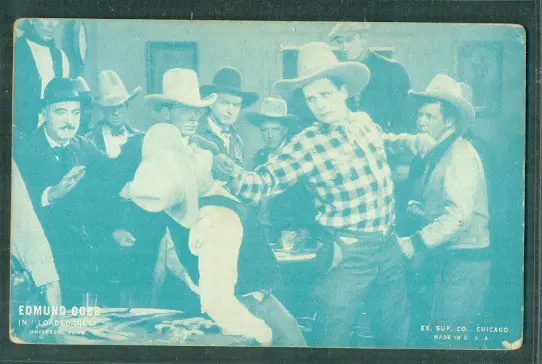
Conversely, the confined spaces of the gambling den are shot with a sense of claustrophobia, emphasizing the high stakes and moral murkiness of the card games. Krusada frequently employs close-ups during the card game sequences, focusing on hands, faces, and the turning of cards to build tension without the need for dialogue. This technique, while common, is executed effectively here, drawing the audience into the silent drama unfolding at the table.
The cinematography, likely uncredited but crucial, contributes significantly to the film's atmosphere. The use of natural light for outdoor scenes lends an authentic ruggedness, a stark contrast to the more theatrical lighting often employed in indoor sets. There’s a particular shot of Bob riding across the plains after his initial win that captures a sense of triumphant, almost solitary, determination. This visual choice elevates the simple act of riding into a statement about the character's journey.
The action sequences, especially the robbery and the horse race, are handled with a surprising dynamism for the era. The editing during these moments accelerates, creating a sense of urgency. While not as sophisticated as later action sequences, Krusada manages to convey the necessary chaos and excitement. The horse race, in particular, demonstrates a good grasp of visual pacing, with cuts between the racing horses, the cheering crowd, and Bob's determined expression, ensuring the audience remains invested in the outcome. It's a solid example of silent film action, reminiscent of earlier frontier epics like The Girl Who Came Back in its earnestness.
The pacing of 'Loaded Dice' is, undeniably, a product of its time. Silent films, generally, operated at a different rhythm than modern cinema, often allowing scenes to linger longer, relying on intertitles to convey dialogue and exposition. This film is no exception. The initial setup, introducing Bob and the rancher's daughter, builds slowly, allowing the audience to absorb the setting and the characters' initial motivations.
For contemporary viewers accustomed to rapid-fire editing and constant narrative propulsion, this deliberate pace might feel sluggish. There are moments, particularly in the domestic scenes or the extended card game, where one might wish for a quicker cut or a more condensed sequence. However, this measured approach also allows for a deeper appreciation of the actors' expressions and the carefully composed frames.
The tone oscillates between a gentle frontier romance and a stark melodrama. The early scenes between Bob and the heroine carry a light, almost idyllic charm, quickly contrasted by the grim reality of the father's gambling addiction and its consequences. The shift to betrayal and suspicion after the robbery is abrupt and jarring, designed to elicit a strong emotional response. This melodramatic swing is typical of the era, where emotional clarity often superseded psychological realism.
The film successfully maintains a consistent tone of earnestness throughout, even in its most dramatic moments. There's a genuine belief in the moral rectitude of its hero and the ultimate triumph of good. The final horse race injects a much-needed burst of kinetic energy, shifting the tone towards pure, unadulterated excitement and relief. It's a tonal journey that, while predictable, delivers the emotional payoffs expected of a silent Western.
Yes, for a specific audience, 'Loaded Dice' is worth watching today. It offers a valuable glimpse into early American filmmaking.
This film is best suited for silent film aficionados, Western history buffs, and those interested in the evolution of cinematic storytelling. It serves as a foundational example of genre conventions.
However, if you struggle with the pacing of older films, or require dialogue and complex character arcs, this might not be for you. It demands patience and an appreciation for its historical context.
Its value lies more in its historical significance and charming simplicity than in its ability to compete with modern narratives. It's a quiet experience, but a rewarding one for the right viewer.
My biggest surprise with 'Loaded Dice' wasn't its predictable plot, but the subtle commentary it offers on the nature of 'skill' versus 'luck' in the West. Bob isn't just a gambler; he's a craftsman of cards, and his success isn't framed as a vice, but as a legitimate, almost honorable, talent that he uses for good. This elevates him beyond a mere cardsharp, suggesting that even in the morally ambiguous world of gambling, a code of ethics can exist. It's a fascinating, almost proto-noir take on a character type usually presented as purely villainous or tragic.
Furthermore, I'd argue that the film's reliance on the heroine's almost instantaneous shift from suspicion to unwavering belief, once the 'truth' is revealed, is its biggest missed opportunity for genuine character development. While expedient for the plot, it undermines her agency somewhat. Had she wrestled with her doubts more, perhaps even taking her own initiative to uncover the truth, her eventual reconciliation with Bob would have felt earned, rather than simply handed to her. It's a common trope of the era, but one that feels particularly jarring when Bob's character is afforded such quiet, internal struggle.
It's a debatable point, but I found the film's climax, the horse race, to be less impactful than the tension built around the card games. While visually more exciting, the card sequences felt more unique to Bob's specific skill set. The horse race, while a classic Western finish, felt like a slightly generic resolution, almost as if the writers, Josephine Dodge and Carl Krusada, painted themselves into a corner and opted for the most universally understood 'big finish' rather than something more creatively aligned with Bob's specific talents. It works, but it’s flawed.
Another unconventional observation: the film, despite its simple premise, subtly highlights the precariousness of frontier life, where a single bad hand or a moment of carelessness can lead to the loss of everything. The ranch isn't just property; it's a symbol of stability and future, and its constant threat underscores the high stakes of merely existing in this harsh environment, a theme often explored in more complex Westerns like Mountain Dew.
Loaded Dice (1925) is more than just a dusty artifact; it's a charming, if somewhat dated, silent Western that offers genuine narrative pleasure for those willing to meet it on its own terms. It works. But it’s flawed. Its historical value is undeniable, providing a clear blueprint for countless Westerns to follow, and Edmund Cobb's performance alone makes it worth a quiet afternoon's viewing. While it won't redefine your understanding of cinema, it will certainly entertain and inform. A solid, if not spectacular, gamble that ultimately pays off.
IMDb 6.5
1921
Community
Log in to comment.