DbcultAccessing Vault...
6.5/10
Senior Film Conservator
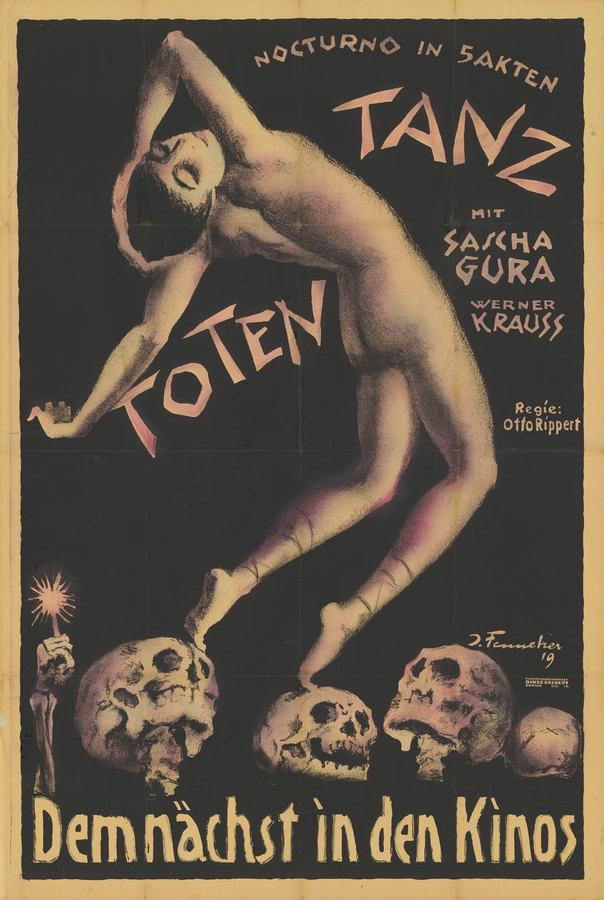
A definitive 6.5/10 rating for a film that redefined the boundaries of cult cinema. The Dance of Death remains a cornerstone of transgressive art.
From the moment the film’s opening frame flickers to life, a palpable tension coils around the screen like a coiled spring. The chiaroscuro lighting, a hallmark of Lang’s early visual experiments, carves deep shadows that seem to breathe, turning every doorway into a portal of dread. Sascha Gura’s dancer glides across the set with a feline grace that feels both intoxicating and foreboding, her movements a paradox of elegance and menace. The cripple, portrayed by Werner Krauss, is rendered in stark relief—his twisted visage a grotesque mask that conceals a mind as labyrinthine as the subterranean passages he guards.
The narrative’s core hinges on a perverse economy of desire and death. The dancer’s allure is weaponized, each seductive glance a trigger that summons men to the brink of annihilation. This dynamic recalls the moral ambiguity explored in Liliomfi, where charm becomes a double‑edged sword, yet Lang pushes the premise further, intertwining eroticism with existential peril. The audience is forced to question whether the dancer is a victim of circumstance or an active participant in the macabre choreography.
When love blossoms between the dancer and her intended prey—a murderer whose own sins echo the cripple’s cruelty—the film pivots into a study of redemption through suffering. The lover, played by Arnold Czempin, exudes a brooding intensity that mirrors the darkness of his past deeds. His presence introduces a layered conflict: can a man steeped in blood find absolution within a maze designed to crush hope? The answer is encoded in the labyrinth’s architecture, a sprawling network of stone and iron that seems to pulse with a life of its own.
Lang’s set design for the underground maze is a triumph of expressionist imagination. Narrow corridors tilt at impossible angles, and doors open onto chambers that shift like the mind of a fevered dream. The labyrinth functions not merely as a physical obstacle but as a metaphor for the characters’ internal turmoil. Each turn forces the lover to confront a facet of his own darkness, echoing the psychological trials found in Tigris, where protagonists navigate both external and internal mazes.
The film’s pacing is deliberately measured, allowing tension to accumulate like a slow‑burning fuse. Silent-era intertitles are sparingly used, their crisp typography providing just enough exposition to keep the audience anchored without breaking the visual flow. The absence of dialogue heightens the reliance on physical expression; every glance, every tremor of a hand becomes a sentence in the story’s unspoken language.
Supporting performances add texture to the narrative tapestry. Fred Goebel’s secondary antagonist, a henchman with a penchant for cruelty, injects moments of visceral horror that recall the brutal realism of A Woman's Honor. Karl Bernhard’s cameo as a weary servant offers a fleeting glimpse of humanity amidst the surrounding malevolence, a reminder that even in the darkest corners, compassion can flicker.
Cinematographically, the film employs a series of innovative camera movements that were ahead of its time. Low‑angle shots emphasize the cripple’s dominance, while high‑angle perspectives render the dancer vulnerable, as if the audience is looking down upon a moth trapped in a spider’s web. These visual choices echo the stylistic daring of Lang’s later work, such as the iconic aerial shots in Metropolis, and they reinforce the power dynamics that drive the plot.
The thematic resonance of The Dance of Death extends beyond its immediate story. It interrogates the notion of agency: is the dancer truly enslaved, or does she wield a covert power through her sexuality? This question aligns with the feminist undercurrents present in For the Defense, where female protagonists navigate patriarchal oppression with cunning and resilience.
Music, though absent in the silent format, is implied through the rhythmic editing. Cuts align with the dancer’s footfalls, creating an auditory illusion that the audience can almost hear the echo of each step reverberating through the stone corridors. This synesthetic approach amplifies the suspense, making the labyrinth feel alive, breathing, and intent on swallowing those who dare to traverse it.
The climax arrives as the lover reaches the maze’s heart—a cavernous chamber illuminated by a single, flickering lantern. Here, the cripple confronts him, offering the final, twisted bargain: survive, and the dancer will be freed. The confrontation is a study in restrained violence; no blood is shown, yet the tension is palpable enough to make the viewer’s pulse race. This restraint mirrors the subtle horror of The Gray Mask, where menace is conveyed through suggestion rather than explicit gore.
When the lover finally emerges into the night, the film does not provide a tidy resolution. The dancer’s fate remains ambiguous, her freedom hinted at but never confirmed. This open‑ended conclusion invites endless speculation, a narrative choice that has kept scholars debating the film’s true meaning for decades. It also aligns with the unresolved endings of works like Soul Mates, where ambiguity serves as a catalyst for deeper audience engagement.
The film’s legacy, though obscured by its status as a “lost” work, can be traced through its influence on later genre pieces. The motif of a seductive femme fatale leading men to doom resurfaces in The Bugler of Algiers, while the labyrinthine setting anticipates the maze‑like structures of modern horror cinema. Lang’s willingness to blend eroticism with existential dread paved the way for future auteurs who sought to explore the darker corners of human desire.
From a technical standpoint, the film’s preservation challenges underscore the fragility of early cinema. Restorers have painstakingly reconstructed missing frames, relying on surviving stills and production notes to approximate the original visual rhythm. This dedication mirrors the meticulous care seen in the restoration of Tennessee's Pardner, where scholars pieced together a fragmented narrative to revive a forgotten classic.
In sum, The Dance of Death stands as a testament to Fritz Lang’s early mastery of visual storytelling, thematic complexity, and atmospheric tension. Its blend of seductive peril, moral ambiguity, and expressionist set design offers a rich tapestry for contemporary viewers to unravel. Whether examined as a study of power dynamics, a precursor to modern horror, or a lost gem of silent cinema, the film continues to captivate, haunt, and inspire.
IMDb 6.3
1935
Community
Log in to comment.