Summary
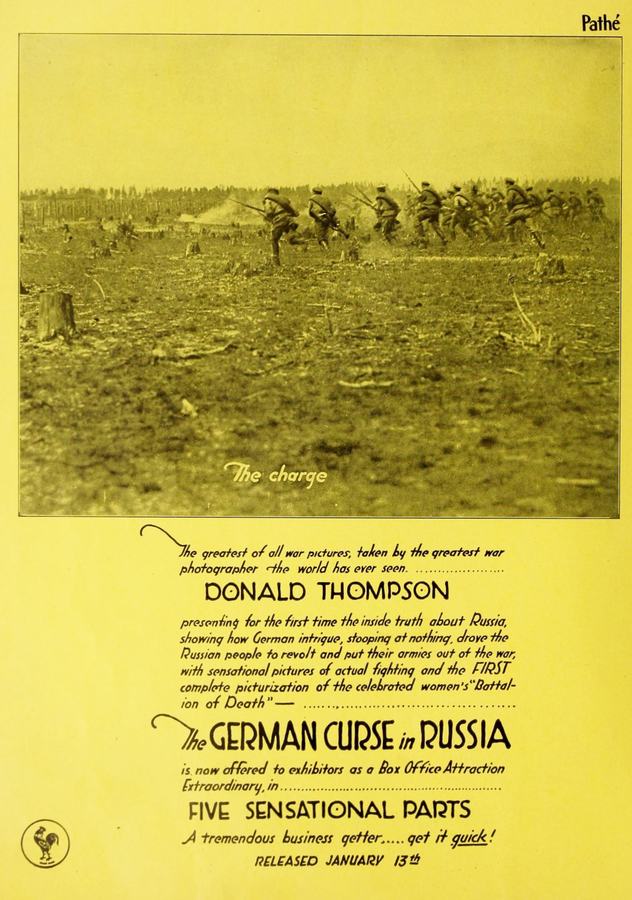
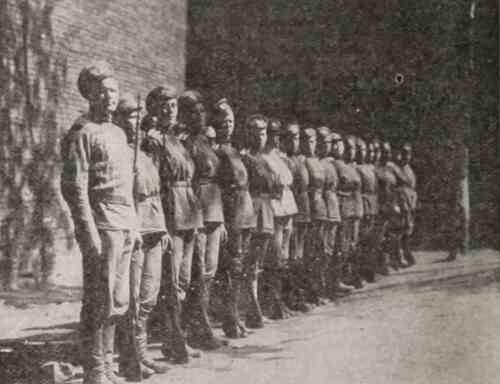
A stark chronicle of Russia’s unraveling in the early 20th century, this propagandistic narrative weaves a tapestry of conflict from August 1914 to 1917, attributing the collapse of order to German machinations. The film’s montage of chaos—hospitals brimming with the wounded, streets teeming with desperate rioters, and soldiers gasping through chemical warfare—paints a visceral portrait of a nation fractured by foreign betrayal. German submarines and Turkish vessels are shown sinking, juxtaposed with the grim reality of Russian trenches, where machine-gun fire decimates waves of advancing troops. The film’s didactic lens frames Czar Nicholas II’s dialogue with Grand Duke Nicholas as a futile attempt to salvage an empire undermined by German scheming, while the Duma’s debates and Lenin’s fiery rhetoric crystallize the ideological shift toward revolution. The ‘Battalion of Death’—a band of women warriors—adds a jarring contrast to the male-dominated brutality, their valor framed as a patriotic counterweight to foreign influence. This is history as a moral fable, where Germany’s shadow looms over every calamity, from food shortages to the fall of Kerensky.
Synopsis
Events in Russia from August 1914 until the revolution of 1917 are shown. Subtitles relate that German treachery was responsible for food riots, street fighting, overcrowded hospitals, shortages of war materials and surgical necessities, and the overthrow of the Kerensky government. Scenes include a sea battle in which 14 boats in the Turkish fleet and a German U-boat are destroyed by Russia's Black Sea Fleet; battle scenes on the Dvinski front; a gas attack; a machine-gun attack that virtually wipes out a Russian detachment sent "over the top"; loyal Cossack troops in the Carpathian mountains; Czar Nicholas II and Grand Duke Nicholas conversing; wounded in hospitals; the Duma and the Council of Workmen and Soldiers in session; Nikolai Lenin speaking in the streets of Petrograd; Leon Trotsky; the attack on the Duma; a march of 15,000 anarchists; Alexander Kerensky, Elihu Root, and Root's American commission; David R. Francis, U.S. Ambassador to Russia; and Mrs. Emmaline Parkhurst, an English suffragette and her daughter Christabel meeting Mme. Yasha Bochkareva, leader of the women's "Battalion of Death," who are seen in battle.
Review Excerpt
"
The German Curse in Russia is not merely a documentary; it is an incendiary tract, a cinematic polemic that weaponizes history against a backdrop of geopolitical strife. Released in an era when propaganda was both art and weaponization, this film stitches together archival footage with relentless editorializing to assert a singular thesis: Germany’s treachery precipitated Russia’s descent into chaos. From the opening frames of the Black Sea Fleet’s triumph over Turkish vessels to the clo..."