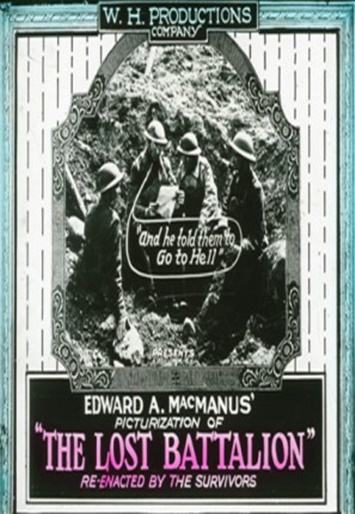
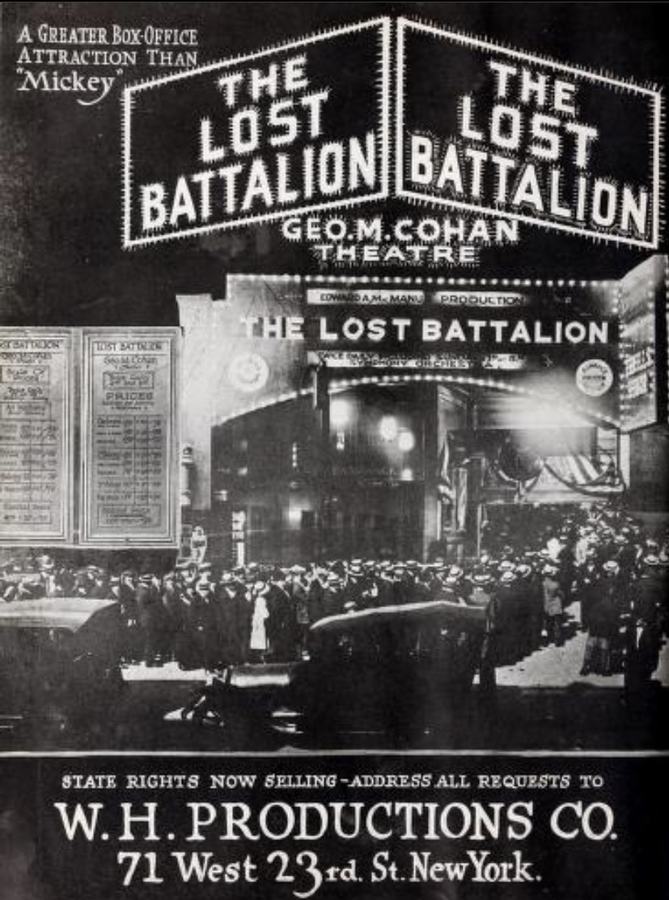
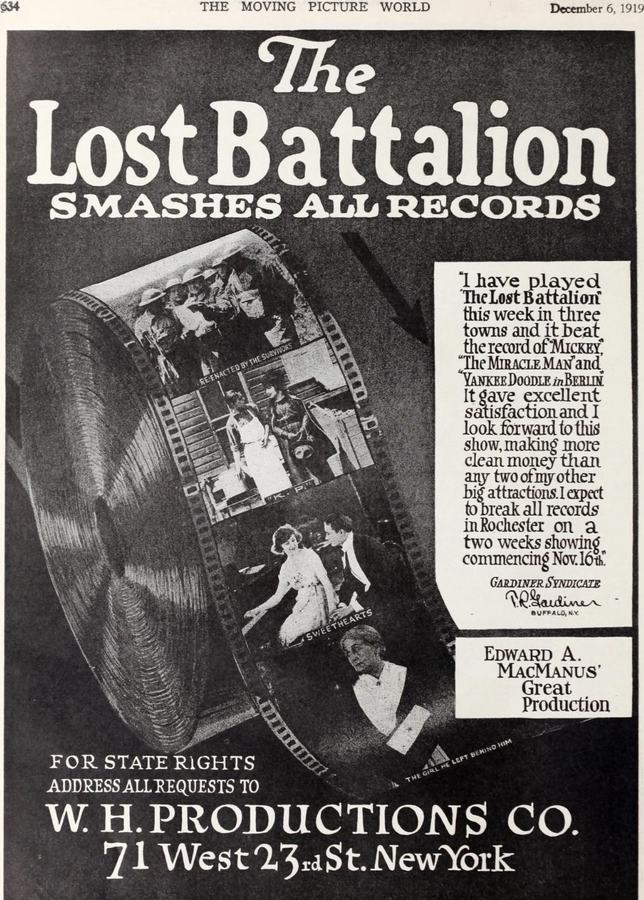
A definitive 6.2/10 rating for a film that redefined the boundaries of cult cinema. The Lost Battalion remains a cornerstone of transgressive art.
The Mud-Caked Symphony of Desperation
Burton King's The Lost Battalion stands as a tectonic shift in war cinema—not merely for its harrowing subject matter but for its alchemical fusion of documentary immediacy and expressionist nightmare. The camera serves as both embedded journalist and traumatized witness, its lens frequently smeared with artificial rain and dirt particles that create a visceral, claustrophobic texture. Unlike the stage-bound war tableaus common in 1910s cinema (such as the theatrically framed conflicts in The Battle of Shiloh), King's direction thrusts viewers into the mud alongside Stephen Grattan's majestically restrained Major Whittlesey. Through clever forced perspective and overlapping trench sets, production designers conjure the Argonne's oppressive topography—tree roots coil like skeletal fingers around foxholes, while mist machines breathe claustrophobia into every frame.
The Silent Scream: Acting Without Voice
In an era before method acting, the ensemble delivers astonishing physical performances. Grattan's Whittlesey communicates strategic calculations through the tightening of jaw muscles and the deliberate reloading of his Colt M1911—a pistol that becomes both tool and talisman. Watch how Blanche Davenport, as a Red Cross nurse behind German lines, conveys paralyzing fear not through swooning but through the frantic rearrangement of medical supplies, her fingers moving with mechanical precision while her eyes remain frozen saucers of terror. The true revelation emerges in the battalion's ethnic tapestry: Tammany Young's Irish corporal leads Hebrew hymns in Yiddish-accented intertitles, while Sidney D'Albrook's Italian sharpshooter communicates exclusively through hand gestures after a gas attack destroys his vocal cords. Their collective trauma manifests not in histrionics but in the gradual slackening of postures—spines curving under imaginary burdens as the siege progresses.
Scene from The Lost Battalion
Cinematic perspective: Exploring the visual vocabulary of The Lost Battalion (1919) through its definitive frames.
"We do not die here. We evaporate—into mist, into soil, into the blank reports of missing men."
- Major Whittlesey's title card before the final assault
Scene from The Lost Battalion
Cinematic perspective: Exploring the visual vocabulary of The Lost Battalion (1919) through its definitive frames.
Charles Logue's Screenplay: Economy as Art
Screenwriter Charles Logue achieves a minor miracle of narrative compression, distilling the 554 soldiers' ordeal into 75 taut minutes without sacrificing emotional granularity. His intertitle cards function as poetic dispatches from hell—"Rain fills craters like God's own spitoon"—while avoiding the melodramatic excesses of his earlier work like Money Mad. The screenplay's structural genius lies in its cyclical rhythms: each dawn brings renewed hope shattered by afternoon artillery barrages, each night descent into primeval terror. Notice how Logue mirrors domesticity with battlefield horror—a scene of soldiers sharing tinned peaches cuts abruptly to German troops opening identical cans, their feast interrupted by an American grenade. This isn't merely storytelling; it's thematic counterpoint composed with ruthless efficiency.
The Sound of Silence: Tactile Sound Design
Though technically silent, the film pioneers sensory suggestion through visual acoustics. When Gaston Glass's sniper character loses hearing to a shell blast, the screen plunges into negative exposure—ghostly white figures moving through black void, their mouths opening in silent screams. Projectionists were instructed to halt the accompanying piano score during these sequences, creating auditoriums of eerie quietude. In the siege's most unbearable moment, a soldier's lips form the word "mother" as he bleeds out, the intertitle vanishing before completion—a visual echo of life cut short. Such techniques predate the sonic innovations of later war films by decades, proving that true horror resides in anticipation rather than exposition.
Scene from The Lost Battalion
Cinematic perspective: Exploring the visual vocabulary of The Lost Battalion (1919) through its definitive frames.
Innovations in Battle Choreography
Stunt coordinator J.A. King revolutionized combat realism using "fragmentary framing"—showing only portions of violent encounters. A bayonet charge is glimpsed through a haze of smoke: boot soles slamming into mud, a rifle butt rising and falling, a helmet rolling into frame. This restraint makes the violence more haunting than any graphic depiction, echoing the fragmented memories of real veterans.
Costuming as Character Arc
Costumer Marion Coakley employs degradation as narrative device. Whittlesey's pristine officer tunic accumulates grime in stages—splattered mud, blood spray, finally complete immersion in a shell crater. By the rescue scene, his uniform bears geological strata of suffering, mirroring the battalion's dissolution. Contrast this with the crisp attire in The Life and Death of King Richard III.
Scene from The Lost Battalion
Cinematic perspective: Exploring the visual vocabulary of The Lost Battalion (1919) through its definitive frames.
The Forgotten Homefront: Bessie Learn's Duality
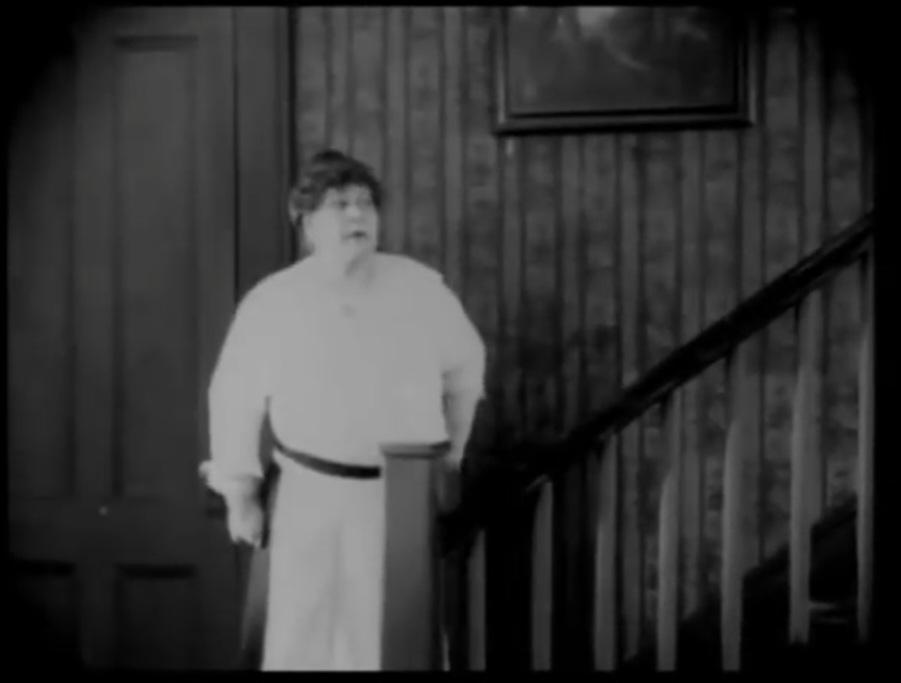
While predominantly a combat film, The Lost Battalion offers devastating homefront commentary through Bessie Learn's dual roles—playing both a German hausfrau and an American mother. In a bravado editing sequence, she reads casualty lists in New York while simultaneously darning socks in Bavaria, her face flickering between identities via double exposure. This radical split-screen technique (years ahead of its time) argues that grief recognizes no flags. Her final scene, folding a telegram announcing her son's MIA status, then immediately stirring soup with robotic efficiency, critiques societal expectations of stoicism—a theme later explored in The Test of Womanhood but never with such economy.
Pigeon 888: The Winged Deus Ex Machina
The carrier pigeon sequence remains cinema's most tension-filled avian performance. Cinematographer John K. Holbrook mounts a camera to a pendulum, swinging between German snipers taking aim and the bird struggling skyward. When the pigeon finally ascends through layers of smoke (achieved with layered glass paintings), its flight becomes a religious ascension—the battalion's prayers given feathers. This scene alone influenced generations of survival narratives, from Chains of the Past to contemporary epics. Unlike the comedic animal antics in Clown Charly, here an animal becomes the ultimate war hero.
Scene from The Lost Battalion
Cinematic perspective: Exploring the visual vocabulary of The Lost Battalion (1919) through its definitive frames.
Psychological Warfare: The German Psy-Ops
Mrs. Stuart Robson delivers the film's most chilling performance as Frau Koehler, a psychological operative interrogating captured Americans. Her weapon isn't violence but devastating empathy—offering warm strudel while describing the mutilation of corpses in such clinically precise detail that one prisoner vomits. The scene's power derives from its violation of war film tropes: no dungeon torture, just a spotless farmhouse kitchen where cruelty wears an apron. This anticipates modern depictions of psychological torture by nearly a century, proving that Fires of Conscience wasn't the first to explore moral ambiguity.
"You mistake persistence for honor, Major. What you call courage, we call arithmetic."
- Frau Koehler's intertitle during interrogation
The Mud Philosophy
King elevates mud beyond setting into existential metaphor. Early trench scenes show men slogging through standard Hollywood dirt, but as desperation mounts, the sludge thickens into a tar-like entity—drowning equipment, swallowing boots, claiming wounded men like amber trapping insects. Special effects artists achieved this through a mixture of cocoa powder, glycerin, and industrial grease, creating a substance that visibly weighed down actors' movements. By day five, soldiers move as if underwater, the mud serving as a physical manifestation of despair. Compare this to the pristine moral clarity of Thou Shalt Not Steal—here, morality is literally submerged.
Legacy: Between Realism and Mythmaking
The film's genius lies in its rejection of easy heroics. When rescue forces arrive, cinematographer Holbrook deliberately overexposes the scene—liberators appear as bleached-out ghosts rather than triumphant saviors. Whittlesey's final close-up shows not relief but profound disorientation, his eyes refusing to focus on the soldiers before him. This ambiguous conclusion (radical for 1919) suggests that survival itself can be a trauma. While later adaptations would romanticize the battalion's stand, King's version remains uncomfortably raw—closer in spirit to the psychological wreckage of The Tides of Fate than patriotic hagiography.
The Vanishing Battalion Paradox
Despite its cultural impact, The Lost Battalion itself became metaphorically "lost"—overshadowed by post-war comedies like The Essanay-Chaplin Revue of 1916. Its restoration in the 1970s revealed astonishing technical sophistication: miniature forests built to scale, pioneering smoke effect diffusion, and the revolutionary "tremor cam"—a weighted tripod that mimicked ground vibrations during shelling. Modern viewers may initially stumble over silent film conventions, but persist beyond the first reel to witness war cinema stripped bare of glorification—a century-old testament that still smells of cordite and wet wool.
The Whispered War: King's Soundless Masterstroke
Ultimately, the silence becomes the film's profoundest statement. Without explosions or gunfire, violence registers through physical recoil—a soldier's body snapping backward as if pulled by strings, dirt geysers timed to piano chords, the grotesque pantomime of men shouting warnings we cannot hear. This sensory deprivation forces audiences to project the horror, making each viewer complicit in the sound design. When the sole German-speaking soldier (William H. Tooker) translates enemy taunts via title cards, his trembling hands tell more than dialogue ever could. In an era of thunderous battle epics, The Lost Battalion reminds us that the loudest truths are often whispered through absence—a lesson as vital now as in 1919. Its endurance lies not in spectacle, but in the deafening quiet between frames.