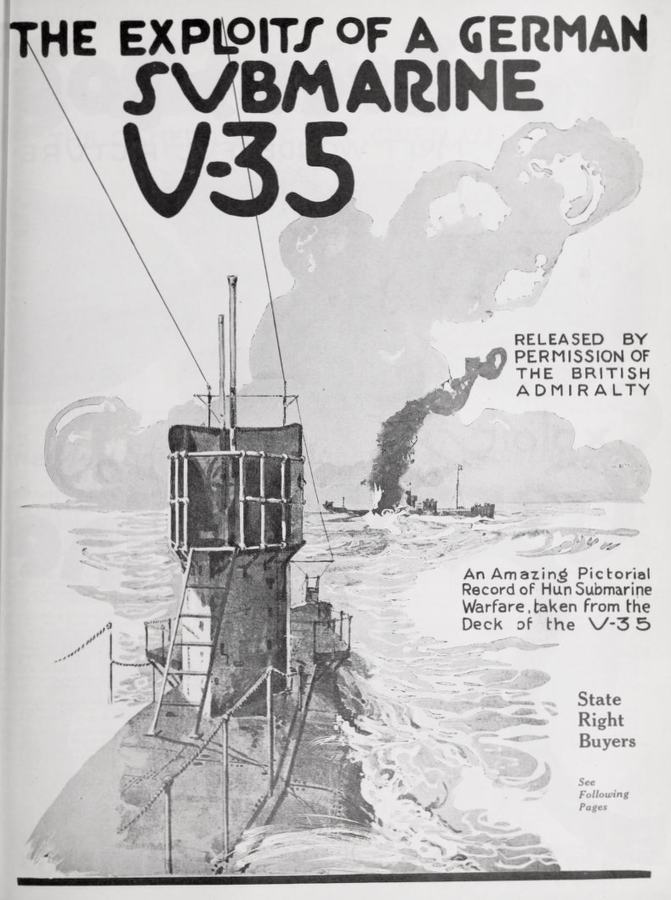
A documentary filmed aboard a German U-Boat during the First World War, featuring footage of the capture and sinking of cargo ships and a private schooner..
Hans Brennert
Germany
There is a peculiar, almost voyeuristic discomfort in watching The Log of the U-35. Unlike the staged heroics found in contemporary dramas such as For a Woman's Fair Name, this 1917 documentary offers no cushioning layer of fiction. It is a raw, maritime ledger written in salt, iron, and black powder. As a blogger wh...

product

Community
Log in to comment.
" There is a peculiar, almost voyeuristic discomfort in watching The Log of the U-35. Unlike the staged heroics found in contemporary dramas such as For a Woman's Fair Name, this 1917 documentary offers no cushioning layer of fiction. It is a raw, maritime ledger written in salt, iron, and black powder. As a blogger who has trawled through the depths of silent-era cinema, I find that few films possess the haunting gravitational pull of this footage. Hans Brennert didn't just film a movie; he cap..."


Deep dive into the cult classic
Discover similar cinematic experiences
A Directorial Spotlight on Hans Brennert
