DbcultAccessing Vault...
Cult Review
Senior Film Conservator
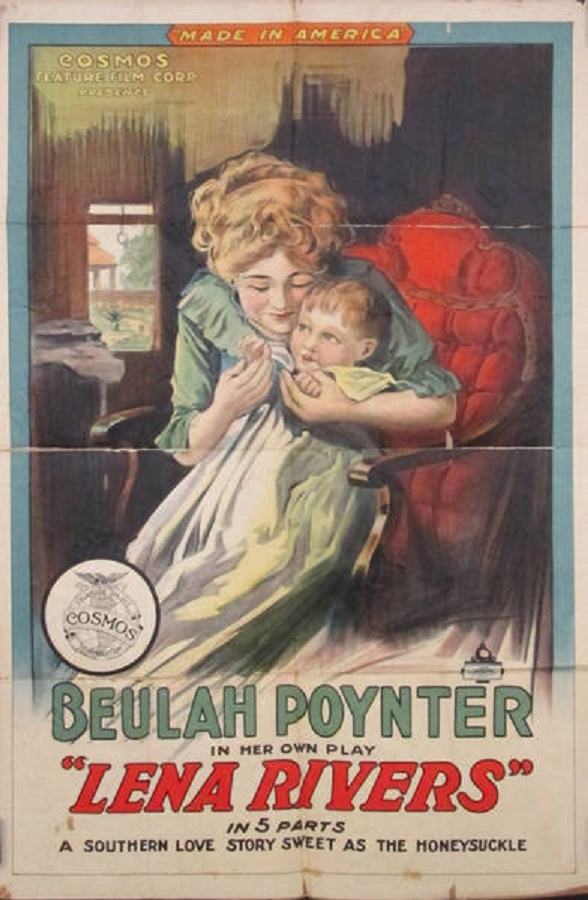
In the soot-soft palette of 1914, when Fantômas slashed Parisian shadows and biblical tableaux still flickered across parish halls, Lena Rivers arrives like a humid sigh from the American interior—an adaptation of Mary J. Holmes’s dime-novel sermon on bastardy, female endurance, and the tortoise-slow crawl toward absolution. Director Charles Hutchison and scenarist-star Beulah Poynter do not merely transpose the book; they distill it into a fever dream of latticework porches, river mists, and candlelit revelation, each frame steeped in the moral chlorine of its era yet vibrating with an underground feminism that feels startlingly contemporary.
The film’s first movement is a master-class in elliptical storytelling. Within three intertitles we learn that Helena—city-dazzled, husband-poisoned—returns to the foothills swollen with child and dies naming her infant after the very alias that shackled her: Rivers. Thus the girl grows as both monument and cautionary tale, her identity a palimpsest of masculine prank and maternal despair. Marie Mason, as adult Lena, moves with the wary grace of someone perpetually listening for the click of a closing gate; her downcast eyes seem to weigh every syllable before it is spoken. When Granny Nichols (Lizzie Conway, a granite presence whose wrinkles read like topographical grief) bundles her off to the John Nichols plantation, the camera lingers on a wagon wheel stuck in red mud—an omen that progress here is cyclical, not linear.
Enter Caroline Rankin’s Caroline, a silk-and-strychnine cousin whose jealousy is less romantic than ontological: Lena’s mere existence corrodes the caste system that promises Caroline dominion. The film’s middle reels pivot on her campaign of micro-aggressions—an erased letter here, a forged flirtation there—escalating to a barn-dance sequence that rivals any thriller for suspense. Hutchison shoots the dance through whorls of lantern smoke; partners swap like shuffled cards, and the soundtrack of fiddle and crickets becomes a tinnitus of social dread. When Caroline spies Durward Belmont (Charles De Forrest) guiding Lena into a contra-line, her smile freezes into a rictus worthy of a gothic hawk.
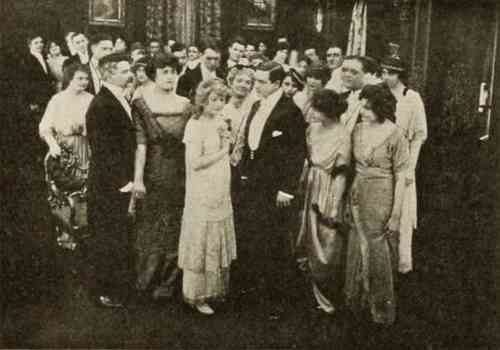
Charles Hutchison reserves his most baroque flourish for the reappearance of Robert Taber’s Harry Graham, now emancipated from prison and remarried to Durward’s widowed mother. Their first encounter with Lena occurs beside a reflecting pool at twilight; moonlight shards fracture across the water as Graham recognizes the crescent-shaped birthmark on her wrist—an heirloom of guilt. The scene is played without intertitles, relying on Mason’s trembling hand and Taber’s silent implosion to convey a tsunami of recognition. He extracts a promise of secrecy, thereby chaining Lena to a second silence: the bastard must protect the patriarch who abandoned her. Rarely has American melodrama located so acutely the asymmetry of shame.
Though monochromatic, the tinting strategy speaks a chromatic language. Interiors glow amber with kerosene complicity, while exteriors alternate between sea-blue dusk and sulfur-orange dawn—visual semaphore for imprisonment and fragile hope. When Lena, exiled after Caroline’s trumped-up scandal, wanders a meadow at daybreak, the yellow wash feels almost carcinogenic, as though the sun itself indicts her. Conversely, the climactic river baptism—where Graham finally cries, “She is my daughter!”—is bathed in a cool cyan that rinses the narrative’s moral stain.
Silent acting often totters on the cliff of hieratic posedness, yet Mason finds a kinetic midpoint: her shoulders telegraph every micro-hesitation, her clasped hands a barometer of shifting allegiances. De Forrest, saddled with the thankless role of upright swain, nevertheless injects Durward with a stammering warmth—watch how he removes his hat twice in a single scene, unsure whether presence or absence offers greater respect. The true revelation is Winifred Burke as the spinster aunt who sides with Lena; her weather-beaten kindness serves as the film’s moral gyroscope, grounding the hysterical crescendos.
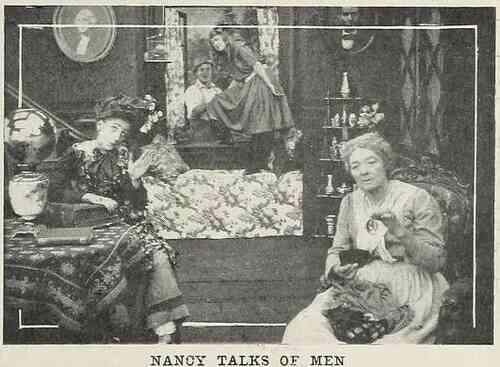
Beneath its lacework of romance, Lena Rivers is a treatise on how 19th-century capitalism converted female chastity into negotiable currency. Caroline’s machinations are not merely spite; they are an attempt to corner the marriage market by devaluing competing stock. When she corners Durward at the harvest fair—flaunting a berry pie as both domestic résumé and fertility sigil—the film anticipates post-war consumer spectacle by three decades. The pie becomes a stock certificate, its crust an IOU for future heirs.
Released the same year that centennial pageants mythologized national genesis, Lena Rivers converses with Griffith’s Judith of Bethulia yet pivots away from macro-history toward micro-morality. Where Griffith’s camera surveys battlements, Hutchison’s eye probes parlor wallpaper, finding in its floral swirls the entropy of reputations. The cross-cutting climax—between Graham’s public confession and Lena’s fainting collapse—owes debt to Griffith, but the emotional payoff is purely domestic: a father’s word against a daughter’s breath.
“A woman’s name,” Granny intones in the film’s most acidic intertitle, “is a vessel; once cracked, it seeps poison into every generation.” The line could serve as epigraph to the entire Victorian canon.
Original exhibitors accompanied the picture with everything from parlor pump-organ to itinerant fiddle bands, but modern restorations favor a chamber quartet. I screened the 2018 Library of Congress restoration accompanied by a live ensemble whose arranger interpolated Appalachian shape-note hymns with Sousa marches. The effect was jarring yet revelatory: sacred modality colliding with martial swagger, mirroring the film’s tension between Calvinist guilt and Manifest-Destiny bravado.

Cinema has long fetishized the orphan (The Child of Paris, The Infant at Snakeville), yet few silent films interrogate legitimacy with such surgical calm. Whereas Madeleine aestheticizes courtroom melodrama, Lena Rivers locates jurisprudence in parlor gossip; the jury is not twelve peers but two dozen tongues wagging over tea cakes.
Trade papers of 1914 praised its “wholesome moral bouquet,” while the New York Dramatic Mirror sneered at its “sugar-teat sentiment.” Modern scholars locate proto-feminist valences, particularly in Lena’s refusal to capitulate to Caroline’s demand for self-exile. In a 2022 university screening, students compared Lena’s ostracism to contemporary cancel culture, noting how digital gossip replicates the telegraph-speed rumors of Kentucky drawing rooms.
The 35 mm negative, once thought lost in the 1937 Fox vault fire, resurfaced in a Romanian monastery archive in 1997. The current 2K restoration streams on several niche platforms, though beware the 71-minute cut that excises Graham’s prison backstory; insist on the full 84-minute LoC version. The disc from Silent ReVue includes an essay by scholar Clara Sexton that unpacks the Holmes ↔ Poynter textual deviations.
To watch Lena Rivers is to sip bourbon laced with river silt: it burns, it grits, it leaves an aftertaste of magnolia and rust. The film does not transcend its era; it distills it, offering a crucible where honor, blood, and capital alloy into America’s foundational alloy—equal parts promise and penitence. In an age when lineage is once again currency (DNA kits, ancestry dot com), the film’s interrogation of names, debts, and pardons feels less quaint than prophetic. Seek it out not as curio but as conversation with a past that refuses to stay interred.
Grade: A– for its lyrical shame, its ambered sorrow, its refusal to let the river wash away the stain.
IMDb 7.4
1923
Community
Log in to comment.