Summary
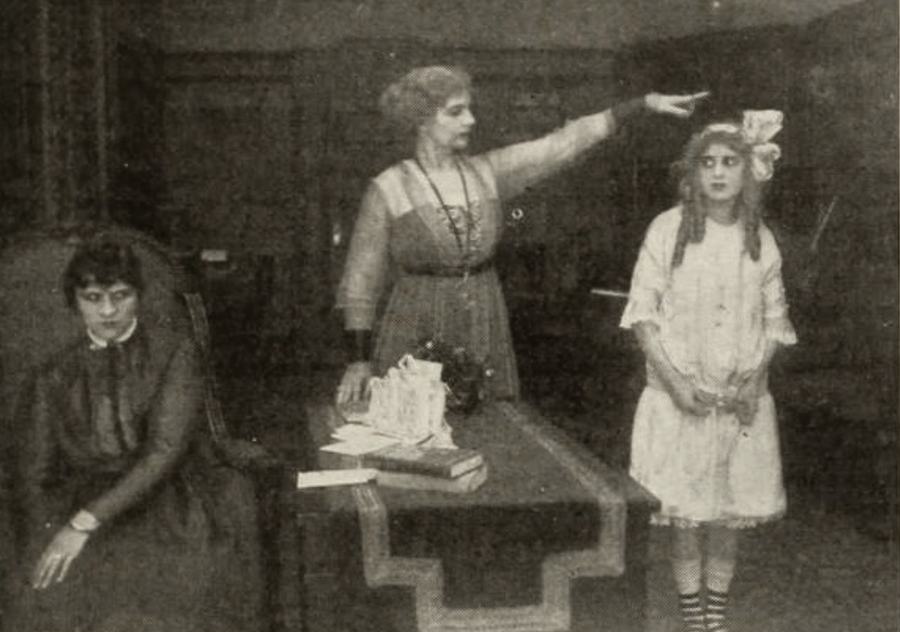
In an evocative tableau of innocence juxtaposed against urban artifice, Robert Z. Leonard's 'The Love Girl' unfurls the poignant odyssey of Ambrosia, a tender-hearted sprite whose sun-dappled rural existence is abruptly shattered by maternal loss. Displaced from her pastoral idyll, she is thrust into the rigid, emotionally sterile city confines of her 'Aunt Grouchy,' a woman whose austere disposition and societal aspirations stand in stark contrast to Ambrosia's innate warmth. Amidst this disorienting transition, Ambrosia finds solace in the spirited companionship of the boy next door, their innocent romps a vibrant counterpoint to the aunt's grim pragmatism. The narrative's emotional core deepens with the plight of Ambrosia's cousin, whose sincere affection for an impecunious suitor is vehemently opposed by Aunt Grouchy, a woman fixated on advantageous matrimony. This familial discord becomes fertile ground for a sinister plot when Aunt Grouchy, misguided by a penchant for exotic mysticism, enlists the counsel of a charismatic 'Swami.' This enigmatic figure, a master of psychological manipulation, employs hypnotism to sever the cousin's romantic ties before escalating his villainy to outright kidnapping, cloaking his ransom demands in the guise of spiritual tribute. Yet, it is the unassuming courage of Ambrosia and her young accomplice that pierces the veil of deception, their youthful vigilance leading law enforcement to the captive's lair. The film culminates in a thrilling dual climax: the dramatic rescue of the imperiled cousin and the unmasking of the fraudulent Swami, apprehended mid-extortion. This crucible of crisis forces Aunt Grouchy to confront her own myopic judgments, catalyzing a profound transformation that ultimately sanctions genuine love and restores harmony, ensuring Ambrosia's happily-ever-after amidst a newly enlightened household.
Synopsis
Ambrosia is a sweet little girl of tender heart and loving disposition, who lives near to nature in fancy and ideals. Her mother dies, and she is sent to an aunt in the city, whom Ambrosia calls "Aunt Grouchy," to be reared as her own child. The aunt is of dignified and austere disposition, far different from Ambrosia's dead mother, and the atmosphere is a decided change from the freedom of country life and the tenderness of mother love. Ambrosia makes friends with the boy next door, and these two greatly enjoy their romps and play together. Ambrosia's cousin is in love with a poor young man, and her mother objects to his attentions, desiring for her daughter an advantageous marriage, regardless of the girl's wishes or thoughts of love. "Aunt Grouchy" is a disciple of Hindu mystics, and consults the "Swami," seeking his aid. The "Swami" practices hypnotism upon the daughter of "Aunt Grouchy," influences her to send a note breaking off the affair with the young man, and finally kidnaps the girl and holds her for ransom. Ambrosia and the boy next door discover where the girl is being held prisoner and inform the police. While the kidnappers' den is being raided, the "Swami" is at "Aunt Grouchy's" in the act of collecting the ransom money, under guise of a tribute to the Buddhist's god, but when the Secret Service men arrive and arrest him, his true character is exposed. The raid is accomplished at a critical moment, the girl is saved from harm, and when "Aunt Grouchy's" eyes are opened she realizes her past shortcomings. Conquering her proud disposition, she gives her sanction to her daughter's marriage to the poor young man, and Ambrosia lives happily ever after.
Review Excerpt
"
The Love Girl: A Silent Symphony of Innocence, Intrigue, and Illumination
Stepping into the world of Robert Z. Leonard's The Love Girl is akin to unearthing a forgotten treasure from the silent era's vast cinematic vault. This isn't merely a film; it's a vibrant tapestry woven with threads of burgeoning emotion, stark moral contrasts, and the enduring power of youthful intuition. At its heart lies Ambrosia, a character whose very name evokes a sweetness, a natural purity that ..."