DbcultAccessing Vault...
Cult Review
Senior Film Conservator
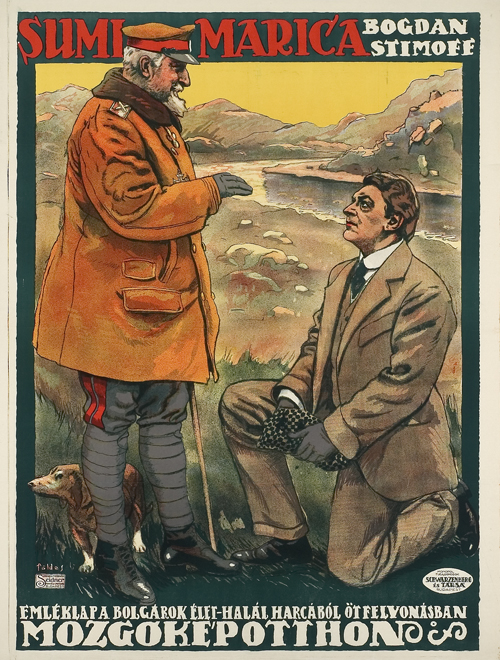
In the annals of early 20th-century cinema, few narratives unfurl with the sprawling ambition and intricate tapestry of human experience quite like Bogdan Stimoff. This is not merely a film; it is a grand, sweeping fresco of a man caught in the unforgiving currents of history, a testament to resilience, the enduring quest for justice, and the profound ties that bind one to land and lineage. From the rustic, sun-baked fields of a Macedonian village at the precipice of a new century, to the industrial clangor of American factories, and back to the war-torn heart of the Balkans, Stimoff's journey is an odyssey of epic proportions, demanding of its audience both patience and an unwavering engagement with the human spirit's capacity for both suffering and triumph. It eschews the simplistic morality plays often found in films of its era, instead delving into a complex web of loyalty, betrayal, and the shifting sands of national identity.
The film introduces us to Bogdan Stimoff, a figure of quiet dignity, whose life is shattered by the brutal caprice of fate. Accused of a murder he steadfastly denies, his world crumbles, forcing him into a desperate flight. This initial injustice sets the tone for a narrative steeped in the precariousness of existence, a recurring motif that resonates through every frame. His wife, Anna, a woman of steely resolve, embodies the strength often found in the partners of men thrust into extraordinary circumstances, her fervent plea for his escape underscoring the primal instinct for survival. This early act of exile is a powerful thematic anchor, immediately drawing parallels to countless stories of displacement, from Homeric epics to modern refugee narratives. The sheer weight of this forced departure, the severing of roots, is depicted with a gravitas that transcends the visual limitations of early cinema, relying instead on the performances and the inherent drama of the situation.
America, the fabled land of opportunity, becomes Bogdan's crucible. Under the adopted moniker of 'Stimens,' he sheds his past identity, not as an act of cowardice, but as a pragmatic necessity for survival. His ascent to director of a munitions factory speaks volumes about his inherent capabilities and the industrious spirit that characterized the era. This transformation from a persecuted villager to a captain of industry in a foreign land is a potent symbol of reinvention, a narrative arc that could easily stand as a film in itself. Yet, the tranquility of this new life is illusory, a temporary reprieve before the storm. The outbreak of the First World War, an event of cataclysmic global significance, inevitably reaches even the distant shores of America, transforming the factory floor into a microcosm of international tensions. The film masterfully illustrates how macro-level conflicts invariably trickle down, poisoning personal relationships and igniting dormant prejudices.
The character of Eteli, the Italian agitator, serves as a crucial antagonist, not merely in a personal vendetta against Bogdan, but as a representation of the divisive nationalism that swept through Europe and its diasporas. His incitement against the Austrian and German workers is a stark reminder of the xenophobia that often accompanies wartime fervor. Bogdan Stimoff's decision to defend these ostracized workers, even at the cost of his hard-won position, is a pivotal moment, cementing his character as one defined by an unwavering moral compass. He is a man who champions justice, not for personal gain, but from an intrinsic sense of right. This act of solidarity, leading to his dismissal alongside friends Max and Friedrich, sets the stage for the next perilous chapter of their journey, a testament to the bonds forged in adversity.
The narrative then introduces a layer of romantic intrigue and unexpected alliance with Eteli's sister, Anna, who, driven by her affection for Max, provides the crucial papers for their escape. This twist adds a delicious complexity to the conflict, demonstrating that even amidst the stark divisions of war, human connections can transcend loyalties and familial feuds. Their perilous voyage aboard a Swedish ship, a symbol of neutrality in a world engulfed by war, is tragically short-lived. Eteli's relentless pursuit, orchestrating their capture by an Italian mail-boat, underscores the inescapable nature of his vendetta. The subsequent escape in a small boat, adrift on the vast, indifferent ocean, is a moment of pure, visceral suspense, a testament to the human will to survive against overwhelming odds. The fortuitous rescue by a German submarine is a narrative contrivance, perhaps, but one that effectively propels the characters into the next phase of their journey, highlighting the unpredictable nature of wartime encounters. Max, Anna, and Friedrich find a temporary haven in Germany, their fates now intertwined with the Central Powers, while Bogdan's destiny, ever pulling him back, lies in the ravaged heart of Bulgaria.
The return to Bulgaria reveals a land scarred by conflict, Bogdan's ancestral estate seized, a poignant symbol of the personal cost of war and occupation. The attempted forced marriage of his daughter, Maritsa, to an invader, is a harrowing depiction of the subjugation faced by conquered peoples, a violation of both personal autonomy and cultural heritage. Bogdan's dramatic arrival on the wedding day is a moment of raw, cathartic power, a narrative beat that resonates with classic tales of heroes returning to reclaim what is rightfully theirs. His leadership in inciting a peasant revolt is not merely an act of defiance but a powerful assertion of national identity and a reclaiming of agency for a people oppressed. This sequence, brimming with revolutionary fervor, recalls the spirit of resistance found in films like Robbery Under Arms, albeit on a grander, nationalistic scale, or even the underlying tension of societal upheaval found in The Pendleton, Oregon, Round-Up, though with far more profound stakes.
The journey to Sofia, where Bogdan kneels before the King, is a pivotal moment of reconciliation and national integration. His recounting of a life's saga, from false accusation to exile and eventual return, is a compelling narrative within a narrative, a testament to the power of personal testimony. The King's pardon is not just an act of clemency but a recognition of Bogdan's inherent nobility and his potential as a national hero. His subsequent enlistment, alongside his son Peter volunteering for the army and Maritsa becoming a nurse, paints a vivid picture of a nation mobilizing, a family dedicating itself to the collective cause. This patriotic fervor, while understandable in the context of the era, is depicted with a sincerity that avoids jingoism, focusing instead on the personal sacrifices made for a greater good. The film, in this phase, transforms from a personal drama into a sweeping national epic, reminiscent of the grand scale of The Triumph of an Emperor, albeit with a more grounded, human focus.
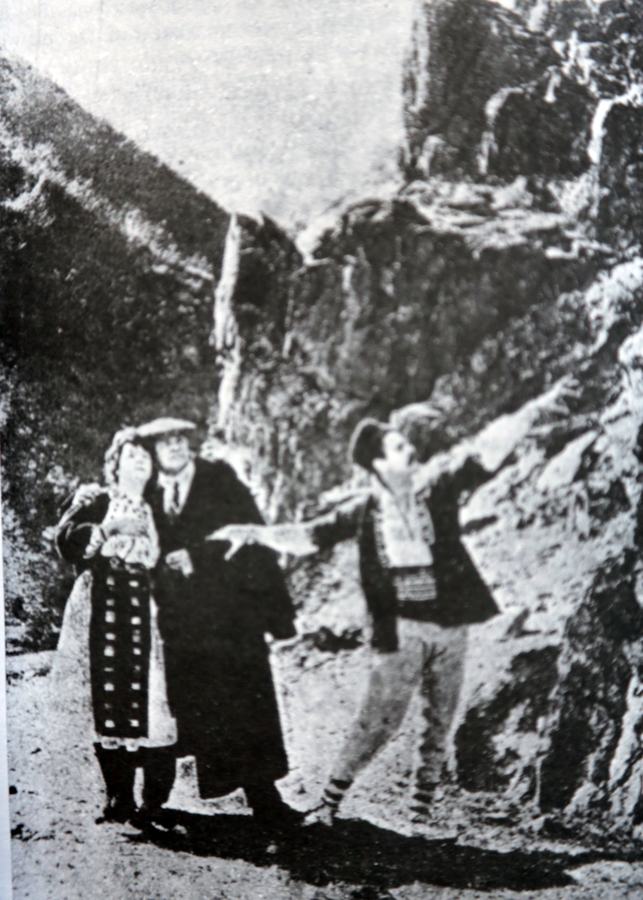
The climax unfolds as Serbian forces are driven out of Macedonia, a hard-won victory that transforms Stimoff's estate into a field hospital, a poignant full-circle moment. Here, the threads of the narrative converge with a devastating elegance. The reunion with Max, now a wounded soldier, underscores the indiscriminate toll of war. The reappearance of Eteli, driven by an unquenchable thirst for vengeance and targeting Maritsa, brings the personal vendetta to its tragic zenith. The act of Max and a young soldier jumping to intercept the bullet is a moment of profound self-sacrifice, a testament to the bonds forged in adversity. The subsequent revelation of the young soldier's true identity—Eteli's sister, Anna, in disguise—is a masterstroke of dramatic irony. Her death, at the hands of her own brother, albeit indirectly, is a gut-wrenching twist that elevates the film beyond mere melodrama. It speaks to the destructive nature of hatred and the tragic, often unforeseen, consequences of conflict, echoing the profound, intricate deceptions and moral quandaries explored in films like The Innocent Lie, but with a far more violent and definitive resolution.
The film's resolution, a military parade where Bogdan Stimoff receives a medal from the King, is a moment of national triumph and personal vindication. It is the hero's reward, a public acknowledgment of his extraordinary journey and unwavering spirit. His return to his village with Peter, greeted with joy, signifies not just a personal homecoming but the restoration of order and peace to his homeland. This ending, while celebratory, is tinged with the lingering shadows of loss, particularly Anna's sacrifice, ensuring that the film's message is not one of facile victory but of hard-won peace, achieved at immense personal cost. The visual symbolism of the medal, gleaming against his uniform, speaks to the profound transformation of the accused fugitive into a national hero, a journey so arduous it feels carved from the very bedrock of human experience.
Alfred Deutsch-German's screenplay is a monumental achievement, weaving together diverse plotlines and a vast array of characters into a cohesive and compelling whole. The sheer scope of the narrative, spanning continents and years, demands a writer of exceptional vision and structural prowess. The pacing, while deliberate, never drags, each scene serving a clear purpose in advancing the grand narrative. The dialogue, though perhaps constrained by the sensibilities of early cinema, effectively conveys character and emotion, relying heavily on the actors' expressive capabilities. Deutsch-German’s ability to imbue the historical backdrop with such personal stakes is truly commendable, making the global conflict intimately felt through the Stimoff family's trials and tribulations. This level of intricate plotting and character development for its time is truly remarkable, perhaps rivaled only by complex narratives like L'assassino del corriere di Lione, though that film focuses more on a single crime, whereas Stimoff broadens its scope to national destiny.
The performances, even through the prism of time and the often-stylized acting conventions of the era, convey a remarkable depth. Hans Lackner, as Bogdan Stimoff, carries the emotional weight of the film with an understated power. His transformation from a bewildered fugitive to a resolute leader is portrayed with conviction, his eyes conveying the weariness of exile and the fire of patriotism. Josef Rehberger and Fritz Wrede, as Max and Friedrich respectively, provide solid support, embodying the camaraderie born of shared hardship. Marietta Pikaver, in the dual roles of Anna (Bogdan's wife) and later as Eteli's sister (also named Anna), must navigate complex emotional landscapes, from the desperate love of a wife to the conflicted affections of a sister torn between loyalty and burgeoning romance. This doubling of names, while potentially confusing, also subtly reinforces the cyclical nature of fate and the recurring themes of love and loss. The supporting cast, including Alfred Valters, Viktor Franz, Georg Reimers, Lotte Medelsky, Baronesa Morpurga-Laval, and Carl Goetz, contribute to a rich ensemble, each character, however minor, feeling integral to the unfolding drama. Their collective efforts bring to life a world fraught with danger and brimming with human emotion, showcasing the burgeoning power of cinematic storytelling to create immersive worlds and believable characters, a feat perhaps as impressive as the character-driven narratives of The Wolf or Mortmain, but on a much grander canvas.
Cinematically, Bogdan Stimoff is a masterclass in early epic filmmaking. The direction, though uncredited in the provided details, must have been visionary to orchestrate such a vast and intricate narrative. The sweeping landscapes of Macedonia, the bustling industrial scenes of America, and the chaotic battlefields of the Balkans are brought to life with a keen eye for detail and scale. The use of cinematography to convey emotion and narrative progression is particularly noteworthy, especially given the technical limitations of the period. One can only imagine the logistical challenges involved in staging the peasant revolt or the military parade, testament to the ambition and ingenuity of the filmmakers. The film manages to convey a sense of genuine historical authenticity, transporting the viewer to a pivotal moment in European history. Its visual storytelling, even without the benefit of sound, is remarkably articulate, relying on strong compositions and clear dramatic action to communicate its complex plot, much like the compelling visual narratives found in Through the Valley of Shadows or The Adventures of Peg o' the Ring, but with a more grounded, historical realism.
Thematically, Bogdan Stimoff explores a rich tapestry of ideas. The inherent injustice of false accusation and the arduous path to redemption form the core. The film delves into the concept of national identity, particularly relevant for Bulgaria and Macedonia during a period of intense geopolitical flux. It examines the universal experience of exile and the yearning for home, the resilience of the human spirit in the face of overwhelming adversity, and the profound impact of global conflict on individual lives. The complex interplay of love, loyalty, and betrayal is skillfully woven throughout, culminating in the tragic irony of Anna's death. It is a story that, despite its specific historical setting, resonates with timeless human struggles, making it a profound and deeply moving cinematic experience. The film also subtly questions the nature of heroism, suggesting it can be found not just on the battlefield but in acts of moral courage and unwavering dedication to family and community, a sentiment that might be subtly contrasted with the more comedic or lighthearted explorations of character in films like Half a Hero or The Squatter and the Clown, emphasizing the gravity of Stimoff's journey.
In conclusion, Bogdan Stimoff stands as a remarkable achievement, a sprawling historical epic that manages to be both grand in scale and deeply personal in its emotional resonance. It is a powerful testament to the enduring human spirit, a poignant exploration of justice, war, and the unbreakable bonds of family and nation. For those who appreciate early cinema that dares to tackle vast historical canvases with rich character development and intricate plotting, this film is an indispensable viewing experience. It transports its audience to a world long past, yet its themes remain profoundly relevant, speaking to the universal quest for dignity, belonging, and peace in a world often defined by conflict and upheaval. It is a film that not only documents a specific historical period but also illuminates the timeless struggles of humanity, making it a true classic of its genre and an enduring piece of cinematic artistry, perhaps echoing the profound human struggles seen in På livets ödesvägar or the emotional intricacies of Her Sister's Rival, but on a truly monumental scale of historical and personal conflict. Its legacy, though perhaps understated in broader cinematic discourse, is undeniably significant, a potent reminder of the power of storytelling to chronicle and interpret the human journey through the most tumultuous of times.

IMDb 6.9
1930
Community
Log in to comment.