DbcultAccessing Vault...
Cult Review
Senior Film Conservator
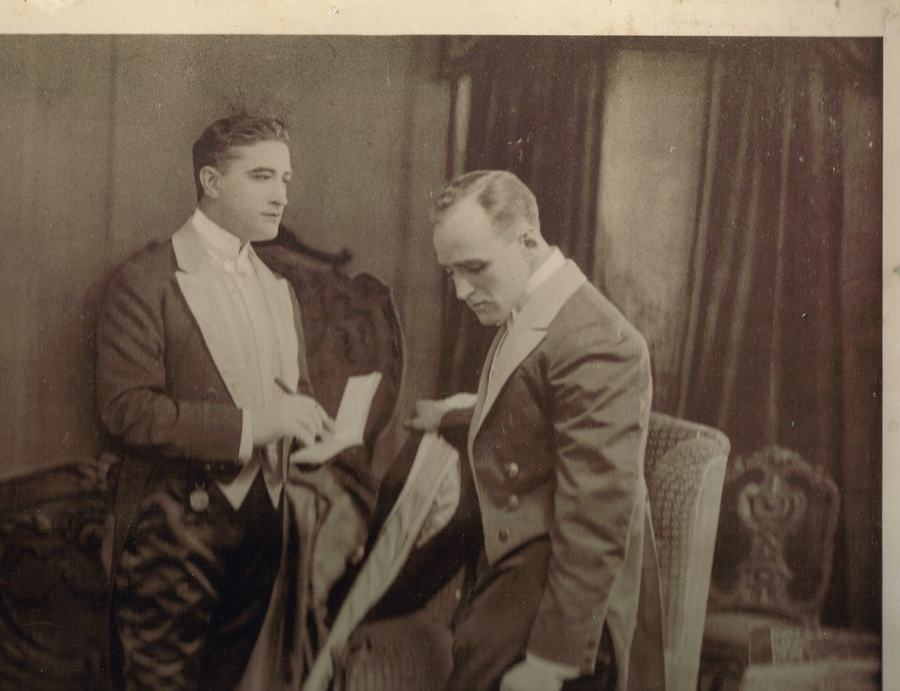
Picture a nation drunk on its own velocity—1917, war drums across the ocean, ragtime in the gutters, and cinema still toddling on the edge of adolescence. Into that maelstrom parachutes Red, White and Blue Blood, a film whose very title clangs like a marching-band cymbal, promising jingoistic pablum yet delivering something far headier: a cocktail of rescue tropes shaken with class voyeurism and served in a cut-crystal flute of irony.
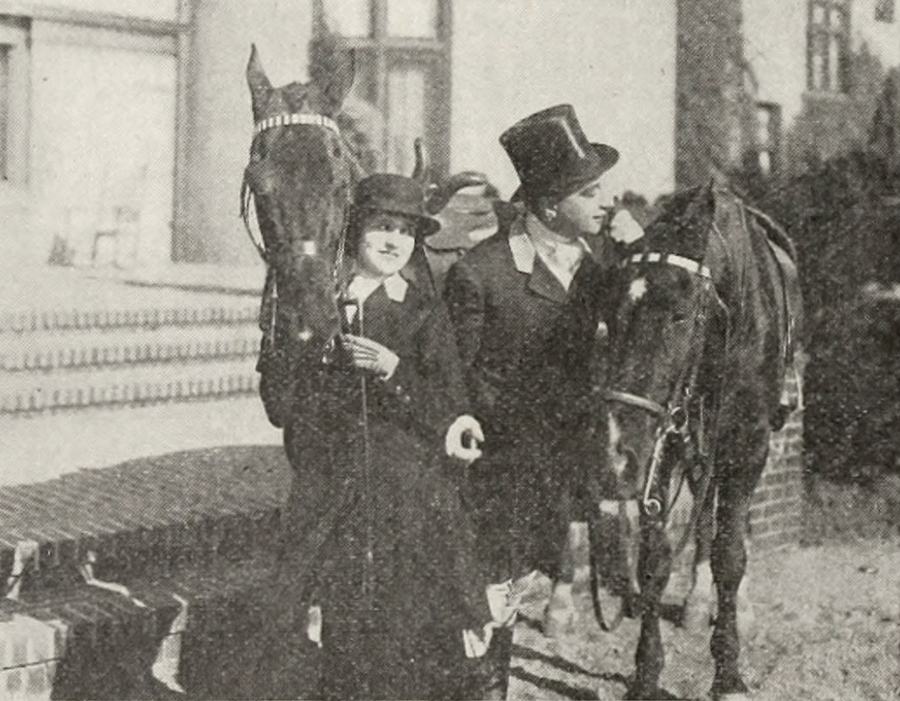
Shannon Fife and June Mathis—two women scribbling scenarios while men hogged director chairs—engineered a screenplay that anticipates screwball’s prickling banter a decade early. Their narrative architecture is a triptych of salvation, each panel hinged to the next by coincidence so shameless it feels mythic. The first rescue, aboard a speeding train, recalls Captain Courtesy’s railroad cliffhangers, but swaps masculine bravura for erotic tension: Bayne’s Helen clings to a brass handrail, wind whipping her chiffon into serpentine banners, while Bushman’s Spaulding rides alongside on a coal-black stallion—an equine anachronism that somehow outruns steam. Cinematographer John W. Brownell cranks the camera at a dutch angle, turning the prairie into a Expressionist tilt-a-whirl; the image vibrates with the same chromatic hysteria found in Das Skelett, yet here the skeleton is social hierarchy rather than mortality.
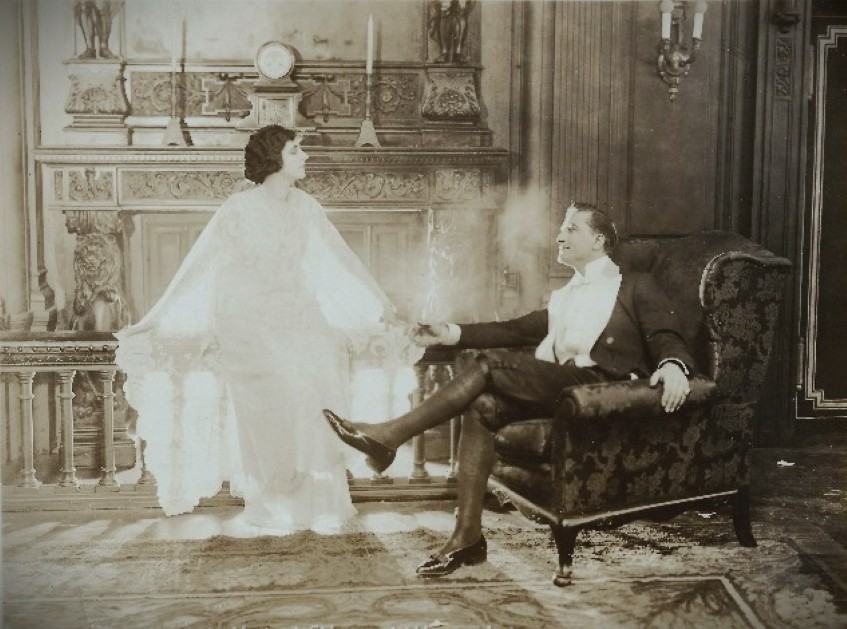
Cut to Long Island, location of the second deliverance. The film’s visual register cools from amber horizons to sea-salt pastels, evoking the yacht-club ennui later perfected in A Wall Street Tragedy. Helen, draped in a dripping chemise that clings like wet meringue, collapses into Spaulding’s arms as waves slap the pier. Intertitles flash: “You have saved me twice—must I forever owe you my breath?” The line crackles with double entendre; in 1917, the word breath flirts with virtue, and the film knows it. Their ensuing romance unfolds in iris-shots that blossom like peonies, yet the courtship is riddled with surveillance: servants peer through lace, gossip columnists scribble, telegrams arrive faster than truth. Mathis, who would later script The Heart of Nora Flynn, understood that female desire needed plausible deniability; thus Helen’s flirtatious reputation is never confirmed, only whispered, leaving the audience to interrogate its own appetite for scandal.
Enter Count Berratti—part Eurotrash vampire, part speculative asset—played with pencil-thin mustache and eyes that glitter like onyx cufflinks. He is the film’s mobile credit line, a reminder that titles, like stocks, can be bought on margin. Arthur Housman, normally the comic relief, here channels a predatory languor that anticipates the lounge-lizard cadence of 1930s Lubitsch. His proposal scene transpires in a moonlit conservatory where orchids exhale perfume as oppressive as colonial debt. Helen accepts, not out of affection but as a preemptive strike against John’s pedagogical cruelty. The gender politics ricochet: the hero’s quest to humble the heroine backfires, turning her into an agent of strategic matrimony. One thinks of Sumerki zhenskoy dushi, where female subjectivity is equally a battlefield, though here the wounds are inflicted by white gloves rather than Orthodox iconography.
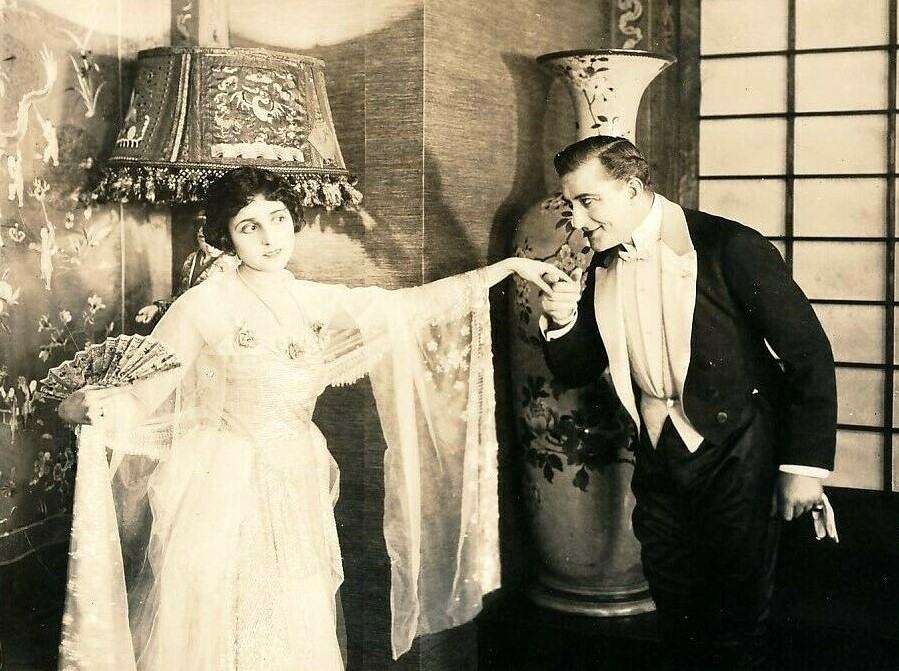
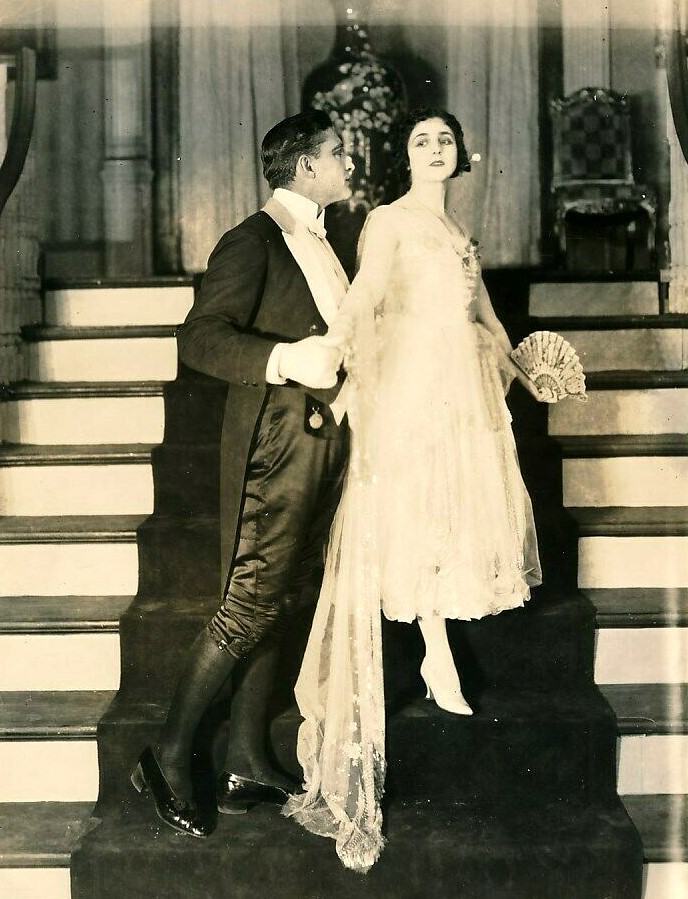
The climax stages the third rescue inside a phantasmagoric ballroom. Production designer Hugo Ballin transforms a Newport mansion into a kaleidoscope: banners of every state ripple overhead, a brass orchestra blares Sousa, and chandeliers sway like cut-glass pendulums. Spaulding, discovering that Berratti has leveraged Helen dowry against Russian war bonds, charges through a choreography of cavalry officers and suffragettes. The accident—whether sabotage or fate—erupts when a horse rears, snapping a velvet rope that suspends a 300-pound crystal chandelier. The camera, perched on a crane, plummets with the fixture in a single unbroken take; shards spray across the parquet like liquid diamonds. Spaulding flings Helen aside, absorbing the blow across his shoulder. Blood blooms on his white uniform, a crimson rebuttal to the film’s patriotic chromatics. In that instant, the title’s tricolor abstraction congeals into flesh and gore, as if the nation itself must be wounded before it can reconcile its divisions.
What follows is a denouement so brisk it feels like a door slamming. Helen renounces the Count with a public slap—an unthinkable breach of etiquette that the film treats as cathartic comedy. She kneels beside Spaulding, whispers through an intertitle whose font suddenly softens from bold to italic: “I traded a kingdom for your heartbeat—will you still have me?” He answers with a kiss that the camera frames in extreme close-up, Bushman’s and Bayne’s lips filling the entire screen, a proto-screen-kiss that scandalized censors in Atlanta and Paris alike. Fade to fireworks: each burst hand-tinted—crimson, ivory, cerulean—until the image overexposes to white, as if the film itself cannot contain the luminal excess of reconciliation.
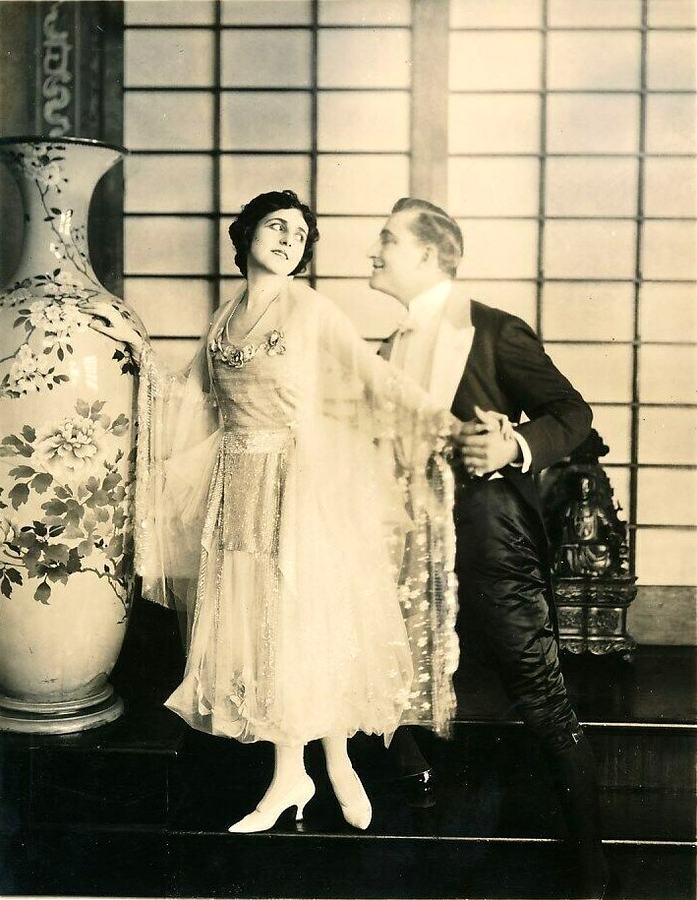
Historically, Red, White and Blue Blood was released four months after America entered WWI; its patriotic semaphore functioned as both escapism and recruitment poster. Yet beneath the bunting lies a more subversive current. Fife and Mathis smuggle a feminist fable inside a masculine rescue narrative: Helen’s final choice is not between suitors but between modes of visibility—trophy wife or co-author of her myth. Bayne, often dismissed as a pretty accessory to Bushman’s box-office magnetism, here wields her comic timing like a stiletto. Watch the micro-moment when she learns of John’s scheme: her pupils dilate, a smile flickers, then shutters—an acting choice executed in 12 frames of celluloid that speaks volumes louder than any intertitle.
Bushman, meanwhile, weaponizes his legendary physique while simultaneously lampooning it. During the second act, he poses before a mirror, flexing like a narcissus of the gymnasium; the reflection doubles, revealing the hollowness of performative masculinity. The gag anticipates the self-deconstructing swagger of The Explorer, yet Bushman does it in 1917, before irony became Hollywood’s lingua franca. His final wounded posture—arm in a silk sling, eyes glassy with morphine and regret—suggests that heroism extracts compound interest on the body.
Archivally, the picture survives only in a 65-minute re-assemblage at MoMA, cobbled from four partial negatives. The missing footage—reportedly a gambling sequence aboard a yacht—leaves lacunae that scholars still spar over. Some argue the cuts enhance the dream logic; others mourn the narrative ligaments lost. Watching the extant print is akin to reading a sonnet with alternate lines erased: the rhyme scheme persists, but ghostly.
Comparatively, the film rhymes with The Romantic Journey in its transcontinental sweep, yet where the latter insists on Manifest Destiny, Red, White and Blue Blood questions the cost of conquest. Its East-West shuttling parallels A Trip to the Wonderland of America, but replaces tourism’s wide-eyed awe with a sardonic side-eye toward American plutocracy. Even the Danish melodrama Den hvide rytterske, with its horseback emancipation, feels kin: both films posit the frontier as arena where gender roles can be re-written in dust.
Technically, the tinting deserves its own monograph. Each reel was dipped in baths of aniline: amber for prairie daylight, lavender for Long Island twilight, green for the Count’s nocturnal seductions. These hues were not mere ornament but semantic code, a chromatic grammar that audiences of 1917 could read faster than intertitles. Today, digital restorations struggle to replicate the warmth; the aniline often oxidizes into bruised ochres, lending the footage a melancholic patina like heirloom photographs left in an attic.
Sound, of course, is absent, yet the film vibrates with aural suggestion. During the chandelier sequence, the orchestra in the diegetic ballroom ceases abruptly—indicated by a single frame reading “SILENCE”—followed by a montage of gloved hands covering mouths. The absence of music, paradoxically, amplifies the imagined crash, a trick later borrowed by Hitchcock in Blackmail. Silence becomes a scream.
Reception-wise, the New York Dramatic Mirror hailed it as “a tonic for war-weary hearts,” while Variety sniffed at its “labyrinthine coincidences.” Box-office tallies were stellar in Boston and Chicago, but Southern exhibitors trimmed the kiss scene, fearing moral contagion. In France, under the title Sang, Blanche et Rouge, critics compared its tri-color motif to the Tricolore, reading the film as American propaganda disguised as romance. They weren’t wrong; the U.S. Committee on Public Information quietly funded lobby-card distribution in exchange for a pro-draft slide preceding the final reel.
Modern viewers, weaned on revisionist Westerns and meta-rom-coms, may smirk at the artifice. Yet dismissing the film as melodramatic relic is to miss its prophetic nerve. The transactional courtship anticipates the swipe-right economies of contemporary dating. Helen’s manipulation of reputation prefigures influencer self-branding. Spaulding’s trilogy of rescues echoes the algorithmic heroics of Marvel franchises, where world-saving becomes a quarterly spectacle. The film’s true radicalism lies in exposing rescue itself as romantic currency: each act of salvation accrues erotic debt, a ledger finally balanced not by marriage but by mutual vulnerability.
Seen today, Red, White and Blue Blood flickers like a kinescope from an alternate America—one where patriotism is negotiable, gender a masquerade, and love the riskiest speculation on the market. It is both artifact and oracle, a cautionary tale about trading hearts on margin. When the final firework fades to white, what lingers is not the triumph of nation but the fragile covenant of two people who decide that saving each other, ad infinitum, is the only story worth rewinding.
Verdict: a ravishing, rambunctious time-capsule that interrogates the very myths it appears to celebrate. Essential viewing for anyone who believes that silent films whisper louder than talkies ever could.
IMDb —
1918
Community
Log in to comment.