Summary
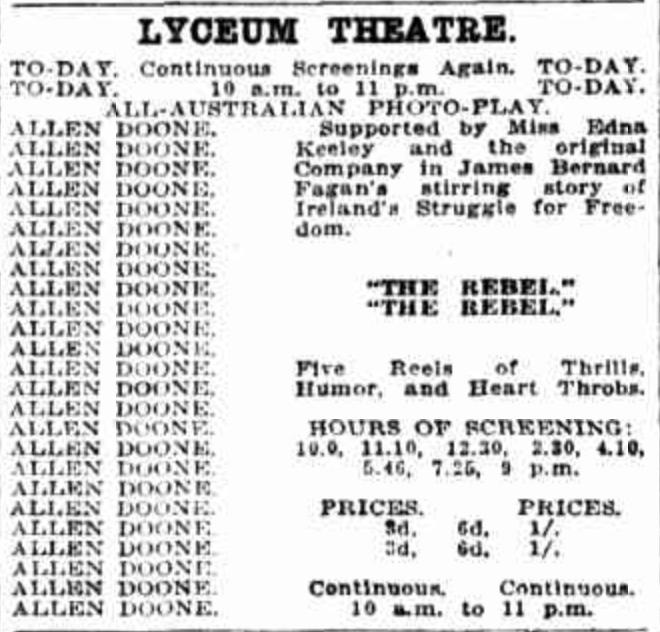
Moonlit Victorian cobblestones glisten beneath the boots of a poet-swordsman who has pawned his surname for a manifesto; Frank Cullenane’s hollow-cheeked demagogue, reputedly Irish, reputedly dead, slips off the convict ship and into Sydney’s labyrinth of gas-lamps, opium haze and whispered treason. He carries no luggage save a blood-stained notebook in which every stanza is a death-sentence against the Crown. Allen Doone’s boozy colonial editor—part Bard, part Barnum—first spots the fugitive in the smoky wings of the Queen’s Theatre, recognises the scar above the eye that once stared down a firing squad, and instantly senses circulation gold. Edna Keeley’s actress-proprietress, part Ellen Terry, part bushranger queen, offers sanctuary in exchange for a new drama: she will stage the revolution as melodrama, sell every ticket, then bolt with the box-office before the curtain falls. Onslow Edgeworth’s prim British magistrate, sent to the antipodes to hang the Empire’s nightmares, arrives armed with statute books and a monocle that reflects every rebel throat he intends to fit with a noose. Over one feverish fortnight the four orbit each other like opposing magnets: in print-shops smelling of kerosene and ink they forge pamphlets that quote Shelley beside bushranger ballads; in sandstone alleyways they rehearse a phantom uprising that will never muster more than a dozen conspirators and one rusted musket; on the harbour-side at dawn they trade masks—poet becomes policeman, jailer becomes jester—until identity itself frays like over-exposed nitrate. The climax is not a battle but a tableau: the theatre’s canvas sky painted midnight, a single calcium spotlight pinning the fugitive centre-stage while the magistrate reads the death warrant as if it were iambic pentameter. Instead of the expected fusillade, Keeley steps forward, tears the warrant from his gloved hand, sets it alight with a footlight taper and declaims Hamlet’s instructions to the players. The audience—convicts, soldiers, street-swellers—erupts into chaotic ovation; the jailers hesitate; Cullenane vanishes through a trapdoor that leads not to sewers but to the harbour’s black tide, leaving behind only the smoking quill of his name. Nobody is redeemed, nobody triumphs; the colony merely discovers that its nightmares make excellent matinees, and the reel ends on a freeze-frame of Keeley’s eyes reflecting both footlights and gallows, a perpetual encore.
Review Excerpt
"
The first time I saw The Rebel I was hunting for a lost bushranger flick and stumbled instead into a sulphurous dream where theatre smoke and gun-smoke swap places. What unfurls is less a narrative than a slow-burn fuse: a political prisoner dropped like a hot coal onto Australia’s dockside, a scribbler who trades truth for type, an actress who sells sedition by the seat, and a magistrate who believes Empire is divine metre.
Frank Cullenane, face sharp as a torn postage stamp, plays the namel..."