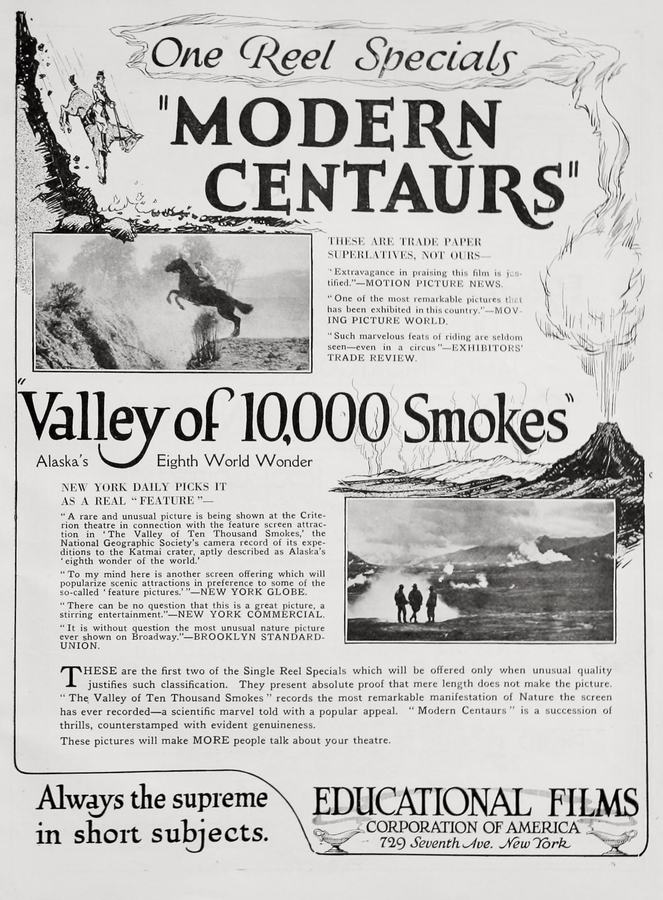
Documenting the National Geographic Society's expedition to view Mt. Katmai in Alaska that last erupted in 1912 and the surrounding valley.
United States
Imagine a film whose very emulsion seems to perspire: crystalline ash wedged between sprocket holes, sulfur vapors ghosting across silver halide. The Valley of Ten Thousand Smokes is that artifact—half scientific record, half fever dream—where the planet’s violent metabolism fuses with the nascent language of documen...

Comparing the cinematic DNA and archive impact of two defining moments in cult history.
Unknown Director

Unknown Director
Community
Log in to comment.
" Imagine a film whose very emulsion seems to perspire: crystalline ash wedged between sprocket holes, sulfur vapors ghosting across silver halide. The Valley of Ten Thousand Smokes is that artifact—half scientific record, half fever dream—where the planet’s violent metabolism fuses with the nascent language of documentary. Shot over four grueling seasons, the picture defies the stodgy lecture-hall tenor of its contemporaries—those Civil War melodramas or matrimonial weepies that still clung to..."