Summary
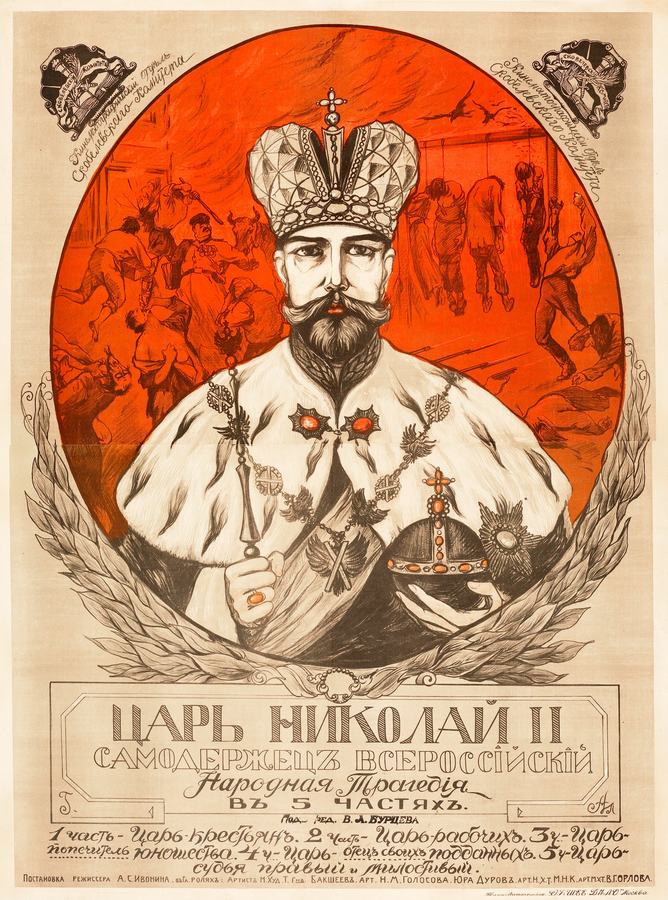
Aleksandr Voznesensky's 'Tsar Nikolay II' is a profoundly melancholic cinematic elegy, meticulously charting the inexorable descent of the Romanov dynasty through the tragic figure of its last emperor. The narrative eschews grand heroic gestures, instead focusing on the suffocating weight of an inherited crown upon a man ill-suited for the tempestuous currents of a nation in upheaval. We witness Nikolay, portrayed with a poignant fragility by N. Golosov, not as a tyrant, but as a devout, deeply private individual whose unwavering devotion to family tragically blinds him to the seismic shifts occurring beyond the palace walls. The film masterfully portrays the insidious erosion of imperial authority, beginning with subtle, almost imperceptible fissures in the social fabric, escalating through the brutalizing futility of the Great War, and culminating in the cataclysmic revolutionary fervor that sweeps away centuries of autocratic rule. Vera Orlova's portrayal of the Empress Alexandra, a woman consumed by ill health and a desperate, almost mystical faith, serves as a haunting counterpoint, her fervent belief in figures like Rasputin (evoked rather than explicitly shown, a shadow of influence) further isolating the imperial couple from their increasingly disaffected populace. M. Kemper and Pyotr Baksheyev inhabit roles that symbolize the growing schism within the aristocracy and the burgeoning revolutionary spirit among the masses, respectively. The film's genius lies in its ability to render the macrocosm of a crumbling empire through the microcosm of a family's doomed struggle, painting a vivid tableau of a world teetering on the precipice, where personal inadequacies and historical inevitability converge in a symphony of despair and ultimate dissolution.
Review Excerpt
"There are films that merely recount history, and then there are those that immerse you in its very texture, its sorrow, its inexorable march towards an predestined end. Aleksandr Voznesensky's 'Tsar Nikolay II' belongs unequivocally to the latter category, a cinematic masterpiece that transcends mere biographical depiction to become a profound meditation on power, fate, and the crushing burden of an empire in its twilight. Released during a period of significant global upheaval, this film, even ..."