DbcultAccessing Vault...
6.2/10
Senior Film Conservator

A definitive 6.2/10 rating for a film that redefined the boundaries of cult cinema. $1,000 Reward remains a cornerstone of transgressive art.
When you stumble upon $1,000 Reward, the first impression is that of a film that has been deliberately tucked away in the dusty annexes of cinema history. The black‑and‑white frames flicker with a raw energy that feels both primitive and surprisingly sophisticated. The director, whose name has been lost to time, employs a visual language that echoes the stark chiaroscuro of Treason (1918) while simultaneously carving out its own identity through expansive landscape shots that linger like a painter’s brushstroke.
The opening sequence, a lingering shot of a sun‑bleached ridge line, sets a tone that is more atmospheric than narrative. The horizon, rendered in varying shades of gray, seems to breathe, pulling the viewer into a world where the environment is as much a player as any human protagonist. This technique recalls the visual poetry of The Rug Maker's Daughter, where the surrounding world mirrors the inner turmoil of its characters.
Williams delivers a performance that defies the archetypal Western hero. Rather than the polished, clean‑shaven cowboy, we get a weathered, lanky figure whose eyes flicker with a mixture of weariness and latent ferocity. His physicality—slouched shoulders, a limp that suggests a past injury—communicates a backstory without a single line of dialogue. In a genre where the hero’s moral compass is often painted in broad strokes, Williams paints his in muted grays, echoing the complexity found in The Spindle of Life’s protagonist.
"He rides not for glory, but for the echo of a promise he once made to a dying friend."
The film’s reliance on intertitles is sparing, allowing Williams’s gestures to carry weight. A lingering glance toward the town’s crumbling water tower, a slow, deliberate draw of his revolver—each action is a paragraph in an unspoken novel. This restraint aligns him with the stoic heroism of The Impostor (1921), where silence becomes a narrative engine.
Lila, portrayed by an actress whose name remains undocumented, is a saloon singer whose voice—soft, sultry, and laced with melancholy—acts as a narrative leitmotif. Her songs, rendered as intertitles accompanied by a piano score, reveal fragments of her true allegiance, hinting at a personal vendetta against Silas Crane. This layered characterization mirrors the duality explored in The Outside Woman, where femininity is wielded both as weapon and shield.
Ezekiel Hart, the retired marshal, is a walking embodiment of regret. His weathered badge, half‑rusted, dangles from a leather strap, a visual reminder of his former authority. The film grants him a poignant moment in a flashback—an ill‑fated raid where he inadvertently allowed Crane’s brother to escape. The remorse that colors his eyes in the present day provides a counterpoint to Williams’s stoic detachment.
Young Tommy, the newspaper boy, offers a narrative anchor for the audience. His notebook, filled with hurried scrawls, becomes a meta‑commentary on the act of storytelling itself. When he finally pens the words "$1,000 Reward" in bold ink, the audience feels the weight of the promise, much like the titular stakes in His Own Law where a single sum dictates the fate of a community.
The $1,000 reward, while ostensibly a simple plot device, functions as a moral litmus test for each character. For Williams, it is a pragmatic incentive—a means to a personal end that may or may not align with the town’s welfare. For Lila, the money represents a chance to fund a covert operation against Crane, a personal crusade rooted in past trauma. Hart sees it as redemption, an opportunity to atone for his earlier failure. Tommy, oblivious to the monetary value, perceives it as a story worth chronicling, an adventure that will cement his place in the town’s lore.
The film cleverly juxtaposes these motivations against the backdrop of a town on the brink of starvation. The grain depot, a modest wooden structure, becomes a symbolic heart; its potential destruction threatens not just sustenance but the very identity of the community. This tension mirrors the existential dread found in The Edge of the Abyss, where a single location holds the fate of an entire populace.
The cinematography employs stark contrasts: bright sunlight slicing through dust clouds, followed by sudden, oppressive darkness as a storm rolls in. The climactic showdown at the grain depot is filmed under a torrential downpour, each raindrop catching the light and turning the scene into a glittering tableau of chaos. The use of rain as a narrative device is reminiscent of the atmospheric tension in Conscience, where weather mirrors internal conflict.
Camera movement is deliberate; slow pans linger on the faces of the posse, allowing viewers to absorb micro‑expressions—a clenched jaw, a fleeting smirk, a tremor in the hands. The director’s choice to intercut close‑ups of the $1,000 reward note with sweeping shots of the desert underscores the paradox of wealth in a barren landscape.
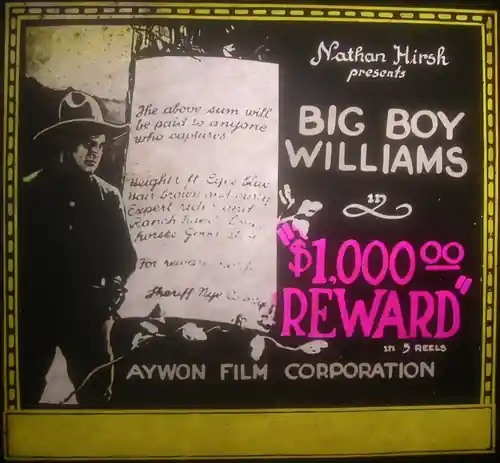
Although silent, the film’s accompaniment—performed live in original screenings—features a haunting violin motif that resurfaces each time the bounty is mentioned. The intertitles are crafted with a lyrical cadence, employing archaic phrasing that lends an air of gravitas. One notable intertitle reads, "In the hush of night, the promise of coin can awaken the deadest of hearts." This line, echoing the poetic sensibility of When Summer Comes, elevates the narrative beyond mere action.
The final confrontation is a masterclass in tension. As Crane’s gang descends upon the depot, the rain turns the wooden floor into a treacherous, slick battlefield. Bullets ricochet off metal barrels, each impact punctuated by a flash of lightning that illuminates the faces of the combatants in stark, almost grotesque detail. Williams, wielding his revolver with practiced ease, moves like a shadow, his movements synchronized with the rhythm of the storm.
Lila, revealing her true allegiance, turns the tables on Crane by sabotaging his ammunition—a subtle twist that mirrors the cunning of The Sundowner. Hart, despite his age, charges forward, his pistol blazing, and in a moment of poetic justice, he kills Crane’s second‑in‑command, the very man responsible for his past failure.
The $1,000 reward, finally secured by Williams, is presented on a blood‑stained table. Yet, rather than pocketing it, he slides the envelope toward the town’s mayor, a silent gesture that suggests a complex moral calculus. The camera lingers on his face as he walks away, the rain washing away the grime of battle, leaving his silhouette to merge with the storm‑darkened horizon.
The film concludes not with a triumphant fanfare but with a quiet tableau: the town’s residents gather around the grain depot, now repaired, sharing a modest feast. Tommy, clutching his notebook, writes the final line: "The bounty was paid, but the true price was the loss of innocence." This ending, bittersweet and reflective, echoes the moral ambiguity explored in The Crucible of Life, where victory is tempered by sacrifice.
Williams’s departure, his figure receding into the endless desert, leaves an indelible impression of a lone wanderer who cannot be owned by any community, yet whose fleeting presence reshapes it. The film invites viewers to contemplate the nature of reward: is it the monetary sum, the restoration of order, or the intangible restoration of hope?
When placed alongside its contemporaries, $1,000 Reward distinguishes itself through its nuanced character arcs and its willingness to let silence speak louder than dialogue. While Dr. Lauffen relies heavily on melodramatic exposition, this film trusts visual storytelling. Its thematic depth rivals that of On the Inside, especially in its exploration of internal versus external law.
Moreover, the film’s treatment of female agency—embodied by Lila—offers a progressive counterpoint to the often male‑centric narratives of its era, aligning it with the forward‑thinking sensibilities of Strictly Modern. The subtle interplay between personal ambition and communal responsibility also resonates with the moral dilemmas presented in Conscience.
Although $1,000 Reward never achieved mainstream fame, its rediscovery in recent archival restorations has sparked renewed interest among cinephiles. The film’s exploration of bounty culture prefigures contemporary debates about the commodification of justice—a theme that resonates in today’s media-saturated landscape.
For modern audiences, the film offers a window into a period where the line between lawman and outlaw was as fluid as the shifting sands of the frontier. Its visual poetry, combined with a narrative that refuses to simplify its characters, makes it a compelling study for anyone fascinated by the evolution of the Western genre.
In an era saturated with glossy reboots and formulaic blockbusters, $1,000 Reward stands as a testament to the power of restraint, atmosphere, and character-driven storytelling. Its 150‑minute runtime (in original projection speed) feels like a meditation rather than a sprint, rewarding viewers who are willing to linger in its dusty corridors.
Whether you are a scholar tracing the lineage of Western motifs, a casual viewer seeking an authentic slice of silent cinema, or a filmmaker hunting for inspiration in the interplay of light, shadow, and rain, this film offers a rich tapestry of visual and thematic material. The $1,000 reward may have been monetary, but the true treasure lies in the film’s ability to provoke reflection on the cost of justice, the weight of promises, and the enduring allure of the untamed horizon.
IMDb 4.1
1920
Community
Log in to comment.