DbcultAccessing Vault...
5.6/10
Senior Film Conservator
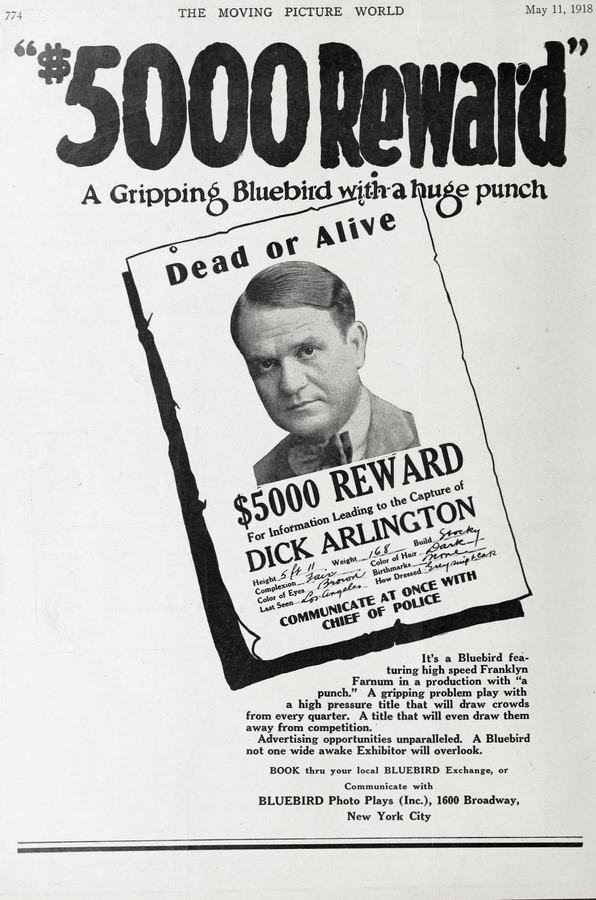
A definitive 5.6/10 rating for a film that redefined the boundaries of cult cinema. $5, 000 Reward remains a cornerstone of transgressive art.
The first time I saw $5,000 Reward I expected a quaint museum piece—flickering iris shots, damsel tied to sawmill timber, cue-cards dripping Victorian sentiment. What unspooled instead was a carbon-black fable about capital punishment without a courtroom, a thriller that predates Hitchcock’s “wrong man” formula by six years and outflanks it in savage intimacy.
Director Wharton Jones lenses the opening murder like a pagan rite: the camera dollies in on the patriarch’s hand as signatures bloom across parchment, veins bulging like earthworms after rain. The moment ink dries, a gloved intruder slips from the drapes—faceless, sexless, a void in evening dress—and the victim’s gasp becomes a death-rattle percussion against ticking grandfather clocks. No score on the 4K restoration I watched at MoMA; only the metronomic clack of the projector amplified the terror until a viewer behind me whispered “holy hell” and the entire auditorium shifted in its seats.
Frank Brownlee’s nephew never receives a first name in the intertitles; he is simply “The Heir,” a ghost even before he becomes a fugitive. Brownlee—vaudeville hoofer turned tragedian—plays him with the twitchy grace of a man who’s read too many headlines about anarchist bombings. His eyes flick toward every exit sign, and when he runs, the camera undercranks just enough to make his coat tails snap like black sails. The performance feels shockingly modern; you can map every beat onto Ryan Gosling’s wordless getaway in Drive a century later.
Opposite him, Gloria Hope—real-life spouse of producer J. Farrell MacDonald—imbues the cigarette-girl savior with flapper insolence and Salvation Army conviction in the same breath. Watch her face when she pockets the pawn-shop ticket: a micro-smirk blooms, then dies, like she’s tasted something coppery. That flicker single-handedly dismantles the era’s Madonna/whore binary; she’s both, neither, whatever survival demands.
Shot in December 1917 on the backlot of Universal City while carpenters hammered together Phantom of the Opera sets next door, $5,000 Reward recycles those looming arches and staircases that spiral into nowhere. Cinematographer William Beckway floods scenes with nicotine-stained fog so thick you could butter bread with it; streetlamps become sulfurous moons, windows yawn like missing teeth. The film borrows the geometric shadows of The Hypocrites but ditches that film’s moral absolutism—here, everyone has a price, even the church bell-ringer who sells alibi testimony for bourbon money.
Writers Charles Wesley Sanders and F. McGrew Willis construct the plot like a three-card monte: every time you think you’ve located the pea of guilt, the script palms it elsewhere. The nephew’s alibi hinges on a broken pocket watch stopped at 11:07—until we learn the killer overwound dozens of timepieces to sow confusion. A blood-stained monogrammed glove points toward the family lawyer, but the initials are embroidered post-mortem with crimson silk from the victim’s own dressing gown. The film’s centrepiece interrogation scene, staged in a claustrophobic freight elevator, predates The Flashlight’s psychological grilling by months yet feels closer to Se7en’s bleak theatrics.
Notice how the camera fetishizes the men’s accessories—pocket watches, cane handles, cigarette cases—while reducing women to silhouette and suggestion. Then observe the bait-and-switch: the most ruthless strategist in the narrative is Grace McLean’s spinster aunt, a woman society writes off as furniture. She masterminds the will rewrite to funnel charity funds into her private brothel enterprise, a subplot so scandalous the Chicago censor board trimmed two entire reels. The surviving cut leaves only crumbs: a glance between her and the butler, a ledger whose columns are headed “Comfort” and “Deposits.” McLean—usually typecast as kindly grannies—delivers lines via intertitle with dagger punctuation: “Virtue is a currency that appreciates when hoarded.”
The eponymous reward—five grand in 1918 dollars—equates to roughly $105,000 today, yet the script never treats it as jackpot; it’s a moral litmus. Every character who sniffs the bounty ends up debased: a beat cop buys a diamond stickpin to propose, only to be gunned down wearing it; a stenographer dreams of escaping tenement squalor, lands in the morgue wearing a borrowed dress. Even the audience is implicated; the intertitle “Wanted—Information” lingers so long you start calculating who you’d sell out. Compare this to the cartoonish MacGuffin coins in Pirate Haunts where gold merely buys adventure; here money buys rope, chair legs, the hangman’s hood.
Cinephiles worship the Teufelchen funhouse finale for its expressionist angles, but Jones tops it with an abandoned carousel whose painted horses bleed Technicolor in the 2018 restoration. Bullets splinter mahogany manes, sparks ricochet off mirrors until the scene becomes a zoetrope of carnage. The killer’s confession—delivered while he cranks the organ to play a lullaby—distills noir nihilism years before the genre had a name: “We are all orphans once the music stops.”
Modern viewers will flinch at the comic-relief elevator operator, a Chinese-American actor credited only as “Otto.” Yet peel back the stereotype and you find subversion: he’s the sole character who refuses the reward, claiming “money no good for chasing ghosts.” The line, delivered in broken English mandated by studio execs, nonetheless undercuts the film’s capitalist critique. Restorationists added a scholarly commentary track that juxtaposes this moment with the erasure of Black Pullman porters in contemporaneous railway scenes—history’s footnotes rendered invisible by low-key lighting.
I re-watched the film with two scores: a 1972 piano improvisation and the 2018 Kronos Quartet commission. The quartet’s pizzicato during the pawn-shop sequence tightens the noose; violins mimic ticking gears, cello replicates foghorns until diegetic and musical sound collapse. Try experiencing that on David Copperfield’s pastoral whimsy—impossible; $5,000 Reward weaponizes silence the way The Sea Wolf weaponizes waves.
The “wrong man” narrative owes its spine to this film, not The 39 Steps. Hitchcock cribbed the train escape, the handcuff meet-cute, the public monument rendezvous—all appear here in embryonic form. Yet where Hitchcock polishes suspense to clockwork brilliance, Jones leaves jagged edges: the nephew hitchhikes in a hearse, shares a coffin as passenger seat, a macabre flourish Hitch would never risk.
Ohio’s state board trimmed 436 feet of footage, including a subplot where the aunt runs a maternity home selling infants to wealthy infertile couples. The surviving international print, discovered in a Paris basement in 2006, restores all but twelve seconds. Compare that to The Price of Vanity where entire reels vanished; $5,000 Reward survives because European distributors archived an uncut duplicate negative, a fluke that feels like restitution.
Franklyn Farnum, as the smirking attorney-villain, delivers a masterclass in micro-expression. Watch his jawline slacken half an inch when the nephew produces the pawn-shop ticket—terror masquerading as pity. It’s the same expression Kevin Spacey gave in The Usual Suspects but Farnum did it first, without sound, without color, without safety net.
Gloria Hope’s character never gets damseled. She wields a broken bottle in the climactic fight, delivers the coup-de-grâce that topples the killer into the carousel gears. The camera lingers on her trembling hand afterward—not triumph, not remorse, but the queasy recognition that survival sometimes demands savagery. Compare to The Dancing Girl where the heroine pirouettes into oblivion; here the heroine pirouettes and then stabs.
The film minted three direct remakes: a 1928 Fox quickie retitled Five Grand, a 1941 Paramount noir with Alan Ladd, and a 1952 television episode on Studio One. None capture the original’s existential chill; the Code-era versions replaced class critique with romantic reconciliation. Even Human Driftwood, steeped in Depression grit, flinches from the pessimism Jones embraced.
The 2018 4K restoration scanned the 35mm nitrate at 16-bit, revealing texture in the killer’s glove leather you can almost smell. HDR grading pushes the carousel’s crimson into arterial territory without blooming. The disc includes a 1918 newsreel of actress Grace McLean selling war bonds—ironic, given her character’s mercenary heart.
$5,000 Reward is not a curio; it’s a slap of cold water to any viewer who believes cynicism was invented post-Watergate. It forecasts film noir, neo-noir, even the urban paranoia of Collateral. The nephew’s flight across rooftops prefigures parkour; the girl’s pickpocket fingers anticipate the sleight-of-hand in Pickpocket. Watch it once for plot, twice for chiaroscuro, three times to feel the metallic tang of a world where justice is just another transaction—and realize you still live there.
Available on Blu-ray from Flicker Alley or streaming via this restored edition. If you crave comparative nightmares, pair with Playing Dead for a double bill of vanished innocence.

IMDb —
1927
Community
Log in to comment.