Summary
Rhoda Mills, a bourgeois orchid raised on thin soil, adores silk more than sense; she spurns the stolid, jewel-encrusted love of Gilman Beverly, her father’s contemporary, for the bright, unburnished promise of Dick Arnold, fresh from lecture halls and still smelling of chalk. Beverly, gentleman to the marrow, bows out with a wedding gift fat enough to bankroll a honeymoon in Biarritz, then lingers at the margins like a benevolent ghost. One opera night—Puccini trembling in the air—Dick’s fatigue curdles into suspicion when he finds his wife returned in Beverly’s limousine. The next dusk, catching the older man lighting a cigarette in his parlor, Dick’s jealousy erupts; he slams doors, vanishes into gas-lit streets. Beverly, sensing fracture, coaxes truth from Rhoda, then vanishes himself, leaving only the echo of his polished cane. Two revolutions of the calendar later, genteel poverty has sanded the gilt from their marriage. An invitation to the St. Regis gleams like a mirage; Rhoda’s wardrobe does not. Dick slips her the rent money—coins warm from overtime—yet even so she cannot afford the necessary armor. A predatory girlfriend whispers the devil’s logic: run up credit at Maison Lescaut. The sequined gown arrives; so does the reckoning. Pawns the pearls, pawns health, pawns peace. Beverly reappears at her sickbed like a deus ex machina in worsted wool; Dick, wild-eyed, expels her into the winter night. Suicide, reconciliation, a final handshake across the class divide—Beverly exits, coat collar high, while Rhoda murmurs the film’s threnody: she has paid the tariff on vanity.
Synopsis
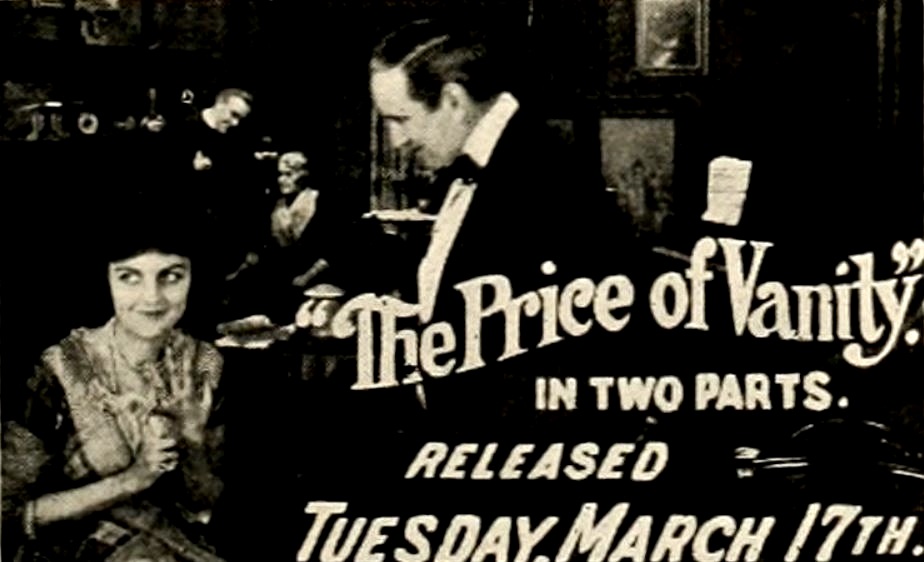
Young, pretty and fond of dress, Rhoda Mills, brought up in moderate circumstances, prefers young Dick Arnold, just from college, to Gilman Beverly, a wealthy, middle-aged gentleman and a friend of her father's. Mr. Beverly is unselfishly devoted to Rhoda and after finding she loves Dick, withdraws in favor of the young man. He contributes a handsome check as a wedding present, and proves himself a faithful friend to the young people. All goes well, until one evening Dick is unable to go with them to the opera, and she and Beverly go alone. Dick returns home from business tired and irritable and when Rhoda and Mr. Beverly arrive, he becomes suspicious of their friend. The next day Dick, arriving home early, finds Mr. Beverly there and orders his wife to put a stop to his visits. He puts on his hat and coat, and goes out in a rage. Mr. Beverly sees something is wrong and persuades Rhoda to tell him. Stunned and hurt, he immediately goes out, leaving Rhoda weeping. Two years pass and Rhoda becomes tired of genteel poverty. One of her friends invites Dick and her to a reception at the St. Regis and Rhoda realizes she has no clothes suitable for the occasion. Dick gives her some of the rent money, making it up later on by night work. Unable to find anything suitable for the amount she has, in a moment of temptation, at the solicitation of a chum, she runs a bill at a fashionable dressmaker's. Later, when the dressmaker begins to press her for payments, she desperately pawns some of her jewelry, and finally becomes ill through worry. Dick has become intensely jealous of Beverly, who comes to visit Rhoda in her illness. Mad with jealous rage, he denounces her and Beverly, and orders her from the house. She meets Mr. Beverly and tells him all her troubles. He tries to comfort her and Dick sees Rhoda in his arms. Dick now determines to commit suicide, but is prevented by Rhoda and Beverly, and, after explanations, Rhoda says, "I have paid the price of vanity." After Beverly and Dick shake hands as friends once more, he goes out, leaving the two young people to their happiness.
Review Excerpt
"
Imagine, if you will, a world where a single spool of thread can unspool a marriage. F. Marion Brandon’s one-reel marvel The Price of Vanity—released in the same year as the Armory Show scandalized New York—proves that haute couture can be as lethal as any noir revolver. The film is a miniature vanitas still-life: pearls catch the gaslight like tiny moons, then slide into a pawnbroker’s drawer with the finality of a coffin lid.
Visual Textures & Chromatic Shivers
Surviving prints are tinged th..."