DbcultAccessing Vault...
3.2/10
Senior Film Conservator
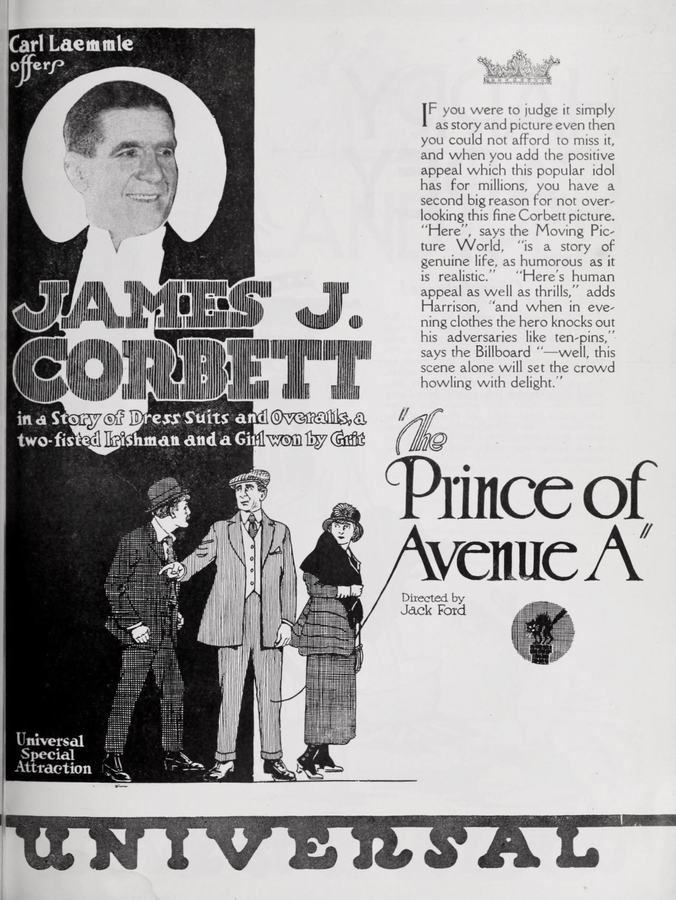
A definitive 3.2/10 rating for a film that redefined the boundaries of cult cinema. The Prince of Avenue A remains a cornerstone of transgressive art.
Stepping into the temporal vortex of early cinematic endeavors often feels akin to unearthing a forgotten artifact, a relic whispering tales from a bygone era. Such is the experience with The Prince of Avenue A, a film whose terse plot summary belies a potential richness of thematic exploration, particularly concerning the murky waters of political influence and familial legacy. While the explicit details of its narrative arc might be limited to what remains of its historical footprint, the core premise—Barry O'Connor, son of a politically potent plumber, tasked with 'putting over' William Tompkins in an election—offers a fascinating springboard for critical dissection.
At its heart, The Prince of Avenue A appears to be a study in nascent political machination, a cinematic precursor to countless dramas exploring the underbelly of power. The very designation of Patrick O'Connor as both 'plumber' and 'political power' is a stroke of genius in its inherent contradiction and sociological insight. It speaks volumes about the grassroots origins of political influence in urban centers of the era, where community ties, practical services, and local patronage often formed the bedrock of electoral success. This isn't the grand, distant politics of national figures, but the intimate, hands-on control exerted by a man deeply embedded in the daily fabric of his neighborhood. His son, Barry, is thus not merely an heir to wealth or status, but to a very specific, practical form of power—a power that requires direct engagement and a keen understanding of human nature.
The central conflict, or rather, the central task, revolves around Barry's assignment to ensure William Tompkins' electoral victory. The phrase 'put over' is particularly telling. It implies a degree of manipulation, persuasion, and perhaps even subterfuge, rather than a straightforward democratic process. Tompkins, then, is not necessarily a candidate chosen for his inherent merit or popular appeal, but one selected for strategic reasons, a pawn in a larger game orchestrated by the O'Connor patriarch. This immediately casts a shadow over the film's depiction of civic engagement, suggesting that even in its nascent stages, the political landscape was ripe with behind-the-scenes dealings and engineered outcomes. One might draw parallels to the subtle manipulations seen in films like The Payment, where the true cost of ambition and influence is meticulously calculated, not just in monetary terms but in moral currency.
The cast, featuring names like Mark Fenton, John Cook, George Fisher, and the illustrious James J. Corbett, hints at a caliber of performance that would have been well-regarded in its time. Mark Fenton, likely playing Barry O'Connor, would have been tasked with embodying the youthful ambition and perhaps moral ambiguity inherent in his character's assignment. John Cook and George Fisher might have filled the roles of Patrick O'Connor and William Tompkins, respectively, each bringing a distinct gravitas to the power broker and the malleable candidate. The inclusion of James J. Corbett, a legendary boxing champion, is particularly intriguing. His presence often lent a certain authenticity and rugged charisma to early films, and one can only speculate on the role he might have played—perhaps a loyal enforcer, a rival power broker, or even a symbolic figure representing the raw, unpolished strength of the working-class electorate that Patrick O'Connor so effectively commanded. Cora Drew, Richard Cummings, Frederick Vroom, Mary Warren, Lydia Yeamans Titus, and Harry Northrup would have populated this world, each contributing to the tapestry of political intrigue and social dynamics.
The narrative, crafted by Charles T. Dazey, Charles J. Wilson, and Frank Mitchell Dazey, would have needed to navigate the complexities of this political landscape with a blend of dramatic tension and character development. How does Barry grapple with his father's expectations? Does he embrace the role of 'prince' of political patronage, or does he find himself questioning the ethics of the game? The writers had an opportunity to explore the father-son dynamic in a unique setting, where the passing of the torch isn't just about inheritance, but about initiation into a world of strategic alliances and calculated risks. This theme of a successor stepping into a complex, often morally ambiguous role resonates with the thematic undertones of films like The Target, where achieving a specific objective, regardless of its ethical implications, drives the central character's journey.
Visually, one can imagine The Prince of Avenue A utilizing the cinematic conventions of its era to depict the bustling urban environment—the tenements, the bustling streets, the smoke-filled backrooms where deals were struck. The contrast between Patrick O'Connor's humble plumbing business and his formidable political clout could have been visually emphasized, perhaps through stark differences in setting or character demeanor. The film might have employed a more theatrical style of acting, common in the period, yet even within those constraints, skilled performers could convey nuanced emotions and motivations. The director, whose name isn't explicitly provided but whose vision would have shaped the final product, would have had the delicate task of balancing the overt plot of an election with the underlying currents of power, loyalty, and ambition.
The very title, The Prince of Avenue A, is evocative. 'Avenue A' suggests a specific, perhaps working-class or ethnically diverse, urban district—a microcosm of a larger city. Barry is the 'prince' not in a royal sense, but in the context of this local dominion, inheriting the mantle of influence from his 'kingpin' father. This local specificity grounds the political narrative, making it feel immediate and personal rather than abstract. It speaks to a time when political power was often concentrated at the ward level, wielded by figures who knew their constituents personally and could mobilize them effectively. This localized power dynamic is a fascinating aspect that modern political dramas often overlook in favor of grander, national narratives.
One wonders about the film's broader commentary on American democracy itself. Was it a cautionary tale about corruption, a cynical exposé of how elections were truly won, or simply a realistic portrayal of the political machinery of the time? Given the era, it's likely that such a film would have walked a fine line, entertaining its audience while subtly reflecting on the societal norms and ethical quandaries of the period. The idea of 'putting over' a candidate, rather than electing one, certainly leans towards a more critical perspective on the purity of the electoral process.
The film's enduring relevance, even in its obscurity, lies in its timeless themes. The struggle for power, the complexities of familial duty, the ethics of political maneuvering—these are perennial human concerns that transcend specific historical contexts. While the methods of 'putting over' a candidate might have evolved, the underlying principles of influence, persuasion, and strategic positioning remain disturbingly constant in the political arena. In this sense, The Prince of Avenue A offers a historical lens through which to view contemporary political landscapes, reminding us that the foundations of modern political strategy were laid long ago, in the very avenues and backrooms of burgeoning cities.
Consider the interplay of class and power inherent in Patrick O'Connor's dual identity. A plumber, a man of practical skills and manual labor, yet also a 'political power.' This juxtaposition challenges simplistic notions of social hierarchy. It suggests that true power, in certain contexts, isn't solely derived from aristocratic lineage or immense wealth, but can be forged through community engagement, patronage, and a shrewd understanding of human needs and desires. Barry's journey, then, is not just about succeeding his father, but about navigating this unique intersection of blue-collar roots and white-collar influence. It's a story that could have explored the tensions between loyalty to one's origins and the allure of higher political aspirations.
The absence of detailed plot points beyond the initial premise forces a critic to engage in a more speculative, thematic analysis, which, paradoxically, can be quite liberating. We are invited to imagine the dramatic beats, the character interactions, and the ultimate resolution. Does Barry succeed in 'putting over' Tompkins? If so, at what personal cost? Does he emerge from the experience a hardened political operative, or does he retain a flicker of idealism? These are the questions that make even the most rudimentary plot summaries fertile ground for thought, especially when considering a film from an era where narrative economy was often a necessity.
The writers, Charles T. Dazey, Charles J. Wilson, and Frank Mitchell Dazey, would have had to craft a narrative that was both compelling and comprehensible to audiences of the time, often accustomed to more straightforward storytelling. Yet, the premise itself suggests a certain sophistication. It isn't a simple romance or adventure; it's a dive into the mechanics of power. Their collective experience would have been crucial in shaping a story that felt authentic to the political realities of the period, while also delivering the dramatic stakes necessary to hold an audience's attention. The skill in outlining such a plot, even briefly, hints at a deeper understanding of human motivation and societal structures.
In comparing The Prince of Avenue A to other films of its time, or even later works, one might consider its place within the nascent genre of political drama. While it may lack the intricate legal battles of a courtroom drama or the espionage of a spy thriller, it lays the groundwork for understanding how power is acquired and maintained at a fundamental level. Its focus on local politics and familial succession differentiates it from more sensationalized portrayals of grander political schemes. It’s a snapshot of a particular kind of American political animal, one that thrives on local connections and personal influence, rather than broad ideological appeal.
The film's exploration of ambition, particularly Barry's, is another key thematic pillar. Is he driven by a genuine desire to serve, or by the intoxicating allure of power itself? Or is it simply an act of filial duty, a necessary step in solidifying his family's legacy? These questions are central to many narratives of power, from ancient epics to modern thrillers. The Prince of Avenue A, in its concise setup, invites us to ponder these very human motivations, making it a surprisingly rich text for interpretation despite its brevity. The inherent 'fear' associated with failing one's powerful father or the intricate 'mystery' of how such political power is truly wielded might find echoes in films like Fear or The Mystery of St. Martin's Bridge, not in plot, but in the psychological undercurrents of the characters' challenges.
Ultimately, The Prince of Avenue A stands as a testament to the enduring fascination with power, its acquisition, and its perpetuation. It's a foundational text for understanding the cinematic portrayal of political influence, stripped down to its essential components: a powerful patriarch, an ambitious scion, and a strategic objective. Though a product of its time, its themes resonate with a timeless quality, offering a poignant reflection on the mechanisms that shape our societies, then as now. It reminds us that even the most seemingly mundane 'plumber' can be a formidable architect of political destiny, and his 'prince' a key player in the grand, often unseen, drama of civic life.
IMDb 7
1934
Community
Log in to comment.