DbcultAccessing Vault...
5.2/10
Senior Film Conservator
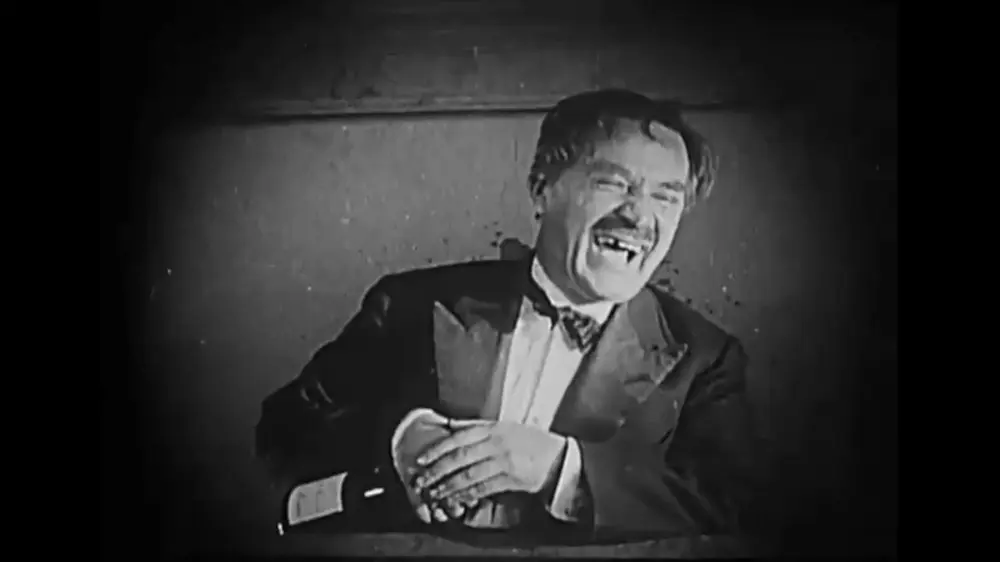
A definitive 5.2/10 rating for a film that redefined the boundaries of cult cinema. 600000 francs par mois remains a cornerstone of transgressive art.
Is 600000 francs par mois a lost masterpiece of silent comedy or a dated relic of the French jazz age? Short answer: It is a brilliantly frantic social satire that feels more relevant in our era of hyper-consumption than it did a century ago. This film is for viewers who appreciate the clockwork logic of silent-era farces and those interested in the 'Russian-French' cinematic crossover of the 1920s. It is definitely not for audiences who require the high-octane editing of modern blockbusters or those who find the repetitive nature of 'spending' plots tedious.
1) This film works because it treats the act of spending money like a high-stakes athletic competition, utilizing the physical comedy of Nicolas Koline to perfection. 2) This film fails because its second act leans too heavily on repetitive scenarios that stall the narrative momentum. 3) You should watch it if you want to see an early, sophisticated take on the trope later popularized by films like Brewster's Millions.
If you are looking for a historical curiosity that provides genuine laughs, the answer is a resounding yes. Unlike the melodramatic weight of Gengældelsens ret, this film opts for a light, breezy tone that belies its sharp economic critique. It captures a specific moment in French cinema where the influence of Russian emigre actors like Nicolas Koline brought a unique, soulful physicality to the screen. The film asks a question we all think we know the answer to: Could you spend a fortune if your life depended on it? By the end of the first hour, you’ll realize just how exhausting that prospect truly is.
The genius of Jean Drault’s writing, adapted here for the screen, is the inversion of the common man’s struggle. Most of us spend our lives trying to acquire currency; Galupin, played with a wonderful nervous energy by Koline, is forced to treat money like a hot potato. There is a specific scene in a high-end restaurant where Galupin tries to order the most expensive items on the menu, only to find that even the most decadent lifestyle can’t keep pace with the sheer volume of his monthly allowance. It’s a moment of pure slapstick that masks a deeper truth about the limits of human desire.
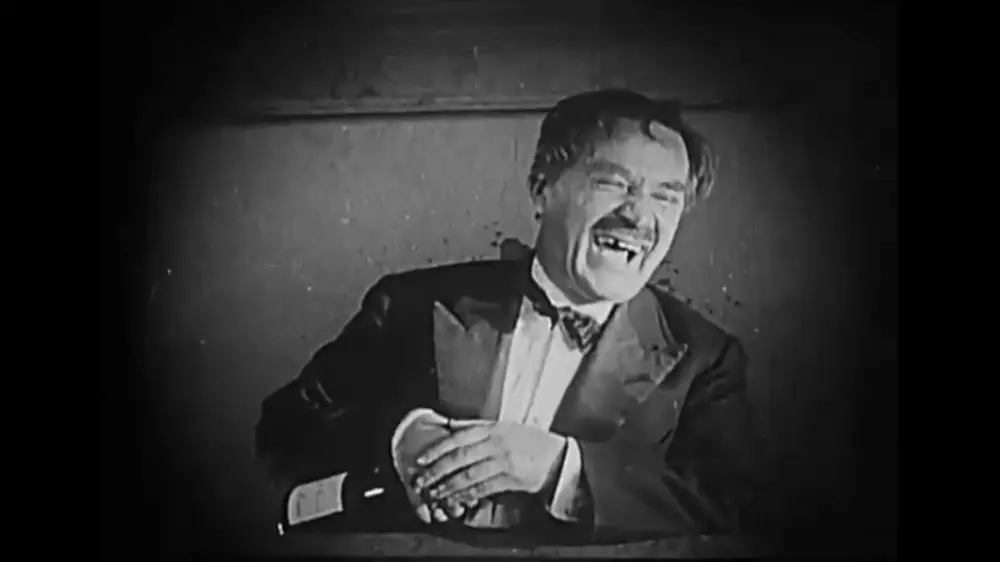
The cinematography by the French team is surprisingly fluid for 1926. They use the bustling streets of Paris not just as a backdrop, but as a character. The camera follows Galupin through luxury boutiques and gambling dens with a sense of mounting claustrophobia. While it lacks the dark, brooding atmosphere of a film like Black Friday, it replaces shadows with the garish, overwhelming light of the nouveau riche lifestyle. It works. But it’s flawed.
Nicolas Koline is the heart of the film. His face is a roadmap of anxiety. Watching him try to lose money is far more entertaining than watching most actors try to find it. He brings a level of pathos to the role that prevents Galupin from becoming a mere caricature of greed. Contrast this with the work of Charles Vanel, who appears here in a role far removed from the gritty, weathered characters he would later play in the 1950s. Here, he is part of the machinery of the elite, providing a solid foil to Koline’s frantic energy.
The supporting cast, including Hélène Darly and Madeleine Guitty, populate this world with a variety of hangers-on and skeptics. Guitty, in particular, provides some of the film’s best comedic beats as the voice of 'common sense' in an increasingly nonsensical world. The chemistry between the ensemble makes the social gatherings feel lived-in, rather than just staged. It reminds me of the character dynamics in The Marionettes, where everyone is playing a part in a larger game they don't fully understand.
"The film posits that wealth is not a liberation, but a full-time job that pays in stress and isolation."
This is a debatable opinion, but I would argue that 600000 francs par mois is secretly a horror film disguised as a comedy. The protagonist is under constant surveillance, his every purchase tracked and judged. He cannot be generous, and he cannot be thrifty. He is stripped of his agency by the very thing that should give him power. This irony is handled with a light touch, but the underlying cynicism is hard to ignore. It lacks the overt moralizing of Lily of the Dust, choosing instead to let the absurdity of the situation speak for itself.
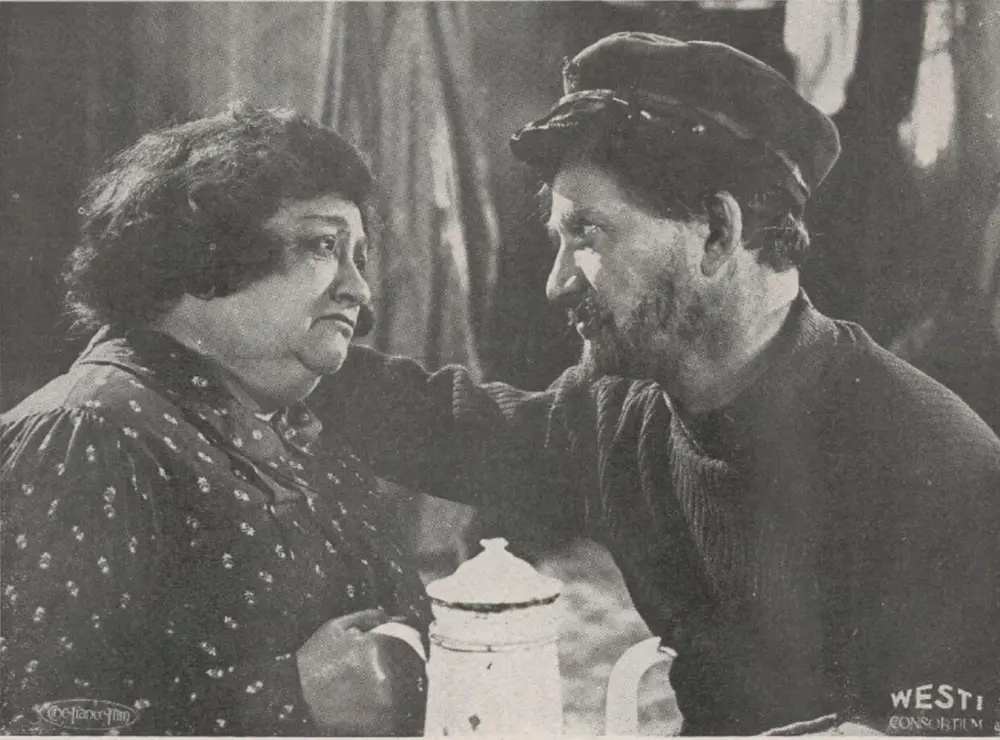
One surprising observation is how the film handles the concept of 'value.' In one scene, Galupin attempts to overpay for a simple service, only to find that the recipient’s pride won’t allow them to accept it. It’s a fascinating look at the social contracts of the 1920s. Even in a world of spiraling inflation and post-war excess, there were still rules that money couldn't break. This adds a layer of grounded reality to the otherwise fantastical premise.
The pacing is where the film stumbles slightly. At over two hours in some restored versions, the joke begins to wear thin by the middle of the second act. There are only so many ways you can show a man failing to spend money before the audience starts to get ahead of the plot. However, the direction keeps things visually interesting. The use of split screens and creative intertitles (common in French cinema of this period) helps to break up the monotony. It’s a far more experimental approach than you’d find in contemporary American films like The Border Legion.
The set design is another standout. The contrast between Galupin’s humble beginnings and the gilded cages of the Parisian aristocracy is rendered with sharp clarity. The Art Deco influences are everywhere, providing a sharp, geometric beauty to the frames. It’s not just about the money; it’s about the aesthetic of the era. The film captures the feeling of a world trying to forget the horrors of the Great War by drowning itself in gold and champagne.
600000 francs par mois is a fascinating experiment in endurance—both for the character and the audience. While it may not have the universal acclaim of a Keaton or Chaplin feature, it offers a sophisticated, European alternative that is well worth the time of any serious cinephile. It is a film that understands the fundamental joke of capitalism: that once you have everything, the only thing left to do is try to get rid of it. It’s funny, it’s frustrating, and it’s undeniably stylish. Just don't expect to come away from it wanting to win the lottery.
In the pantheon of silent cinema, it sits comfortably alongside works like Tennessee's Pardner as a character-driven piece that uses its setting to explore deeper human flaws. It is a solid 7/10 that could have been an 8 with a tighter edit. Watch it for the history, stay for the comedy of desperation.
IMDb 6.9
1931
Community
Log in to comment.