DbcultAccessing Vault...
Cult Review
Senior Film Conservator
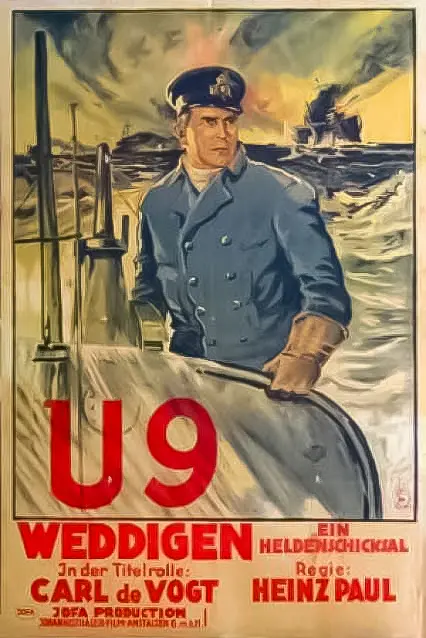
Is U 9 Weddigen worth watching today? The short answer is a resounding yes, but with significant caveats that demand a particular kind of cinematic appreciation. This 1927 German silent film is a crucial historical document, a window into early war propaganda and technical filmmaking prowess, making it essential viewing for historians and silent film aficionados, yet potentially a challenging watch for those accustomed to modern narrative conventions.
It's a film for those who appreciate the artistry of the silent era, the power of visual storytelling unburdened by dialogue, and the historical context of post-WWI Germany. It is decidedly not for viewers seeking fast-paced action, complex character arcs driven by spoken word, or a detached, objective portrayal of historical conflict. This is a film that requires patience and an open mind to its unique cinematic language.
Let's cut to the chase for those considering a viewing:
U 9 Weddigen emerges from a fascinating period in German cinema, a time when the nation was grappling with the aftermath of a devastating war and a burgeoning republic. Released in 1927, it arrives late in the silent era, benefiting from years of technical refinement while still bearing the hallmarks of early cinematic storytelling. Directed by Carl Boese, the film isn't merely an adventure; it's a testament to national pride, a dramatization of heroism that sought to remind a populace of their wartime valor, even in defeat.
The film’s central conceit, the exploits of Captain Weddigen and his U-boat crew, draws directly from real-life German naval legends. Otto Weddigen was a celebrated WWI U-boat commander, and his story provided fertile ground for a narrative steeped in courage and sacrifice. This historical grounding gives the film a certain gravitas, even as it clearly leans into heroic myth-making.
Carl Boese, a prolific director of the silent era, demonstrates a commendable grasp of visual storytelling, especially given the technical limitations of the time. His direction is most effective in the sequences set within the submarine. The camera, often static but strategically placed, emphasizes the cramped, claustrophobic environment. We feel the squeeze of the metal hull, the weight of the water above.
A particular strength lies in the use of lighting. Inside the U-boat, flickering lamps and stark shadows create an atmosphere of constant tension and looming danger. When a depth charge explodes nearby, the sudden shift to a single, trembling light source effectively communicates the fragility of their existence. This isn't just mood-setting; it's a critical narrative tool.
The external shots, primarily relying on impressive miniature work, are surprisingly convincing for their time. The sight of the U 9 gliding through choppy waters or launching a torpedo, while perhaps quaint by today's standards, would have been genuinely thrilling for 1927 audiences. Boese understands the power of visual spectacle, even if the budget didn't allow for grand-scale naval fleets.
The cast, featuring Mathilde Sussin, Fred Solm, and Carl de Vogt, delivers performances that are quintessentially silent era. Exaggerated expressions and broad gestures are necessary to convey emotion without dialogue, and here, they are employed with varying degrees of success.
Fred Solm, as Captain Weddigen, embodies the stoic, resolute leader. His performance is largely internal, relying on intense gazes and a rigid posture to communicate command and quiet determination. There’s a scene where he receives a critical message, and his face, bathed in the dim light of the periscope, subtly shifts from concern to grim resolve – a powerful moment of understated acting for the period.
Mathilde Sussin, likely playing a character representing the home front, brings a necessary emotional counterpoint. Her scenes, though perhaps fewer, are crucial for reminding the audience of the human cost of war. Her portrayal of anxiety and longing is palpable, a stark contrast to the hardened resolve of the men at sea. It’s a performance that grounds the epic in personal tragedy, even if it feels somewhat archetypal.
However, some of the supporting performances occasionally veer into melodramatic territory, a common trait of the era. The urgency of a crisis can sometimes be conveyed with a touch too much flailing, which can momentarily pull a modern viewer out of the immersion. This isn't a flaw unique to U 9 Weddigen but rather a stylistic convention that requires adjustment.
The pacing of U 9 Weddigen is deliberate, a slow burn that builds tension rather than relying on constant action. Early scenes establish the routine and camaraderie aboard the U-boat, allowing the audience to become familiar with the crew and their environment. This investment pays off during the later combat sequences.
The film’s tone is overtly patriotic and heroic. It portrays the German submariners as noble, courageous, and deeply dedicated to their duty. There’s an undeniable sense of national pride woven into every frame, reflecting the prevailing sentiment of its production era. While this can feel jingoistic to a modern audience, it’s vital to understand it within its historical context as a piece of post-war national myth-making.
One could argue this unwavering positive portrayal of the protagonists makes the film less complex. There’s little moral ambiguity, which might disappoint viewers seeking a more nuanced exploration of conflict. However, for a film of its time, its clear stance serves its purpose effectively.
The cinematography, while not groundbreaking in the vein of a Murnau or Lang, is highly competent. The use of close-ups during moments of high tension – a captain’s hand on the periscope, a sailor’s sweat-streaked face – effectively draws the audience into the immediate peril. Wide shots are reserved for the impressive exterior miniatures, giving a sense of scale to the naval battles.
The production design of the U-boat interior is particularly noteworthy. The sets feel authentic, capturing the cramped, metallic reality of submarine life. Pipes, gauges, and levers are meticulously detailed, contributing significantly to the film’s immersive quality. This attention to detail demonstrates a commitment to realism that elevates the film beyond mere stage play.
It’s a stark contrast to some of the more fantastical elements seen in contemporary German Expressionist films like The End of the Road, firmly planting U 9 Weddigen in a more realist tradition for its subject matter.
Absolutely, for the right audience. U 9 Weddigen is more than just a historical curiosity; it’s a robust example of early filmmaking tackling a challenging subject. It demonstrates the ingenuity required to create suspense and spectacle without sound or advanced CGI. While its patriotic tone might feel alien to modern sensibilities, it offers a fascinating glimpse into how nations processed and mythologized their wartime experiences through cinema.
It works. But it’s flawed. Its historical significance alone makes it a valuable watch for serious film students and historians. For casual viewers, it requires a conscious effort to appreciate its context and visual language.
What truly surprised me about U 9 Weddigen wasn't its technical ambition, which is impressive, but its profound silence. In an era where films were often accompanied by live orchestras and sound effects, the sheer absence of actual engine noise or torpedo blasts within the film itself forces the viewer to internalize the sounds, creating a more personal and terrifying experience than any actual sound design could have achieved at the time. The quiet amplifies the tension, making you acutely aware of every creak and groan of the ship, even if they aren't audibly present. It's a testament to the power of suggestion.
U 9 Weddigen is a fascinating, if challenging, piece of cinematic history. It's not a film you'll stumble upon and instantly love if you're not already attuned to the rhythms of silent cinema. However, for those who seek to understand the evolution of filmmaking, the power of visual storytelling before sound, and the socio-political landscape of a nation grappling with its past, this film offers immense value.
Its technical achievements in depicting submarine warfare are genuinely impressive for its era, and its unwavering patriotic tone serves as a crucial historical document. While it demands patience and a historical lens, the rewards are a deeper appreciation for the craft and context of early German cinema. It’s a film that deserves to be seen, studied, and discussed, not just as a relic, but as a vibrant, if silent, voice from the past. It’s a compelling, if imperfect, journey into the depths of history and human courage.

IMDb —
1929
Community
Log in to comment.