DbcultAccessing Vault...
Cult Review
Senior Film Conservator
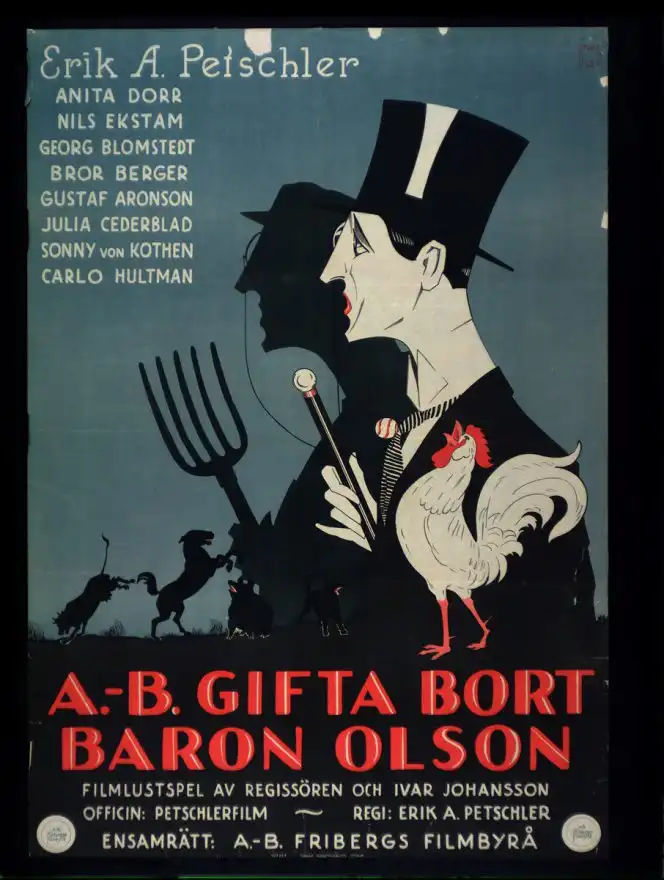
Alright, so “A.-B. gifta bort baron Olson” – which translates to something like “A.-B. Marries Off Baron Olson” – is a curious piece of film history from 1922. If you’re the kind of person who genuinely loves digging into the very earliest days of cinema, especially Swedish silent films, and you’re endlessly fascinated by how storytelling worked on screen a whole century ago, then yeah, this might be worth your time. You’ll find a certain, almost naive, charm in its earnestness. But for pretty much everyone else, especially if you’re looking for anything resembling modern pacing or character depth, you’re probably going to find it a real struggle. It feels more like a historical document than an engaging film today.
The central idea is simple enough: Baron Baltzar Casimir Von Gahl, our Baron Olson, is drowning in debt because of his old farm. So, a company, the “A.-B.” of the title, decides the best way out is to marry him off. This isn't exactly a high-concept thriller, you know? It’s a framework, really, for a series of small, often quite static, scenes.
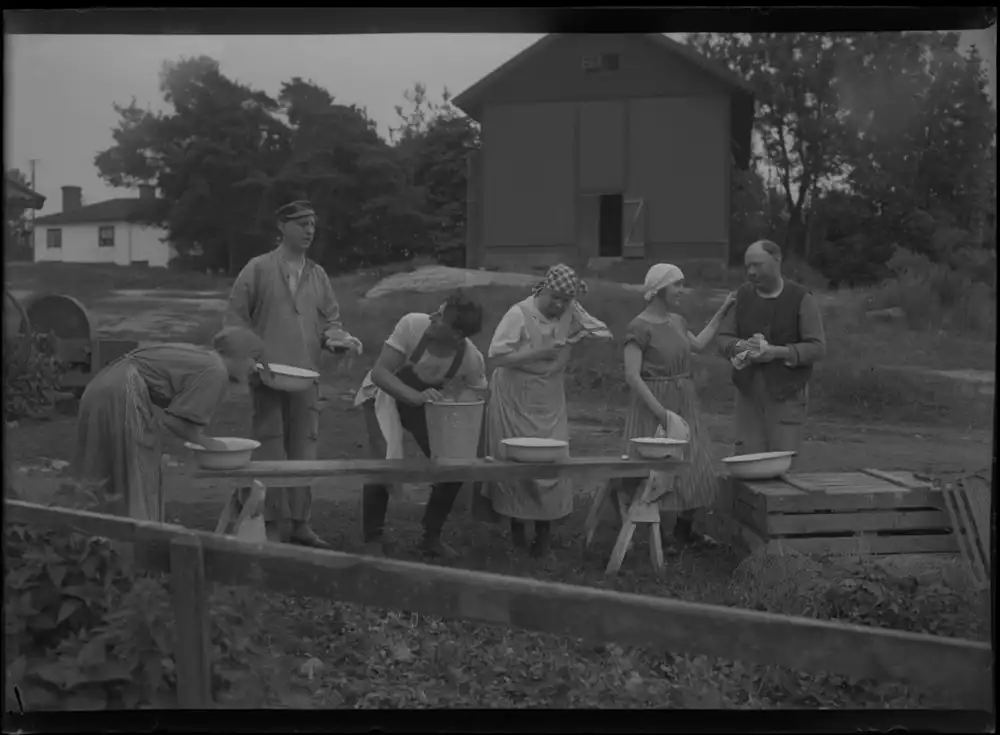
Nils Ekstam plays Baron Olson, and he’s got this perpetually bewildered look about him. It’s hard to tell if this is a deliberate character choice or just how acting was done back then. His expressions are broad, very much in the pantomime style common to the era, which makes sense, but it can feel a bit much now. Like he’s constantly trying to convey something huge with just his eyebrows, even when the scene calls for something quieter.
There's a scene early on where the company, the A.-B. folks, are having a meeting about the Baron’s finances. They’re all sitting around a huge table. The camera just… sits there. Watching them. The intertitles, which are our dialogue, are incredibly direct. No real subtext, everything is laid out plain. You can almost feel the movie trying to convince you this meeting is important, but it just sort of… exists.
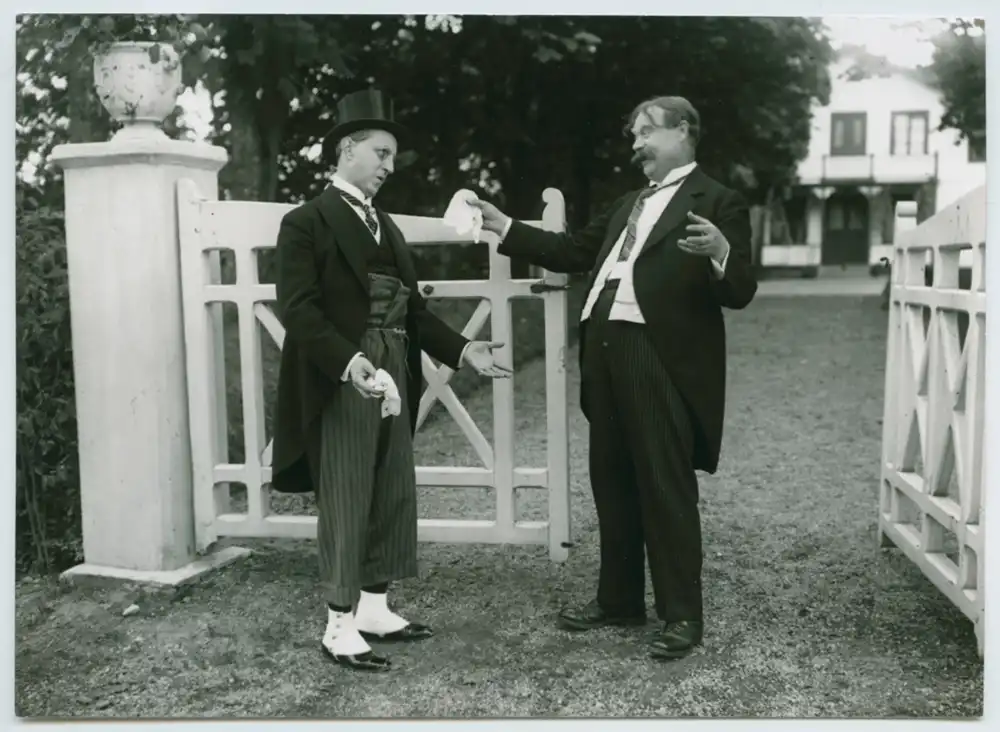
The pacing, for a modern viewer, is a real challenge. We’re talking long takes where not much actually happens. Characters walk into a room, sit down, and you feel like minutes pass before the next intertitle appears to nudge the plot forward. You really feel the silence, the lack of an intricate score, the raw footage of it all. It’s not a criticism of the film as much as it is an observation of the experience of watching it now.
Maud Stenfeldt, as one of the women involved in the marriage scheme, has a more naturalistic screen presence than some of the others. She carries herself with a certain grace, even when the situation around her is quite silly. It’s a small thing, but it stood out. A hint of something more subtle in a sea of broad strokes.
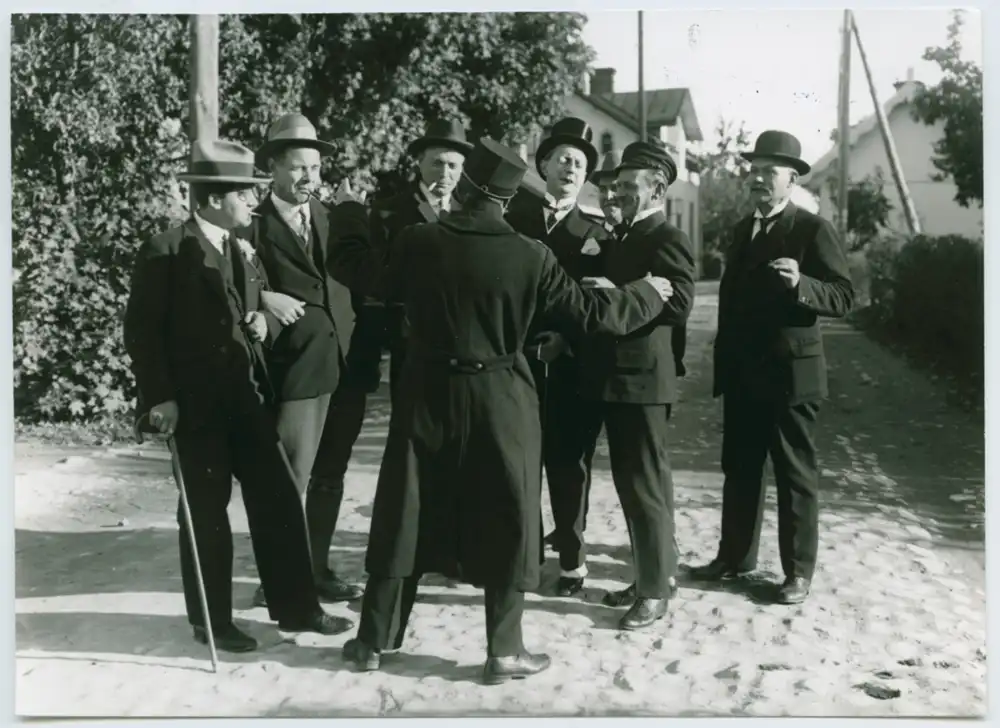
And the fashion, oh man. Those hats! And the men’s suits, all very formal even on a farm. It adds a layer of unintentional comedy for a modern viewer, just seeing these outfits in a rural setting. It’s like everyone dressed for a Sunday picnic that never quite materialized.
There’s a moment where Baron Olson is trying to avoid someone, and he hides behind a tree that's clearly too small to properly conceal him. It’s played for laughs, but it’s so simple, so direct, it almost works in its sheer unpretentiousness. It’s that kind of low-stakes, almost childlike humor that permeates the film.
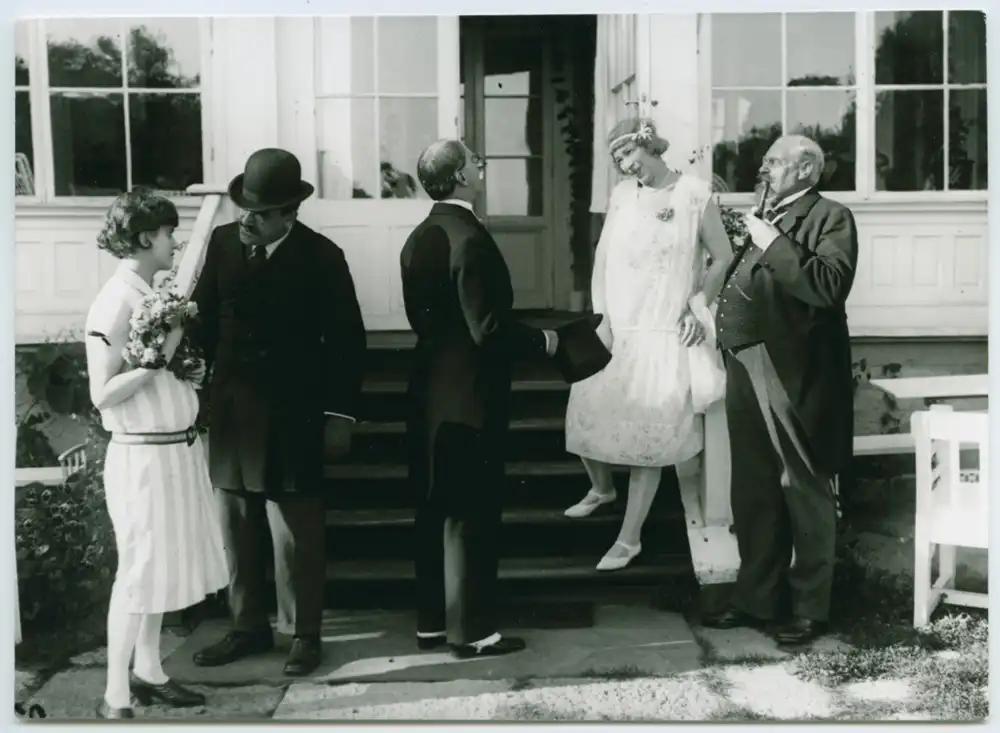
The editing just feels… utilitarian. Cuts happen when a scene needs to change, not for any particular rhythm or emotional impact. It’s just getting from point A to point B. No fancy transitions, no quick cuts to build tension. Just a clear, functional progression.
You often find yourself watching the backgrounds more than the foreground sometimes. Just seeing the old farmhouses, the Swedish landscapes, the way people moved in that specific era. It’s a window into a different time, even if the narrative itself isn't always compelling. It’s like looking at an old photograph album that someone narrates very, very slowly.
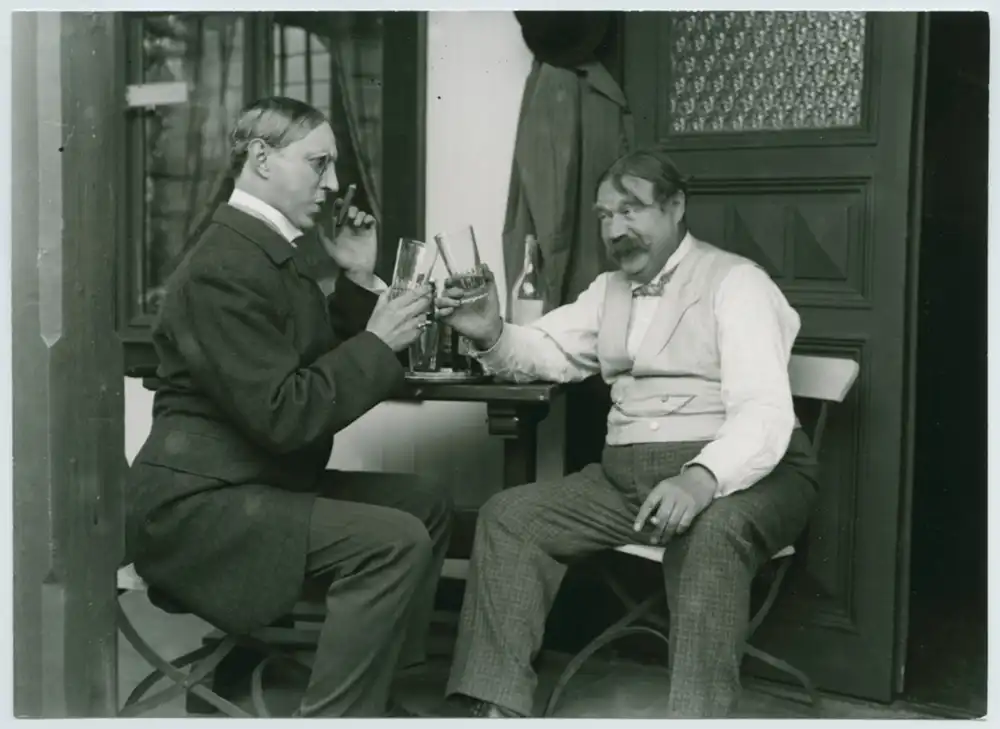
The whole “marrying off” plot feels very much of its time, too. The women are mostly there to be proposed to or to facilitate the men's schemes. There isn't much agency given to them, which isn't a flaw of the film itself, but an important observation about the era's storytelling conventions.
One shot, I think it’s Baron Olson walking through a field, just lingers a little too long. You start to wonder if the camera operator forgot to cut. It’s not particularly beautiful, it’s not especially meaningful, it just *is*. It gives the film this strange, almost documentary-like quality in its quiet moments.
The film doesn't really build tension or emotional stakes. It’s more like watching a play unfold very, very slowly. The conflicts are minor, the resolutions are gentle. It aims for a light, almost farcical tone, but often lands closer to quaint. It never feels urgent.
There are moments of genuine sweetness, though. A few scenes where characters interact simply, without the weight of the plot, and you get a glimpse of something genuinely human. It’s fleeting, but it’s there. A quiet smile, a shared glance.
The ending feels a bit abrupt. Like, “okay, that’s done now.” No grand emotional payoff, just a quiet resolution to the financial mess. It doesn't try to tie everything up neatly with a bow, which is almost refreshing in its lack of ambition. It just concludes.
This isn't a film you *experience* in the modern sense. It’s a film you *observe*. You watch it not for the thrills, but for the historical texture, the primitive filmmaking techniques, the glimpse into a very different world of cinema. It’s a slow burn, a quiet look back, and for the right audience, that might be enough.
IMDb 6.4
1935
Community
Log in to comment.