DbcultAccessing Vault...
5.6/10
Senior Film Conservator
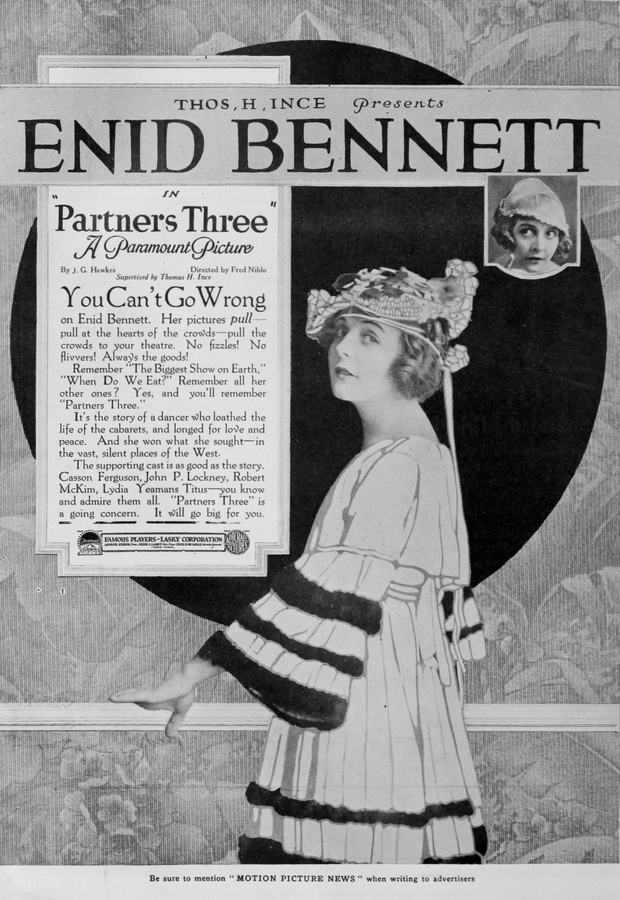
A definitive 5.6/10 rating for a film that redefined the boundaries of cult cinema. Partners Three remains a cornerstone of transgressive art.
In the annals of early cinema, particularly the nascent years of the American Western, certain films emerge not just as historical artifacts, but as compelling narratives that, even in their silent grandeur, resonate with timeless human struggles. Partners Three, a 1918 production penned by J.G. Hawks, stands as a testament to the era's robust storytelling and the enduring appeal of the frontier myth. It's a tale of escape, betrayal, resilience, and the forging of an unconventional family amidst the unforgiving beauty of the Arizona desert. Directed with a keen eye for dramatic tension and character development, this film, while lacking the auditory enhancements of modern cinema, compensates with powerful visual storytelling and the expressive performances characteristic of the silent era.
The narrative unfurls with Agnes Cuyler, portrayed with captivating vulnerability and burgeoning strength by Enid Bennett, trapped in the gilded cage of a New York cabaret. Her existence is one of performative cheer, a stark contrast to the quiet desperation simmering beneath her facade. The initial spark of rebellion, a defiant slap delivered to the boorish Grant Haywood (Robert McKim) after an unwelcome advance, becomes the unexpected catalyst for her dramatic life pivot. Haywood, a figure of initial charm concealing a dark core, then paints a shimmering mirage of the West – a land of boundless opportunity and moral rectitude, a stark counterpoint to Agnes's urban disillusionment. Desperate to shed her current shackles, Agnes impulsively accepts his proposal, a decision driven by a yearning for liberation rather than genuine affection. This hasty union is less a marriage of love and more a desperate gamble for a new beginning, a flight from the suffocating confines of her past. This opening sequence skillfully sets the stage for a journey of profound transformation, illustrating the desperate lengths to which individuals will go to escape their circumstances, often trading one form of entrapment for another more insidious one.
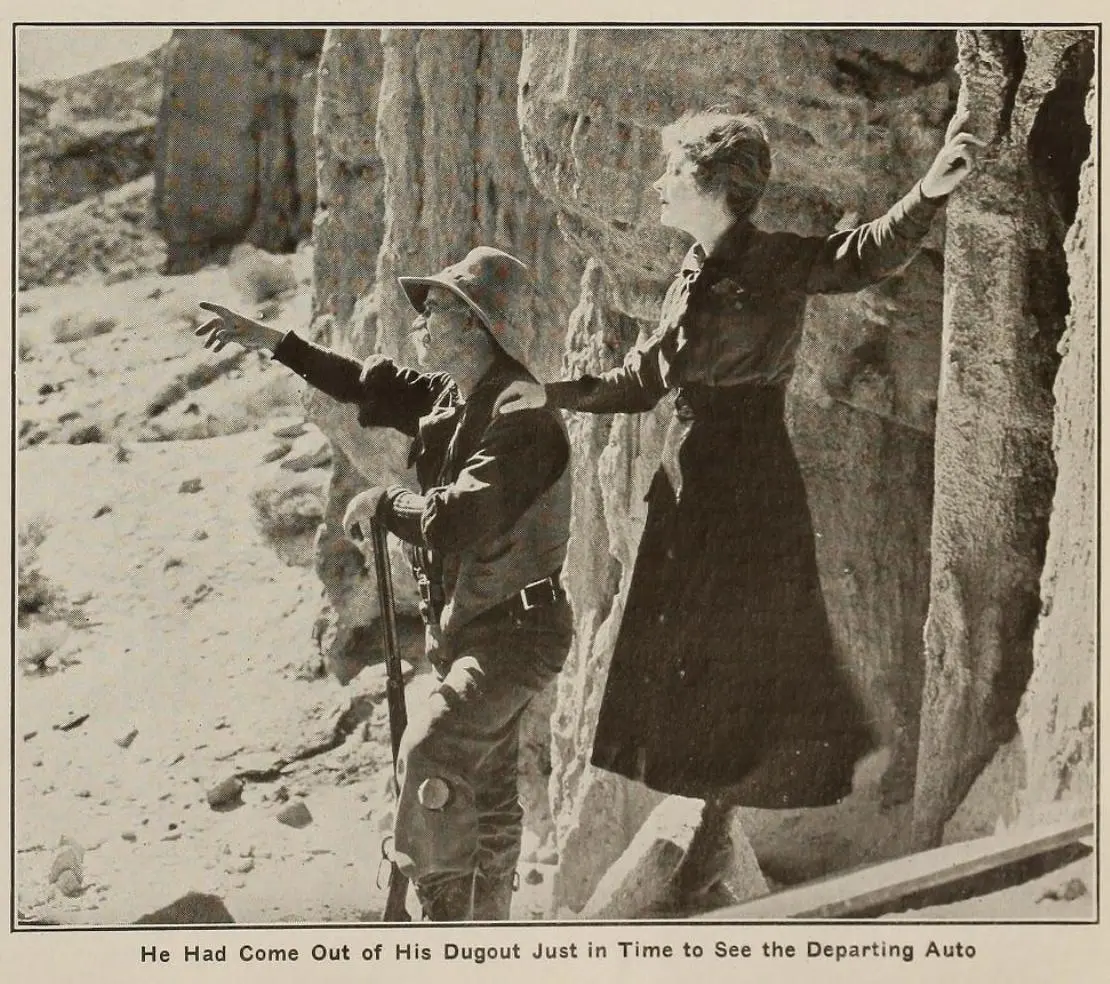
The illusion of a fresh start quickly dissipates under the harsh Arizona sun. Haywood reveals his true colors, a brutal drunkard whose promises of a clean Western life are as empty as a desert well. The contrast between his initial portrayal and his subsequent actions is stark, painting him as a truly menacing antagonist whose cruelty is amplified by the isolation of their new environment. The film masterfully builds tension as Agnes's dream curdles into a nightmare. A pivotal moment of terror arrives when, attempting to curb his destructive drinking while driving, Agnes is violently cast from the moving vehicle by Haywood, left for dead in the unforgiving wasteland. This act of barbaric abandonment underscores the immense peril faced by women in such a rugged, lawless setting, and highlights the immediate and visceral threat Haywood poses. It’s a scene that, even without dialogue, conveys profound shock and despair, a testament to the power of silent film acting and visual composition.
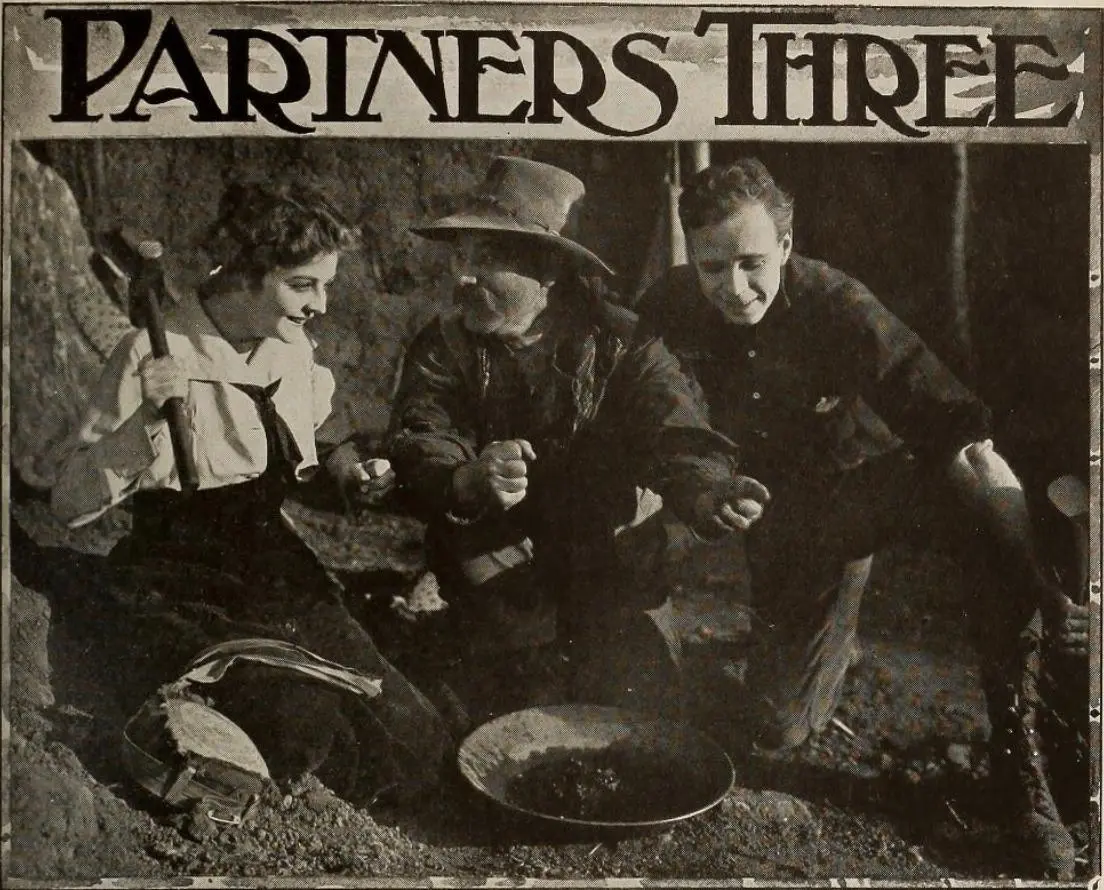
Enter Hassayampa Hardy, played by J.P. Lockney, the archetypal 'desert rat' – a figure of quiet wisdom and profound empathy. His discovery and subsequent revival of Agnes mark a significant turning point, a literal resurrection from the jaws of death and despair. Hardy embodies the benevolent spirit of the frontier, a stark contrast to Haywood's maliciousness. Agnes's subsequent role as a waitress, a temporary respite from her ordeal, introduces her to Arthur Gould (Casson Ferguson), a penniless Easterner seeking health in the dry Western air. Arthur, with his refined demeanor and fragile health, represents a different kind of vulnerability, one that resonates with Agnes's own recent trauma. The formation of their partnership – the eponymous 'Partners Three' – is born not of romantic intrigue initially, but of shared necessity and mutual respect. This alliance, forged in the crucible of adversity, represents the true spirit of the West: collaboration, resilience, and the belief in collective endeavor. Their striking of ore is more than just a discovery of wealth; it's a symbolic triumph of hard work, hope, and the power of human connection over the harsh realities of their individual pasts. It’s a narrative arc that speaks to the enduring appeal of the 'rags to riches' story, but with a profound emphasis on the moral character of the wealth creators.
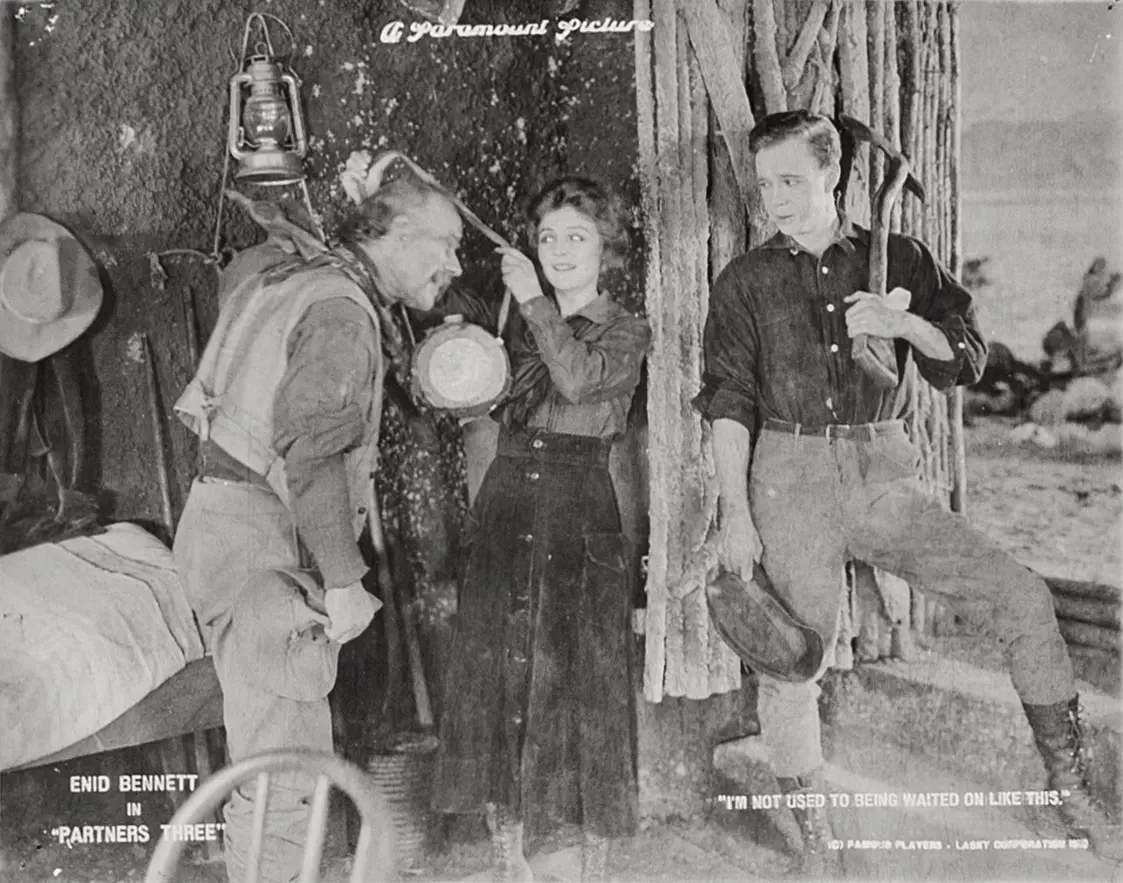
The resurgence of Haywood into Agnes's life is a masterstroke of dramatic irony. His manipulative return, replete with false contrition, is designed to shatter the fragile peace Agnes has found. The film expertly ratchets up the tension as Haywood, driven by greed and malice, exacts his revenge. He steals the partners' claim notice, a symbolic theft of their dreams, and, even more devastatingly, drains their water supply. This act of sabotage is particularly heinous in the desert, representing a direct threat to their very survival. The desert, which had offered Agnes a chance at rebirth, now threatens to consume her and her newfound family due to Haywood's depravity. This sequence showcases the potent symbolism of the Western genre, where natural elements become extensions of human conflict. The struggle for water, a primal need, amplifies the stakes to an almost unbearable degree, reminding one of the desperate plight depicted in other survival narratives, albeit in different settings, like the struggle for resources in The Treasure of the Sea, though 'Partners Three' grounds its struggle in human villainy rather than purely natural forces.
The climax is a heart-pounding race against time and human malevolence. Arthur, weakened by illness and the harsh conditions, collapses in the vast, indifferent desert. Agnes's discovery of Haywood's duplicity ignites a fierce resolve within her, transforming her from a survivor into a proactive force for justice. The confrontation between Agnes and Haywood is visceral, culminating in his attempt to murder her. It is at this critical juncture that Hardy, the quiet sentinel of justice, intervenes. His pursuit of Haywood across the desert is a classic Western showdown, a relentless chase that utilizes the expansive landscape to its fullest dramatic potential. Hardy's tactical disabling of Haywood's gas tank and canteen is a poetic justice, leaving the villain to face the same brutal, unforgiving desert he had condemned Agnes to. This moment echoes the theme of natural consequences, where the land itself becomes an agent of retribution. Meanwhile, Agnes's desperate race to rescue Arthur is infused with a burgeoning love, a realization that their shared ordeal has forged an unbreakable bond. Their love story, born from adversity and mutual rescue, feels earned and genuine, a beacon of hope against the backdrop of betrayal and hardship.
Enid Bennett's portrayal of Agnes Cuyler is truly the anchor of Partners Three. She navigates a complex emotional landscape, transitioning from urban weariness to frontier resilience, from victim to active agent of her own destiny. Her performance, characterized by subtle gestures and expressive eyes, speaks volumes without uttering a single word. She embodies the strength and determination often overlooked in early female protagonists, paving the way for more nuanced portrayals of women in cinema. Robert McKim, as Grant Haywood, delivers a chilling performance, his capacity for charm and cruelty a potent combination that makes him a truly memorable villain. His descent into pure malevolence is unsettling, a stark reminder of the dangers lurking beneath a polished exterior. J.P. Lockney's Hassayampa Hardy is a stoic, dependable presence, the moral compass of the film, while Casson Ferguson's Arthur Gould provides a gentle counterpoint, embodying the vulnerability and eventual strength that comes from true partnership.
J.G. Hawks' screenplay is remarkably well-structured, building suspense and developing characters with an economy of expression typical of silent films, yet without sacrificing depth. The plot, while adhering to certain genre conventions, introduces elements of psychological complexity and female agency that elevate it beyond a simple Western adventure. The film's exploration of themes like the illusion of the 'clean Western life' versus its harsh reality, the power of true partnership over individual greed, and the transformative nature of adversity, are handled with a deft touch. It’s a narrative that, in its silent form, compels the viewer to engage deeply with the visual cues and the emotional arcs of its characters.
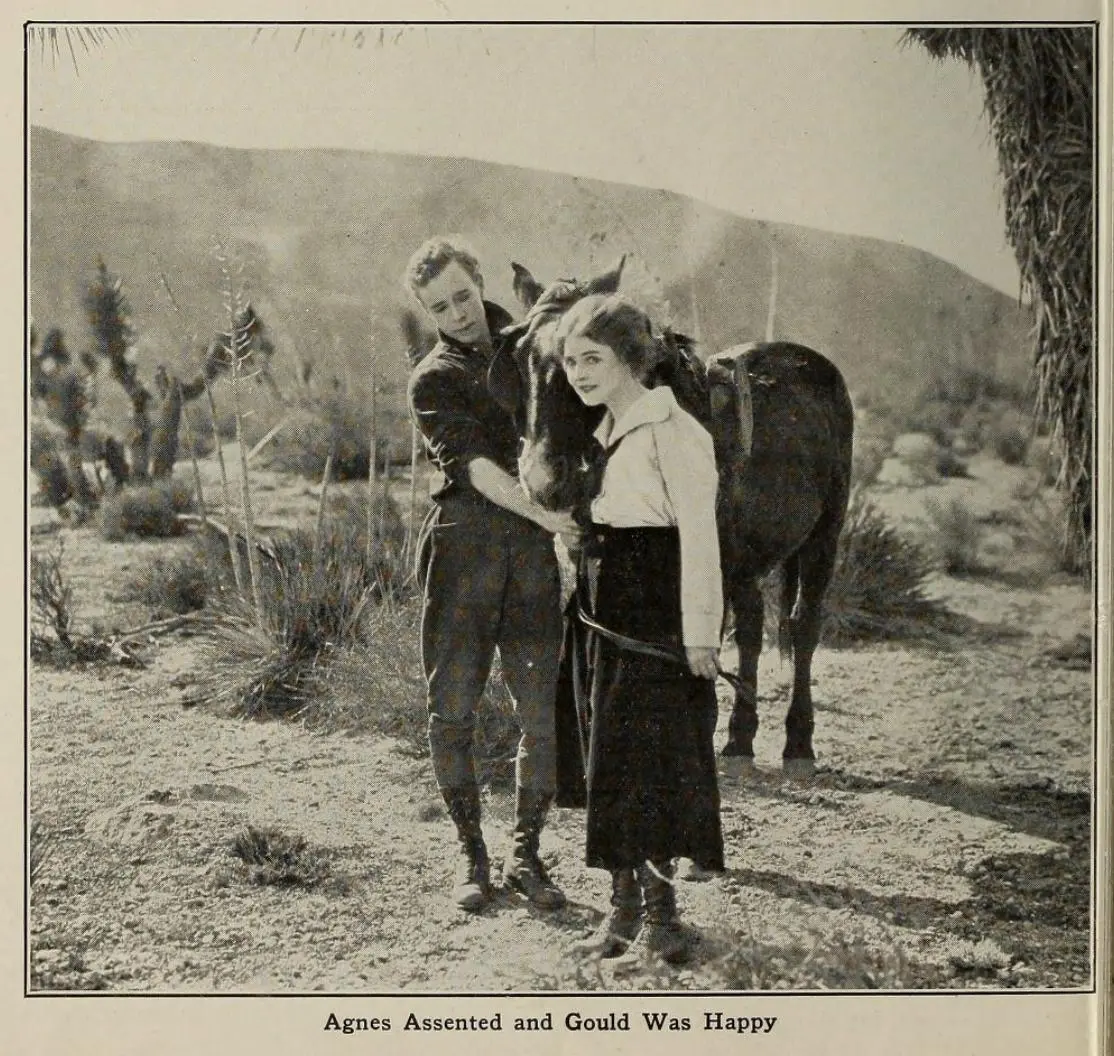
The visual grammar of Partners Three is a study in contrasts: the claustrophobia of the New York cabaret versus the expansive, liberating, yet also threatening, vistas of the Arizona desert. The cinematography, though limited by the technology of its time, effectively uses the vastness of the landscape to underscore the isolation and danger faced by the characters. The stark beauty of the desert becomes a character in itself, mirroring the internal struggles and external conflicts. The use of title cards, integral to silent film narration, is judicious, providing necessary exposition without disrupting the flow of the visual story. These intertitles are crafted to be succinct and impactful, driving the plot forward and giving voice to the characters' inner thoughts and dialogues.
Compared to other films of its era, Partners Three distinguishes itself through its focus on female resilience and the nuanced development of its central partnerships. While films like Beulah also explored strong female characters, Partners Three places its heroine squarely in the traditionally male-dominated Western genre, allowing her to not just survive but to thrive and find love on her own terms. The film’s dramatic intensity and clear moral compass also set it apart from more purely observational or historical pieces like Desfile histórico del centenario, instead opting for a deeply personal and emotionally charged narrative. The themes of betrayal and redemption, while universal, are given a distinctly American frontier flavor, making it a compelling entry in the pantheon of early Westerns. It shares a thematic kinship with other films exploring the harsh realities of life and death, such as Mellan liv och död, but grounds its philosophical inquiries in the tangible grit of the gold rush era.
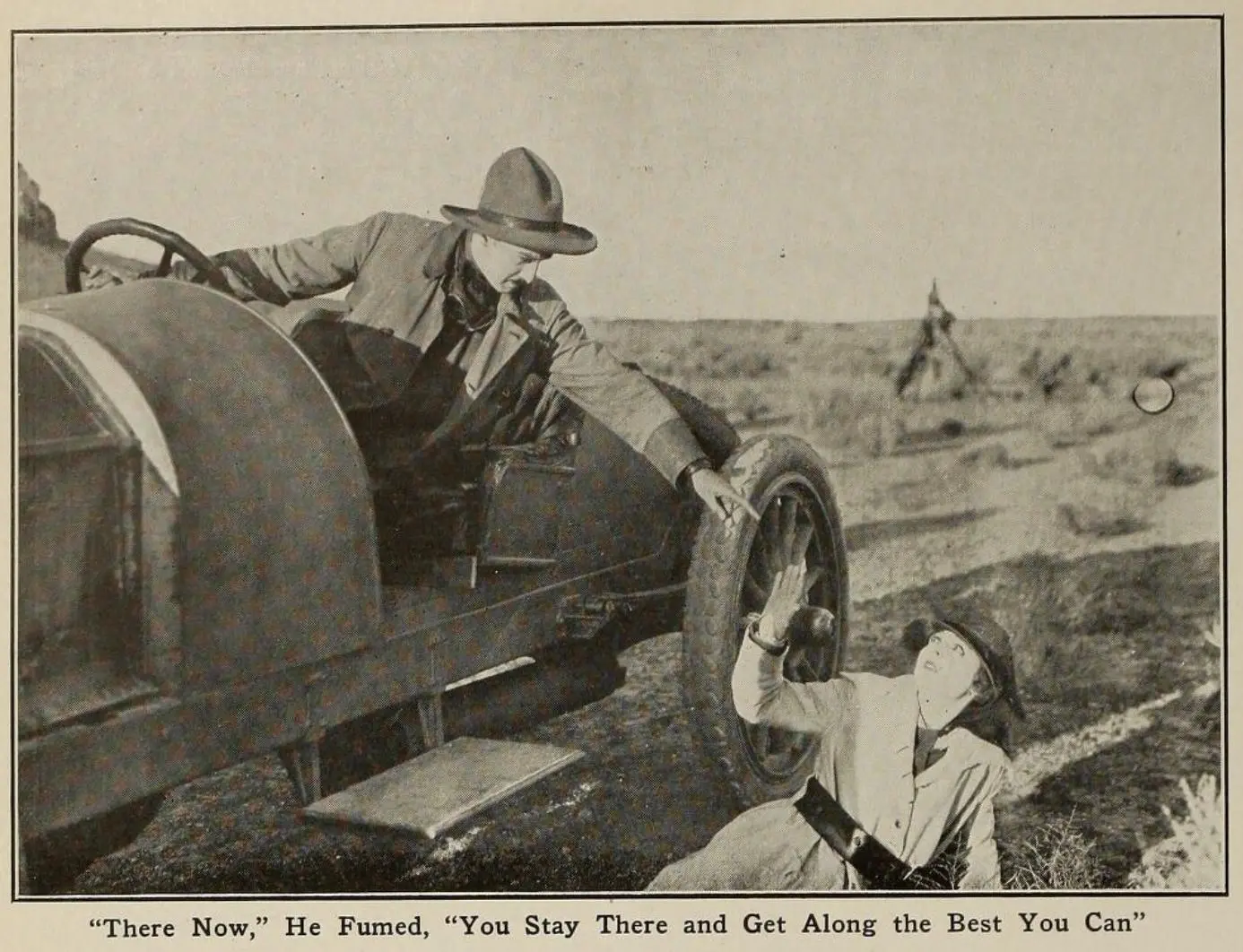
The enduring appeal of Partners Three lies in its potent blend of classic Western adventure with a deeply human story of overcoming adversity. It’s a film that speaks to the timeless desire for freedom, the pain of betrayal, and the profound strength found in unexpected alliances. The journey of Agnes Cuyler from a desperate cabaret singer to a resilient woman of the West, finding not only prosperity but genuine love and partnership, is a compelling arc that continues to resonate. The performances by Enid Bennett, Robert McKim, J.P. Lockney, and Casson Ferguson breathe life into these archetypal characters, making their struggles and triumphs feel immediate and real, even across the chasm of a century. The film serves as a powerful reminder of the foundational narratives that shaped early American cinema and the robust storytelling capabilities of the silent era. It is more than just a historical curiosity; it is a vibrant piece of cinematic art that deserves continued appreciation for its dramatic power and its timeless themes of human endurance and the quest for true partnership in a challenging world.
In conclusion, Partners Three is a remarkable example of silent-era filmmaking, showcasing strong character development, a gripping plot, and a deep understanding of the Western genre's potential for both thrilling adventure and profound human drama. Its exploration of female agency, the stark realities of the frontier, and the redemptive power of partnership make it a film that transcends its historical context, offering a compelling viewing experience even today. The final image of Agnes and Arthur, having faced the crucible of the desert and the malevolence of Haywood, finding solace and love in each other’s arms, is a powerful testament to the film’s optimistic spirit and its belief in the triumph of good over evil. The journey is arduous, filled with peril and deceit, but ultimately, it is a journey towards self-discovery and a partnership built on genuine affection and shared struggle, a far cry from the ill-fated, impulsive marriage that set Agnes on this path. It stands as a vibrant piece of cinematic history, offering insights into the period's storytelling prowess and the enduring allure of the American West.
IMDb —
1917
Community
Log in to comment.