DbcultAccessing Vault...
Cult Review
Senior Film Conservator
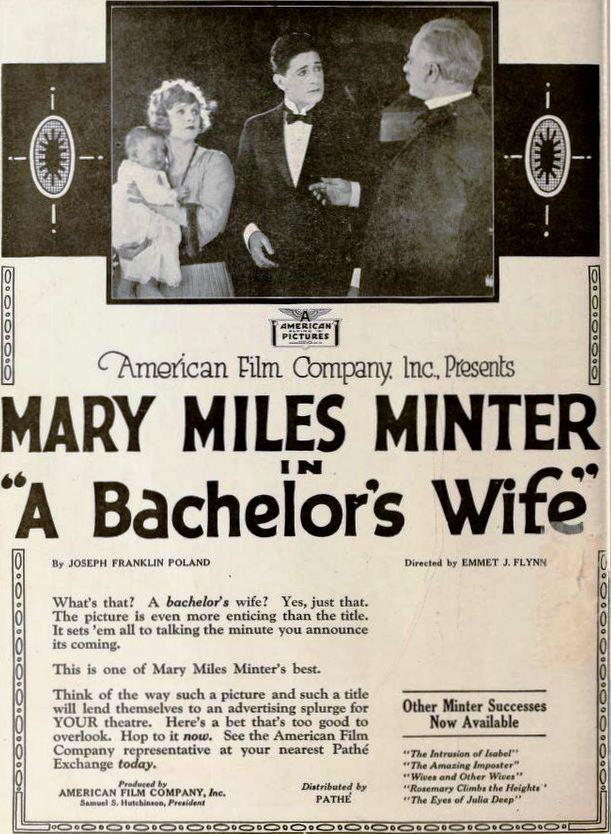
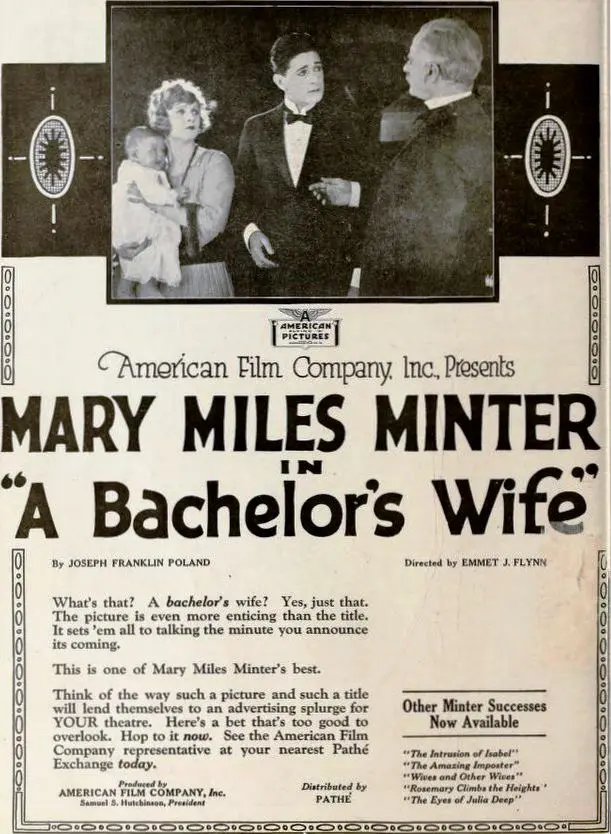
In the pantheon of silent cinema, few figures evoke the same sense of ethereal fragility and mercurial wit as Mary Miles Minter. In the 1919 production A Bachelor's Wife, Minter transcends the standard 'Colleen' archetype, delivering a performance that functions as the gravitational center of a complex social satire. The film, directed with a keen eye for the spatial politics of the era, explores the elasticity of identity when confronted with the rigid structures of the American aristocracy. Unlike the more visceral melodrama found in From the Valley of the Missing, this narrative operates with a surgical precision, utilizing the 'mistaken identity' trope not merely as a comedic engine, but as a critique of class-based perception.
The opening sequences, depicting Mary O’Rourke’s arrival in a burgeoning New York, are shot with a sense of wonderment that quickly curdles into a gritty realism. When she finds her cousin Norah abandoned, the film pivots from a travelogue into a domestic thriller of sorts. The Stuyvesant manor is presented as a mausoleum of old-money values, where the air is thick with the scent of lavender and impending mortality. Here, the invalid Mrs. Stuyvesant—played with a haunting stillness by Lydia Knott—becomes the catalyst for Mary’s grand deception. It is a fascinating psychological study: a woman kept alive only by a lie, and a protagonist who must sacrifice her own truth to preserve a stranger’s heartbeat.
The visual language of A Bachelor's Wife relies heavily on the contrast between the cramped quarters of the immigrant experience and the cavernous, cold halls of the Stuyvesant estate. This dichotomy is a staple of Joseph F. Poland’s writing, which often pitted the vitality of the 'commoner' against the stagnation of the elite. We see similar thematic echoes in The Corner, where economic survival dictates moral flexibility. In this film, the set design emphasizes the isolation of the invalid mother, her room a sanctuary of delusion that Mary must maintain with increasingly elaborate fabrications.
"The deception is not born of malice, but of a profound, almost primal empathy—a hallmark of the Irish spirit as interpreted by Hollywood's golden age."
As Mary navigates the Stuyvesant household, her 'blarney'—a term the film uses to describe her linguistic dexterity—becomes her primary weapon. It is not just charm; it is a tactical deployment of rhetoric designed to disarm the suspicious and soothe the suffering. This use of language as a tool for social mobility mirrors the themes in Rose of the Rancho, where cultural identity is both a barrier and a bridge. Minter’s ability to pivot from wide-eyed innocence to sharp-tongued strategist is a testament to her range, which was often underestimated by contemporary critics who saw her only as a rival to Mary Pickford.
The narrative's crescendo at the church is a masterpiece of silent era blocking and pacing. The arrival of John Stuyvesant and his cousin Fred introduces a masculine energy that threatens to shatter Mary’s carefully constructed artifice. The conflict between Genevieve Harbison—John’s fiancée—and Mary is more than a romantic rivalry; it is a clash between the performative rigidity of the upper class and the adaptive survivalism of the working class. The tension is palpable, reminiscent of the high-stakes social maneuvering in The Divorce Trap.
When Mary produces the marriage certificate, the film shifts into a legalistic drama. The revelation that 'John Stuyvesant' was a pseudonym used by Fred to circumvent an inheritance clause is a sharp critique of the 'dead hand' of the law. The inheritance, contingent on remaining unmarried, highlights the absurdity of patriarchal control over the next generation’s personal lives. This plot point shares a DNA with the convoluted legacies found in The Mysterious Mr. Browning, where secrets are the only true currency.
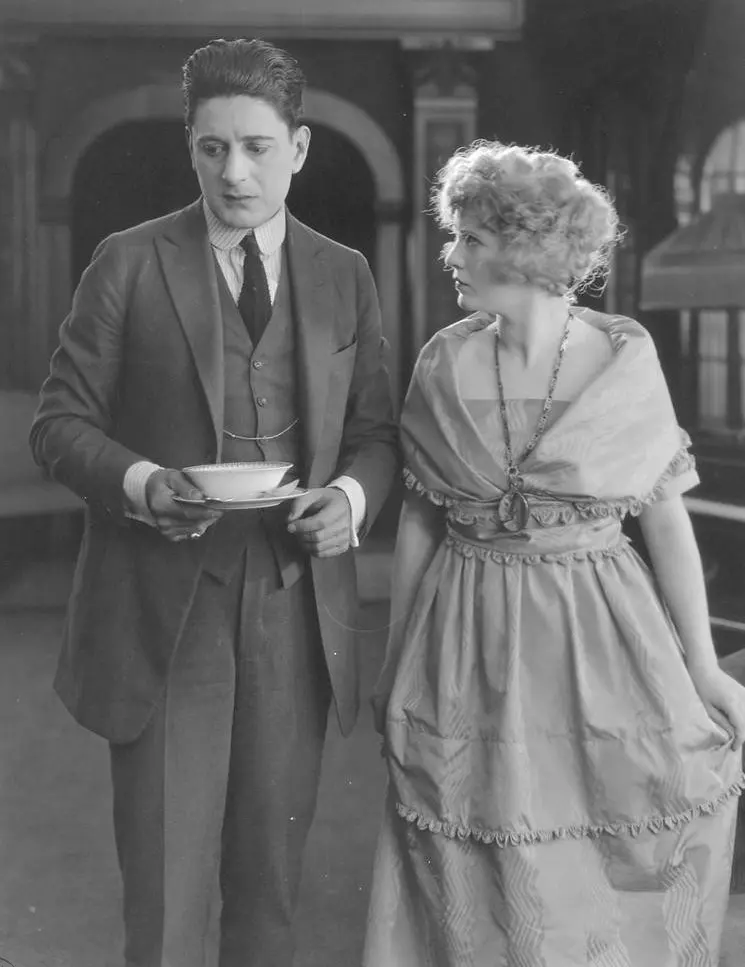
The resolution, involving the trustee and Mary’s final act of 'blarney,' is satisfyingly subversive. She doesn't just win the man; she wins the system. By manipulating the trustee’s perceptions, she secures Fred’s legacy and Norah’s future, effectively redistributing the Stuyvesant wealth through the power of narrative. It is a triumphant moment for the immigrant outsider, one that would have resonated deeply with the urban audiences of 1919 who were witnessing their own social hierarchies being dismantled in the wake of the Great War.
Viewing A Bachelor's Wife through a contemporary lens, one cannot ignore the technical proficiency of the era. The cinematography, while constrained by the equipment of the time, uses shadow and light to create an atmosphere of domestic mystery. The way the light catches Minter’s hair—a signature 'halo' effect—serves to emphasize her perceived saintliness, making her eventual deception even more narratively potent. This aesthetic choice is a far cry from the more experimental visual styles seen in The Mysteries of Myra, but it serves the story’s emotional core with unwavering fidelity.
The film also serves as a fascinating comparison to The Still Alarm in its treatment of domestic crisis. While the latter focuses on the physical danger of fire, A Bachelor's Wife focuses on the social fire that threatens to consume a family’s reputation. Both films utilize a central 'rescue' motif, though Mary’s rescue of the Stuyvesant family is one of emotional and financial preservation rather than physical extraction. Furthermore, the comedic timing of Allan Forrest and Charles Spere provides a necessary levity, preventing the film from descending into the heavy-handed moralizing often found in Who Shall Take My Life?
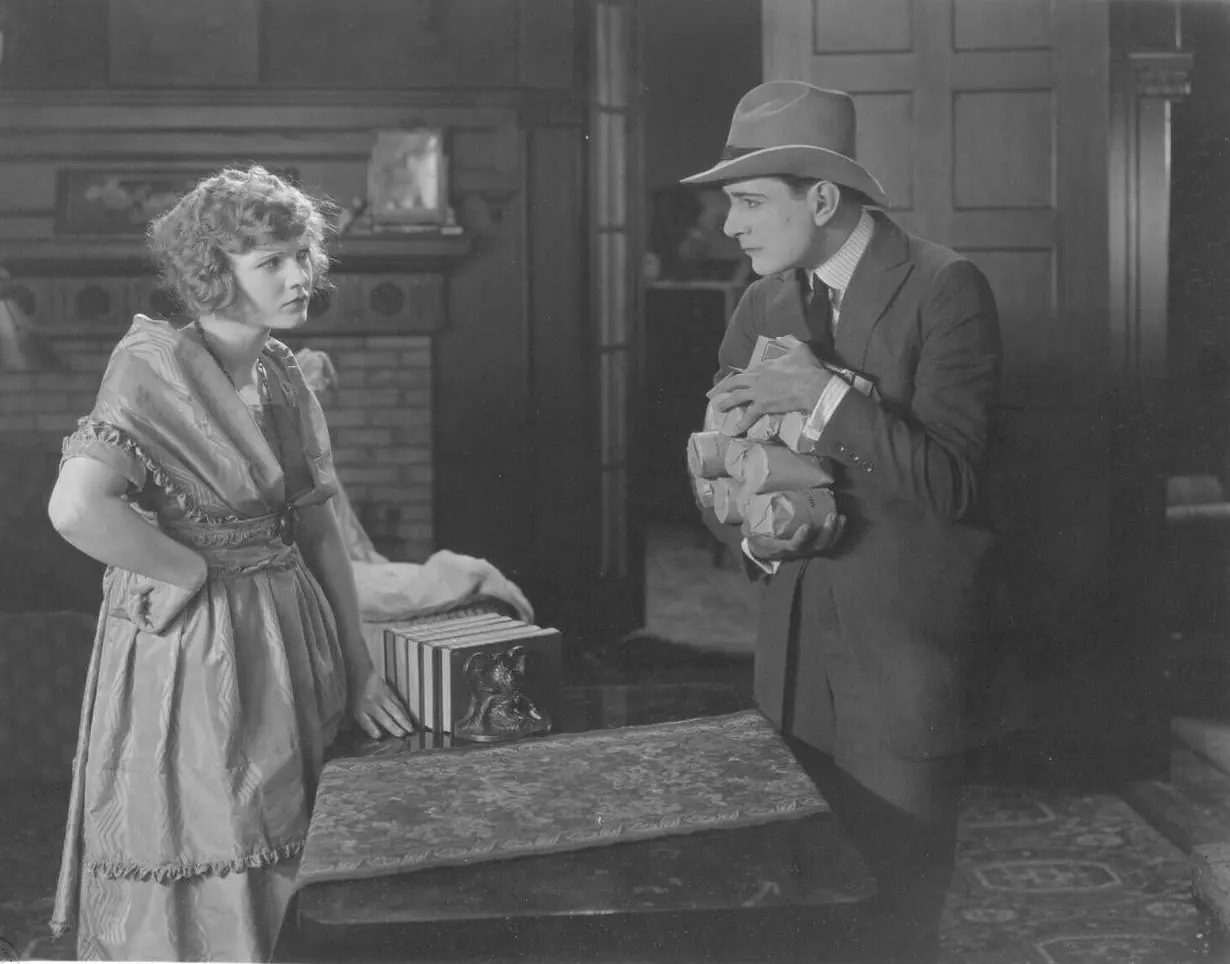
In the broader context of 1919 cinema, A Bachelor's Wife represents a bridge between the simplistic morality plays of the early 1910s and the sophisticated social comedies of the 1920s. It lacks the surrealist absurdity of The Extraordinary Adventures of Saturnino Farandola or the slapstick chaos of Some Cave Man, opting instead for a grounded, character-driven approach. It is a film that understands the stakes of its world—where a single lie can save a life, and a single name on a certificate can change a destiny.
Ultimately, the brilliance of A Bachelor's Wife lies in its refusal to be just one thing. It is a romance, a comedy of errors, and a poignant drama about the lengths we go to for family. Mary Miles Minter’s Mary O’Rourke is a character of immense agency, a woman who takes the wreckage of her cousin’s life and builds a new future out of it using nothing but her wits and her heart. The film’s exploration of the 'spurious wife' trope is handled with a delicacy that avoids the prurient, focusing instead on the transformative power of kindness—even when that kindness is delivered through a veil of lies.
As we look back at the surviving fragments of silent history, films like this remind us of the sophistication of the medium before the advent of sound. The nuances of Minter's expressions, the subtle interplay between the cast, and the thematic richness of the script by Joseph F. Poland create a tapestry that is as vibrant today as it was a century ago. It stands alongside works like Fiamma simbolica and Marga, Lebensbild aus Künstlerkreisen as a testament to the international language of cinema—a language that speaks of love, identity, and the enduring human spirit. Whether compared to the intrigue of A szentjóbi erdö titka or the domestic struggles in Dollars and the Woman, A Bachelor's Wife remains a singular achievement in the career of one of silent cinema's most luminous, and tragically short-lived, stars.
IMDb —
1928
Community
Log in to comment.