In the twilight of the Great War, as the German Empire fractured and the social mores of the Kaiserreich dissolved into the hedonistic uncertainty of the Weimar Republic, cinema found its most provocative voice in the 'Aufklärungsfilm'. Among these, Der Weg, der zur Verdammnis führt, 1.Teil - Das Schicksal der Aenne Wolter stands as a towering, if often harrowing, testament to the era's obsession with moral decay and social hygiene.
The Architecture of Abyssal Descent
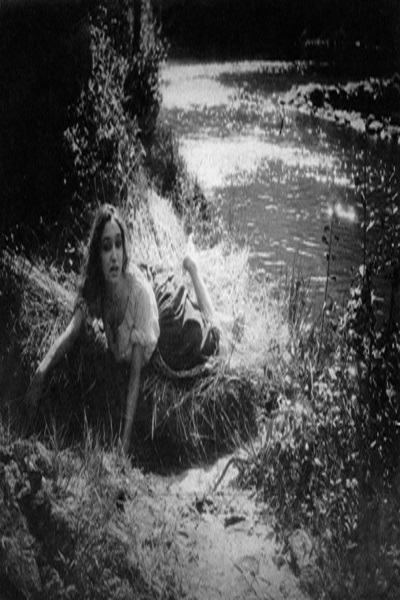
The film’s narrative architecture is built upon the stark juxtaposition between the 'safe world' of Aenne Wolter and the 'quagmire' of the city. Unlike the pastoral innocence found in Betty of Greystone, where the rural environment offers a semblance of moral fortitude, Aenne’s world is one of fragile protection. Her 'carelessness' is not merely a personal failing but a byproduct of a sheltered existence that has left her utterly unequipped for the predatory realities of the modern urban landscape. When she ventures into the city, she isn't just seeking adventure; she is walking into a meticulously laid trap.
The cinematography, though restricted by the technical limitations of 1918, utilizes shadow and claustrophobic interior sets to emphasize Aenne’s loss of agency. The transition from wide-open spaces to the cramped, oppressive rooms of the brothels mirrors her psychological constriction. This is a recurring theme in films of the era that dealt with the commodification of women, such as Sold for Marriage, yet here the tone is significantly bleaker, lacking the sentimental buffers common in American productions.
The Villainy of Ignatz Czyslow
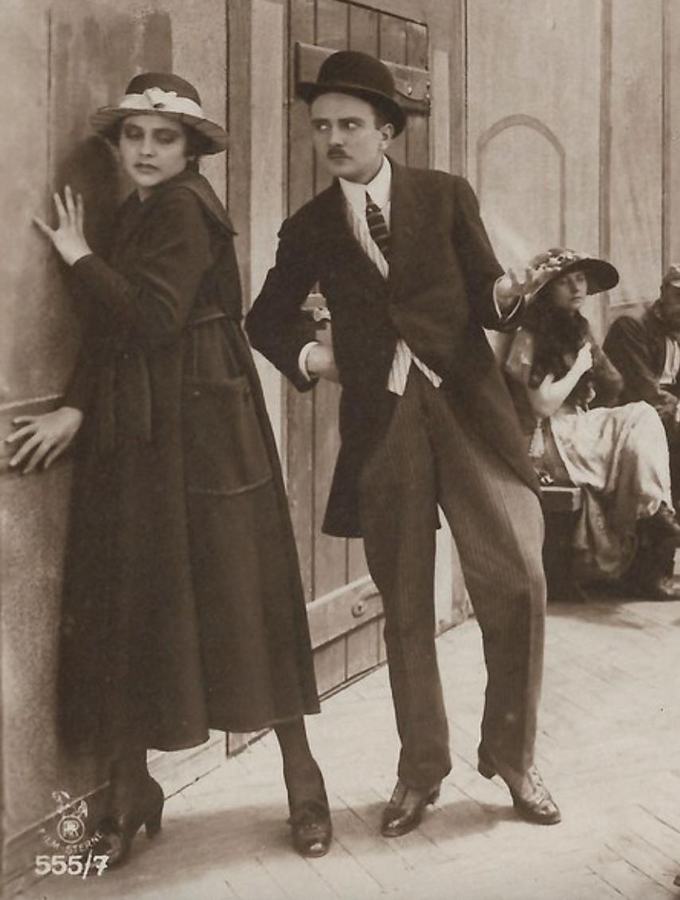
Ignatz Czyslow, portrayed with a chilling, calculated efficiency, represents the systemic nature of trafficking. He is not merely a 'bad man' but a cog in a broader machine of exploitation. His abduction of Aenne and Grete Kröning is depicted with a cold, procedural detachment that heightens the horror. Where The Girl, Glory might focus on the individual’s triumph over adversity, this German production focuses on the crushing weight of the 'path to damnation.'
The inclusion of Grete Kröning as a secondary victim serves a vital narrative purpose. It suggests that Aenne’s fate is not an isolated tragedy but a systemic inevitability for the vulnerable. The 'quagmire' described in the plot is both literal and metaphorical—a sinkhole of human misery where the individual is stripped of their name and reduced to a commodity. The performances by Martha Orlanda and Grete Weixler capture a sense of hollowed-out despair that resonates far more deeply than the melodramatic excesses of the time.
Social Hygiene or Exploitation?
One cannot discuss Der Weg, der zur Verdammnis führt without addressing the controversial nature of the 'Enlightenment' film genre. While these films ostensibly aimed to educate the public about the dangers of prostitution and venereal disease, they often skirted the line between moral instruction and voyeuristic exploitation. However, Julius Sternheim’s script leans heavily into the sociological, attempting to dissect the mechanisms of the trade rather than merely titillating the audience.
Compared to the more romanticized struggles in Love or Justice, Sternheim’s work is unflinching. There is no easy redemption here. The film demands that the viewer confront the reality of the sex trade, even if that confrontation is wrapped in the stylistic conventions of silent melodrama. The presence of actors like Max Hochstetter and Maria Forescu lends a certain gravitas to the proceedings, ensuring that the gravity of the subject matter is never fully lost to sensationalism.
Aesthetic and Technical Prowess
Visually, the film operates within the early stages of what would become German Expressionism. The use of lighting to delineate the 'pure' world from the 'damned' world is rudimentary but effective. The brothel scenes are characterized by a clutter of textures and bodies, creating a sensory overload that contrasts with the sparse, clean lines of Aenne’s former home. This visual dichotomy reinforces the sense of displacement and loss.
The pacing is deliberate, allowing the audience to feel the slow-motion car crash of Aenne’s life. It lacks the kinetic energy of a war drama like The Deserter, but it replaces that energy with a mounting sense of dread. The '1.Teil' (Part 1) designation indicates an epic scope, suggesting that Aenne’s tragedy is only the beginning of a much larger exploration of societal rot.
The Comparative Landscape
When we look at contemporary films like Pay Me! or Heart of the Sunset, we see a global fascination with the intersection of morality, money, and gender. However, the German approach in 1918 was uniquely clinical and pessimistic. There is a distinct lack of the 'frontier spirit' or the 'American dream' that often provided a safety net for characters in Hollywood productions. In the world of Aenne Wolter, the system is designed to consume you, and once you have strayed from the 'safe path,' the return is nearly impossible.
Performance and Pathos
Maria Forescu’s performance deserves particular mention. As a figure who would become a staple of early German cinema, her ability to convey complex internal states through subtle shifts in posture and expression is already evident here. The cast, featuring stalwarts like Willy Kaiser-Heyl and Margarete Kupfer, provides a solid ensemble that grounds the film’s more heightened dramatic moments. They portray a society that is at once indifferent and complicit, a collective of individuals either profiting from or ignoring the destruction of lives like Aenne’s.
The tragedy of Aenne Wolter is not just that she was seduced, but that she was so easily forgotten by the world she left behind. The film critiques the rigidity of a society that offers no path back for the 'fallen.' This theme of social ostracization is a powerful undercurrent that makes the film feel surprisingly modern, despite its century-old vintage.
Legacy of the Damned
Ultimately, Der Weg, der zur Verdammnis führt is a vital artifact of cinematic history. It captures a specific moment in time when film was beginning to realize its power as a tool for social commentary and provocation. It eschews the easy comforts of a happy ending in favor of a stark, uncompromising look at the consequences of vulnerability in a predatory world.
For those interested in the evolution of the crime drama and the social problem film, this is essential viewing. It provides the DNA for later masterpieces of the Weimar era, prefiguring the dark corridors and moral ambiguities that would define the works of Lang and Murnau. While it may lack the technical polish of later silent films, its emotional core remains remarkably intact, a haunting reminder of the 'fate of Aenne Wolter' and the many real-life women whose stories it mirrored.