DbcultAccessing Vault...
6.4/10
Senior Film Conservator
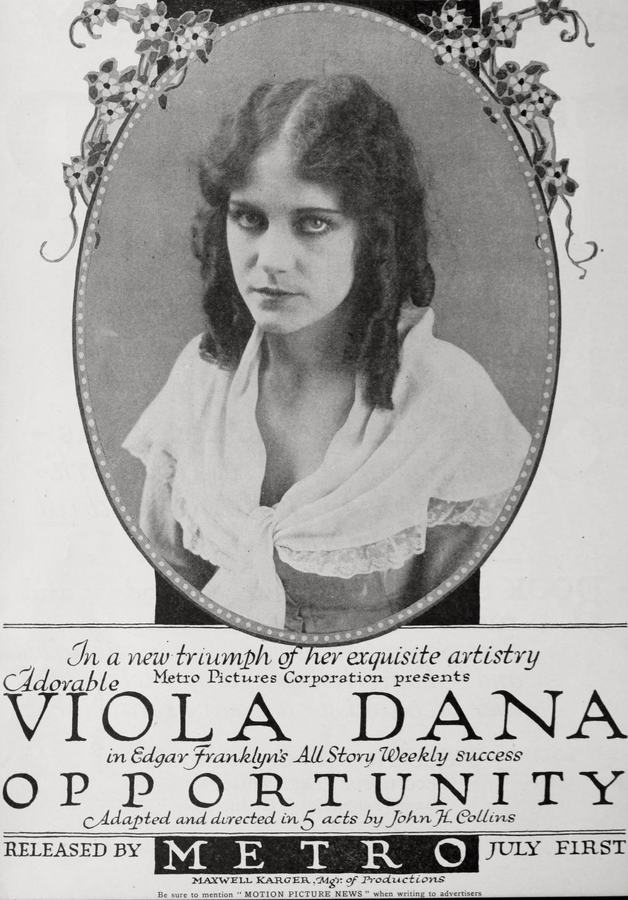
A definitive 6.4/10 rating for a film that redefined the boundaries of cult cinema. Opportunity remains a cornerstone of transgressive art.
In the shadowy corridors of early Hollywood, Opportunity emerges as a relic of audacious storytelling, its narrative as tangled and vibrant as the gilded threads of a bygone era. This 1920s gem, directed with a deft hand by John H. Collins and Edgar Franklin, spins a yarn of gender subterfuge and social critique that feels both archaic and eerily prescient. At its core lies Mary Willard (Elsie MacLeod), a spirited daughter whose defiance of paternal authority catalyzes a domino effect of farcical consequences. Her decision to don her brother’s attire to witness a prizefight—a simple act of rebellion—unfurls into a labyrinth of misunderstandings, exposing the fragility of societal norms.
The film’s genius lies in its manipulation of perspective. When Mary, disguised as a boy, catches the eye of Anthony Fry (Frank A. Lyons), a capitalist with a mantra—'opportunity knocks only once'—the stage is set for a clash of ideologies. Fry’s belief in seizing the moment, however, is juxtaposed with the audience’s knowledge of Mary’s true identity, creating a dissonance that permeates every scene. The apartment, a character in itself, becomes a site of tension where truth and illusion coexist. Louis Wolheim’s house detective, with his furrowed brow and relentless scrutiny, embodies the era’s puritanical gaze, his suspicions a metronome counting down to the inevitable unraveling.
What elevates Opportunity beyond mere slapstick is its layered exploration of power dynamics. Mary’s cross-dressing is not a mere comic device but a subversive act that questions the rigidity of gender roles. Her interactions with Anthony, charged with a mixture of vulnerability and bravado, mirror the silent film’s broader commentary on identity as performance. The chaos that ensues—Anthony’s friend Johnson Bowler (Hale Hamilton) nearly losing his wife Beatrice (Sally Crute) to a scandalous misunderstanding—serves as a farcical counterpoint to the film’s more serious undertones. Here, the directors wield humor not as a distraction but as a lens to critique the absurdity of societal expectations.
The cast, a constellation of early Hollywood’s most versatile talents, breathes life into this intricate tapestry. Elsie MacLeod’s portrayal of Mary is a masterclass in physicality and restraint; her wide-eyed determination and subtle gestures convey a character straddling two worlds. Frank A. Lyons, as Anthony Fry, oscillates between suave confidence and comic ineptitude, his character a walking embodiment of the era’s capitalist ethos. Louis Wolheim’s detective, with his brooding intensity, adds a noir-like gravitas to the proceedings, his suspicion a dark thread weaving through the film’s comedic fabric.
Visually, Opportunity is a feast of contrasts. The stark lighting of Anthony’s opulent apartment, a chiaroscuro of shadows and gold, mirrors the moral ambiguity of its occupants. The prizefight scene, rendered with kinetic energy and a cacophony of intertitles, contrasts sharply with the claustrophobic tension of the apartment’s confines. These stylistic choices, though rooted in the limitations of 1920s cinema, enhance the narrative’s emotional resonance. The film’s pacing, deliberate yet dynamic, ensures that each revelation builds toward the cathartic climax where identities are stripped bare.
Thematically, Opportunity dances between the poles of satire and sincerity. It mocks the pretensions of the wealthy (Anthony’s mantra is both inspiring and absurd) while quietly mourning the constraints placed upon women. The resolution—where Mary’s father is summoned, and the truth spills out in a torrent of explanations—feels less like a conclusion and more like a reset, a reminder that societal norms are both a cage and a construct. The film’s final moments, as Anthony and Mary decide to 'take advantage of the strange opportunity' that bound them, are tinged with bittersweet ambiguity. Is this a union of equals or a continuation of the charade?
Comparisons to contemporaries like The Blue Bird are apt, though Opportunity diverges with its sharper focus on gender dynamics. Unlike the fairy-tale whimsy of The Babes in the Woods, this film grounds its fantasy in the tangible struggles of its characters. The influence of Beloved Adventuress is also evident in its narrative structure, though Opportunity distinguishes itself with its critique of class and gender. For modern audiences, the film’s most resonant parallel lies in its anticipation of themes later explored in The Cave Man, where identity is similarly deconstructed and reassembled.
Technically, Opportunity showcases the ingenuity of silent film storytelling. The absence of synchronized sound is not a limitation but a strength, allowing intertitles to double as narrative devices. The physical comedy, though broad by today’s standards, is meticulously choreographed, each pratfall and expression a testament to the performers’ craft. The score, though not specified in the film’s credits, is an unseen character, its swelling melodies amplifying the drama in moments of high tension.
However, the film is not without its weaknesses. The subplots involving Beatrice and Johnson Bowler, while adding layers of chaos, occasionally dilute the focus on Mary and Anthony’s central relationship. Additionally, the resolution feels hurried, as if the filmmakers were eager to tie up loose ends rather than linger in the messy reality of their characters’ choices. These quibbles, though, are minor in the grand scheme of the film’s ambition.
In the pantheon of silent comedies, Opportunity occupies a unique niche. It is a film that dares to ask whether identity is a fixed essence or a fluid performance, a question that remains startlingly relevant. Its blend of humor and pathos, coupled with a stellar cast and incisive social commentary, cements it as a landmark of early cinema. For enthusiasts of the genre, it is a must-watch—a time capsule that whispers its story in the language of gestures, shadows, and fleeting glances.
For further exploration of films that grapple with identity and societal constraints, consider Journey’s End for its wartime introspection or The Courage of the Common Place for its examination of ordinary heroism. Yet, for a masterclass in gender-bending farce with a beating heart, Opportunity remains unmatched.
IMDb —
1926
Community
Log in to comment.