DbcultAccessing Vault...
6.6/10
Senior Film Conservator
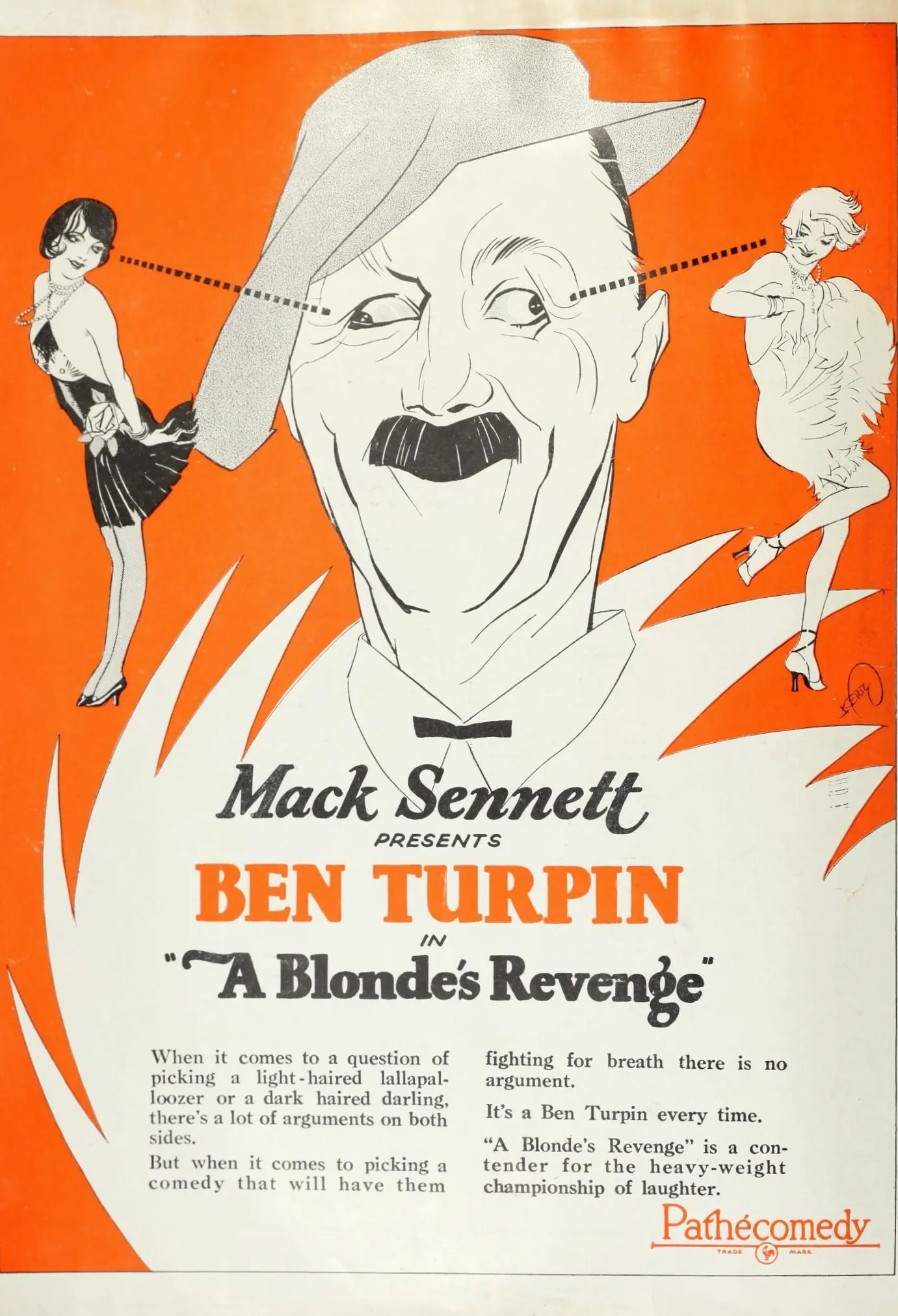
A definitive 6.6/10 rating for a film that redefined the boundaries of cult cinema. A Blonde's Revenge remains a cornerstone of transgressive art.
Is 'A Blonde's Revenge' worth your time in the 21st century? Short answer: yes, but with significant caveats. This early farce, a relic of its era, offers a fascinating glimpse into the mechanics of silent-era comedy, yet much of its humor relies on conventions that have, understandably, aged. It’s a film best suited for cinephiles, historians of comedy, and those with a deep appreciation for physical gags and the foundational elements of slapstick, rather than casual viewers seeking modern comedic sensibilities.
This film works because of its relentless pacing and the committed physical performances, particularly from Ben Turpin, which remain surprisingly effective. It fails because its narrative depth is minimal, and some of its comedic situations now feel dated or even problematic. You should watch it if you're curious about the origins of screen comedy, enjoy broad physical humor, and can appreciate a film for its historical significance as much as its entertainment value.
At its core, 'A Blonde's Revenge' presents a classic comedic setup: a man in a position of power, attempting to maintain an image of decorum, is besieged by an escalating series of domestic and romantic entanglements. Our protagonist, a Senate candidate (likely played with frantic energy by Ben Turpin), finds his political aspirations jeopardized not by policy debates, but by a catastrophic convergence of women within his private residence. The wives of his political rivals, an insistent admirer, and the titular 'blonde bombshell' descend upon him, each with their own agenda, transforming his home into a veritable madhouse.
The genius – or perhaps the cruel irony – of the premise lies in the addition of the film crew, waiting in the wings to capture every compromising detail. This isn't merely a private scandal; it's a public execution waiting to be filmed, an early precursor to reality television and the insatiable appetite for political drama. The film thrives on this impending doom, milking every near-miss and mistaken identity for maximum comedic effect. It's a testament to the era's understanding of situational irony, where the very act of trying to avoid scandal only makes it more inevitable and spectacular.
Director George Jeske and the team of writers, including Randall Faye and Phil Whitman, understood the fundamental mechanics of farce: escalation and timing. The film's pacing is its strongest asset, a relentless march towards comedic chaos. From the moment the first unexpected guest arrives, the narrative rarely pauses, each new arrival or discovery layering another complication onto the candidate's already precarious situation. This isn't subtle humor; it's a comedic avalanche.
Consider, for instance, the sequence where the candidate attempts to hide multiple women in quick succession. We can imagine Ben Turpin's character frantically shunting one woman into a closet, only for another to appear at the window, forcing him to improvise with a strategically placed screen or an absurdly oversized vase. The camera work, though likely static by modern standards, would have focused on the physical comedy, using quick cuts between the candidate's panicked reactions and the oblivious arrivals to build tension and laughter. The film's energy is infectious, even if the gags themselves are broad.
The direction doesn't just manage the chaos; it orchestrates it. Each door slam, each whispered conversation overheard, each prop strategically placed for a future mishap contributes to a symphony of comedic misdirection. It’s a blueprint for countless future comedies, from bedroom farces to modern sitcoms, proving that certain comedic structures are truly timeless. The sequence involving the film crew's arrival, for example, would have been a masterclass in building anticipation, with shots cutting between the crew setting up outside and the frantic internal scramble, highlighting the ticking clock of impending exposure.
The ensemble cast, featuring stalwarts like Ben Turpin, Ruth Taylor, and Mary Ann Jackson, is crucial to 'A Blonde's Revenge's' success. Ben Turpin, with his iconic cross-eyes and rubbery face, was a master of physical comedy. His performance as the harried candidate would have been a central pillar, his exaggerated expressions and frantic movements conveying the character's mounting desperation without a single spoken word. One can easily picture him contorting his face into a mask of abject horror as he realizes the sheer number of women now occupying his home, or his eyes darting wildly as he tries to keep track of everyone.
The supporting cast, particularly the women, would have embodied distinct comedic archetypes. Ruth Taylor might have played the glamorous, demanding 'blonde bombshell,' while Barbara Tennant and Julia Griffith as the rival wives could have brought an air of indignant, self-righteous chaos. Each character's entrance and subsequent interaction would have been designed to amplify the central character's predicament. Billy Gilbert, known for his sneezes and bluster, might have played a boisterous aide or an equally flustered rival, adding another layer of auditory and visual comedy.
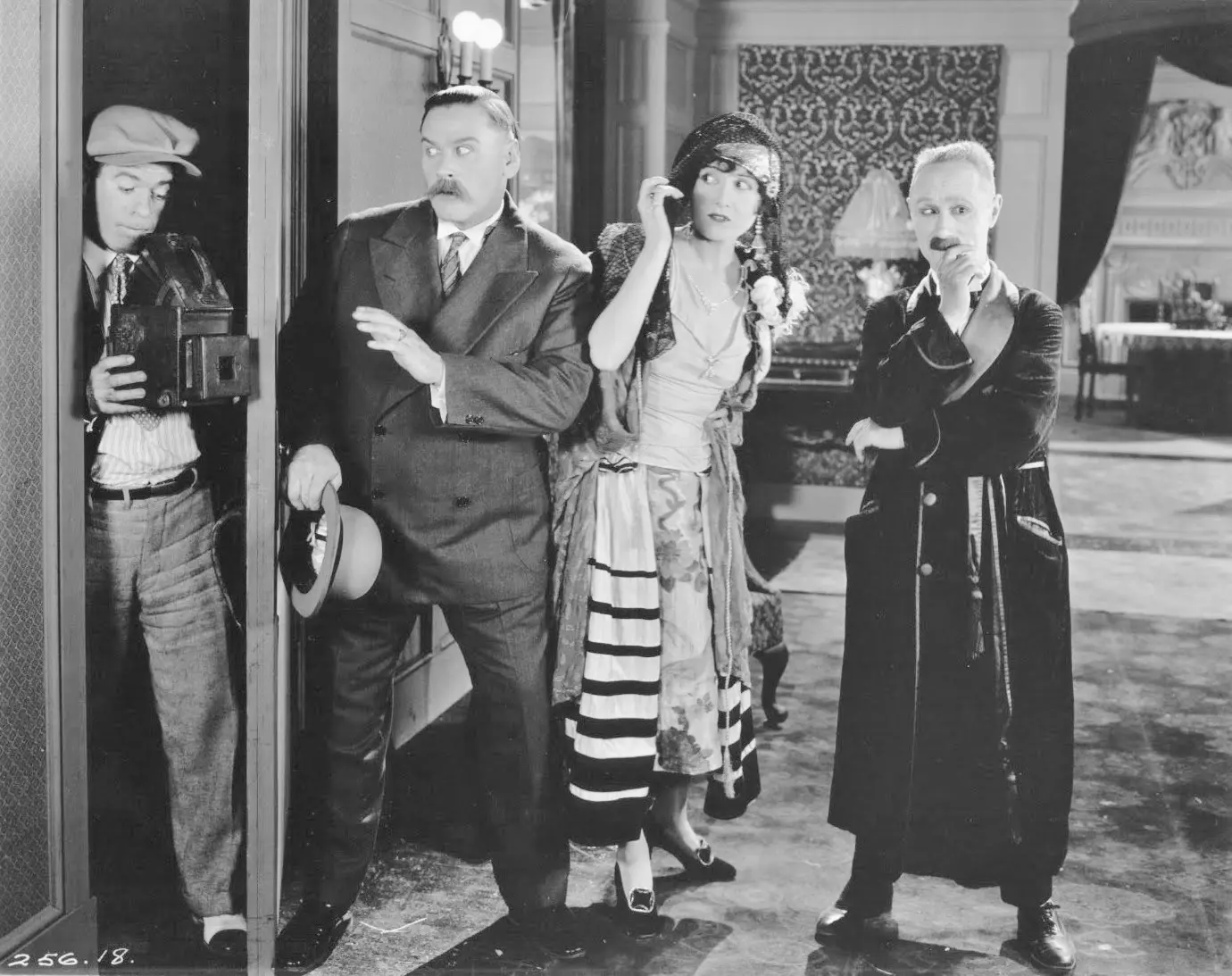
The strength of these early ensemble comedies often lay in the actors' ability to play off each other's physicalities and reactions. A moment where Turpin attempts to whisper a secret to one woman, only for another to inadvertently overhear, would rely entirely on the precise timing of their movements and expressions. The actors are not just delivering lines; they are performing a ballet of escalating absurdity, a testament to their craft in an era where visual storytelling was paramount. The sheer number of cast members listed, from Irving Bacon to Vernon Dent, suggests a crowded house, amplifying the sense of inescapable bedlam. This isn't subtle acting; it's bold, declarative, and utterly committed to the bit.
As a film from the early sound era (or potentially late silent, given the cast), 'A Blonde's Revenge' would have relied heavily on visual gags, exaggerated expressions, and physical comedy. The cinematography, while not groundbreaking by today's standards, would have been functional, designed to capture the action clearly. We can imagine wide shots establishing the chaotic scene in the candidate's house, followed by tighter shots emphasizing Turpin's reactions or a specific prop being misused.
The visual humor would have been paramount. Think of characters slipping on rugs, hiding under tables, or accidentally bumping into each other in rapid succession. The 'blonde bombshell' herself would have been a visual focal point, her presence alone a catalyst for much of the candidate's panic. The film crew's equipment — bulky cameras, bright lights — would also have been visually integrated, serving as a constant reminder of the stakes. The aesthetic is one of functional comedy, prioritizing clarity of action over artistic flourishes, but within that framework, there's a certain charm to its directness.
The production design, too, would have played a role. A cluttered, somewhat extravagant set for the candidate's house would have provided ample hiding spots and obstacles, turning the domestic space into a comedic obstacle course. The very architecture of the home becomes a character, facilitating the frantic chases and near-discoveries that define the genre. It's a less-is-more approach to visual storytelling, where every element serves the central comedic purpose. Frankly, the film’s strength lies in its unpretentious commitment to pure, unadulterated slapstick.
Farce, by its very nature, often feels dated. Its reliance on mistaken identity, physical comedy, and exaggerated social anxieties can sometimes fall flat for a modern audience accustomed to more nuanced humor. 'A Blonde's Revenge' is no exception. Some of the gags, while undoubtedly hilarious at the time, might elicit more polite chuckles than belly laughs today. The characterizations are broad, almost caricatures, which is inherent to the genre but can feel simplistic through a contemporary lens.
However, what truly surprises is how much of its core comedic structure remains a blueprint for modern sitcoms and romantic comedies. The idea of a character juggling multiple secrets, the escalating absurdity, the public humiliation as a punchline — these elements are perennial. The film serves as a valuable historical document, showcasing how these comedic tropes were established and refined in the nascent days of cinema. It’s a foundational text for anyone interested in understanding the evolution of screen comedy.
It works. But it’s flawed. And that's precisely why it's worth engaging with.
For the casual viewer, 'A Blonde's Revenge' might feel slow or overly simplistic. The humor is broad, the pacing is relentless, and the lack of sound (if it's a silent film) or early, rudimentary sound can be a barrier. However, for those with an interest in film history, particularly the golden age of silent and early sound comedy, it's an absolute must-see.
It's a vibrant example of a genre that captivated audiences, demonstrating the raw energy and inventiveness of early filmmakers. You'll see the groundwork laid for future comedic legends and appreciate the sheer effort that went into creating laughter with limited technological means. It’s a window into a different era of entertainment, offering lessons in comedic timing that still resonate.
'A Blonde's Revenge' is a fascinating artifact of early cinematic comedy, a boisterous and energetic farce that delivers exactly what it promises: a candidate's chaotic downfall at the hands of multiple women and a lurking film crew. While it won't resonate with every modern viewer, its historical value and the sheer gusto of its performances, particularly from Ben Turpin, make it a worthwhile watch for those with an appreciation for the foundational elements of screen humor. It’s a testament to the enduring power of physical comedy and the timeless appeal of a good, old-fashioned political scandal, even if the execution feels a little less polished than, say, Why Not Now?. Approach it as a historical document of laughter, and you'll find much to enjoy.
IMDb 6.8
1931
Community
Log in to comment.