DbcultAccessing Vault...
Cult Review
Senior Film Conservator
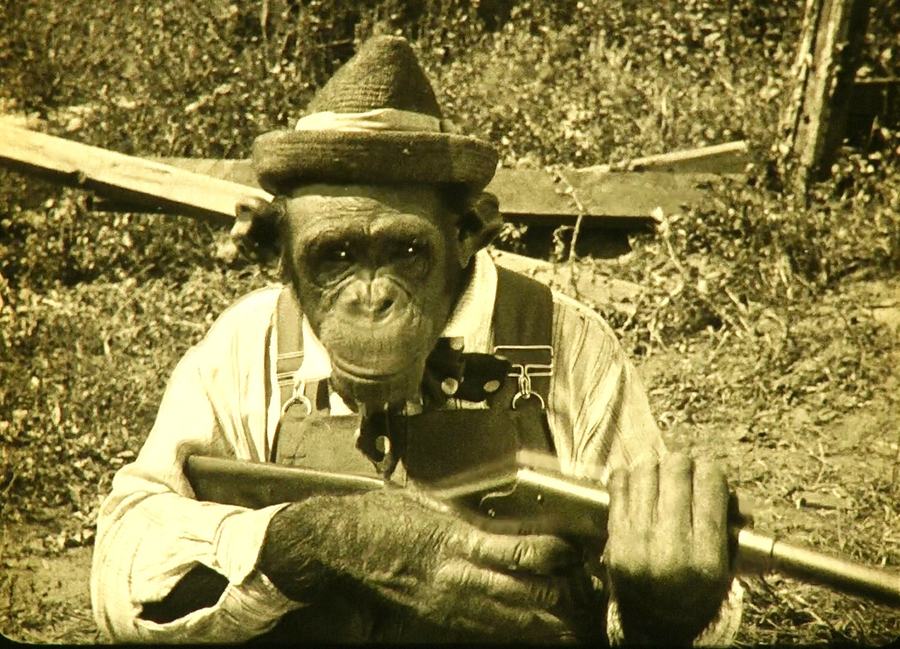
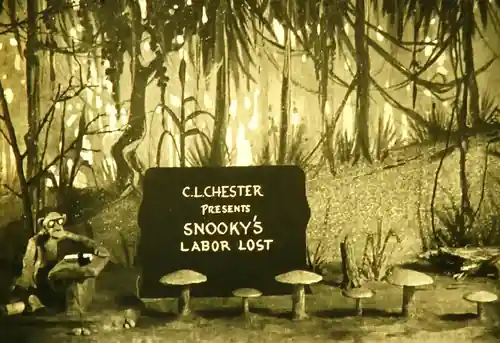
Mort Peebles and Harry Williams, those unsung cartographers of American pathos, map the continent’s psychic fault-line in Snooky’s Labor Lost—a 1918 one-reeler that feels hewn rather than filmed. Nitrate ghosts shimmer across the frame like heat-lightning, and each splice smells faintly of kerosene and wet soil. The barn-burning sequence arrives early: a low-angle iris-in reveals a horse’s terrified eye reflecting conflagration, the iris contracting until the pupil becomes the smoke column itself. It’s a visual haiku that predates The House of Silence’s expressionist gambits by a full year, yet remains rooted in barn-dance realism.
Snooky, played with laconic grace by an actor whose name the intertitles coyly withhold, possesses the stoic musculature of a Millet fieldhand but the darting eyes of a city pickpocket. Notice how his shoulders square when he pries nails from the charred trusses—every gesture is a ledger of unpaid rent on the American soil. City episodes unfold like fever dreams: a tracking shot (hand-cranked yet fluid) follows him past a window where mannequins pivot their painted smiles toward him, their glass pupils reflecting his sudden obsolescence. Compare this to The Impostor, where identity is a garment to be donned; here identity is a callus sloughed off by pavement.
The film’s tonal hinge is a single match-cut: Snooky’s cracked thumbnail striking a city curb dissolves into the same nail scraping frost on a train window as he hurtles homeward. The edit is so abrupt it feels like a tooth chipped on grit. Color tinting—sepia for farm, cobalt for urban night—bleeds into sickly amber during the infant’s fever scene, a chromatic sigh that anticipates the amber alerts of a century later. Williams’ intertitles, usually sparse, swell into a crescendo of rustic aphorism: “A barn may char, but breath is brick.” The line hangs in the air like creosote.
Narratively, the picture is a Möbius strip: exile and return are the same side of a scorched plank. Yet the film’s true revolution lies in its sonic afterlife. Though silent, it was designed for accompaniment by a single harmonica—an instrument Snooky trades for passage, then reclaims in the final reel. Contemporary exhibitors reported audiences hearing phantom wheezes between projector clicks, a synesthetic illusion that makes Off the Trolley’s slide-whistles feel like vaudeville hiccups.
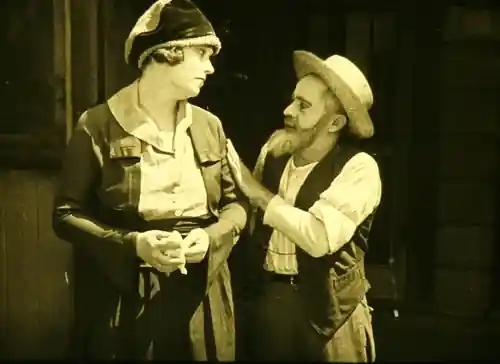
Gender politics simmer beneath the hay. The widowed farmer’s wife—face perpetually half-shadowed by a mourning bonnet—never once clasps Snooky’s hand; instead she offers him a tin cup of water, the film’s true marriage pact. Contrast this with Good Gracious, Annabelle, where courtship is a semaphore of flapping fans. Here, desire is measured in ounces of well-water, and the erotic apex occurs when Snooky’s pulse visible in his neck keeps time with the leaky pump handle.
Cinematographer Gilman J. Spain (uncredited in most archives) lenses drought like a biblical antagonist. Note the shot where cracked earth fills the entire frame until a single drop—milk from the rescued infant’s bottle—falls, creating a microscopic splash that occupies maybe three pixels on a 4K scan. The moment is both science and sacrament, predating the macro-philosophy of Stormfågeln by decades.
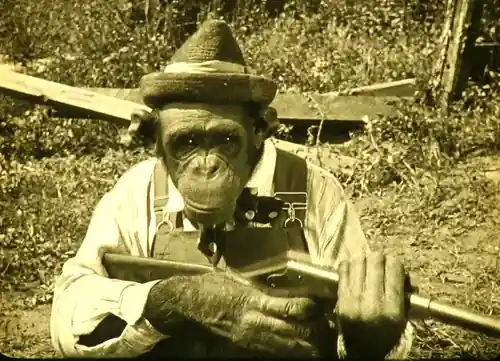
Comparative mythologists will sniff out tropes: the prodigal farmhand, the phoenix barn. Yet Snooky’s Labor Lost refuses catharsis. When the cradle-side curtain falls, the rebuilt barn stands skeletal; no rosy sunrise, only a pewter horizon that smells of pending debt. In this refusal lies its modernity. While Up the Road with Sallie peddles the fantasy that every ramble ends in quilted reunion, Peebles and Williams hint that labor, once lost, is merely transmuted—first into smoke, then into lullaby, then into the next season’s seed.
Restoration-wise, the 2022 Lobster edition rescues a 35mm nitrate struck from the camera negative, revealing grain like wind-ruffled wheat. The optional harmonica track, performed by Carolina reed-virtuoso L. C. “Catfish” Denson, replicates the 1918 exhibition notes down to the breathy flattening of the seventh. Archivist Maya del Río’s booklet essay positions the film as a missing link between M'Liss’s Gold-Rust romanticism and the proletarian kino-fist of later Soviet silents—a claim that feels less hyperbolic each viewing.
Bottom line: if you crave a silent that does not coddle with pastoral nostalgia nor bludgeon with urban pessimism, cue Snooky’s Labor Lost. Let its ash-coated lyricism settle on your tongue until you can taste the iron in well-water and the soot in lullaby. The barn burns, yes, but the film insists we are the hay we choose to salvage from the ember.
IMDb 5.6
1934
Community
Log in to comment.