DbcultAccessing Vault...
Cult Review
Senior Film Conservator
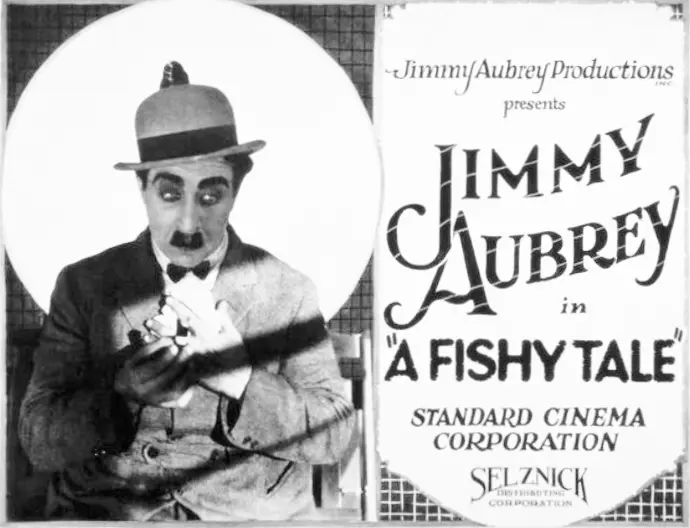
To witness A Fishy Tale is to descend into a world where the laws of physics are merely suggestions and the human body is a pliable instrument of comedic destruction. Jimmy Aubrey, a contemporary of Chaplin and Keaton who often finds himself relegated to the footnotes of cinematic history, demonstrates here a profound grasp of the vaudevillian ethos. Unlike the grand historical narratives of Famous Battles of Napoleon, Aubrey’s canvas is intimate, focused entirely on the friction between a man and his environment. The film operates on a principle of rhythmic escalation; what begins as a simple casting of a line transforms into a complex web of entanglement that mirrors the existential traps found in Moral Suicide.
The visual grammar of this short is deceptively simple. Aubrey utilizes the wide shot to establish a sense of isolation against the vastness of the water, only to tighten the framing as the gags become more intricate. This shift in perspective forces the audience to confront the minutiae of his failure. It is a technique that echoes the claustrophobic tension of Nearing the End, though here the stakes are played for laughs rather than melodrama. The mastery of timing is palpable; every slip and every splash is choreographed with the precision of a clockmaker, ensuring that the humor is derived not just from the mishap itself, but from the anticipation of the inevitable.
Aubrey’s performance in A Fishy Tale serves as a bridge between the broad strokes of early Mack Sennett comedies and the more character-driven narratives that would follow. Much like the protagonist in A Champion Loser, Aubrey’s character is defined by a resilient optimism that is perpetually at odds with his physical surroundings. He possesses a specific kind of kinetic energy—a jittery, nervous vitality that differentiates him from the more stoic performers of his era. This energy is essential to the film's pacing, preventing the repetitive nature of the fishing gags from becoming stagnant.
One cannot discuss Aubrey without acknowledging his roots in the Fred Karno troupe. This pedigree is evident in the way he handles props; a fishing rod is not merely a tool, but an extension of his own awkwardness. In Polly Put the Kettle On, we see domestic objects utilized for narrative progression, but in Aubrey’s hands, they are instruments of chaos. The way he interacts with the invisible fish—the phantom tug on the line—requires a level of mimetic skill that is often overlooked in modern critiques of silent film. He creates a tangible reality out of thin air, much like the prophetic visions explored in The Man Who Saw Tomorrow.
When placed alongside international efforts of the time, such as the Brazilian drama Hei de Vencer or the German epic Fridericus Rex - 1. Teil: Sturm und Drang, A Fishy Tale feels remarkably modern in its focus on the mundane. It eschews the grandiosity of national identity or historical destiny in favor of a universal struggle. The film shares a certain gritty realism with At Piney Ridge, despite its comedic intent. There is a raw, unpolished quality to the location shooting that grounds the absurdity in a recognizable world. This isn't the stylized Northwest of Channing of the Northwest; it is a wet, slippery, and unforgiving dockside.
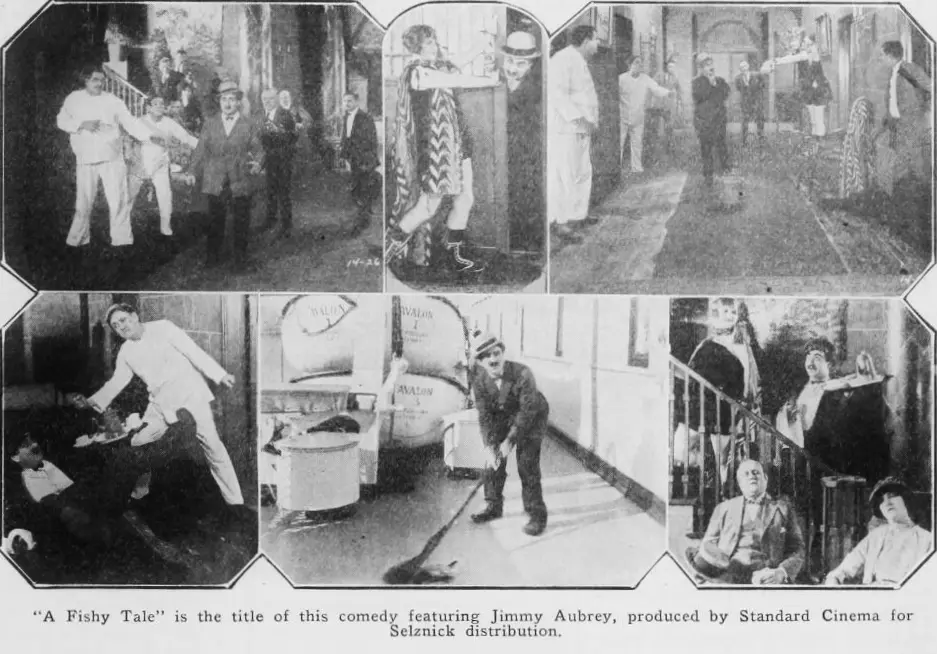
The film also touches upon themes of class and leisure. The very act of fishing, a leisure activity for some and a necessity for others, is subverted here. Aubrey’s character is clearly out of his element, a fish out of water in his own right. This thematic resonance is found in other works like Ragged Robin, where the protagonist's social standing dictates their interaction with the environment. However, Aubrey avoids the sentimentality found in Open the Bars, opting instead for a relentless pursuit of the next gag.
Technically, A Fishy Tale utilizes the limited technology of the early 1920s to its advantage. The use of natural light on the water creates a high-contrast environment that emphasizes the silhouette of the performer. The editing is snappy, a necessity for slapstick, ensuring that the punchlines land with maximum impact. We see a similar attention to visual texture in Maddalena Ferat, though the emotional register is vastly different. The clarity of the print (where preserved) reveals a surprising amount of detail in the costuming and the weathered wood of the pier, adding a layer of authenticity to the proceedings.
The film’s structure is episodic, yet it maintains a cohesive internal logic. Each segment of the fishing trip—the preparation, the casting, the struggle, and the inevitable immersion—serves as a movement in a larger symphony of failure. This structural integrity is something we also see in A Sister to Salome, where the narrative builds toward a predetermined climax. In Aubrey’s case, the climax is usually a dunking in the cold Pacific, a baptism of sorts into the world of the perpetually unlucky. It is a price paid for vanity, much like the themes explored in Vanity's Price.
Why does A Fishy Tale still resonate today? It is because the film taps into a primal human experience: the frustration of a plan gone awry. We have all been Jimmy Aubrey, wrestling with an inanimate object that seems to possess a malevolent will of its own. His performance transcends the cultural specificities of the 1920s because it is rooted in the universal language of the body. While the film may lack the philosophical depth of some contemporary dramas, its purity of purpose is its greatest strength. It does not seek to moralize or educate; it seeks to evoke a visceral reaction through the medium of pure motion.
In the grand tapestry of silent cinema, Aubrey’s contributions are often overshadowed by the giants of the era. Yet, in this short, we see a performer at the height of his powers, demonstrating a level of physical courage and comedic ingenuity that remains impressive a century later. The film stands as a testament to the power of the short-form narrative, proving that one does not need a feature-length runtime to create a memorable and impactful cinematic experience. It is a minor masterpiece of the piscatorial genre, a buoyant reminder of the joy to be found in the art of the fall.
Ultimately, A Fishy Tale is more than just a series of gags. It is a snapshot of a transitional moment in film history, a time when the language of cinema was still being written with every crank of the camera. Aubrey’s frantic energy and the film’s unpretentious execution offer a refreshing contrast to the often-stuffy prestige pictures of the era. It is a work that invites us to laugh at our own inadequacies, to embrace the chaos of existence, and to find beauty in the most spectacular of failures. Whether you are a scholar of silent film or a casual viewer looking for a laugh, this tale of a man and his fish is one that deserves to be caught, kept, and cherished.
IMDb 6.3
1936
Community
Log in to comment.