DbcultAccessing Vault...
Cult Review
Senior Film Conservator
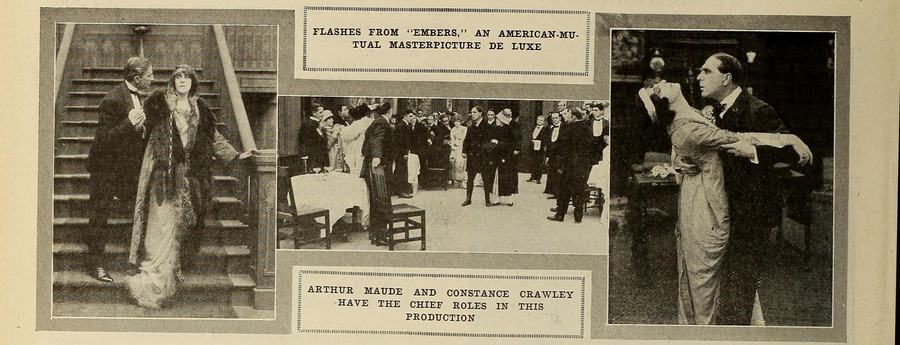
The film Embers plunges viewers into the devastating aftermath of a stillbirth, not just for the parents, Rhea and Martin Woodley, but for the very fabric of their union. The physician's grim pronouncement—that Rhea must never again endure childbirth—becomes a silent, yet seismic, fault line within their marriage. This tragedy, ostensibly a shared sorrow, instead becomes the catalyst for an agonizing estrangement, particularly for Martin, whose "virile manhood," as the narrative starkly puts it, seeks an outlet denied by Rhea's delicate health and the emotional chasm that has opened between them. It’s a primal conflict, one that society often shies away from acknowledging: the physical needs of a partner when intimacy is no longer possible within the primary relationship, or at least, is perceived to be.
This void is swiftly, perhaps inevitably, filled by Maysie, Rhea’s young cousin, whose presence in their home introduces a dangerous element of proximity and temptation. Maysie, whether innocent or calculating, becomes the focal point for Martin’s misdirected affections, leading to an affair that further erodes the already fragile foundation of the Woodley marriage. The film masterfully portrays the insidious spread of this breach, a slow-burning fuse threatening to detonate their domestic tranquility. The quiet desperation of Rhea, caught in a state of semi-invalidism and emotional isolation, is palpable. Her husband, once her protector and lover, now drifts further from her, drawn by a younger, healthier allure.
The arrival of Rhea's former rejected lover, Welsey, injects a venomous twist into the unfolding drama. Discovering Martin’s infidelity, Welsey, driven by a petty, malicious vindictiveness, reveals the affair to Rhea. This act of cruel exposure, rather than shattering Rhea, seems to ignite a spark of defiance within her. It’s a pivotal moment, transforming her from a passive victim into an agent of her own destiny, albeit through a path paved with calculated risk and emotional manipulation. Her offer of freedom to Martin is not an act of surrender, but a test, a desperate attempt to force an admission, a confrontation with a truth he himself refuses to acknowledge. His refusal to accept this freedom, his denial of his true feelings for Maysie, highlights the complex psychological undercurrents at play; he is trapped not just by circumstance, but by his own inability to confront his desires and their consequences.
Rhea’s subsequent, audacious move—permitting Welsey’s attentions and orchestrating a public rendezvous at a roadhouse, leaving an anonymous note for Martin—is a stunning act of theatrical desperation. It’s a gamble, a last-ditch effort to shock her husband into acknowledging the reality of their fractured marriage and his own transgressions. The ensuing chase, with Martin and Maysie following Rhea and Welsey, culminates in a scene charged with raw emotion and performative betrayal. Rhea’s feigned passion for Welsey, maintained until Martin’s departure, is a chilling display of her newfound resolve, a mask of indifference designed to inflict maximum pain. Her subsequent turning on Welsey, her scorn and denunciation, strips away the pretense, revealing the depth of her anger and the calculated nature of her actions. This is not a woman seeking new love, but one desperately fighting for recognition, for justice, for perhaps, a twisted form of love that she believes she is owed.
The divorce that follows is an inevitable consequence, a formal dissolution of what had already been emotionally severed. Maysie, with a chaperon, assumes the role of mistress of the household, a seemingly triumphant, yet perhaps hollow, victory. Rhea, meanwhile, retreats to a sanitarium, a place of healing, but also of profound isolation. It is here that the narrative takes a profound, almost miraculous turn. The doctor, recognizing Rhea’s deep maternal yearning, hits upon an unconventional, yet inspired, solution: giving her a motherless baby to care for. This act of profound empathy and intuitive understanding becomes Rhea's salvation, a balm for her wounded spirit, and a reawakening of her dormant maternal instincts. It is a moment reminiscent of the redemptive power of nurturing found in stories like The Valley of the Moon, where characters find solace and purpose in connection to life itself, though in a very different context.
Meanwhile, Martin, haunted by memories of happier days, finds himself drawn back to Rhea’s room, a space imbued with the ghosts of their shared past. There, he discovers her diary, a poignant chronicle of her sacrifice, her suffering, and the depth of her enduring love. The revelation of her selfless acts, her deliberate orchestration of events to force a confrontation, strikes him with the force of an epiphany. Overcome by the injustice he has inflicted, and perhaps by the realization of the superficiality of his relationship with Maysie, he breaks with her. This emotional catharsis leads him back to Rhea, where he finds her transformed, not just by time, but by the profound connection with the baby. The child, once a symbol of his initial loss and the chasm it created, now becomes the bridge, the living embodiment of a renewed hope, destined to help fulfill his dream of home and happiness.
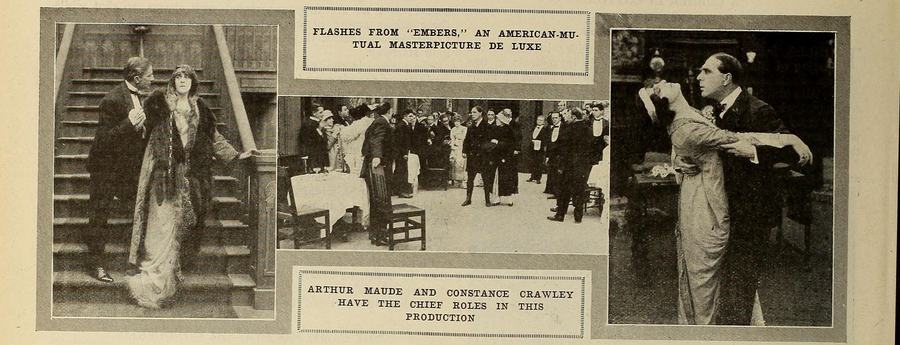
This narrative, though seemingly melodramatic by contemporary standards, delves into universal themes with a stark honesty characteristic of early cinema. Constance Crawley’s portrayal of Rhea must have been nothing short of captivating. Her journey from passive despair to audacious defiance, and ultimately to a quiet, maternal strength, requires a nuanced performance, relying heavily on expressions and gestures in the absence of spoken dialogue. One can imagine the subtle shifts in her gaze, the tremor in her hands, conveying volumes of unspoken emotion. This kind of physical acting, so crucial in the silent era, allowed for a direct, unfiltered connection to the audience’s empathy, much like the intense emotionality often found in other early dramas such as Zudora, which also explored complex female protagonists navigating challenging circumstances.
The film's exploration of marital duty versus individual desire is particularly potent. Martin’s struggle is not painted as purely villainous; rather, it is a human failing born from a traumatic event and a societal expectation of male virility. The doctor’s initial advice, while medically sound, inadvertently sets the stage for the moral dilemma. It’s a poignant commentary on how external circumstances can unravel the most intimate bonds. The contrast between Maysie’s youthful, uncomplicated appeal and Rhea’s complex, suffering grace is central to the film’s emotional core. Maysie represents an easy escape, a temporary balm, while Rhea embodies the enduring, albeit painful, essence of true partnership and sacrifice.
The character of Welsey, the rejected lover, serves as a crucial antagonist, not through physical threat, but through psychological manipulation. His malicious pleasure in exposing Martin’s affair underscores the darker side of human nature, the petty vindictiveness that can fester when love is spurned. He is a catalyst, an agent of chaos who, ironically, precipitates the events that lead to Rhea’s ultimate vindication and Martin’s awakening. Without his intervention, the slow decay of the Woodley marriage might have continued indefinitely, never reaching its cathartic, if painful, climax. This reminds one of how external forces, often driven by less-than-noble intentions, can inadvertently force protagonists to confront uncomfortable truths, a trope seen in many classic narratives.
Embers also subtly examines the societal expectations placed upon women in the early 20th century. Rhea’s identity is initially tied to her role as wife and potential mother. The loss of her child and the subsequent medical directive strip away part of this identity, leaving her adrift. Her journey to reclaim agency, first through calculated deception and then through the profound act of nurturing, speaks volumes about resilience and the multifaceted nature of female strength. It challenges the notion of women as mere passive recipients of fate, presenting Rhea as a woman capable of strategic thought and deep emotional fortitude. This contrasts with some portrayals in films like The Gilded Cage, where female characters, though often strong, are more overtly constrained by societal opulence and expectation, often finding their agency limited by their surroundings.
The film's title, "Embers," is deeply symbolic. It speaks to the dying flames of a love that once burned brightly, reduced to smoldering remnants. Yet, embers also hold the potential for rekindling, for a new fire to be sparked. The motherless baby, given to Rhea, is precisely that spark—a new flame of hope, a symbol of life and renewal that breathes warmth back into the Woodley home. It’s a powerful metaphor for the cyclical nature of relationships, the idea that even from the ashes of despair, something beautiful and restorative can emerge. The narrative arc, moving from tragedy to betrayal, through sacrifice, and finally to a tentative, hard-won redemption, is a testament to the enduring human capacity for forgiveness and the transformative power of love, particularly parental love.
The resolution, where Martin, enlightened by Rhea’s diary, rejects Maysie and returns to his wife and the baby, might seem overly neat to modern sensibilities. However, within the context of early cinema, it represents a profound moral reckoning. It emphasizes the sanctity of the original marital bond, even one severely tested, and the idea that true happiness lies in genuine connection and shared sacrifice, not fleeting physical attraction. The baby acts as a powerful symbol of this renewed commitment, a physical manifestation of their potential future, built on understanding and forgiveness. It’s a poignant echo of the original dream of home and happiness that was shattered by tragedy, now reassembled, piece by painful piece, into something perhaps even stronger.
In essence, Embers is more than just a domestic drama; it is a profound psychological study of grief, desire, manipulation, and the arduous path to redemption. It challenges viewers to consider the complexities of human relationships, the unforeseen consequences of tragedy, and the extraordinary measures individuals might take to preserve, or rediscover, a sense of belonging and purpose. The performances, particularly that of Constance Crawley, would have been central to conveying these intricate emotional landscapes, transforming a silent film into a resonant tapestry of human experience. It remains a compelling example of how early cinema, even without dialogue, could explore the deepest recesses of the human heart, leaving an indelible mark on its audience. The film, in its quiet intensity, suggests that true love, like an ember, can lie dormant, waiting for the right breath to fan it back into a vibrant, life-giving flame.

IMDb 7.1
1931
Community
Log in to comment.