DbcultAccessing Vault...
Cult Review
Senior Film Conservator
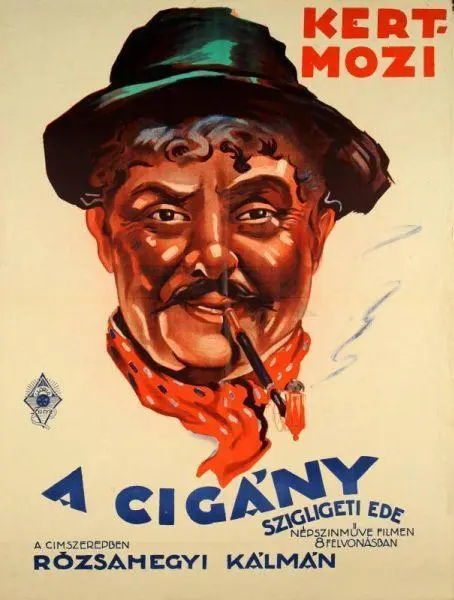
Is A cigány a hidden gem worth digging up from the archives? Short answer: yes, but only if you approach it as a cultural artifact rather than a modern entertainment piece.
This film is for the patient cinephile who finds beauty in the grain and the 'népszínmű' enthusiast; it is emphatically not for those who demand the kinetic energy of contemporary blockbusters or even the polished pacing of late-silent era Hollywood.
1) This film works because it captures a specific, authentic Hungarian rural atmosphere that was rapidly disappearing even in 1925. 2) This film fails because its reliance on Ede Szigligeti’s stage structure makes the blocking feel static and occasionally claustrophobic. 3) You should watch it if you want to see the roots of Eastern European social realism before it was sanitized by later political regimes.
A cigány is a fascinating, if sometimes frustrating, example of how early cinema struggled to break free from the gravitational pull of the theater. Directed by Antal Forgács, the film feels like a stage play that has been dragged kicking and screaming into the sunlight. While films like The Avalanche were already experimenting with more fluid outdoor cinematography, Forgács opts for a more grounded, literal interpretation of Szigligeti’s work.
The film’s tone is heavy with the weight of the past. There is a specific scene where Zsiga, played with a surprising lack of artifice by the ensemble, stands at the edge of a dusty road. The camera lingers a second too long, capturing the vastness of the Hungarian plains. It’s in these moments—where the landscape takes over—that the film transcends its theatrical origins. It’s not just a story; it’s a preservation of a landscape.
The acting in A cigány is a mixed bag of silent-era histrionics and genuine pathos. Kálmán Rózsahegyi brings a gravitas to the screen that anchors the more flighty performances of the younger cast. There is a specific moment in the second act during a confrontation in the village tavern where Rózsahegyi’s eyes convey more than any title card ever could. It’s a masterclass in silent restraint, contrasting sharply with the more exaggerated movements of Sacy von Blondel.
Gusztáv Vándory and Andor Sárossy provide the necessary tension, though their characters often feel like archetypes rather than flesh-and-blood humans. In comparison to the character-driven nuances found in Kohlhiesel's Daughters, the players in A cigány are bound by the rigid requirements of the folk-play genre. They are symbols of class, virtue, or vice, rarely allowed to inhabit the gray areas of the human condition.
Yes, if you value the preservation of cultural folk-identity through the lens of early 20th-century technology. This is a film that demands your full attention, not because its plot is complex, but because its value lies in the textures of the costumes, the architecture of the village huts, and the social hierarchies on display. It offers a rare glimpse into the Hungarian soul of the 1920s, unburdened by the cynicism of the sound era.
While the cinematography doesn't possess the revolutionary fervor of Devyatoe yanvarya, there is a sturdy, craftsman-like quality to the frames. The use of natural light in the outdoor sequences is particularly effective. You can almost feel the heat of the sun on the thatched roofs. However, the interior scenes often suffer from the flat lighting typical of early European studios, making them feel significantly less alive than the village exteriors.
The pacing is, predictably, glacial. Forgács is in no hurry to get to the resolution. He allows scenes to breathe, perhaps too much. A sequence involving a family dispute over a debt feels like it lasts an eternity, yet it is essential for establishing the high stakes of the social standing that Zsiga is trying to protect. It’s a slow burn that occasionally forgets to stay lit.
The most striking aspect of A cigány is its treatment of the title character. In many films of this era, such as The Master Key, the 'outsider' is often a source of mystery or threat. Here, Zsiga is the moral center. This is a bold choice for 1925. The film argues that nobility is not a matter of birth or land ownership, but of action. It is a surprisingly progressive stance wrapped in a very traditional package.
The central conflict—the tension between the 'settled' villagers and the 'wandering' spirit of Zsiga—is handled with a surprising amount of nuance. It doesn't descend into easy stereotypes. Instead, it highlights the hypocrisy of the landed gentry who rely on Zsiga’s labor and loyalty while simultaneously looking down upon his heritage. It’s biting. It’s uncomfortable. And it’s the best part of the movie.
Pros:
- Authentic 1920s Hungarian rural atmosphere.
- Strong thematic exploration of class and 'otherness'.
- Beautifully preserved outdoor sequences that capture a lost era.
- A central performance that holds up against modern standards of realism.
Cons:
- Static camera work that feels overly indebted to the theater.
- Some supporting performances are distractingly hyperbolic.
- The narrative pacing can be grueling for the uninitiated.
- Title cards are sparse, occasionally making the specific plot points of the debt dispute confusing.
A cigány is a flawed but essential piece of the Hungarian cinematic puzzle. It isn’t a 'masterpiece' in the traditional sense—the direction is too timid and the script too tethered to its source material for that. However, it is a brave film. It takes a stance on social exclusion that still feels relevant today. It works. But it’s flawed. If you can look past the dust of nearly a century, you will find a story with a beating heart and a soul that refuses to be ignored. It is a quiet, somber experience that rewards the patient viewer with a profound sense of place and time.
IMDb —
1917
Community
Log in to comment.