DbcultAccessing Vault...
Cult Review
Senior Film Conservator
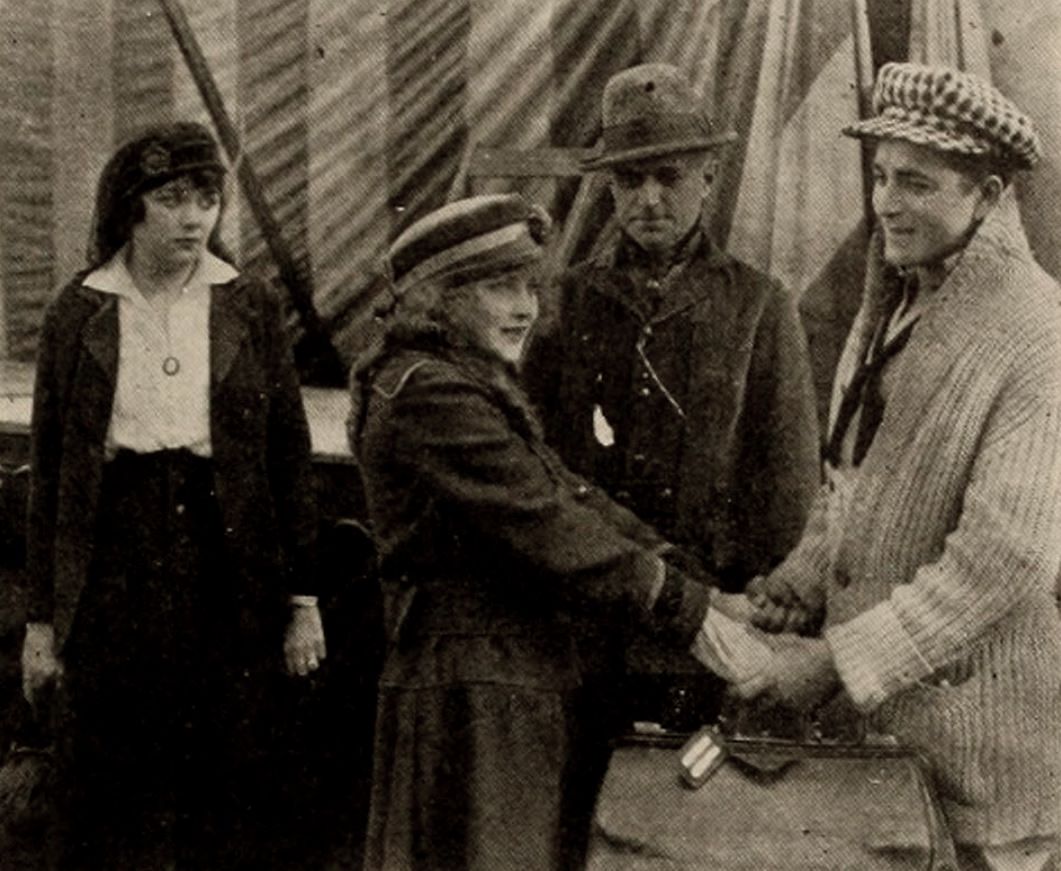
Stepping into the flickering glow of early cinema, one often encounters narratives that, despite their age, resonate with timeless human dilemmas. Such is the case with the 1917 silent drama, "A Circus Romance," a film that, even a century later, offers a compelling look at societal expectations, the burden of a hidden past, and the unwavering spirit of individualism. Directed with a keen eye for emotional depth, this picture, penned by the talented Betty T. Fitzgerald and Frances Marion, showcases the era's unique storytelling prowess while delivering a narrative rich in character and thematic complexity. It’s a compelling journey into a world where reputation dictates destiny, and the heart's true calling often conflicts with societal demands.
At its core, "A Circus Romance" is a narrative about identity, both found and concealed. We are introduced to Babette, portrayed with captivating grace by Muriel Ostriche, a spirited circus dancer whose life under the big top is one of vibrant movement and artistic expression. Her world, however, is upended by a revelation from her mother, Zaidee, a fortune-teller whose mystical insights pierce the veil of their humble existence. Zaidee unveils the truth: Babette's father is none other than Ezra Butterworth, a pillar of the community, a respected businessman whose current standing stands in stark contrast to his past transgressions. He is the man who deserted Zaidee years prior, forging a new life and a new family, leaving behind a chapter he desperately wished to erase. This dramatic exposition sets the stage for a conflict that is as much internal for the characters as it is external, fueled by societal judgment.
Following Zaidee’s passing, Babette, now orphaned, seeks out her biological father. Ezra, embodied by the formidable Al Hombourg, finds himself in an unenviable predicament. His carefully constructed life, built upon a foundation of respectability and conventionality, threatens to crumble under the weight of his past. The fear of scandal, of his second wife learning the truth, and of the townspeople's inevitable condemnation, forces him into a compromise that is both cowardly and pragmatic: he takes Babette in, but under the guise of a ward, strictly forbidding her to breathe a word of their true relationship. This act of disavowal, while an attempt to preserve his social standing, inadvertently sets the stage for further emotional turmoil and eventual public reckoning. The initial silence, meant to protect, ultimately becomes a ticking time bomb, a theme explored in other narratives of concealed truths like The Reckoning, where past deeds invariably catch up to their perpetrators.
The fragile facade Ezra constructs is, predictably, unsustainable. Gossip, that insidious and pervasive force, begins to circulate, its whispers threatening to expose the truth. This mounting pressure compels Ezra to finally confront his past, confessing the entire story to his bewildered wife, played by Catherine Doucet. Her initial shock gives way to understanding and, ultimately, forgiveness, a testament to the era's nuanced portrayal of marital bonds and the potential for redemption within domesticity. However, the townspeople, less forgiving than his wife, become a source of judgment and intolerance. Their rigid moral compass cannot reconcile Ezra's hidden past with his present reputable persona, creating an atmosphere of ostracism that Babette finds utterly suffocating. This societal condemnation, a recurring motif in silent films dealing with social transgression, echoes the harsh realities faced by characters in dramas like Her Silent Sacrifice, where the weight of public opinion can be crushing.
Disgusted by the provincial narrow-mindedness and the hypocrisy of a society that values appearance over authenticity, Babette makes a pivotal decision. She rejects the stifling world of 'respectability' and returns to her true home, the vibrant, accepting embrace of the circus. Here, she reunites with her sweetheart, Petey, portrayed by George Larkin, a character who represents genuine affection and a life unburdened by pretense. This return to the circus is not merely a retreat; it's an assertion of self, a declaration that her identity is not defined by societal labels or a father's past, but by her own spirit and chosen path. It's a powerful statement about finding one's true calling, a theme that resonates deeply and perhaps even more strongly today than it did a century ago.
The film culminates in a heartwarming resolution that, while perhaps idealistic, provides a satisfying emotional arc. Ezra, having witnessed Babette's strength and the superficiality of the town's judgment, undergoes a significant transformation. He publicly acknowledges Babette as his daughter, a profound act of acceptance and reconciliation. This public declaration not only validates Babette's identity but also redeems Ezra, allowing him to finally embrace his full self, past and present. As a final gesture of love and atonement, he presents Babette and Petey with a farm as a wedding present, symbolizing a new beginning, a blend of stability and freedom. It's a poignant end to a tumultuous journey, demonstrating that true love and family bonds can ultimately transcend societal divisions and past mistakes.
The strength of "A Circus Romance" lies not only in its narrative but also in the compelling performances that bring its characters to life. Muriel Ostriche, a prominent star of the era, delivers a nuanced portrayal of Babette. Her expressive eyes and graceful physicality perfectly convey the character's initial vivacity, her heartbreak upon discovering her father's denial, and her ultimate resolve. Ostriche’s ability to communicate complex emotions without dialogue is a masterclass in silent film acting, allowing the audience to deeply empathize with Babette's plight and cheer for her eventual triumph. Her performance showcases the subtle art of conveying emotion through gesture and facial expression, a hallmark of the period that made stars like her truly shine.
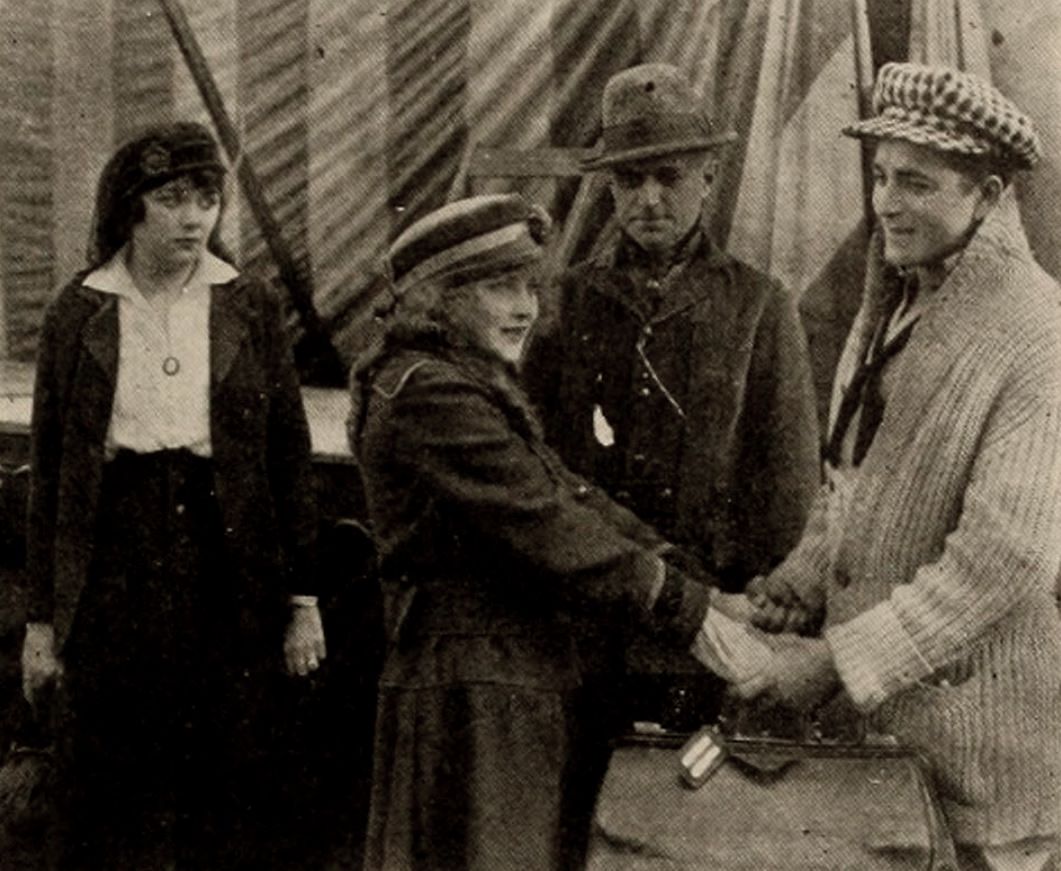
Al Hombourg, as Ezra Butterworth, masterfully captures the internal conflict of a man torn between his carefully cultivated reputation and the undeniable pull of paternal affection. His initial fear and rigidity slowly give way to a more empathetic and ultimately loving father, a transformation that feels earned and believable. George Larkin, as Petey, provides a steady, heartwarming presence, representing the uncomplicated love and acceptance that Babette craves and ultimately finds. The supporting cast, including Charles Brandt, Edwards Davis, Catherine Doucet, Mollie King, Jack Hopkins, and Raymond Agnell, each contribute to the rich tapestry of the film, adding layers of community and emotional depth. Doucet's portrayal of Ezra's second wife, in particular, is noteworthy for its depiction of a woman who, despite being wronged, chooses understanding and forgiveness, a refreshing departure from potential melodramatic tropes.
The narrative's enduring power is a testament to the skill of its writers, Betty T. Fitzgerald and Frances Marion. Marion, in particular, was a prolific and influential screenwriter of the silent and early sound eras, known for her strong female characters and emotionally charged plots. Their script for "A Circus Romance" navigates sensitive themes with a delicate touch, allowing the characters to evolve organically rather than forcing them into predetermined archetypes. The pacing is deliberate, building tension through social pressure and personal struggle, culminating in a resolution that feels earned. The dialogue, conveyed through intertitles, is concise yet impactful, driving the plot forward while revealing character motivations with clarity. Their ability to craft a story that balances melodrama with genuine human emotion is a hallmark of their collaborative genius, creating a piece that stands out even amidst the myriad productions of the era.
"A Circus Romance" delves into several profound themes that remain relevant today. The most prominent is the clash between societal expectations and individual authenticity. Ezra’s desperate attempts to conceal his past highlight the rigid social structures of the early 20th century, where a single misstep could irrevocably tarnish one's reputation. This fear of social ostracism is a powerful motivator, driving much of the film's initial conflict. Babette’s journey, conversely, is one of self-discovery and defiance. Her eventual return to the circus is a powerful rejection of a world that demands conformity and a celebration of a life lived on one's own terms. This struggle for individual freedom against a backdrop of social judgment can be seen in other contemporary works, such as A Little Sister of Everybody, which also touches upon themes of social acceptance and belonging for those on the fringes.
Another compelling theme is the nature of family and forgiveness. The film explores how blood ties, even those strained by abandonment and deceit, can ultimately reassert their power. Ezra's initial denial of Babette is a painful act, yet his eventual public acknowledgment signifies a profound emotional growth and a willingness to confront his past. His wife's forgiveness of his long-held secret further underscores the film's message about the redemptive power of understanding and compassion within familial bonds. This intricate dance between past mistakes and present reconciliation gives the narrative a deep emotional resonance, preventing it from devolving into mere melodrama and elevating it to a more thoughtful character study.
As a silent film, "A Circus Romance" relies heavily on visual storytelling to convey its narrative and emotional beats. The contrast between the vibrant, almost chaotic world of the circus and the staid, respectable environment of Ezra’s town is visually striking. The circus scenes are likely filled with dynamic movement, colorful costumes (even in black and white, the implied vibrancy is palpable), and a sense of freedom that stands in stark opposition to the rigid formality of the town. This visual dichotomy reinforces the film's central thematic conflict. The use of close-ups on actors’ faces would have been crucial for conveying the subtle nuances of emotion, from Babette's hopeful anticipation to Ezra's conflicted fear. The cinematography, though limited by the technology of the time, would have been employed to frame the characters in ways that accentuate their isolation, their joy, or their defiance, drawing the audience into their internal worlds. The visual language of silent cinema, often underestimated today, was incredibly sophisticated, using composition, lighting, and performance to tell stories with profound impact.
The circus itself serves as more than just a setting; it's a character in its own right. It embodies freedom, artistry, and a certain bohemian acceptance that contrasts sharply with the stifling morality of the conventional world. For Babette, it is both her origin and her sanctuary, a place where she can truly be herself without judgment. This romanticized view of the circus as a haven for misfits and artists is a common trope in literature and film, but here it feels particularly earned, given Babette's traumatic experiences with societal hypocrisy. The allure of the big top, with its promises of spectacle and escape, resonates deeply with the human desire for belonging and acceptance, especially for those who feel marginalized by mainstream society. This cinematic portrayal of the circus, while perhaps not as grand in scale as later epics, nonetheless captures its essential magic and its role as a counter-culture haven.
"A Circus Romance" stands as a compelling example of early 20th-century filmmaking, showcasing the era's capacity for intricate storytelling and emotional depth. While perhaps not as widely known as some of its contemporary blockbusters, its themes of identity, social acceptance, and the search for belonging remain universally resonant. It offers a valuable window into the social mores and anxieties of the period, particularly concerning reputation and moral judgment. For silent film enthusiasts and scholars, it provides a rich text for examining acting styles, narrative conventions, and the evolving language of cinema. The film's eventual resolution, with Ezra's public acknowledgment and the wedding gift, speaks to a timeless desire for reconciliation and the triumph of love and family over societal prejudice.
In an age where films often rely on bombastic effects and rapid-fire dialogue, returning to a silent drama like "A Circus Romance" is a refreshing exercise in patience and appreciation for the subtle art of visual storytelling. It reminds us that powerful narratives don't always need sound to stir the soul or elaborate CGI to capture the imagination. Sometimes, all it takes is a compelling story, expressive performances, and a profound understanding of the human condition to create a lasting impact. The film, like many from the period, serves as a crucial historical document, reflecting the societal values and artistic innovations of its time. It invites viewers to slow down, observe, and interpret, engaging with the cinematic experience on a deeper, more reflective level. Its legacy is one of quiet power, a testament to the enduring magic of the silver screen, even in its earliest, most 'silent' form. It’s a compelling piece of cinematic history that continues to speak volumes without uttering a single word, proving that true artistry transcends temporal boundaries and technological limitations. The emotional journey of Babette and Ezra, brought to life through the dedicated performances and thoughtful direction, remains a powerful testament to the complexities of human relationships and the eternal quest for authenticity in a world often too eager to judge.
IMDb 8.1
1924
Community
Log in to comment.