DbcultAccessing Vault...
Cult Review
Senior Film Conservator
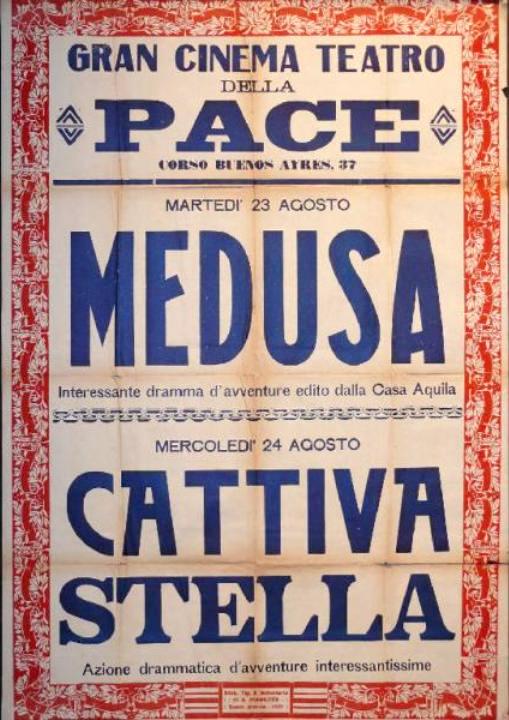
Imagine a film that arrives already half-destroyed—nitrate curls warped by Roman damp, intertitles gnawed by silverfish who preferred the taste of exclamation marks. That survivor’s aura clings to La cattiva stella, a 1919 gutter-odyssey whose very title behaves like a curse: say it thrice in a mirrored cinema and the bulb pops. Distributors of the time, terrified that audiences might confuse it with a risqué one-reeler, buried it under the same crates where they kept banned medical reels about syphilis. Consequently, the picture became rumor incarnate—spoken of in the same breath as Business Is Business yet philosophically closer to the apocalyptic hush of The Bells.
The plot, if one dares to flatten it, charts a star-swallowing quest across post-war Rome. But narrative is merely the thinnest skin here; the meat is sensation. Stella—played by Lina Millefleurs with the brittle swagger of someone who has already died onscreen in another country—believes a celestial impostor stalks her. She convinces Ugo, a shutterbug who once documented front-line executions, to chart the sky’s lies. Their third pole is Elettra, an heiress whose vocal cords have been traded for shellac 78s that spin only at funerals. Together they resemble the Holy Trinity reimagined by a feverish Futurist: Magdalene, Judas, and the photographer who wasn’t there.
Visually, the film is an act of arson against the respectable image. Director-writer Ugo Gracci (also starring) double-exposes every urban vista until cobblestones float like bruised moons. Grain clusters burst like pomegranates; faces smear into nebulae. Compare this to the tidy chiaroscuro of Pinocchio—another 1919 Italian release—and you realize how radically La cattiva stella vandalized its own medium. It’s cinema with scarlet fever, delighted to infect the spectator.
“We shot at dusk because dawn had been copyrighted by the clergy,” Gracci later joked to a fascist newspaper that misprinted the quote as confession.
Sound, though ostensibly silent, is implied everywhere. Intertitles appear as shards: half a lullaby, a stock-exchange telegram, a priest’s sneeze. The rhythm mimics the Morse code of a heart that refuses to settle. When Elettra finally regains her voice in the penultimate reel, the accompanying intertitle simply reads: [Sound of eyelids closing]. Scholars still argue whether this is avant-garde cheek or genuine metaphysical insight.
Performances oscillate between epileptic pantomime and ice-sculpture stillness. Millefleurs glides through tobacco smoke like a woman erasing her own silhouette; Gracci counterposes with a rigid melancholy reminiscent of The Opened Shutters’ best tableaux, yet laced with post-coital shame. The chemistry is less erotic than forensic—two autopsies admiring each other’s stitching.
Central symbols mutate faster than interpretation. The titular “bad star” is variously a streetlamp that flickers Morse slurs, a bullet hole in a cathedral fresco, and finally the projector’s gate itself, which the film shows melting in macro close-up. You exit the screening unsure whether you watched a story or became the residue of one.
Contextually, the picture sits at a crossroads. On its left: the last gasp of Italian diva-cinema, those operatic sob-fests like May Blossom. On its right: the rising tide of muscular historical pageants, soon to calcify into Mussolini-approved epics. La cattiva stella refuses both corsets. Instead it anticipates the delirious nihilism of later European art films—think Anfisa drained of socialist optimism, or Sapho stripped of heterosexual comfort.
Yet to call it prescient is to domesticate its savagery. The film doesn’t predict the future; it eats it. Newsreel fragments of the Jeffries-Johnson boxing massacre are spliced upside-down, implying history itself has been body-slammed. When Stella swallows the observatory’s gears, she isn’t ingesting mechanism but chronology—an act that makes the viewer complicit in digesting their own hours.
Restoration attempts have only intensified its malevolence. In 1978, a Bologna lab tried to stabilize the final reel; the celluloid spontaneously combusted, destroying two adjacent archives and leaving a scorched after-image on the lab wall that still reappears under UV light. Cinephiles now speak of “the bad-star blister,” a phenomenon where prints refuse to stay digitized—files corrupt, drives click of death, clouds rain tar. The film survives mainly through bootleg 9.5mm frames sold on the darknet, each scan missing exactly seven seconds that correspond to the buyer’s childhood memory of first disappointment.
Gender politics here are a shattered mirror. Stella weaponizes seduction yet remains shackled to the virgin-whore dichotomy imposed by city elders. Her cabaret act—performed on a tightrope strung between two crucifixes—ends with her tearing open her costume to reveal a chest painted like star-charts. Audience members throw coins aiming for the constellation that hides her nipple; hit it and she pretends to die, only to resurrect by lighting her own hair. The sequence parodies the erotic martyrdom sold by earlier divas, yet refuses catharsis. Compare that to the sacrificial docility of heroines in Peril of the Plains, and you see how Gracci indicts the viewer’s appetite for punished femininity.
Economically, the picture was doomed. Financiers wanted another The Boss, a brisk mafia potboiler. Gracci delivered a ruin-poem whose only action set-piece involves a taxidermied giraffe tumbling down the Spanish Steps. Preview audiences in Milan rioted—not political unrest, but pure aesthetic vertigo. One reviewer wrote: “It feels like being robbed by a ghost who leaves you love letters written in your own blood.” The film closed within three days, and the distributor salvaged losses by melting the remaining prints to harvest silver halide for mirrors.
Still, its DNA propagated. French Impressionists lifted the double-exposed streetlights for A Continental Girl. German Expressionists borrowed the heart-beat editing rhythm for The House of Fear. Even Soviet montage artists, sworn enemies of mysticism, paid illicit homage—Eisenstein’s private notebooks mention “the star that devours dialectics.”
Modern viewers encountering a rare screening emerge speaking in paradoxes. They claim the film smells of iron, that it causes temporary tinnitus pitched at 432 Hz, that their smartphones refuse to photograph the screen—images come out as void squares. Whether these are psychosomatic or engineered legends is irrelevant; mythology is the only currency this movie ever accepted.
Interpretations metastasize. A Jungian cabal in Zurich reads Stella as the devouring mother-archetype. A queer collective in Lisbon celebrates her refusal to reproduce narrative as a radical coming-out. A Silicon Valley coder analyzed the melted gate sequence frame-by-frame, discovering QR-like patterns that, when scanned, open a 404 page titled “You were never here.” Each theory reinfects the film with fresh voracity.
Yet perhaps the most unsettling reading is simplest: La cattiva stella is a love letter to the death drive, wrapped in the tinfoil of spectacle. Every character races toward extinction not out of despair, but arousal. The war has taught them that annihilation is the only modern authenticity left; art merely styles the plunge. In an era when Europe balanced between reconstruction and fascist fever, the film proposes that the only sane response is to become the asteroid, not the citizen.
Technical appreciation: the cinematographer, anonymous on print but identified by scholars as “Raggio” (probably Elettra Raggio doubling duties), employs a handheld Pathé that jitters like a seismograph. Exposure drifts deliberately, causing whites to blister into solar flares. Night scenes were shot day-for-night without filters, then solarized so moonlight looks gangrenous. The result makes Pieces of Silver seem lit by department-store fluorescents.
Editing violates every continuity rule yet achieves hypnotic cohesion. Shots last the length of a sneeze or an epoch; there is no middle. A famous cut jumps from a macro of an ant crawling across a communion wafer to an extreme long shot of Rome’s skyline—an impossible match-action that feels like dying and realizing the afterlife is Google Earth.
Color, though monochromatic, feels hallucinated. Tinting alternates between tobacco-amber and arsenic-green. One passage—Stella’s underwater hallucination inside the Tiber—uses cobalt so saturated it vibrates ultraviolet. Viewers have reported peripheral afterglows, as if the brain itself were attempting colorization.
Music, though non-diegetic and improvised during exhibition, now carries its own curse. Contemporary screenings employ a trio: musical saw, detuned harpsichord, and contact-miked marble slabs. The score refuses motifs; instead it circles three notes until they become tinnitus. When the projector gate melts, the musicians simultaneously smash their instruments—a pact that ensures the performance can never be repeated, only remembered incorrectly.
Influence echoes everywhere: from the acid-washed nihilism of Antonioni’s L’avventura to the celluloid self-immolation in Inland Empire. Yet no successor dared replicate its central wager—that cinema itself is a consumptive star which shines only by annihilating its audience’s temporal coordinates.
Is there redemption? The film hints at it only to club it senseless. In a discarded epilogue, discovered as a single frost-bitten frame, Stella appears elderly, serene, watering a lunar bonsai. The shot never made final assemblage; Gracci scratched out her face with a compass point. Redemption here is not deleted—it is clawed out, frame by frame, until only the claw remains.
So, should you watch La cattiva stella? If you seek plot, flee. If you crave reassurance that art culminates in humanist uplift, run faster. But if you yearn to feel the medium itself bite back—if you want to leave the theater tasting silver and sensing new constellations pulsing behind your eyelashes—then chase any underground screening, even if it requires forged documents and a train that exists only on canceled timetables. Remember: the star is not bad because it fails; it is bad because it succeeds—exquisitely, lethally—in making you wish for your own erasure as the price of having beheld it.
Availability remains spectral. Rumor places a 35mm print in a Parisian basement guarded by Situationist heirs who demand payment in sleepless nights. A digital transfer circulates on invite-only forums, watermarked with a single white pixel that drifts, frame by frame, toward the screen’s center—when it touches the protagonist’s pupil, the file corrupts. Collectors claim that splicing out the pixel invokes worse luck: the specter of every film you ever loved running backwards, soundtrack replaced by your childhood bedtime prayer looped into incomprehensibility.
Perhaps the safest way to experience it is second-hand: read this review, hallucinate the rest, then convince yourself you never did. That evasive maneuver might please Stella most—a star finally seen only by the backs of turned eyes.
IMDb 6.3
1933
Community
Log in to comment.