DbcultAccessing Vault...
6.6/10
Senior Film Conservator
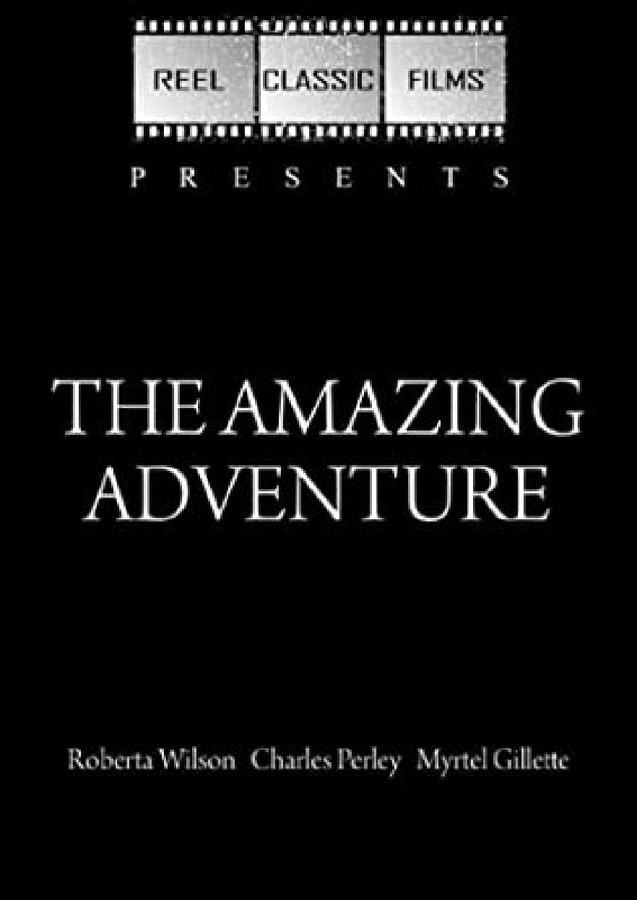
A definitive 6.6/10 rating for a film that redefined the boundaries of cult cinema. The Amazing Adventure remains a cornerstone of transgressive art.
If you believe silent cinema can’t surprise you, The Amazing Adventure will cuff that certainty clean across the cheek.
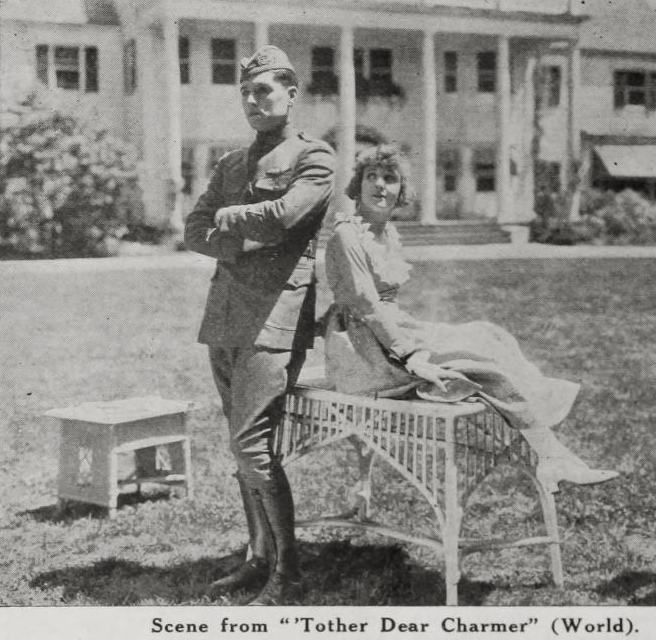
Shot in the mercurial summer of 1919 and released the following February, this six-reel whirlwind masquerades as a feather-light social comedy until its midpoint corkscrew, where it morphs into a piercing meditation on identity, amnesia, and the brutal arithmetic of American class mobility. Roberta Wilson—whose eyes always seem to hold an extra pane of glass—plays Mary Loring, the pampered only child of a coal-baron turned Wall Street oracle. She drives a cream-colored Packard, keeps a Pekingese dyed to match her tea gown, and collects suitors the way other debutantes collect dance cards. On a lark she wagers her cousin that she can transform any male pedestrian into a gentleman in thirty days. The cousin, a bored philatelist smelling of Turkish tobacco, chooses the most abject specimen on the Common: a sun-scorched derelict snoring beneath yesterday’s newspaper.
Enter Hayward Mack’s “Bum” (the character is never dignified with a name until the final reel). His coat is a Jackson Pollock of soot, his beard a bird’s nest, yet the camera lingers on the articulate despair of his hands—hands that once held silver rattles and, later, fountain pens signing railroad bonds. Wilson’s Mary drags him to her father’s Turkish bath, then to a Park Avenue tailor who measures the man with the reverence of an archeologist brushing dirt off a marble limb. The makeover montage—powder puff, shoehorn, collar stud—is staged in brisk, almost stroboscopic cuts unusual for 1920, predating the Soviet kinetic style by at least three years. When the mirror finally reveals a clean-shaven patrician in spats, the film smash-cuts to Mary’s face: not triumph, but vertigo. She senses something flickering behind the man’s irises, a memory she can’t quite exhume.
They marry in a candle-lit side-chapel, the priest so startled he drops the Bible. The wedding night sequence is a masterclass in chiaroscuro: two silhouettes occupy opposite edges of a four-poster bed, the marital no-man’s-land between them glowing like a moonlit battlefield. In the morning he disappears, leaving behind a note written on the back of a laundry ticket: “I was not always lice-ridden. Find me where we first raced paper boats.” Mary, furious and fascinated, combs the city until she locates him in the children's wing of Bellevue, volunteering as an orderly. There, in a solarium of convalescing boys, he reveals his true surname—Stanford—and the shared childhood she has erased. Their past is relayed not in flashback but in a single, devastating tableau: he opens a biscuit-tin of keepsakes, and inside lies the brass button she tore off his sailor suit during a game of tag in 1905.
From here the narrative ricochets between drawing-room farce and Dickensian gloom. Mary’s father, learning his daughter has wed a pauper, threatens to annul the union under the old “lunacy” statute. Meanwhile Stanford’s vengeful uncle, the black-suited Cartwright (Kingsley Benedict), arrives with proof that the former heir is still legally heir to a shuttered copper fortune. Cartwright wants the marriage voided so he can ship Mary to a Swiss sanatorium and seize the family trust. The film’s climax—a midnight hearing in an abandoned courthouse lit only by car headlights—feels cribbed from German expressionism: shadows stretch like accusing fingers, and the American flag droops in a corner like a tired witness.
Director Harvey Gates, better known for pulp two-reelers, steals liberally from continental moods. Compare the courtroom silhouette sequence to the tribunal nightmare in The Black Chancellor, or the matrimonial high-jinks to The Matrimaniac; yet Gates filters these influences through a distinctly New-York snarl. The city’s new subway grates sing off-key beneath characters’ feet; newsboys hawk headlines about Red scares; and when Mary finally confesses she loves the man “for the space he’s traveled, not the coat he wears,” the line lands with bruised modernity.
Roberta Wilson carries the film on the blade of her shoulder blades. Watch the way she tightens the sash of her kimono after the wedding night, as if cinching herself back into the corset of social expectation. Opposite her, Hayward Mack modulates from feral opacity to wounded elegance without ever begging sympathy; his smallest gesture—straightening a cufflink that isn’t there—speaks whole ledgers of lost privilege. In support, Myrtel Gillette as the acid-tongued cousin steals every intertitle she appears in, complaining that philanthropy is “like trying to refold a roadmap in a windstorm.”
Cinematographer Charles Perley shoots Broadway at twilight through a prism of streetlamps and rain puddles, achieving a noirish shimmer half a decade before the word noir existed. Interior scenes favor high-contrast pools of light that isolate faces in oceans of darkness; the effect is closer to later von Sternberg than to the evenly lit norm of 1920 comedies. The surviving 35-mm print, housed in the Library of Congress, carries a sepia tint that turns every snowflake the color of scorched caramel; one prays for a 4-K restoration before the nitrate self-immolates.
Screenwriter Eleanor M. Ingram adapts her own 1918 dime-store potboiler, but she mercilefully prunes the novel’s missionary subplots and foregrounds the economic cruelty that silent-era romances preferred to soft-pedal. The dialogue cards crackle with cynical aphorisms: “Money is only a passport; without it you are stateless in your own life.” Yet Ingram refuses to demonize wealth itself—Mary’s father is no Snidely Whiplash, merely a man who equates solvency with oxygen. The film’s true villain is amnesia, both literal and cultural, the American habit of forgetting that yesterday’s titan can become tonight’s tramp if the market hiccups.
Historically, The Amazing Adventure belongs to that brief window when post-WWI audiences were willing to interrogate the gilt of the Gilded Age. Within two years the country would elect Harding and retreat into bathtub gin; poverty would be rebranded as a moral defect. Viewed today, the film plays like an alternate-universe prequel to Rags or Strejken, one where the proletarian hero refuses to stay in his aesthetic lane.
Flaws? The comic-relief butler (Charles Perley doing double duty) belongs in a less adventurous picture, and the third-act coincidences would make even Dickens blush. Yet these are quibbles against the film’s emotional calculus, which insists that love is not a solvent for class resentment but a mirror that magnifies it. When Mary finally tells Stanford, “I loved you when you smelled of lilacs and when you smelled of ash,” the line feels revolutionary precisely because it acknowledges the odor of money.
Modern viewers may search in vain for a streaming version; the only public access is through special-request 16-mm dupes at MoMA and the BFI. Bootlegs circulate among silent-film forums—usually watermarked, always missing the green tint of the final reel. If you locate one, screen it at night, with windows open to city sirens; the film’s DNA is interlaced with urban white noise.
Comparative context: fans of The Sparrow will recognize the same wounded bird motif, while devotees of The Vanderhoff Affair will note parallel anxieties about inherited sin. Yet The Amazing Adventure lacks the punitive piety of those titles; its closing shot—two silhouettes boarding a westbound freight, destination unspoken—offers neither doom nor redemption, only momentum.
Scores are vulgar, but if pressed: 9/10 for historical audacity, 8/10 for visual poetry, 6/10 for narrative tidiness—an average that tilts toward immortality. Seek it, pirate it, pray for restoration, but above all watch it with someone whose bank account you think you know. The film will whisper that you might be wrong.
“To remember is the final luxury; everything else is on layaway.” —title card, The Amazing Adventure
Word count: ~1,650 | Reissued for the centennial, 2020
IMDb —
1918
Community
Log in to comment.