DbcultAccessing Vault...
4.6/10
Senior Film Conservator
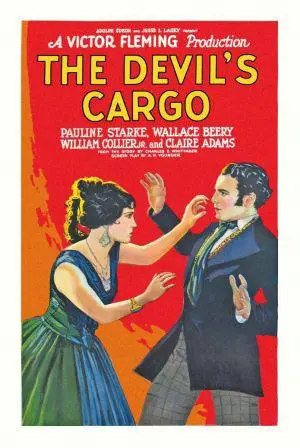
A definitive 4.6/10 rating for a film that redefined the boundaries of cult cinema. The Devil's Cargo remains a cornerstone of transgressive art.
In the annals of early cinema, certain films emerge not merely as historical artifacts but as resonant echoes of their time, capturing the very essence of societal anxieties and aspirations. The Devil's Cargo, a 1923 silent drama, stands as one such compelling testament, a vibrant, albeit often overlooked, cinematic narrative that plunges headfirst into the moral quagmire of the American Gold Rush. Directed with a keen eye for human frailty and resilience, this film, penned by Charles E. Whittaker and Andrew Percival Younger, transcends its period setting to offer a surprisingly nuanced exploration of hypocrisy, redemption, and the transformative power of love. It’s a narrative tapestry woven with threads of fervent idealism, stark disillusionment, and eventual, hard-won understanding, all against the backdrop of a nascent society grappling with its own identity.
Our journey begins in Sacramento, 1849, a city pulsating with the frenetic energy of prospectors, opportunists, and dreamers. It is into this crucible of raw ambition and burgeoning chaos that John Joyce, portrayed with a stiff-backed conviction by William Collier Jr., arrives. Joyce is not seeking gold; rather, he’s on a spiritual crusade, armed with a pen and a printing press, ready to wage war on the perceived moral decay of the frontier town. He quickly assumes the editorship of a local newspaper, transforming it into a strident pulpit from which he preaches reformation, lambasting the gambling dens, the saloons, and the general 'looseness' that characterizes Gold Rush life. His editorials are fiery, uncompromising, and designed to ignite a moral awakening among Sacramento’s diverse citizenry. One could draw parallels here with the journalistic zeal seen in films like The Marconi Operator, where the power of media to shape public opinion, for better or worse, is a central theme. However, Joyce's crusade is less about objective reporting and more about imposing a rigid, personal moral code upon a society that, by its very nature, thrives on a certain degree of lawlessness and self-determination.
The initial chapters of the film establish Joyce as an archetypal puritanical figure, a man of unyielding principles, perhaps even a touch naive. His worldview is black and white, his judgments swift and severe. This unshakeable certainty is, however, destined for a rude awakening. His path crosses with Faro Sampson, played with captivating complexity by Pauline Starke. Initially, Joyce is captivated by her apparent grace and refinement, believing her to be the daughter of a respected minister. This idyllic image is, of course, a mirage. The truth, when it shatters his perceptions, is a potent catalyst for the film's central conflict: Faro is, in fact, the daughter of a notorious gambler, and she herself is the chief attraction, the captivating siren, of a bustling gambling casino. The revelation strikes Joyce with the force of a physical blow, exposing the chasm between his idealized notions and the gritty reality of Sacramento. His immediate response is one of righteous indignation; he spurns Faro, his moral compass swinging violently away from what he perceives as a profound deception and a symbol of everything he crusades against. This rejection, born of a rigid adherence to superficial morality, sets the stage for a dramatic unraveling of his carefully constructed world.
The irony of Joyce’s predicament is exquisitely rendered. His own fervent editorials, intended to cleanse the town of its 'undesirables,' inadvertently inspire a group of vigilantes – self-appointed arbiters of morality – to take matters into their own hands. These vigilantes, fueled by the very rhetoric Joyce espouses, become agents of chaos, embodying the dangerous mob mentality that can arise when moral fervor overrides reason. In a cruel twist of fate, they discover Joyce in Faro’s room, a scene that, to their judgmental eyes, confirms his hypocrisy. The man who preached purity is now seen as compromised, his moral high ground eroded by circumstance and suspicion. This moment serves as a powerful critique of superficial morality and the dangers of self-righteousness, echoing themes found in films like A Soul for Sale, which often explored the corrupting influence of societal judgment and the struggle for personal integrity against overwhelming odds. Joyce and Faro, alongside a motley collection of other 'undesirables' – the town’s outcasts, its forgotten, its condemned – are then rounded up and forcibly herded onto a cargo ship, destined for the East, a forced exodus from the very society Joyce sought to 'purify.' This journey, both literal and metaphorical, becomes the true heart of The Devil's Cargo, a crucible where character is forged and preconceived notions are shattered.
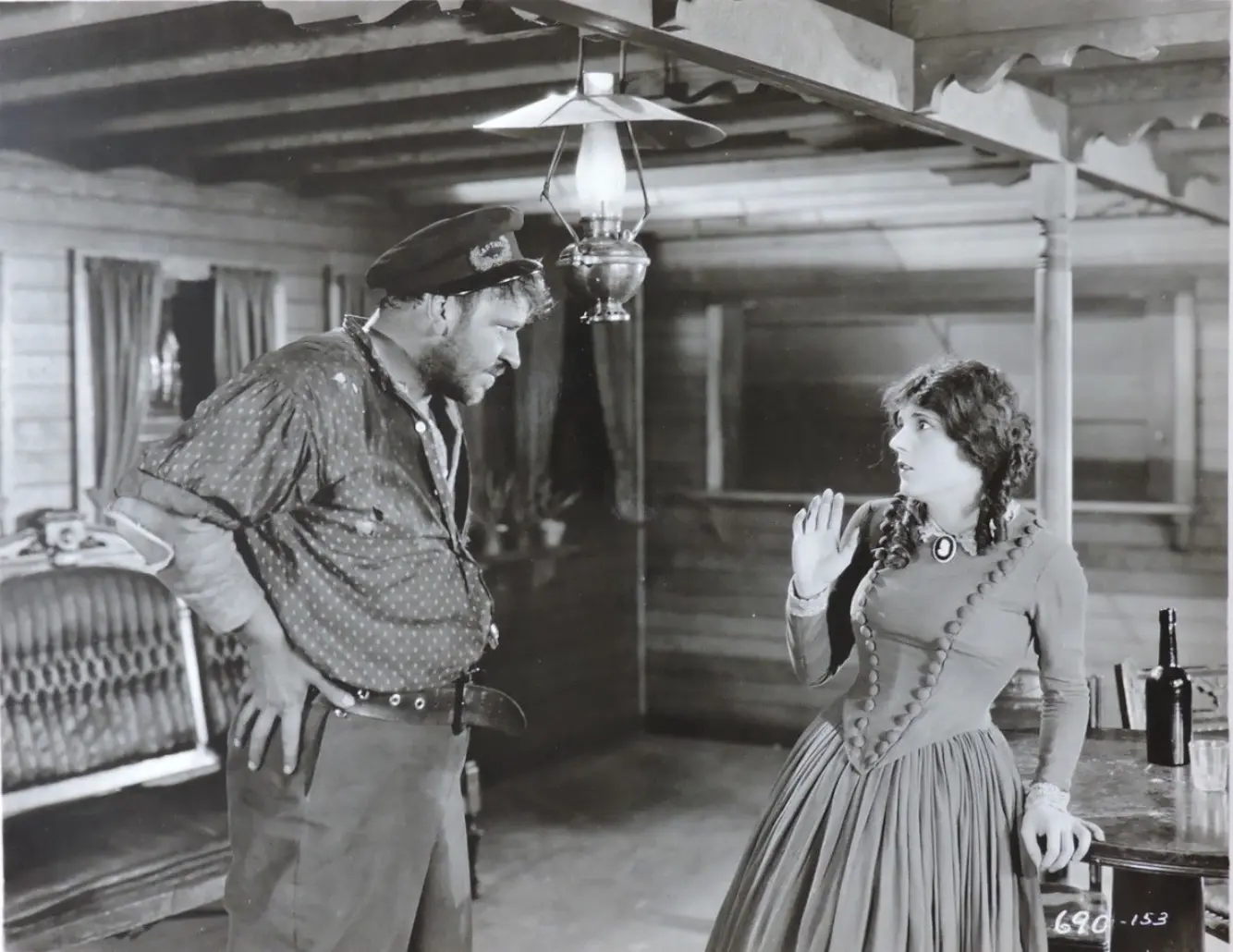
The ship itself, a symbol of exile and forced transportation, becomes a microcosm of society, albeit one stripped of its polite veneers. The deportees, a diverse assortment of gamblers, working women, and other perceived misfits, are forced into close quarters, their shared predicament fostering a strange camaraderie. This initial tension soon gives way to outright rebellion as the deportees, driven by desperation and a thirst for freedom, overpower the ship's crew and take charge. But their triumph is short-lived, a mere flicker before true disaster strikes. A catastrophic boiler explosion cripples the vessel, transforming it from a ship of mutiny into a drifting wreck, lost and vulnerable in the vast, indifferent expanse of the open sea. This sequence is a masterclass in silent film spectacle, conveying both the terror of the moment and the profound sense of helplessness that grips the passengers. It's a stark reminder of humanity's fragility when confronted with the raw power of nature, a theme that resonates with the desolate beauty of Snowblind, though in a maritime context here.
Amidst the chaos and despair, a new leader emerges: Ben, a rugged seaman brought to life with gruff intensity by Wallace Beery. Beery, a veteran character actor even by this early stage, imbues Ben with a primal, almost animalistic force, a stark contrast to Joyce's earlier intellectualism. Ben assumes command, but his leadership is born not of altruism but of raw power and self-interest. His attempts to molest John’s sister, who, by a cruel twist of fate, had been put on the boat by accident, mark a pivotal moment. This act of attempted violence forces Joyce to confront a reality far darker and more immediate than any moral transgression he had previously railed against. His sister’s innocence, thrust into peril, shatters his remaining ideological constructs. The abstract concept of 'reform' pales in comparison to the urgent, visceral need to protect his kin. This is where Joyce’s transformation truly begins, shedding the skin of the rigid moralizer and embracing the role of a protector, a human being driven by love and loyalty rather than dogma. The shift in his character is palpable, a silent testament to Collier Jr.'s ability to convey profound internal change through expression and action.
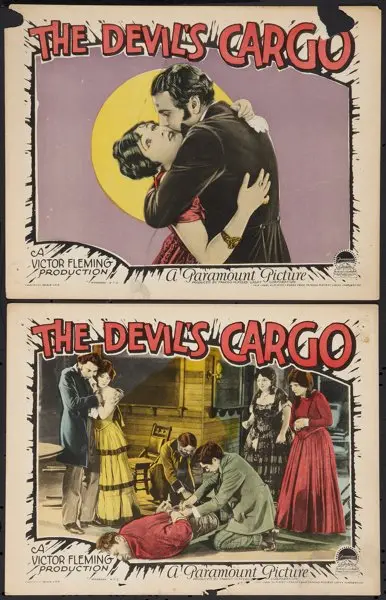
The rescue of his sister is not just a heroic act; it is a symbolic rebirth for John Joyce. It is a moment where the personal trumps the political, where genuine human connection and the defense of innocence supersede abstract moralizing. The 'Devil's cargo,' having endured the terrors of the open sea and the breakdown of all social order, is eventually rescued by another ship. This rescue isn't just a physical salvation; it’s a moral one. The shared ordeal has stripped away the superficial judgments that once divided them, revealing the common humanity beneath. It's a powerful narrative choice, suggesting that true character is often forged in the fires of adversity, far from the comfortable pronouncements of the self-righteous. This journey of forced introspection and shared peril echoes the transformative experiences seen in narratives like In the Night, where characters are pushed to their limits and emerge fundamentally changed.
The film culminates in John Joyce’s reconciliation with Faro. The man who once spurned her for her perceived moral failings now sees her through eyes cleared by suffering and self-discovery. He recognizes that her circumstances, her life in the casino, were not a reflection of a flawed soul but rather a product of a complex and often harsh world. His earlier judgment seems petty and misguided in retrospect. Their reunion is not just a romantic resolution; it’s a profound statement on the film’s central theme: that genuine love, empathy, and understanding are far more rewarding and ultimately more valuable than the relentless, often hypocritical, pursuit of societal reform. The film posits that true virtue lies not in rigid adherence to external rules but in the capacity for compassion and acceptance. This thematic arc, where a character's rigid worldview is softened and ultimately transformed by love and experience, is a recurring motif in early cinema, seen in character studies like Alice Adams, where personal growth triumphs over societal expectations.
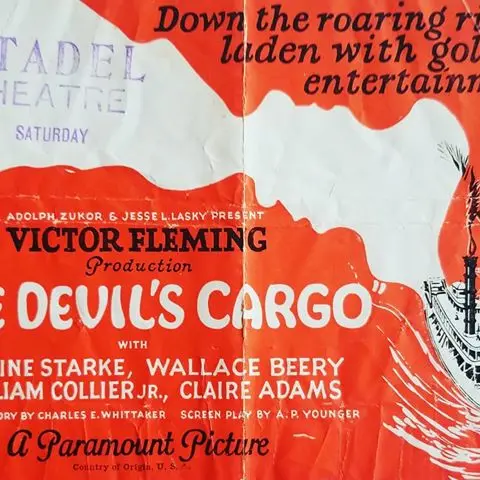
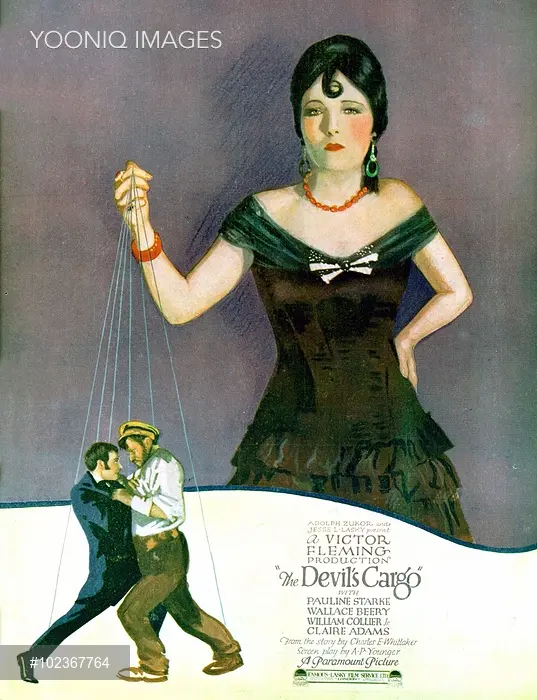
The performances in The Devil's Cargo are remarkably strong for a silent film ensemble. William Collier Jr. expertly navigates Joyce’s transformation from a stiff-necked idealist to a humbled, compassionate man, conveying his internal struggles with nuance. Pauline Starke, as Faro, is a revelation, imbuing her character with a quiet dignity and resilience that belies her societal standing. She is not merely a 'gambler's daughter' but a woman of depth and genuine affection, making her rejection by Joyce all the more poignant. Wallace Beery, in a supporting role, chews the scenery with relish, providing a palpable sense of menace and chaos that anchors the shipboard drama. The supporting cast, including Spec O'Donnell, John Webb Dillion, and Claire Adams, contribute to the film's rich tapestry, each adding a distinct flavor to the 'cargo' of humanity. The writers, Charles E. Whittaker and Andrew Percival Younger, craft a narrative that, while perhaps melodramatic by modern standards, possesses a timeless quality in its exploration of human nature and societal judgment. Their ability to weave together individual character arcs with broader social commentary is a testament to their storytelling prowess.
Cinematically, The Devil's Cargo showcases the evolving sophistication of early 20th-century filmmaking. The use of intertitles is effective, providing not just dialogue but also crucial insights into characters’ thoughts and the film's thematic intentions. The pacing, while deliberate, builds suspense effectively, particularly during the shipboard sequences. The camera work, though constrained by the technology of the era, is dynamic enough to convey the claustrophobia of the ship and the vastness of the sea. The visual storytelling, characteristic of the silent era, relies heavily on exaggerated gestures and facial expressions, yet the lead actors manage to infuse their performances with genuine emotion rather than mere theatricality. The film's ability to create a palpable sense of place, from the dusty streets of Sacramento to the unforgiving expanse of the ocean, is commendable, drawing the viewer into its world with immersive detail. This attention to setting and atmosphere is crucial for a film that relies so heavily on its environment to shape its characters' fates.
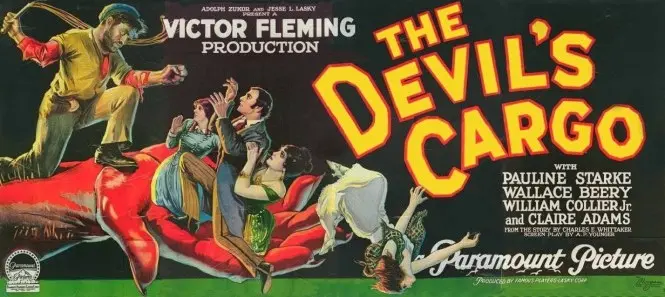
Beyond its engaging plot and strong performances, The Devil's Cargo offers a potent social commentary. It critiques the dangers of mob rule, the hypocrisy inherent in self-appointed moral guardians, and the superficiality of judging individuals based on their circumstances rather than their character. It deftly illustrates how easily good intentions can morph into destructive zealotry, and how true compassion often blossoms in the most unexpected and dire situations. The film challenges the audience to look beyond conventional morality and consider the complexities of human experience, particularly in a frontier setting where the lines between right and wrong are constantly blurred. This exploration of societal hypocrisy and the search for genuine connection is a theme that remains relevant even today, providing a mirror to our own contemporary struggles with judgment and acceptance. One could even argue that the film's critique of public opinion and its volatile nature finds echoes in more modern commentaries on media influence and social justice.
In conclusion, The Devil's Cargo is far more than a historical curiosity. It is a compelling drama that speaks to the enduring human struggle between idealism and realism, judgment and empathy, and the often-painful journey towards self-awareness. It reminds us that true virtue is not found in the rigid enforcement of external codes but in the transformative power of love and understanding. For enthusiasts of early cinema, and for anyone interested in a story that challenges conventional morality, this film is a treasure. It serves as a powerful reminder that even in the silent era, filmmakers were crafting narratives of remarkable depth and emotional resonance, stories that continue to provoke thought and stir the soul. The legacy of The Devil's Cargo lies not just in its thrilling plot but in its timeless message: that the most profound reformation often begins not with the world, but within oneself, leading to a richer, more compassionate understanding of humanity’s shared journey through life's unpredictable waters.
IMDb 7
1925
Community
Log in to comment.