DbcultAccessing Vault...
Cult Review
Senior Film Conservator
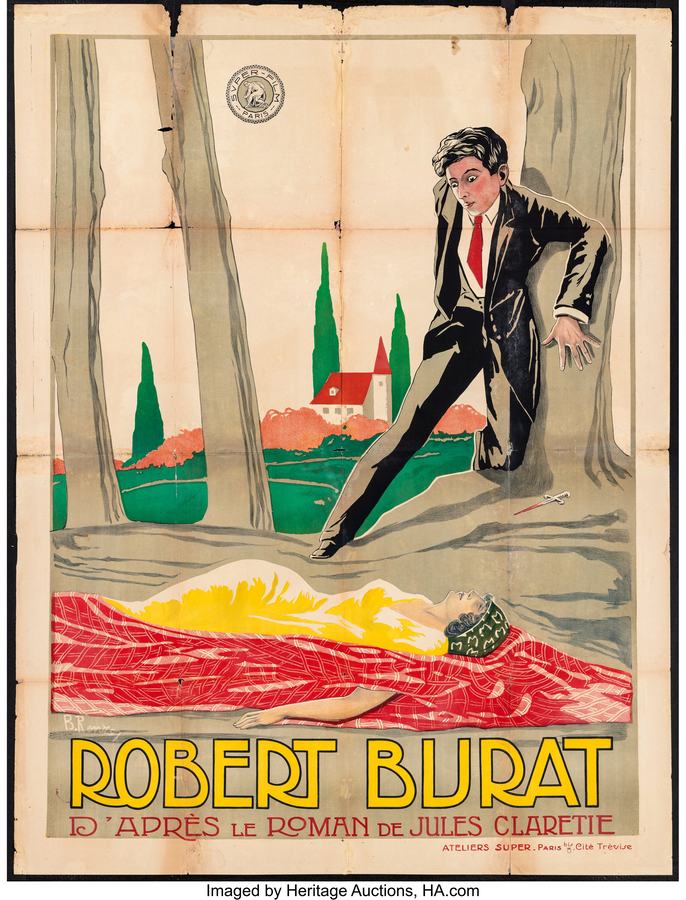
The first time we see Roberto Burat he is tuning his violin with the same languid cruelty a lover might tighten a garrote, and you instantly sense that every note will cost someone a heartbeat. Director-editor Jules Clarétie—yes, the same ink-stained provocateur who once scripted the scandalous A Spy for a Day—has returned with a film that feels less like a narrative and more like a fever etched on celluloid. Shot on grain-rich 35 mm, then solar-bleached to mimic daguerreotype rot, the picture oozes a patina of archaic grime so thick you can almost smell the mildewed velvet of La Scala’s curtains.
Forget linearity; Clarétie layers timelines like lacquer on a Stradivarius. One thread stalks Roberto’s present-tense investigation into his own doppelgänger’s demise, while another folds back to the night he bartered virtuosity for erotic capitulation. A third, more spectral strand belongs to Milan itself—its arcades, its cholera-scarred canals, its chandeliers dripping wax like slow confession. The city becomes a character that hums off-key, a contrapuntal drone beneath the human drama.
Lola Visconti-Brignone—credited only as “La Cantante” until the closing crawl—slips into each timeline with feline seamlessness. Sometimes she is the pamuled diva whose throat can fracture crystal; sometimes a gutter waif humming Monteverdi to stray cats. Clarétie never signals the switch; you must parse the timbre of her voice, the shift from molasses-rich contralto to glass-sharp soprano. The effect is destabilizing, as though your own auditory canal has been forged anew.
Cinematographer Vittorio Nero bathes frames in tungsten pools, then punctures them with sulfur-yellow flares that recall the sodium streetlights in Black Fear. Yet Nero’s boldest gambit arrives during the masked-ball sequence: the camera pirouettes through a hall of mirrors, each reflection tinted a different epoch—sepia, two-strip Technicolor, bleached ’90s bleach-bypass—until Roberto’s face fragments into a kaleidoscope of temporal selves. You half expect the screen itself to slice your retinas.
Compare this chromatic bravado to the pastoral restraint of A Cumberland Romance or the snow-blinded whites of Caprice of the Mountains; the juxtaposition clarifies how Roberto Burat weaponizes color as moral indicator. Gold equals complicity; sea-blue signals the fleeting possibility of innocence; arterial orange is violence, always.
Forget the plush symphonics typical of heritage prestige. Here the soundtrack is scraped, detuned, re-amplified until horsehair on gut sounds like bone on rust. When Roberto practices Paganini’s 24th Caprice, the solo is cross-faded with the squeal of tram brakes and the hiss of a catheter. The result sickens; it also seduces. You realize that beauty, when stretched to its tensile limit, becomes indistinguishable from torture—a lesson A Falu Rossza once taught via pastoral cruelty, but Clarétie pursues with urban claustrophobia.
Visconti-Brignone dominates every molecule of air. Watch how she enters a room: shoulders squared yet wrists limp, as though her body were an exclamation mark penned by a drunk calligrapher. In close-up, the camera registers micro-quivers at the corners of her lips—tiny seismic betrayals that clue us to the predator within. She never plays “femme fatale” as archetype; she plays it as infection, a slow sepsis of the will.
Opposite her, Lucien García’s Roberto is a study in eroded charisma. His cheekbones could cut silk, but the eyes betray a man who has pawned his soul and keeps the receipt for sentimental reasons. García’s violin miming is flawless—months of tutelage under a conservatory prodigy pay off in fingerings so precise you swear the bow itself perspires.
Clarétie’s dialogue needles. A throwaway line about “the scent of rosined grief” or “a confession squeezed from catgut” lingers like perfume laced with arsenic. The script’s greatest triumph is withholding judgment: every character carries rot and radiance in shifting proportions. When Roberto accuses Lola of forging Caravaggios, she retorts that forgery merely restores a masterpiece to the world before the world proved itself unworthy. Moral relativism has rarely sounded so seductive.
At 158 minutes the film risks elephantiasis, yet the rhythm mimics musical tempo markings rather than conventional acts. The first hour drifts like smoke through opium dens; the middle segment accelerates into a staccato of betrayals; the coda snaps shut with a single sustained note held so long you forget to breathe. Compare this deliberate cardiac manipulation to the breezier screwball velocity of A Pair of Pink Pajamas and you appreciate how form here is content: tempo is fate.
On the surface Roberto Burat meditates on authenticity—what separates a Stradivarius from a flawless fake, a genuine feeling from manipulative performance. Dig deeper and you unearth a dirge for Euro-elitism: the aristocracy clings to culture as moral justification while financing their foibles through forged canvases sold to arriviste Americans. The film anticipates its own commodification; characters discuss auction prices even as their lives unravel. Meta? Perhaps. But the self-reference never calcifies into cleverness; it festers.
Devotees of The Trail to Yesterday will recognize the same fatalistic circularity—time as Möbius strip. Fans of From Dusk to Dawn will spot nocturnal imagery that turns cities into predator and prey simultaneously. Yet Roberto Burat surpasses both in moral murk; it makes even Babette’s sacrificial grandeur feel tidy.
No masterpiece emerges unscathed. A subplot involving an anarchist bomb-maker feels grafted from a different film—imagine if Go and Get It crash-landed into La Traviata. The political rhetoric, though historically grounded, thuds against the opera-house opulence. Likewise, an over-reliance on match-cuts between violin pegs and thumbscrews belabors the art-as-torture motif. A quieter metaphor might have sung louder.
Yet quibbles evaporate once the end credits crawl over black, scored by the faint rasp of a frayed bow that refuses to admit it has snapped. You exit the theater tasting resin and rust, unsure whether you’ve watched a film or survived an autopsy of your own cultural pretensions. Roberto Burat does not merely depict moral decay; it perfumes the rot, invites you to inhale, then asks why you keep breathing.
See it twice—once to submit to its narcotic spell, again to trace how Clarétie’s sleight-of-hand swaps mirrors for windows. After that, good luck trusting any artwork, lover, or memory again. The violin has spoken; the echo does not care if you call it lie or lullaby.
IMDb —
1927
Community
Log in to comment.