DbcultAccessing Vault...
Cult Review
Senior Film Conservator
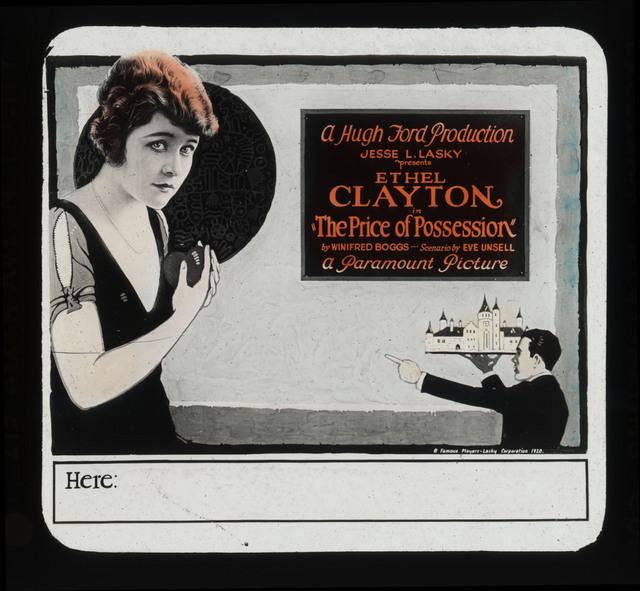
The silver screen, throughout its storied history, has frequently served as a crucible for exploring humanity's most primal desires and complex machinations. Among these timeless narratives, the pursuit of wealth and status often takes center stage, twisting characters into knots of ambition and deceit. Such is the compelling fabric of The Price of Possession, a film that, even in retrospect, resonates with an almost Shakespearean grandeur concerning the intricate dance between truth and fabrication, lineage and longing. It’s a compelling drama, deftly penned by Eve Unsell and Winifred Boggs, that plunges viewers into a world where identity is fluid, and the stakes are nothing less than an ancestral fortune.
Our journey begins not in the opulent drawing rooms of England, but under the harsh, unforgiving sun of the Australian outback, where Jim Barston meets a mysterious, untimely end. This event, cloaked in ambiguity, serves as the catalyst for the entire ensuing drama. Enter Helen, his widow, a woman of remarkable resolve and, as the narrative soon reveals, formidable audacity. Her subsequent actions form the very core of this intricate plot: a transatlantic voyage to England, armed with little more than her conviction, to lay claim to the substantial estate of Gerald Mortimer Barston. Helen's assertion is audacious: her recently deceased husband, she insists, was the long-lost scion, the rightful heir to this formidable English legacy. It’s a claim made with an almost breathtaking temerity, given its fundamental lack of legal corroboration.
The brilliance of Unsell and Boggs’s screenplay lies in its subtle yet profound irony. The deceased Jim Barston, Helen’s husband, was indeed related to the Barston lineage, but merely a cousin to the *true* heir. And, in a narrative flourish that adds layers of delightful complication, the legitimate heir also bears the name Jim Barston. This shared nomenclature becomes a pivotal device, both a source of initial confusion and a dramatic accelerant. Helen, portrayed with a compelling blend of vulnerability and steely determination by Dorothy Hall, manages to sway the estate’s trustees. Despite her inability to produce definitive legal proof, her persuasive charm and an unwavering conviction are enough to install her, however precariously, as the mistress of the manor. This initial triumph for Helen is a testament to the power of a well-spun yarn and the inherent human desire to believe in a romanticized version of events, especially when it simplifies complex legal quandaries.
The film truly ignites with the unexpected arrival of the *true* Jim Barston, brought to life with understated charisma by Reginald Denny. His appearance shatters the fragile edifice of Helen’s carefully constructed reality. Initially, Helen, entrenched in her deception, dismisses him as a brazen impostor, clinging desperately to her fabricated identity. This confrontation is a masterclass in dramatic tension, as two individuals, both named Jim Barston, stand on opposing sides of a deep chasm of truth and deceit, vying for the same birthright. The eventual unveiling of the true heir's identity, replete with irrefutable proof, forces Helen to confront the futility of her charade. Her relinquishment of the estate, while inevitable, is depicted with a nuanced grace, revealing a character capable of introspection and, ultimately, integrity.
What elevates The Price of Possession beyond a simple tale of inheritance dispute is its surprising and poignant denouement. The true Jim Barston, rather than reveling in his victory or dismissing Helen, is profoundly captivated by her spirit. He recognizes not just the cunning behind her actions, but the underlying strength and resilience. In a turn that defies conventional expectations of justice and retribution, he persuades her to stay, not as a guest, but as his wife. This unexpected proposal transforms the narrative from a legalistic drama into a compelling romance, suggesting that true possession lies not in material wealth, but in the forging of human connection. It implies a deeper understanding, a recognition of shared human fallibility and the potential for redemption, making the 'price' of possession less about financial gain and more about the cost of honesty and the reward of genuine affection.
The performances in The Price of Possession are uniformly strong, anchoring the intricate plot with believable human emotion. Dorothy Hall, as Helen, carries the dramatic weight with remarkable dexterity, navigating her character’s journey from ambitious deceiver to a woman capable of love and honesty. Her portrayal avoids caricature, instead imbuing Helen with a complexity that makes her motivations understandable, if not always laudable. Reginald Denny, as the true Jim Barston, provides a compelling counterpoint, embodying a quiet strength and an unexpected magnanimity that ultimately defines the film’s romantic arc. Rockliffe Fellowes, Isabel West, and Clarence Heritage, among others, contribute solid supporting roles, each adding to the authenticity of the English estate setting and the legal wrangling. Their collective efforts craft a world that feels both grand and intimately human, a testament to the era's acting prowess.
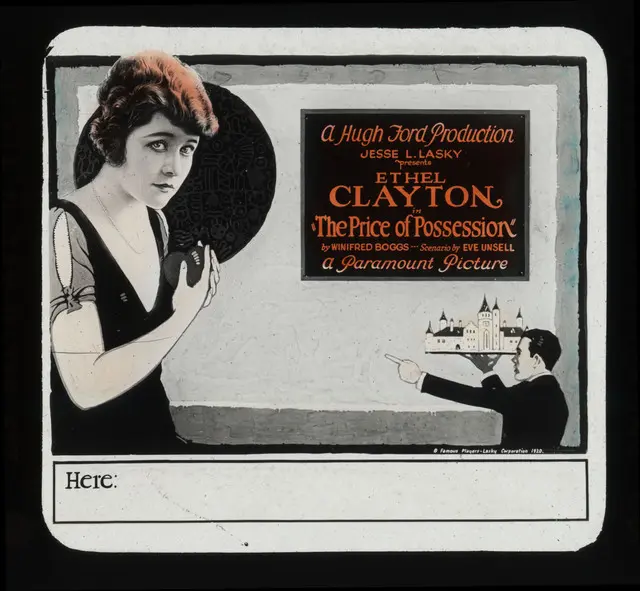
Thematically, The Price of Possession is a rich tapestry. At its heart, it interrogates the very nature of identity. Is it defined by birthright, by legal documents, or by the stories we tell ourselves and others? Helen’s initial triumph underscores how easily perception can be manipulated, how a convincing performance can eclipse inconvenient truths. This theme resonates with the moral ambiguities explored in works like The Picture of Dorian Gray, albeit in a different context of self-deception and hidden truths. While Dorian Gray confronts his inner corruption through an externalized portrait, Helen confronts the external reality of her fabricated identity when the true heir appears. Both narratives explore the profound consequences of living a lie, and the eventual, often painful, reckoning.
Furthermore, the film delves into the corrosive power of greed and ambition. Helen’s initial drive is undeniably rooted in a desire for financial security and social standing, a common human aspiration that can, as shown here, lead to desperate measures. This aspect draws parallels with other narratives of financial intrigue, such as His Wife's Money, where monetary gain often underpins the central conflicts. However, The Price of Possession distinguishes itself by moving beyond mere material acquisition, ultimately suggesting that the true 'possession' worth striving for is love and acceptance, even from someone initially wronged. The film deftly navigates the transition from outright deception to a journey of emotional redemption, a testament to the human capacity for change and forgiveness.
The screenwriters, Eve Unsell and Winifred Boggs, deserve particular commendation for constructing a plot that, while relying on a significant contrivance (the shared name), never feels cheap or unearned. Their narrative craftsmanship ensures that each revelation feels impactful, each character's motivation understandable. The pacing builds gradually, allowing the audience to become invested in Helen’s precarious situation before introducing the inevitable complications. The tension is palpable as the true Jim Barston closes in, and the resolution, far from being a simple triumph of good over evil, offers a more complex, satisfying outcome. This kind of intricate storytelling, where character development intertwines with plot mechanics, is a hallmark of compelling drama from any era.
Consider the social commentary embedded within the narrative. The ease with which Helen, a woman with no legal standing, manages to convince a panel of trustees speaks volumes about the vulnerabilities within legal systems and the power of social performance. It hints at a society where appearances could, at times, override facts, especially when a compelling story was presented. The film also subtly touches upon the role of women in society during its probable historical setting. Helen’s ambition, while leading her to deception, also showcases a remarkable self-reliance and intelligence, qualities that might have been constrained by societal norms. Her ability to navigate a male-dominated legal and social landscape, even through dishonest means, highlights a certain subversive strength. This portrayal offers a fascinating counterpoint to more overtly constrained female characters seen in other period dramas.
While the film doesn’t explicitly delve into the stark realities of poverty or social injustice in the vein of The Jungle, its focus on inheritance and the mechanisms of wealth transfer implicitly comments on class structures. The very idea of a sprawling estate, passed down through generations, underscores the enduring power of aristocratic lineage and inherited privilege. Helen's attempt to infiltrate this system, even if through deceit, can be seen as a challenge to these established hierarchies, a desire to claim a piece of the prosperity that might otherwise be out of reach. It's a drama of aspiration, both legitimate and illegitimate, against the backdrop of an entrenched social order.
The visual storytelling, even without specific details, can be inferred to play a crucial role. The contrast between the rugged, untamed Australian setting where the first Jim Barston dies and the stately, ordered grandeur of the English manor would have been a potent visual metaphor for the shift in Helen’s fortunes and the different worlds she inhabits. The manor itself, with its implied history and weight, acts almost as a character, a silent witness to the unfolding drama. The choices in set design and costuming would undoubtedly have enhanced this contrast, drawing the audience deeper into the distinct environments and the psychological states they represent. Such attention to detail in creating atmosphere is often what elevates a good story to a memorable cinematic experience.
In conclusion, The Price of Possession stands as a compelling example of dramatic storytelling that transcends its initial premise. It begins as a gripping tale of mistaken identity and an audacious claim to an inheritance, but evolves into something far more profound. The film masterfully explores themes of identity, ambition, deception, and ultimately, redemption. The performances, particularly by Dorothy Hall and Reginald Denny, imbue the characters with a depth that makes their complex journey believable and engaging. The screenplay by Unsell and Boggs is a testament to sophisticated plot construction, weaving together suspense, irony, and an unexpected romantic resolution. It’s a narrative that reminds us that while material wealth might come with a price, the true cost and reward often lie in the forging of genuine human connections and the unwavering pursuit of truth. For those who appreciate intricate plots, strong character development, and a surprising romantic twist, The Price of Possession remains a resonant and deeply satisfying cinematic experience, proving that some stories, much like true love, are priceless.
IMDb 6
1933
Community
Log in to comment.