DbcultAccessing Vault...
Cult Review
Senior Film Conservator
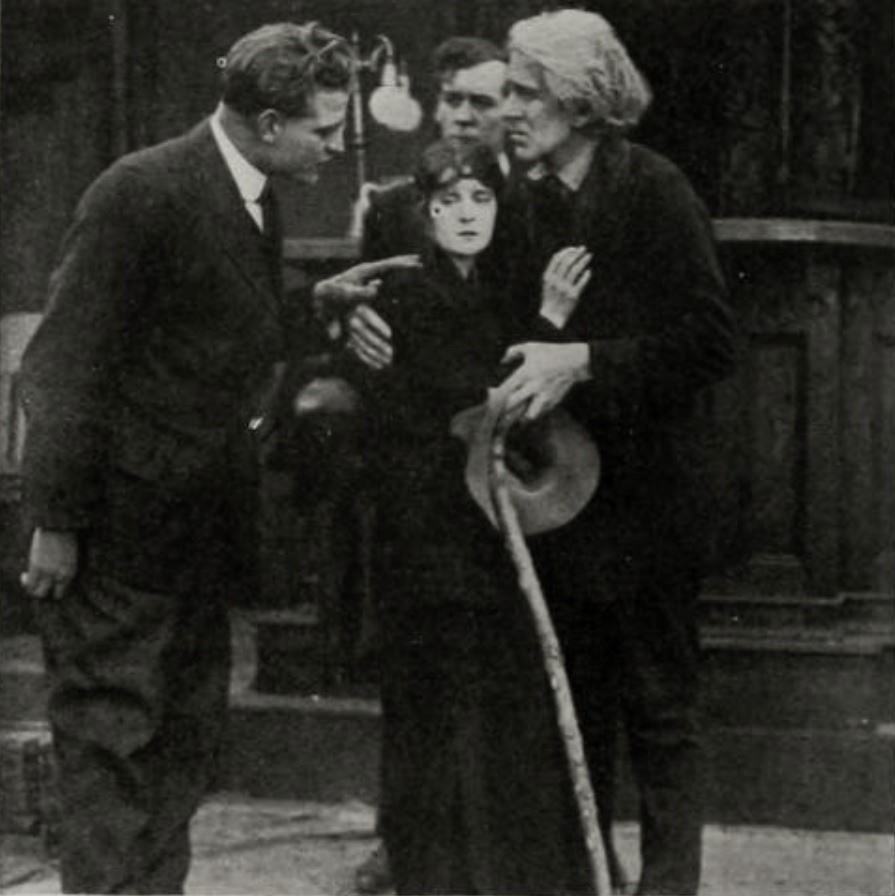
To gaze upon the flickering frames of The Outcast (1915) is to witness the nascent language of cinematic empathy being forged in real-time. In an era where the medium was rapidly transitioning from the nickelodeon's ephemeral thrills to the structured complexity of feature-length storytelling, this film emerges as a poignant, albeit stark, meditation on the intersection of socio-economic desperation and the inexorable weight of the past. It is a work that refuses to shy away from the grime of the gutter, yet it seeks a transcendental grace that feels remarkably modern in its psychological underpinnings.
The film opens with an atmospheric immersion into the 'slums,' a setting that serves not merely as a backdrop but as a character in its own right. Mae, portrayed with a haunting, wide-eyed vulnerability, is the quintessential 'flower in the mud.' Her existence as a dancing girl in a rough dive provides the director with an opportunity to explore the chiaroscuro of early 20th-century urban life. The 'dive' is a masterclass in set design for 1915—a claustrophobic, smoke-filled purgatory where the predatory gaze of men like Graves represents the constant threat of annihilation for a woman of unknown antecedents. When we compare this to the pastoral serenity of Sealed Valley, the urban decay of The Outcast feels all the more visceral.
The relationship between Mae and Bob is the film's moral compass. Bob, the waiter with a checkered past, is played with a stolid, protective earnestness. Their day off in the park is one of the most effective sequences in the film; it utilizes the 'longing gaze'—a staple of silent cinema—to communicate a profound yearning for the 'decent married existence' they see reflected in the young couples around them. This scene is pivotal because it establishes the stakes: they are not merely fighting for survival, but for the right to belong to a society that has already branded them as surplus. It echoes the thematic yearning found in Unto the Darkness, where the light of social acceptance remains perpetually out of reach.
The introduction of Judge Lewis provides the film’s ideological conflict. Lewis is the personification of the 'hanging judge,' a man whose commitment to the law has ossified into a form of moral tyranny. His refusal to grant mercy to a pleading criminal in the opening court scene sets the stage for the dramatic irony that will later consume him. The film cleverly juxtaposes Lewis with a second judge—a more compassionate figure who had previously paroled Bob. This duality between law-as-punishment and law-as-rehabilitation is a sophisticated narrative device for 1915, elevating the film above the standard 'damsel in distress' tropes of the period.
When Graves follows Mae to her room, the film shifts from social realism into the territory of a taut thriller. The ensuing struggle and the accidental shooting are captured with a frantic energy that belies the technical limitations of the time. Bob’s subsequent flight is not an act of cowardice but a rational response to a system he knows will never give him the benefit of the doubt. This sense of being trapped by one’s history is a recurring motif in the era’s cinema, much like the desperate gambles taken in The Cheat (1915).
The discovery of the locket by the young defense attorney initiates the film’s second act—a detective story that bridges the gap between the urban present and a rural, hidden past. The journey to the country town and the meeting with the old photographer and Aitken introduce a pastoral element that contrasts sharply with the courtroom’s austerity. Spottiswoode Aitken’s performance as the man who knows the truth is layered with a theatrical yet effective pathos. The locket itself, containing the photograph of Mae’s mother, serves as the ultimate 'silent witness,' a visual synecdoche for the secrets that the characters have tried to bury.
The trial scene is the film's emotional apex. The prosecutor’s cross-examination of Bob is a brutal demonstration of how the law can be used to weaponize a person's past against them. By discrediting Bob’s testimony based on his parole status, Judge Lewis inadvertently seals the fate of his own daughter. The tension in the courtroom is palpable, and the use of close-ups on Mae’s distraught face demonstrates the growing sophistication of film acting. This isn't the grand, sweeping gestures of the stage; it is an internalised suffering that demands the audience’s complicity.
When the defense attorney presents the locket to Judge Lewis, the film utilizes a 'fade back' or flashback sequence to detail the backstory of Mary Alden and Lewis. This narrative technique was still relatively fresh in 1915, and here it is used to devastating effect. We see a younger, more ambitious Lewis abandoning his love to pursue a career—a classic Faustian bargain that haunts the remainder of his life. The realization that the woman he is about to sentence to the 'limit' of the law is his own child causes a literal and figurative collapse of his authority.
"The law is a blind giant, but even the blind can feel the heat of a burning conscience when the truth finally comes to light."
The resolution of the film is a fascinating study in early 20th-century morality. The fact that another judge—the compassionate one—must step in to suspend Mae’s sentence suggests that Lewis has lost the moral standing to preside over the case. It is a subtle critique of the impartiality of the judiciary. The final scenes, showing a convalescent Lewis in the country, seeking redemption through his newfound relationship with Mae and Bob, provide the 'happy ending' that audiences craved, yet the lingering sadness of the lost years remains.
The cast of The Outcast represents a 'who's who' of early Hollywood talent. Mae Marsh (or Mary Alden, depending on the specific billing of the era's prints) delivers a performance that transcends the often-melodramatic writing. Her ability to convey complex emotions through minute changes in expression is why she became a favorite of the era's great directors. Robert Harron, as Bob, provides a sturdy, masculine counterpart whose vulnerability is equally affecting. Ralph Lewis, as the judge, manages to make a potentially villainous character sympathetic by the final reel, a testament to his nuanced understanding of the script's requirements.
Technically, the film is a product of its time but shows flashes of brilliance. The lighting in the 'dive' scenes uses deep shadows to create a sense of menace that predates the film noir aesthetics by decades. The editing during the fight scene and the subsequent trial is rhythmic and purposeful, guiding the viewer’s eye with a precision that was not yet standard in the industry. Compared to the more static presentation of After the Ball, The Outcast feels remarkably kinetic.
In the broader context of 1915 cinema, The Outcast stands alongside films like The Bargain as an exploration of the 'outlaw' figure who is more sinned against than sinning. It tackles themes of illegitimacy, class warfare, and the fallibility of the legal system with a boldness that is often overlooked in histories of the silent era. The film’s writer, Thomas Nelson Page, brings a sense of Southern gothic sensibility to the 'lost child' trope, grounding the melodrama in a palpable sense of place and history.
For the modern viewer, the film serves as a reminder of the power of visual storytelling. Without the aid of synchronized dialogue, the actors and director must rely on the purity of the image to convey the weight of a father’s regret or a daughter’s terror. It is a visceral experience that bypasses the intellect and strikes directly at the heart. While some of the coincidences—like the locket and the second judge—might feel contrived by contemporary standards, they function within the film’s internal logic as manifestations of a cosmic justice that the human legal system fails to provide.
Ultimately, The Outcast is a triumph of early narrative cinema. It is a film that demands to be seen not just as a historical curiosity, but as a living, breathing piece of art that continues to resonate. Its exploration of the 'other'—those living on the fringes of respectability—remains as relevant today as it was over a century ago. Whether you are a scholar of the silent era or a casual fan of classic drama, this film offers a rich, rewarding experience that lingers long after the final title card has faded to black.
Final Verdict: A Cinematic Relic of Profound Humanity
Rating: ★★★★☆
IMDb 4.7
1927
Community
Log in to comment.