DbcultAccessing Vault...
7.4/10
Senior Film Conservator
A definitive 7.4/10 rating for a film that redefined the boundaries of cult cinema. A Doll's House remains a cornerstone of transgressive art.
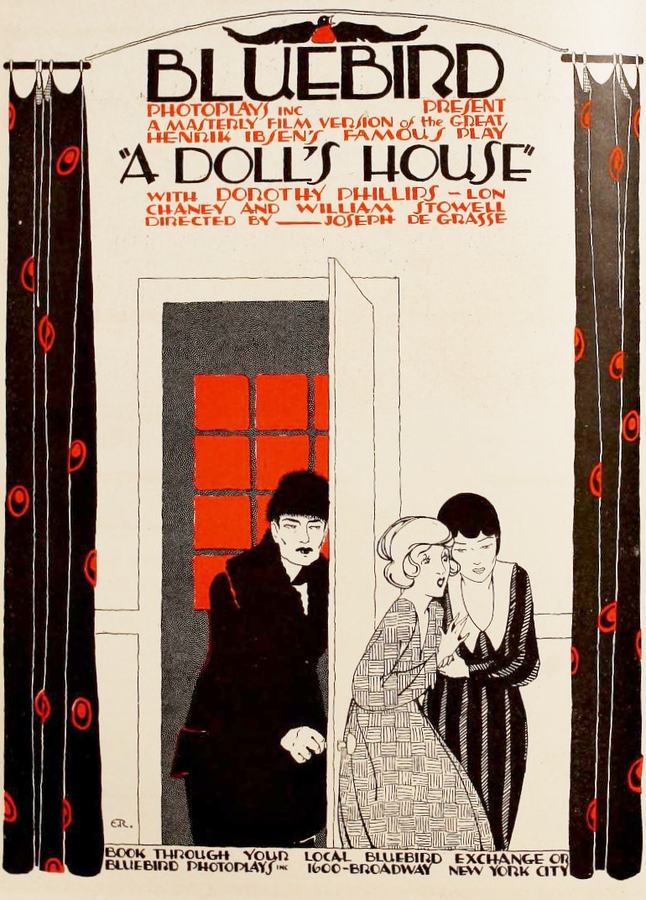
Joseph De Grasse’s 1922 screen transmutation of Ibsen’s incendiary play lands like a shard of ice on bare skin: a silent film that refuses to stay politely mute.
Forget every notion of coy intertitles and fainting heroines; this A Doll’s House vibrates with subversive electricity, shot through with chiaroscuro corridors and close-ups so intimate you can count the gooseflesh on Miriam Shelby’s nape. Shelby’s Nora is no fluttering songbird but a coiled spring—eyes darting, fan flicking—who greets her husband’s patronizing pinches with the strained rictus of a woman swallowing thumbtacks.
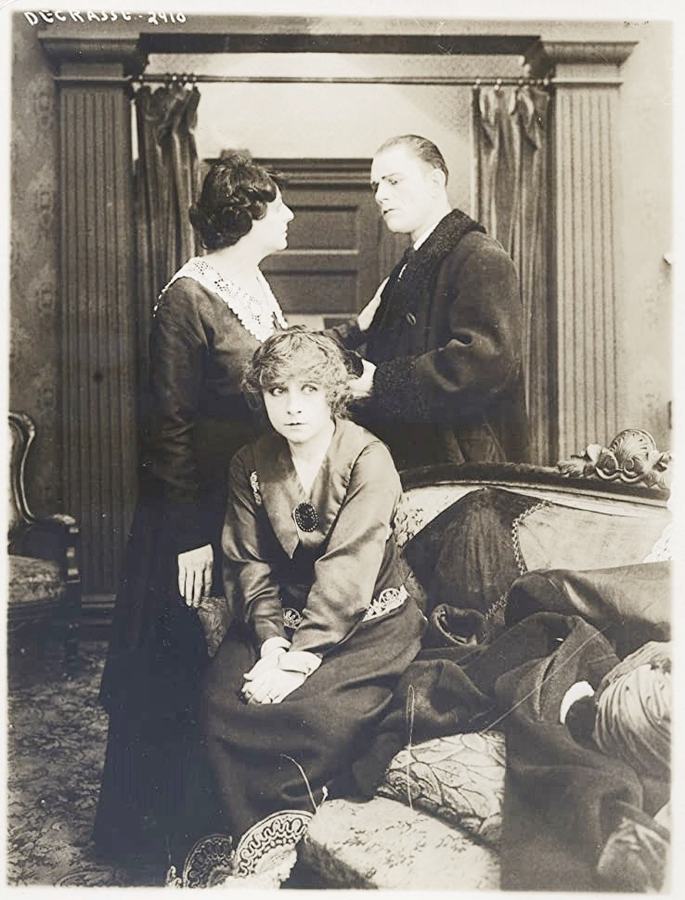
De Grasse, better known for thrillers like Trapped by the Camera, turns fiscal limitation into aesthetic triumph. The Helmer apartment is a diorama of mahogany claustrophobia: doors loom taller than ceilings, Xmas ornaments hang like tiny handcuffs, and the wallpaper’s repeating fleur-de-lis motif feels faintly carnivorous. He choreographs Nora’s tarantella as if it were a pagan exorcism—double exposures of spinning fabric overlay her anxious face, prefiguring the centrifugal force that will fling her out of orbit.
Lurking in the role of Dr. Rank—the family’s ailing, amorous confidant—Lon Chaney magnetizes every frame despite minimal screen time. Gaunt cheekbones sculpted by klieg lights, he exudes a moribund eroticism, his cane tapping a death-march waltz. Watch how his pupils dilate when Nora’s gloved fingers brush his wrist; the moment is wordless yet louder than any subtitle. Chaney’s presence here operates like a stealth anesthetic: you don’t feel the needle until ideology’s bloodstream carries it straight to the heart.
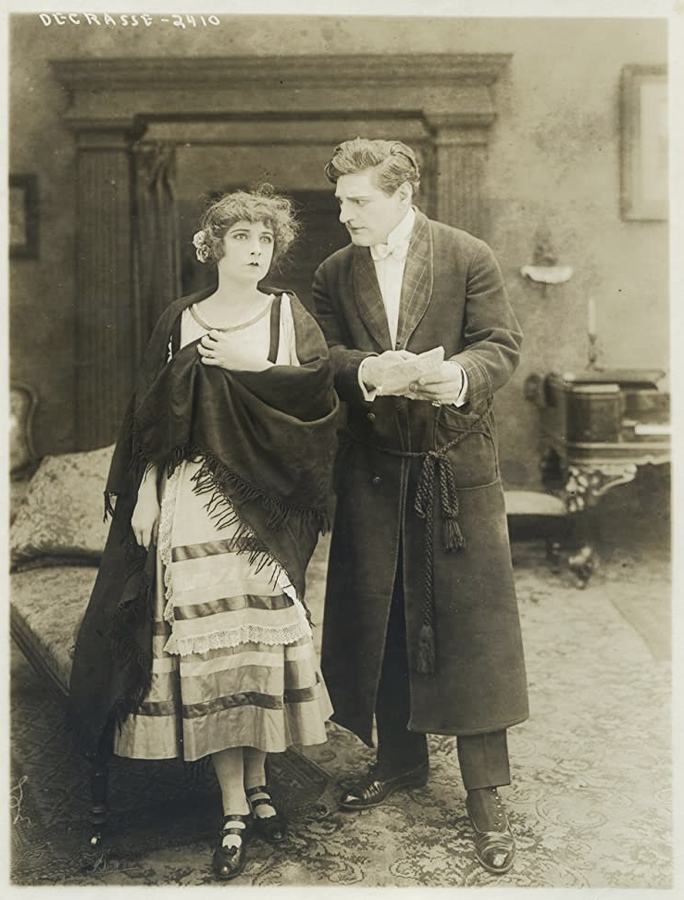
Stowell, matinee-idol handsome, weaponizes that charm with microscopic cruelty. He modulates between smug paternalism and volcanic self-interest so fluidly you glimpse the modern corporate executive in embryo. When he calls Nora his “little feather-brain,” the endearment lands like a paper-cut across the viewer’s conscience; his subsequent tirade upon reading Krogstad’s letter is a masterclass in patriarchal panic, sweat beads forming a diadem of entitlement.
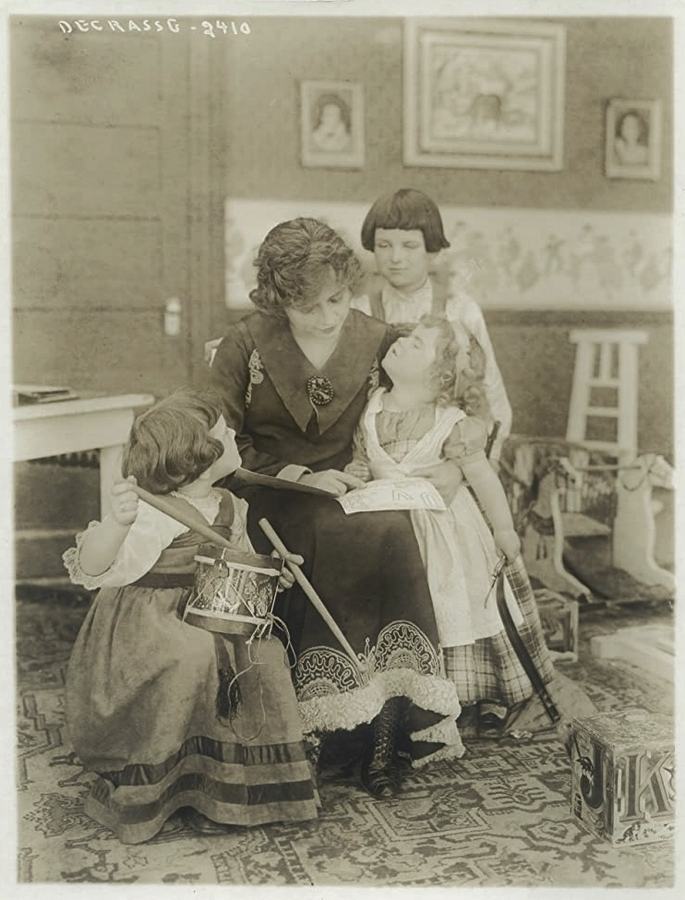
Shelby’s performance is a silent sonata of micro-gestures: the way her hand lingers on the children’s bedroom doorknob as though weighing an entire cosmos of motherhood; the breath she traps behind closed lips when forging her father’s name in flashback, the nib of the pen trembling like a seismograph of guilt. Her final door-slam—achieved by a quick cut to a massive wooden door quivering in the frame—remains one of silent cinema’s most seismic ruptures, a visual detonation that reverberates beyond intertitles.
Place this film beside contemporaneous melodramas and its radical pulse spikes. The Poor Little Rich Girl peddles sentimental salvation through innocence; The College Orphan resolves class tension via matrimonial happenstance. Even De Grasse’s own Through Turbulent Waters ultimately reins its heroine back into domestic safety. A Doll’s House alone lets the camera linger on a woman’s solitary silhouette trudging into a snow-blurred horizon—no fiancé, no fortune, no fade-to-black kiss.
The film’s visual grammar incessantly tallies invisible labor. Note the montage of Nora fluffing pillows, trimming lamps, scrawling numbers on a household account book whose margins bleed into the intertitles. De Grasse literalizes her commodification by superimposing a giant banknote over her anxious visage—a proto-feminist flourish that anticipates Marxist film theory by a decade.
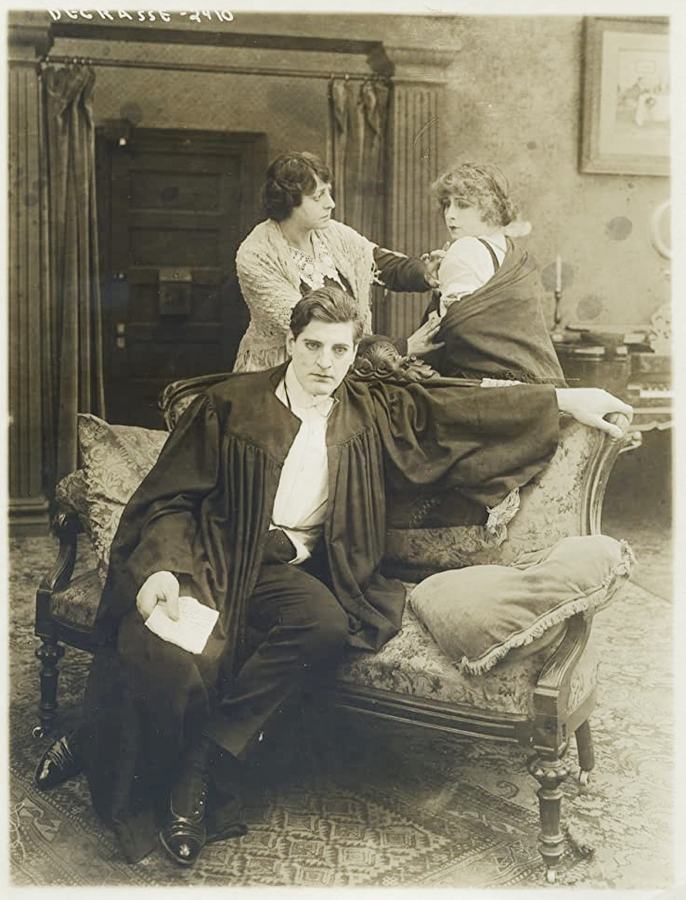
Shot by King D. Gray, the movie luxuriates in tenebrous pools: candlelight carves amber fjords across Torvald’s study, while winter’s cobalt glare through the parlor window paints Nora in chiaroscuro half-life. The camera occasionally dollies backward as she advances, a subtle visual revocation of space that mirrors her shrinking marital terrain. Tinted amber for interiors and cerulean for exteriors, the nitrate reels (surviving in 9.5 mm at Cinémathèque Française) pulse with chromatic emotion.
Joseph De Grasse and scenarist Ida May Park pare away subplots—no Mrs. Linde romance, no Krogstad redemption—compressing the narrative into a taut 47 minutes. Purists howled, yet the excisions intensify the marital pressure-cooker, turning every intertitle into a staccato drumbeat toward rupture. The censor boards demanded an alternate ending showing Nora hearing her children’s cry and returning; De Grasse complied by shooting it but quietly shipped the original cut to European exhibitors, ensuring the door-slam survived.
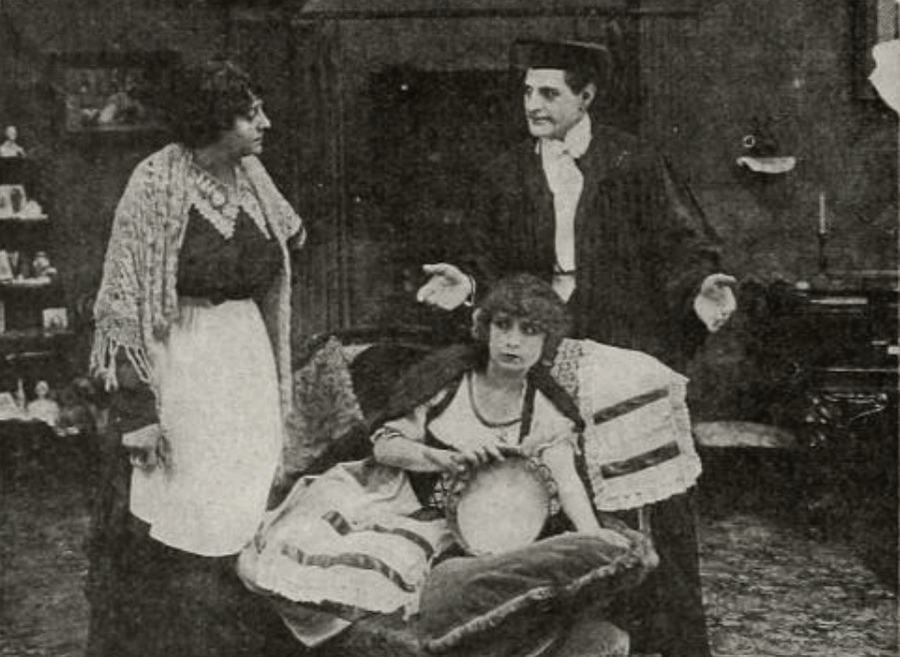
Viewed today, the absence of spoken dialogue paradoxically amplifies Nora’s final soliloquy. Modern viewers subconsciously fill the void with their own internal monologue—an experiential ventriloquism that renders her assertion “I am first and foremost a human being” even more seismic than spoken words could supply.
Contemporary trade papers praised the film’s “Nordic restraint,” though some exhibitors buried it on bottom bills with two-reel comedies. Rediscovered in 1978, the print had turned vinegar-sour; a 2018 4K restoration by San Francisco Silent Film Festival unfurled its visual majesty for new crowds, earning a thunderous ovation that rattled the Castro Theatre’s rafters.
Each rewatch leaves me more rattled, more wide-eyed at how 1922 anticipated 2020s debates on emotional labor, marital equity, and the price of selfhood. When Nora’s silhouette dissolves into Nordic night, the screen feels colder, the world marginally larger—a reminder that cinema’s most radical act can be letting a woman walk out of frame and refusing to chase her.
Verdict: Essential, incendiary, and inexplicably evergreen.
IMDb 6
1931
Community
Log in to comment.