DbcultAccessing Vault...
5.5/10
Senior Film Conservator
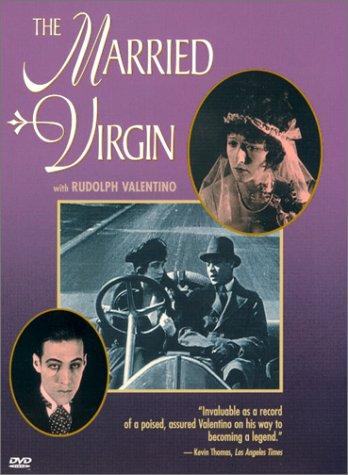
A definitive 5.5/10 rating for a film that redefined the boundaries of cult cinema. The Married Virgin remains a cornerstone of transgressive art.
Picture, if you can, a world where stock exchanges still smelled of ink wet from copperplate presses, where telegrams arrived like miniature lightning bolts on silver trays, and where a woman’s signature on a marriage register could function as legal tender redeeming her father’s flesh. Into this gas-lit labyrinth slinks The Married Virgin, a 1918 silent that most buffs relegate to footnote status—“Oh yes, Valentino before The Four Horsemen.” Dismiss it at your peril. The film is a velvet glove turned inside-out to reveal the brass knuckles of patriarchal capitalism, a fever dream of pre-Code sensuality that feels startlingly contemporary in an era still debating bodily autonomy.
Director Charles Swickard (never a household name, unjustly) shoots Venice-by-way-of-California as though it were a Caravaggio chapel: every torch-flare carves tangerine wedges across stone, every lace curtain billows like ectoplasm. The unnamed cinematographer—historians quibble between Gilbert Warrenton and Elgin Lessley—pioneers what I’d dub “emotional parallax”: focus racks from Marya’s tear-beaded eyelashes in extreme foreground to the Count’s silhouette lounging thirty feet behind her, creating a depth-of-field soap-bubble that seems to throb with heartbeat irregularity.
Compare this spatial sophistication to the relatively stage-bound tableaux of East Lynne or the pictorial stasis of The Suburban Vicar, and you appreciate why The Married Virgin was quietly revolutionary. Its camera moves—hand-cranked, jittery, yet audacious—dolly through wrought-iron gates, peer through keyholes, even plunge underwater (in a submarine-shot homage to 20,000 Leagues) for a hallucinatory flashback of Marya’s childhood baptism. The aquatic footage is tinted aquamarine via手工-dyed frames, one of the earliest uses of selective colour to signal psychological regression.
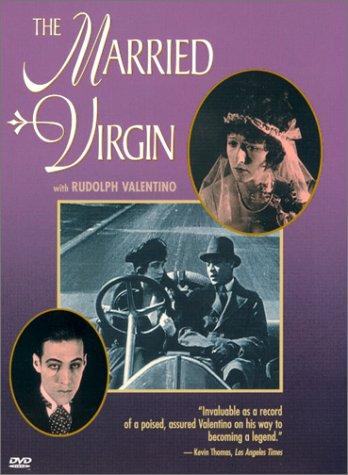
Rudolph Valentino’s Count Roberto has suffered decades of critical whiplash: either a mustache-twirling cad or a smoldering martyr to passion. Both readings flatten the performance. Watch his micro-gestures—the way his right thumb obsessively rubs the signet ring that imprisons the family crest, or how he inhales Marya’s glove but hesitates before the scent reaches his lungs, as though fearing narcotic overdose. It’s a portrait of toxic masculinity aware of its own dysfunction, predating Brando’s self-lacerating Stanley Kowalski by three decades.
“I have bought you, yes,” his intertitle reads, “but the coin was my own soul, and I fear the exchange was counterfeit.”
This line, scribbled by scenarist Hayden Talbot, crackles with a modern self-reflexive irony—you half expect the Count to wink at the camera. Instead Valentino lets his pupils dilate like a nocturnal creature caught in headlamps, and the moment becomes genuinely tragic. Compare that to Frank Newburg’s Stephen Erskine, the nominal “hero,” whose lantern-jawed earnestness feels, frankly, insipid beside Valentino’s baroque ambivalence. The film slyly undercuts the All-American diplomat: Stephen brandishes a revolver with the giddy inexperience of a fraternity boy waving a toy at Hell Week, whereas the Count handles firearms like a man who’s calculated the trajectory of every sin before committing it.
Kathleen Kirkham’s Marya is no passive porcelain doll. In the pivotal wedding-night sequence she bars the bridal chamber door with a crucifix and a flick-knife concealed inside her garter—a detail the censor boards of Ohio and Pennsylvania excised, surviving prints circulate with jump-cuts that look like bad splices but are actually moral surgery. Lillian Leighton, essaying the role of the spinster aunt, delivers a scene-stealing monologue (via intertitle) about the economics of dowries that could double as an op-ed in today’s Guardian:
“A girl is raised like a hothouse orchid, petals pampered, roots ignored, then auctioned to the highest bidder who will pluck her at the first sign of bloom.”
It’s a scathing indictment, and the film lets the words hang in mid-air like smoke. Notice how Swickard cuts to a static long-shot of framed miniatures—portraits of Marya’s ancestresses staring down the centuries, their painted eyes accusatory. The montage anticipates Soviet-style intellectual editing, yet arrives two years before Battleship Potemkin.
Modern viewers often complain that silent cinema feels like “watching a radio.” Try disabling your default organ score and viewing The Married Virgin in absolute hush; the absence amplifies small sonic ghosts—projector flutter, the creak of your own leather sofa, the arterial thrum inside your ears. Suddenly the flickering images attain 3-D urgency: Marya’s tear isn’t just glycerin, it’s a tidal event. The Count’s cigarette ash lengthens like a countdown fuse. Silence becomes a co-author, a negative space that invites you to graft your own inner soundtrack—maybe Debussy’s Clair de Lune, maybe the low throb of a Billie Eilish bassline—onto the vintage celluloid.
On paper the plot creaks: father gambled, daughter pays. Yet Talbot’s script reframes blackmail as an early template for derivative debt. The Count doesn’t simply want Marya’s body; he seeks to corner the market on her hereditary wealth—land holdings in Dalmatia poised to quadruple once the post-war Adriatic re-map is signed. In today’s parlance he’s a venture-capital vulture converting moral bankruptcy into leveraged buyouts. The film thus anticipates our era of data-harvest ransom and celebrity-sex-tape extortion. Its moral unease feels prophetic.
If you crave another silent that marries fiscal dread to erotic brinkmanship, stream La dame aux camélias—yet its courtesan sacrifices for altruism, whereas Marya’s marriage is pure coercion. Conversely The King’s Game offers political chess, but its gender politics remain testosterone-soaked. The Married Virgin occupies a liminal sweet-spot: erotic thriller without the guilt, social critique minus the pamphleteering.
For decades the only surviving element was a 9.5 mm Pathé-Baby abridgement sold in French department stores as children’s entertainment—imagine toddlers reenacting marital blackmail with paper dolls! In 2019 Bologna’s Il Cinema Ritrovato premiered a 2-K restoration culled from a 35 mm nitrate print discovered in a Montenegrin monastery (the monks had used reels to reinforce stained-glass gaps). The restored tinting—amber for interiors, viridian for exteriors, rose for erogenous anxiety—glows with jewel-encrusted luster. Kino Lorber’s Blu-ray offers two scores: a traditional chamber ensemble and a synth-chillwave remix by Daedelus that somehow deepens the nocturnal dread.
Some silents you appreciate; others you binge like opium-laced absinthe. The Married Virgin is the latter—a film that crawls under the corset of polite society and claws until the stays snap. Its gender politics are messy, its class politics messier, but its stylistic audacity and moral ambiguity seduce like the Count’s velvet-lined coercion. Ninety-odd minutes later you’ll emerge blinking into neon daylight, unsure whether you’ve been kissed or conned, certain only that you want another hit.
IMDb 6.4
1935
Community
Log in to comment.