DbcultAccessing Vault...
5.4/10
Senior Film Conservator
A definitive 5.4/10 rating for a film that redefined the boundaries of cult cinema. A False Alarm remains a cornerstone of transgressive art.
A door slams. Somewhere, dignity falls flat on its face.
There’s a special alchemy to early-century slapstick: take a mundane noise, inflate it with paranoia, and let the balloon ricochet until the room looks like a thought balloon in a Tex Avery cartoon. Walt Hoban’s A False Alarm distills that formula into twelve electric minutes, proving that runtime is irrelevant when panic is the star. The film’s genius lies not in sophisticated plot machinery but in how cavalierly it strips civic authority down to clown shoes.
Picture the neighbor first: a silhouette at the windowpane, his face swallowed by velvety darkness save for the cigarette ember that pulses like a guilty conscience. The instant the crash detonates, his imagination detonates harder—blood on the wallpaper, a blunt instrument dripping melodrama. The gag is universal; we’ve all felt that midnight jolt when the pipes clank and suddenly the Boogeyman has an M.O. Hoban weaponizes that universal shudder, then watches society trip over its own shoelaces trying to exorcise it.
Vernon Stallings, moonlighting as the jittery homeowner, has the rubbery limbs of a rag doll possessed by Saint Vitus. Watch him balance atop a sideboard to retrieve a vase, only to somersault into a fishbowl: the stunt is filmed in real time, no under-cranking, no stunt double. The camera’s stately patience makes the pratfall feel like physics’ personal vendetta. In an era where CGI bends gravity until it squeaks, this mundane authenticity hits like moonshine—illicit, flammable, and probably bad for you.
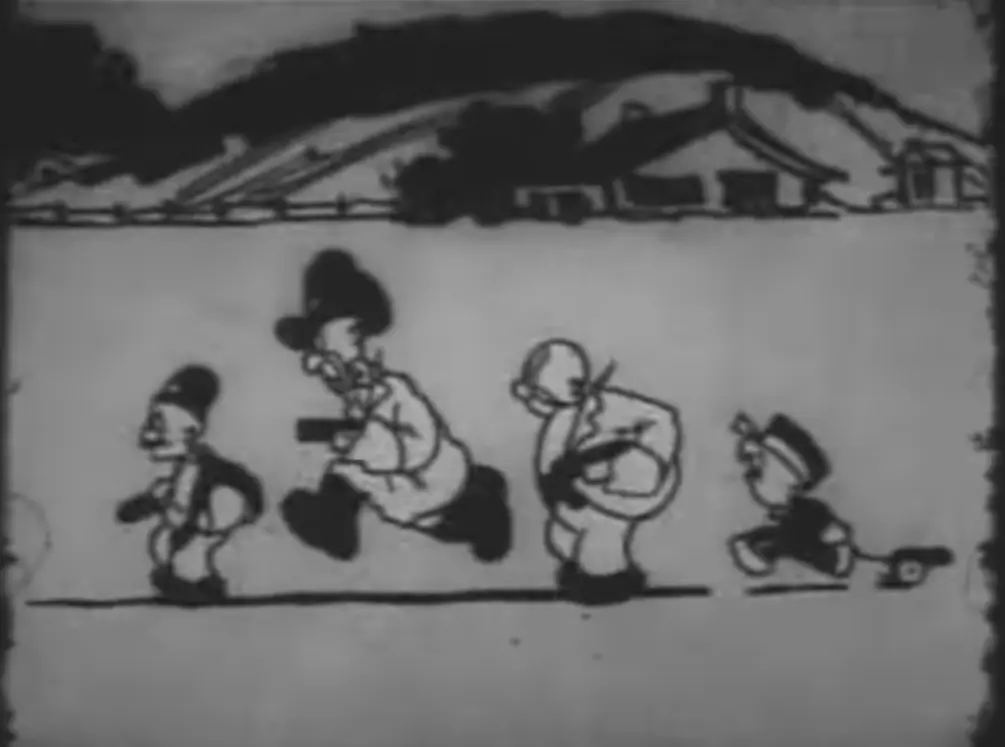
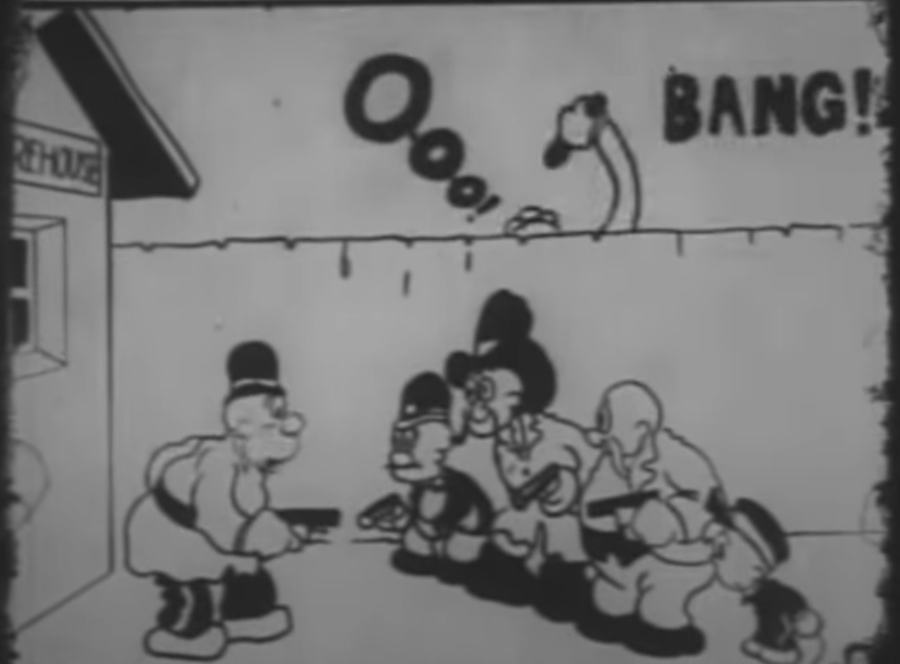
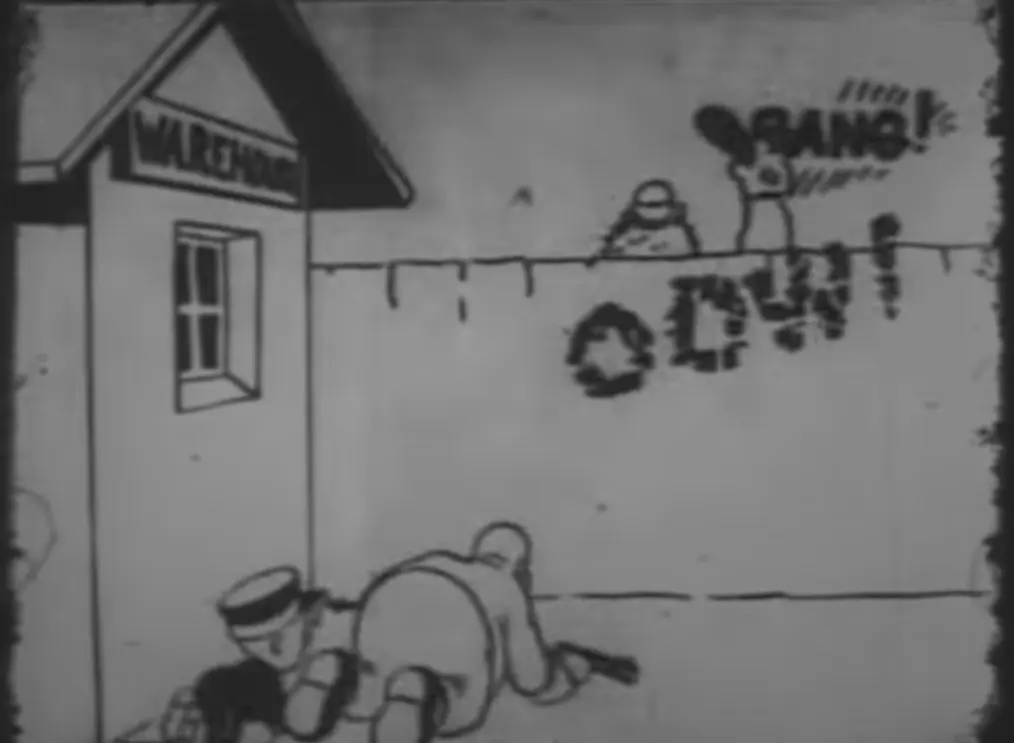
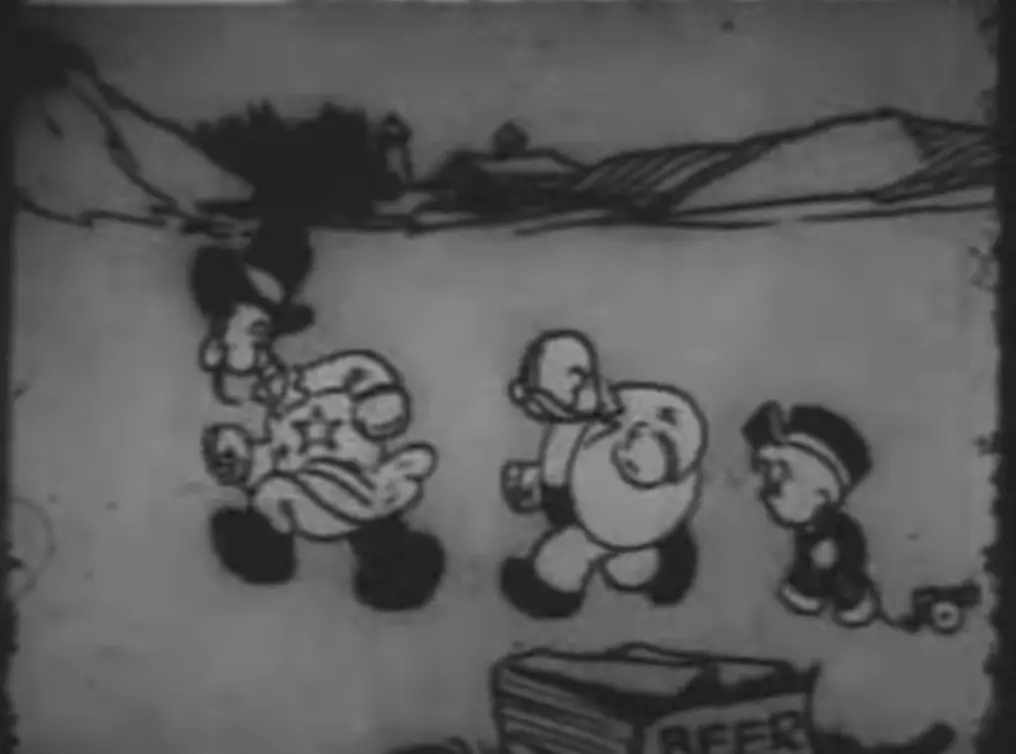
Then the sheriff barges in, badge flashing like a sheriff-shaped disco ball. He’s the prototype for every small-town arm of the law who mistakes procedure for solution. Observe how Hoban frames him: low angle, shoulders filling the doorway, yet the ceiling fan dangles perilously above—visual shorthand that authority here is always one inch from concussive irony. The moment he radios for backup, the film’s tone pivots from domestic screwball to bureaucratic carnival. Each successive civil servant arrives with faster cuts and steeper Dutch tilts; the editing rhythm simulates a panic attack in real time.
Comparative context helps: if Hearts of Love filtered melodrama through stained-glass piety, and Apartment 29 weaponized claustrophobia, then A False Alarm weaponizes the very act of summoning help. The escalating incompetence prefigures modern satires like Burn After Reading, yet does so without a single syllable of dialogue. Intertitles are sparse, almost contemptuous of verbiage; the film trusts faces, doors, and the metronomic tick of wall clocks to articulate man’s tribal impulse to overreact.
Consider sound—its absence, specifically. The crash that ignites the plot is never heard, only implied by jolted curtains and a cat’s arched spine. Our brains paint the decibel, a participatory gimmick Hitchcock would later exploit in Blackmail. Contemporary audiences, jaded by THX bombast, may smirk at the quaintness, but the silence functions like negative space in a charcoal sketch: the void compels you to scribble your own terror into it.
Hoban’s screenplay—yes, even silent films have scripts—stacks misunderstandings like a precarious Jenga tower. Each new civil servant adds a fresh rulebook: health inspector demands quarantine for the goldfish, the fire marshal cites combustible feathers, the postal clerk insists the crash was a clandestine signal to bootleggers. By the time the undertaker shows up “just in case,” the living room resembles a vaudeville parade where every profession is a punchline. The gag crests when the homeowner tries to confess the truth but is shushed—because paperwork trumps reality.
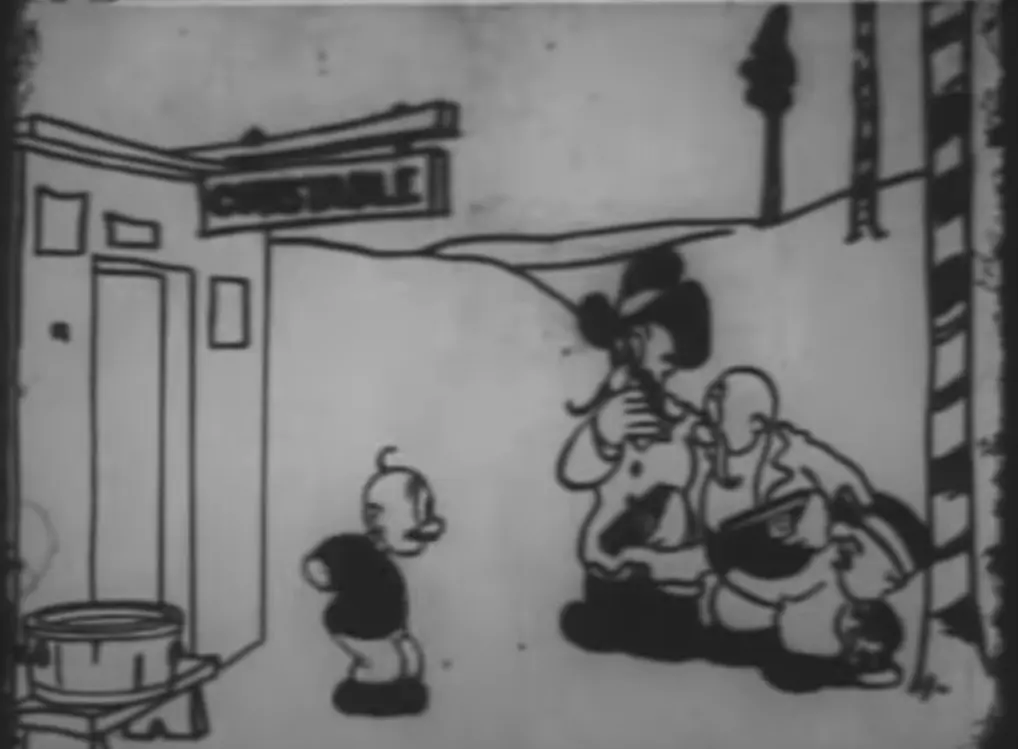
Cinematographer Frank Good keeps the mise-en-scène deceptively shallow; backgrounds smear into chiaroscuro, foreground objects pop like in a pop-up book. Notice the coffee pot, gleaming center-frame, destined to shatter. It’s Chekhov’s percolator. When it finally explodes, the splash pattern resembles a Pollock before Pollock, a caffeinated Big Bang that sends the sheriff slipping into a laundry basket. The stunt lasts maybe three seconds, yet the setup begins in the opening shot—visual foreplay worthy of Keaton, who himself once said, “Tragedy is a close-up; comedy, a long shot.” Good toggles between both like a sadistic optometrist.
Gender politics sneak in sideways. The lone female character—credited only as “Neighbor’s Wife”—appears midway, clutching a feather duster like a scepter of domestic sovereignty. She never speaks, but her eye-rolls could curdle milk. Watch her exit frame left while men create bureaucratic gridlock: a silent indictment of masculine problem-solving long before the term “toxic” entered the lexicon. In contrast, Shoes foregrounded female suffering; here, the woman simply refuses to participate in the idiocy. Her absence becomes a presence, a vacuum the men frantically plug with protocols.
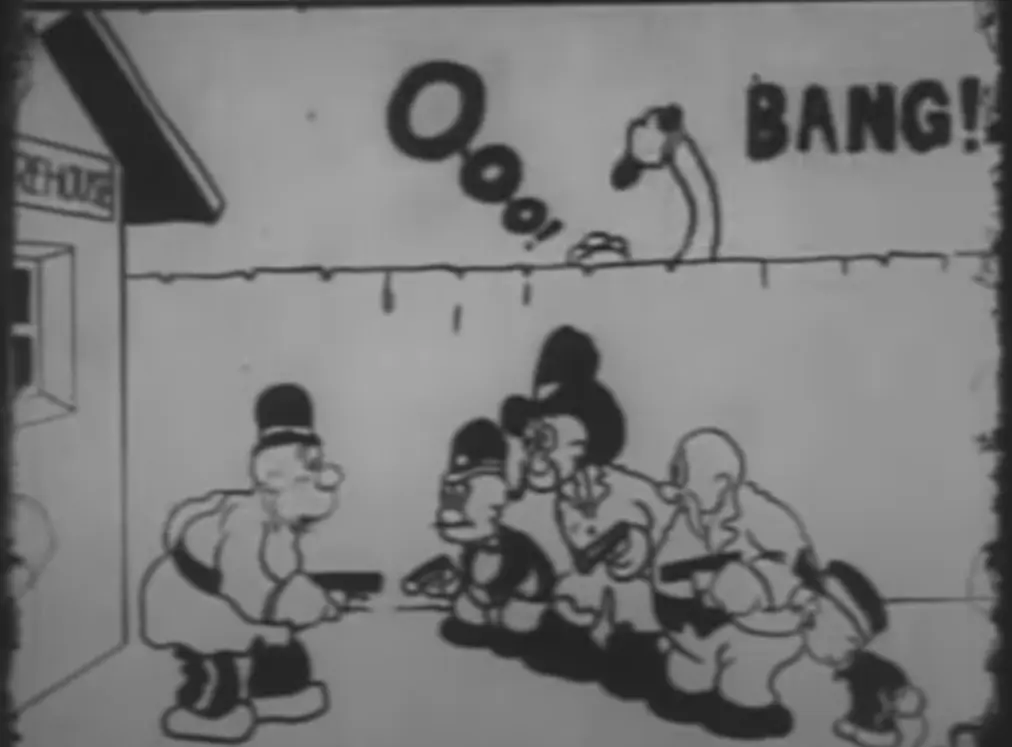
Themes? Take your pick: surveillance culture, the illusion of security, civic overreach. But the film’s most sly commentary is epistemic: how quickly certainty mutates into mythology. The neighbor “knows” it’s murder; the sheriff “knows” it’s bigger than him; the experts “know” specialized jargon can cage chaos. By the time the door hinge is revealed as the true culprit, no one can admit error—because careers now hinge on the narrative. Replace screen door with WMD and you have a century’s foreign policy in miniature.
Restoration nerds will appreciate the 4K transfer struck from a 35mm nitrate print discovered in a Defiance, Ohio barn. The grain looks like frost on a window; every cigarette burn is a miniature supernova. The tinting follows period conventions: amber interiors, viridescent night, rose-cheeked close-ups that render faces like bruised peaches. Composer Ben Model’s new score—piano, clarinet, and muted trumpet—syncs pratfalls with klezmatic staccatos, evoking a Yiddish circus rolling through Main Street. The result feels less like a museum relic, more like a pebble in your shoe demanding attention.
Yet the triumph is tonal balance. Unlike Within Our Gates, burdened by racial trauma, or I Accuse, heavy with social justice, A False Alarm is a soufflé of anxiety—risks collapse if over-analyzed. Hoban understands that satire ages better when it tickles rather than punches. The film’s nihilism is frothy, ephemeral, vanishing like the pop of a flashbulb. You laugh, you exhale, you realize the universe is indifferent, and somehow that comforts.
Legacy? Search the DNA of The Pink Panther, Fargo, even Edgar Wright’s Hot Fuzz—you’ll find Hoban’s fingerprints smudged on every scene where bumbling officialdom metastasizes into spectacle. The movie’s brevity precluded franchise potential, yet its DNA replicates endlessly. Next time you watch a swat team burst into a sitcom living room, tip your hat to a 1920 one-reeler that perfected the gag before sound was even a glint in Warner Bros’ eye.
So, is A False Alarm essential viewing? If you crave pyrotechnics or three-act redemption, skip it. But if you savor the acrid tang of human folly distilled to its atomic essence, queue it up at 2 a.m. when the pipes begin their nocturnal chatter. Watch the neighbor’s eyes widen. Recognize that reflex in yourself. Then laugh—because if you don’t, you’ll dial 911 and become the next punchline in a century-old joke that refuses to retire.
IMDb —
1926
Community
Log in to comment.