DbcultAccessing Vault...
3.5/10
Senior Film Conservator
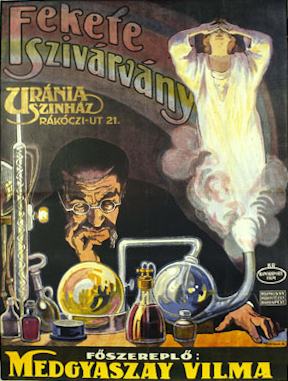
A definitive 3.5/10 rating for a film that redefined the boundaries of cult cinema. A fekete szivárvány remains a cornerstone of transgressive art.
There are films that merely tell a story, and then there are those that weave an intricate tapestry of human emotion, regret, and the relentless pursuit of self. László Békeffi's 'A fekete szivárvány' (The Black Rainbow) belongs firmly in the latter category, a cinematic experience that transcends its era to speak to the universal human condition. It is a profound exploration of identity, guilt, and the spectral beauty found within profound sorrow, delivering a narrative that is as visually arresting as it is psychologically penetrating. This isn't just a film; it's a melancholic ballet of the soul, rendered with a delicate hand and an unyielding gaze into the abyss of human experience.
From its opening frames, 'A fekete szivárvány' establishes an atmosphere steeped in a peculiar, almost lyrical sadness. The titular motif isn't merely a poetic flourish; it's the very heart of the film's thematic resonance, symbolizing a beauty born from pain, a hope tinged with despair. Békeffi, known for his nuanced storytelling, presents us with a world where the past is not merely prologue but an ever-present specter, casting long shadows over even the brightest moments of triumph. The film navigates the treacherous waters of memory and reinvention, asking profound questions about whether one can ever truly escape the indelible marks left by love, loss, and the choices made in moments of desperation. It's a testament to the power of early Hungarian cinema to delve into complex emotional landscapes with such artistry and conviction.
At the core of this compelling drama is Katóka Kertész, whose portrayal of Ildikó (née Borbála) is nothing short of mesmerizing. Kertész, a luminous presence, embodies the paradox of her character with breathtaking subtlety and depth. Her Ildikó is a prima ballerina, a figure of public adoration whose every movement on stage is a testament to sublime artistry, yet beneath this veneer of radiant success, she carries the weight of a past crime and a shattered identity. Kertész conveys this internal conflict not through exaggerated gestures, but through an exquisite economy of expression – a fleeting shadow in her eyes, a subtle tension in her posture, a tremor in her hands. Her performance is a masterclass in silent acting, communicating volumes without uttering a single word. One is reminded of the intense psychological realism often sought in films like The Evil Eye, where the protagonist's inner turmoil is externalized through their very being. Kertész doesn't just play Ildikó; she inhabits her, making her struggles palpable and her triumphs bittersweet.
The transformation from the naive village girl Borbála to the celebrated, enigmatic Ildikó is rendered with such conviction that the audience feels the trauma of her reinvention. Her past entanglement with the artist Géza (Artúr Somlay) is presented through haunting flashbacks, revealing a tempestuous love affair that leaves an indelible mark. Kertész skillfully projects the ghost of Borbála within the elegant facade of Ildikó, a constant reminder of the price of survival and the impossibility of true escape. Her performance is a poignant exploration of how identity can be both a prison and a carefully constructed shield, a theme that resonates powerfully throughout the film and places it alongside other compelling narratives of women grappling with their fates, such as The Iron Woman.
While Kertész anchors the film, the supporting cast provides a rich tapestry of characters that complicate and deepen Ildikó’s journey. Artúr Somlay, as the charismatic yet ultimately destructive Géza, is perfectly cast. His portrayal imbues Géza with a dangerous allure, making his tempestuous relationship with Borbála believable and tragically compelling. Somlay captures the essence of a man whose artistic passion borders on recklessness, leaving a trail of beautiful wreckage in his wake. His presence, even in memory, is a potent force, much like the lingering shadow of past deeds in films such as Chains of the Past.
József Kürthy, as the enigmatic Baron István, plays a crucial role as Ildikó's mysterious benefactor. Kürthy's performance is subtle, hinting at a deeper knowledge and perhaps even a personal connection to Ildikó's past, without revealing too much too soon. His quiet intensity adds another layer of intrigue, keeping the audience guessing about his true motives and the extent of his involvement. Vilma Medgyaszay, portraying Géza’s embittered sister Eszter, delivers a performance charged with simmering resentment and a thirst for vengeance. Her aristocratic poise barely conceals a burning desire to expose Ildikó, turning her into a formidable antagonist whose presence elevates the film’s dramatic tension significantly. Medgyaszay masterfully conveys Eszter's single-minded pursuit, reminiscent of the relentless uncovering of truth in films like Das Abenteuer eines Journalisten.
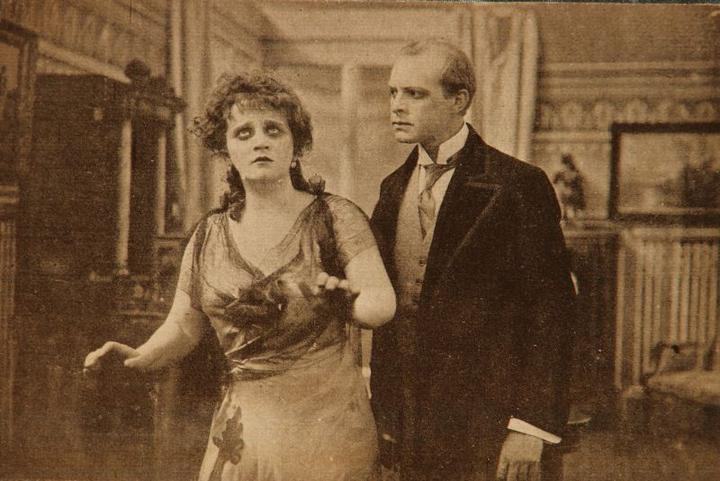
Jenõ Ivánfy and Gusztáv Vándory round out the cast, each contributing to the film’s rich dramatic texture. Ivánfy often portrays figures of authority or societal judgment, and his presence here likely adds to the external pressures bearing down on Ildikó. Vándory, with his versatile range, would have brought a nuanced performance to whatever role he inhabited, further fleshing out the complex world Békeffi created. The collective strength of these performances ensures that 'A fekete szivárvány' is not just a character study, but a vivid tableau of human interactions, betrayals, and unspoken loyalties.
László Békeffi's screenplay for 'A fekete szivárvány' is a triumph of narrative construction, demonstrating a keen understanding of dramatic pacing and character development. He meticulously builds a world where every glance, every gesture, carries significant weight. The non-linear structure, with its evocative flashbacks, skillfully unravels Ildikó’s past, creating a sense of unfolding tragedy rather than a simple exposition. This sophisticated approach to storytelling allows for layers of meaning to emerge organically, inviting the audience to piece together the fragments of Ildikó’s broken life. Békeffi's writing avoids simplistic morality, instead delving into the complex motivations that drive his characters, making them profoundly human in their flaws and their desperate hopes. The film’s thematic depth, particularly its exploration of guilt and complicity, brings to mind the intricate moral dilemmas presented in The Accomplice.
Békeffi's direction complements his writing, employing visual metaphors and atmospheric staging to great effect. The cinematography, though of its era, is remarkably expressive, using light and shadow to underscore emotional states and narrative shifts. The contrast between the dazzling, stage-lit world of the ballerina and the shadowy, often claustrophobic spaces of Ildikó's private life is stark and powerfully symbolic. This visual dichotomy reinforces the central theme of a hidden truth lurking beneath a beautiful facade, a characteristic often seen in films that explore dual identities or hidden lives, much like The Black Butterfly. Békeffi's command over the medium ensures that 'A fekete szivárvány' is not just a story told, but an experience felt, lingering long after the final frame.
The film's title, 'A fekete szivárvány,' is a stroke of poetic genius, encapsulating the paradoxical essence of Ildikó’s existence. A rainbow, typically a symbol of hope and beauty, is here tinged with black, suggesting a beauty born from despair, a fleeting moment of joy forever stained by sorrow. This motif manifests both literally, in the form of a darkly iridescent opal pendant—a cursed heirloom from Géza—and metaphorically, representing the tragic arc of Ildikó’s destiny. It's a powerful visual and conceptual anchor, speaking to the unique and often painful beauty found in resilience amidst suffering. This evocative symbolism, where an object or concept takes on deeper, often darker meanings, is a hallmark of truly resonant cinema, much like the indelible mark in The Mark of Cain.
The black rainbow also serves as a metaphor for the human psyche, capable of finding pockets of light even within profound darkness, but never entirely free from its shadow. It speaks to the idea that some experiences, particularly those born of intense love and tragic loss, fundamentally alter one's perception of the world, creating a unique, albeit melancholic, lens through which all subsequent life is viewed. This exploration of inner worlds, and how they are shaped by external events and internal conflicts, echoes the profound introspection found in films like The Mirror, where self-perception is constantly challenged and redefined.
In its entirety, 'A fekete szivárvány' stands as a compelling example of early Hungarian cinema's capacity for sophisticated dramatic storytelling. It avoids the melodramatic excesses often found in films of its period, opting instead for a nuanced, character-driven approach that feels remarkably modern. The film's enduring power lies in its ability to tap into universal themes of regret, redemption, and the search for peace amidst a troubled past. It is a testament to the fact that compelling human drama transcends language and era, speaking directly to the heart. The exploration of passion's consequences, particularly in Géza and Borbála's relationship, finds a thematic kinship with films like Fruits of Desire, highlighting the timeless nature of such complex human emotions.
Ultimately, 'A fekete szivárvány' is not merely a historical artifact but a vibrant, emotionally resonant work of art that continues to captivate. It challenges viewers to look beyond superficial beauty and confront the darker, more complex truths that lie beneath. It reminds us that even in profound darkness, there can be a unique, albeit sorrowful, kind of beauty—a black rainbow arching across the sky of a troubled soul. For those who appreciate cinema that delves deep into the human psyche, offering both visual splendor and profound emotional insight, this film remains an essential viewing, a forgotten gem waiting to be rediscovered and celebrated for its timeless artistry. It is a film that, much like Ildikó's own journey, forces us to confront what is lost in darkness and what can still shimmer with a unique, if shadowed, light.
IMDb —
1936
Community
Log in to comment.