DbcultAccessing Vault...
6.3/10
Senior Film Conservator
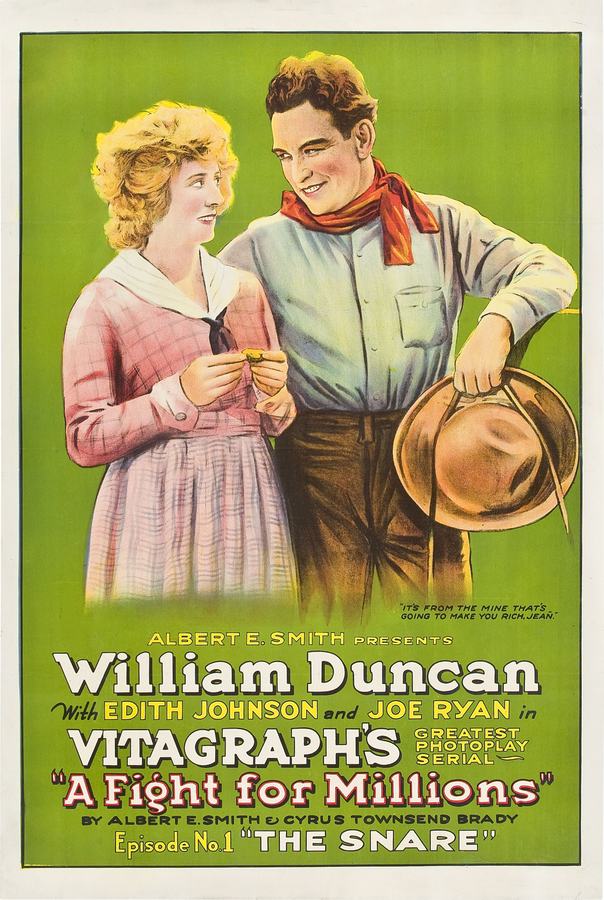
A definitive 6.3/10 rating for a film that redefined the boundaries of cult cinema. A Fight for Millions remains a cornerstone of transgressive art.
In the nascent days of cinema, before the silver screen found its voice and before feature-length narratives became the ubiquitous standard, audiences flocked to darkened theaters for a different kind of thrill: the film serial. These episodic sagas, often stretching over a dozen or more chapters, were the weekly rituals of suspense, promising heart-stopping cliffhangers and daring escapades that would leave patrons clamoring for the next installment. Among these early titans of serialized storytelling stands 'A Fight for Millions,' a 15-episode journey into the perilous pursuit of fortune and justice. While its specific plot details might have faded into the mists of time for many, its structure, its ambition, and its very existence speak volumes about the ingenuity and relentless energy of early filmmakers and the insatiable appetite of a burgeoning audience.
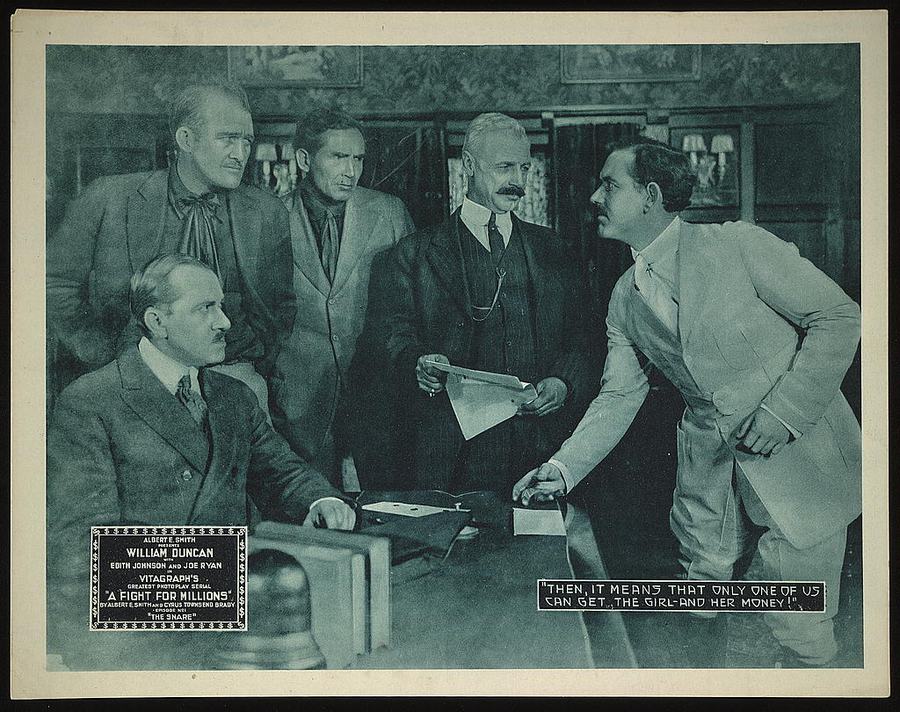
This particular serial, penned by the collaborative talents of Albert E. Smith, C. Graham Baker, and Cyrus Townsend Brady, epitomizes the era's fascination with grand stakes and relentless peril. The title itself, 'A Fight for Millions,' immediately signals the core conflict: a vast inheritance, a fortune beyond imagination, becomes the ultimate prize in a high-stakes game of cat and mouse. Such narratives were the bread and butter of serials, designed to tap into universal desires for wealth and the thrilling spectacle of its acquisition or defense. The serial form, by its very nature, demands a continuous escalation of danger, a fresh predicament at the close of each chapter to ensure loyalty for the following week. This was not mere entertainment; it was a communal experience, a shared anticipation that built week by week.
The true genius of 'A Fight for Millions,' like its contemporaries, lay in its mastery of the cliffhanger. Imagine the audience, on the edge of their seats, as the plucky heroine, Evelyn Vane (portrayed with characteristic vigor by Edith Johnson), finds herself dangling precariously from a crumbling precipice, or the intrepid detective, Jack Harrison (the ever-reliable William McCall), is trapped in a room rapidly filling with water, the villainous Mr. Thorne (S.E. Jennings, likely relishing his role as the conniving antagonist) cackling in the background. Each fade to black, each intertitle declaring 'To be continued…', was a carefully orchestrated punch to the gut, ensuring that the audience would return. This psychological hook was far more than a simple plot device; it was the lifeblood of the serial, a direct engagement with the audience's emotional investment. The writers, Smith, Baker, and Brady, would have been acutely aware of this, meticulously constructing each episode's climax to maximize suspense and leave no doubt as to the necessity of tuning in next week.
The narrative arc of a serial like 'A Fight for Millions' isn't a gentle curve; it's a jagged, thrilling line, punctuated by explosions, chases, narrow escapes, and shocking revelations. The central conflict—the battle for Silas Vane's immense fortune and the mythical 'Serpent's Eye' diamond—provides a clear, tangible goal, around which layers of deception, betrayal, and heroism can be woven. The inclusion of a shadowy codicil to the will, a document that could redistribute the millions or impose arduous conditions, adds a layer of intellectual mystery to the physical perils. This intricate dance between physical action and mental puzzle-solving was a hallmark of the genre, keeping both the heart and mind of the viewer engaged. The relentless pursuit by Thorne and his menacing henchman, Joe Ryan, provides a constant, tangible threat, forcing Evelyn and Jack to constantly innovate and adapt.
The cast of 'A Fight for Millions' embodies the classic archetypes essential for a successful serial. William McCall, as the intrepid detective Jack Harrison, would have projected an image of unwavering resolve and physical prowess, the quintessential hero always arriving just in the nick of time. His presence would have been a comforting constant for audiences, a bastion of justice against the forces of greed. Edith Johnson, a notable figure in early cinema, would have brought a crucial blend of vulnerability and resilience to Evelyn Vane. Serials often featured strong female protagonists, a trend that can be seen in other adventure serials of the era like The Adventures of Kathlyn, where the heroine is not merely a damsel in distress but an active participant in her own salvation. Johnson’s portrayal would have needed to convey both the terror of her predicaments and the inner strength to overcome them.
S.E. Jennings, likely cast as the primary antagonist Mr. Thorne, would have been tasked with embodying pure, unadulterated villainy. In silent cinema, where dialogue was conveyed through intertitles, facial expressions and exaggerated gestures were paramount. Jennings would have needed to project menace and cunning without uttering a single word, relying on a sneer, a glare, or a menacing posture to convey his sinister intentions. Joe Ryan, as Thorne's henchman, would have provided the physical threat, the blunt instrument of the villain's will. The dynamic between the calculating mastermind and his brutish enforcer is a timeless one, perfectly suited for the clear-cut morality often found in serials.
The supporting cast, including Leo D. Maloney, Vincente Howard, Walter Rodgers, William Duncan, Guillermo Calles, and Jack Hoxie, would have filled out the rich tapestry of characters, each playing their part in advancing the narrative's twists and turns. From loyal but eccentric retainers to duplicitous lawyers and rough-and-tumble prospectors, these roles added texture and complexity, providing both obstacles and unexpected aid to the protagonists. Jack Hoxie and William Duncan, known for their work in Westerns, might have brought a rugged authenticity to scenes set in remote or frontier-like environments, a common trope for hidden treasures and secret passages in early adventure stories.
Beyond the thrilling action, 'A Fight for Millions' delves into timeless themes that resonate even today. The central struggle for a vast fortune immediately brings to mind the corrupting influence of wealth, a theme explored with devastating realism in films like Greed, albeit with a far more cynical and bleak outlook. While 'A Fight for Millions' likely offered a more straightforward heroic narrative, the underlying question of who truly deserves such immense wealth and the lengths to which individuals will go to acquire it remains potent. Mr. Thorne embodies unchecked avarice, demonstrating how the pursuit of money can warp morality and drive individuals to commit heinous acts. This stark contrast between the villain's rapacity and the protagonists' quest for rightful inheritance and justice provides the moral backbone of the serial.
The serial also celebrates perseverance and ingenuity. Evelyn Vane is not simply a passive victim; she is an active agent, forced to use her wits and courage to navigate the treacherous path laid out before her. This aligns with the 'fighting chance' narratives seen in other films of the period, such as Her Fighting Chance, where characters must actively battle against adversity. The collaborative efforts of Evelyn and Jack Harrison underscore the importance of teamwork and trust in overcoming seemingly insurmountable obstacles. Their journey, replete with deciphering cryptic clues and navigating dangerous landscapes, transforms the fight for millions into a broader fight for truth and righteousness.
Producing a 15-episode serial in the early days of cinema was a monumental undertaking. It required a relentless shooting schedule, innovative special effects for stunts and perils, and a cohesive narrative vision that could sustain interest over many weeks. The writers, Albert E. Smith, C. Graham Baker, and Cyrus Townsend Brady, were likely veterans of the craft, understanding the delicate balance between episodic closure and overarching continuity. Smith, a pioneer in film, would have brought invaluable experience in production and direction, ensuring the visual spectacle was as compelling as the narrative. The constraints of silent film, particularly the reliance on visual storytelling and intertitles, meant that action had to be clear, expressions exaggerated, and plot points easily digestible, despite the complexity of the overarching mystery.
Compared to the more contained narratives of feature films like The City of Illusion or character studies such as Montmartre, serials like 'A Fight for Millions' offered a different kind of cinematic experience. They were less about introspection or artistic nuance and more about pure, unadulterated escapism and adventure. They were the blockbusters of their day, designed for mass appeal and maximum weekly draw. The practicalities of filming, often on location to capture the dynamism of chases and stunts, would have been immense. The use of real-world environments, from bustling city streets to treacherous wilderness, would have added to the verisimilitude and excitement, much like the on-location filming in films such as California Scrap Book, albeit for different narrative purposes.
The legacy of 'A Fight for Millions' and similar serials is profound. They honed the craft of suspense, developed narrative techniques that would influence later genres, and established the star power of actors who could carry a story over many hours. While many early serials have been lost to time or exist only in fragmented form, their impact on the development of cinematic storytelling is undeniable. They taught filmmakers how to pace a narrative, how to build character through action, and how to keep an audience utterly captivated. The sheer volume of content produced—15 distinct episodes, each with its own mini-climax and resolution—is a testament to the indefatigable spirit of early Hollywood. The ambition to tell a story of such scope, week after week, with limited technology and burgeoning techniques, is truly remarkable.
To watch 'A Fight for Millions' today, if a complete print were available, would be to step back into a particular moment in cultural history. It would offer insights not just into filmmaking techniques, but into the anxieties, aspirations, and forms of entertainment that captivated audiences over a century ago. The clear-cut morality, the unambiguous heroism, and the dramatic, often exaggerated, performances are all characteristic of the era. It’s a world where good and evil are easily discernible, where courage is always rewarded, and where justice, eventually, triumphs. This contrasts sharply with the often ambiguous moral landscapes of later, more complex dramas. The innocence, yet also the raw excitement, of these early cinematic endeavors is something truly special.
The very concept of a 'film serial' might seem quaint in an age of streaming services and binge-watching, but the underlying principle remains the same: to tell a compelling story over an extended period, keeping the audience hooked. Before Netflix and HBO, there were the weekly cinema visits, the communal gasp at the cliffhanger, the water cooler (or rather, street corner) discussions about how the hero might escape *this* time. Serials like 'A Fight for Millions' were the foundational blocks of modern serialized storytelling, from television dramas to epic film franchises. They taught us how to love characters, how to dread villains, and how to eagerly await the next chapter. The impact of such prolific works cannot be understated. They were not just films; they were cultural touchstones, shared experiences that bound communities together in anticipation.
In conclusion, 'A Fight for Millions' stands as a vibrant testament to the pioneering spirit of early cinema. Though perhaps less widely remembered than some of its more famous contemporaries, it represents a crucial chapter in film history, showcasing the power of episodic storytelling, the allure of high-stakes adventure, and the enduring appeal of a clear battle between good and evil. It reminds us that long before sophisticated CGI or intricate psychological dramas, there was a raw, unadulterated joy in watching heroes and heroines battle for everything they held dear, week after thrilling week.

IMDb —
1931
Community
Log in to comment.