DbcultAccessing Vault...
Cult Review
Senior Film Conservator
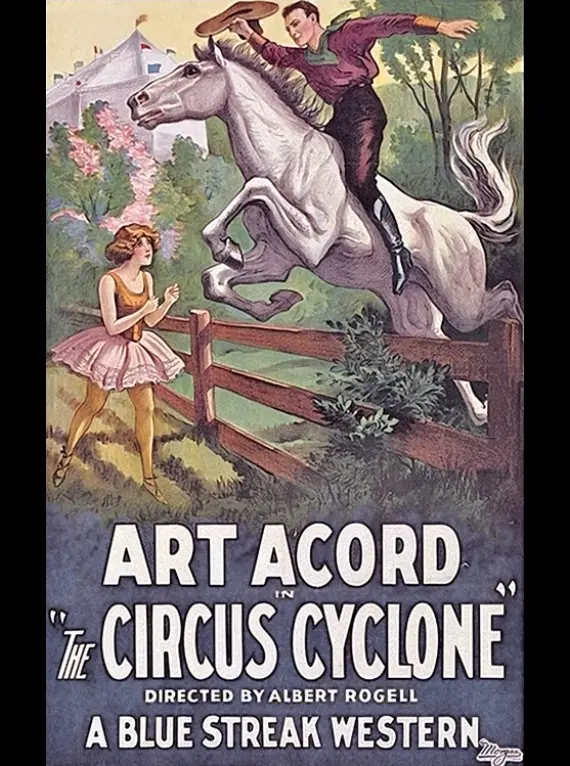
Is The Circus Cyclone a hidden gem or a dusty relic of a bygone era? Short answer: It is a fascinating, if deeply flawed, piece of pulp history that demands a viewer with a high tolerance for 1920s tropes. This film is for the silent cinema completionist who wants to see Art Acord at the height of his physical powers; it is most certainly not for anyone who cannot look past the jarring racial caricatures and simplistic moral binaries of the mid-twenties.
1) This film works because Art Acord brings a genuine, unvarnished physicality to the role of Jack Manning, making the transition from rodeo cowboy to circus savior feel remarkably organic. 2) This film fails because its narrative relies on a series of increasingly improbable coincidences and a secondary character that functions as a painful racial stereotype. 3) You should watch it if you are interested in how early Hollywood blended the Western genre with the 'Big Top' melodrama to capture a broader rural audience.
In the 1920s, the Western hero wasn't just a character; he was a brand. Art Acord, often referred to as 'The Mormon Cowboy,' was the real deal. Unlike many of his contemporaries who learned to ride on a studio lot, Acord was a rodeo champion. In The Circus Cyclone, this authenticity is his greatest asset. When he steps into the ring to box Steve Brant, played with a sneering, thuggish energy by Albert J. Smith, the stakes feel physical rather than just theatrical. The choreography isn't the polished dance of modern action; it’s a scrappy, desperate exchange of blows that mirrors the film's gritty undercurrent.
The boxing match itself is a bizarre narrative pivot. It’s an unconventional way to settle a dispute over animal welfare, yet it serves a specific purpose: it bridges the gap between the cowboy’s frontier justice and the circus owner’s urban brutality. This clash of archetypes is a recurring theme in films like Big Dan, where the protagonist's moral compass is tested by the corrupting influence of 'civilized' greed. In The Circus Cyclone, the ring is the only place where the law of the land is momentarily suspended for the law of the fist.
Steve Brant is not a nuanced antagonist. He is a predator. His treatment of Doraldina (Nancy Deaver) and her horse is meant to provoke an immediate, visceral reaction from the audience. By modern standards, the scene where he beats the horse is difficult to watch, but it serves as the necessary catalyst for Jack Manning’s intervention. This is melodrama at its most fundamental level—clear-cut good versus irredeemable evil. Brant doesn't just want Doraldina; he wants to destroy everything she loves when he can't possess her.
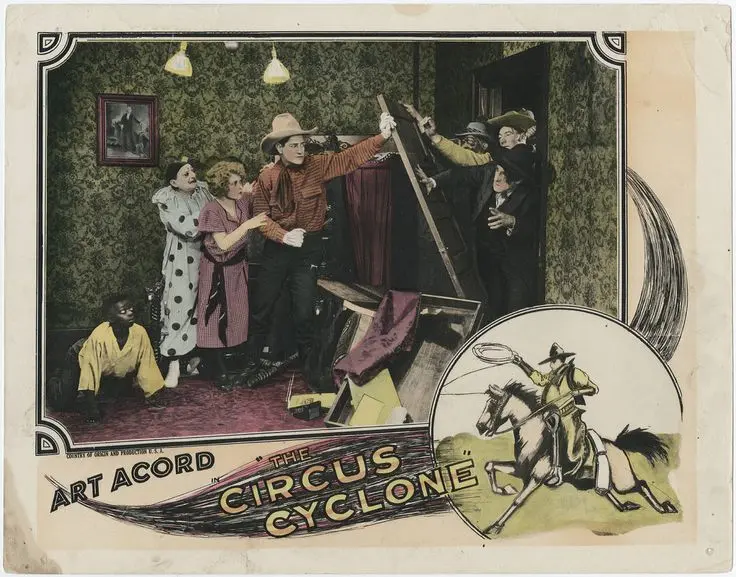
The subsequent framing of Pepe the Clown (Cesare Gravina) for a bank robbery is a classic 'innocent man in peril' trope. Gravina, who excelled in playing pathetic, downtrodden characters—much like his work in The Third Degree—brings a necessary pathos to the role. When the townspeople turn into a lynch mob, the film shifts from a circus drama into a proto-thriller. The tension in these scenes is palpable, even if the resolution feels somewhat rushed. The mob's quickness to violence reflects a recurring anxiety in 1920s cinema regarding the fragility of social order.
We have to address the elephant in the room. The character of Eczema Jackson, played by Hilliard Karr, is a stark reminder of the era's systemic racism. Used primarily for 'comic relief' based on his race and fear, the character is a difficult pill to swallow today. However, from a critical perspective, there is a strange irony at play: Eczema is the only character who actually solves the mystery. While the white hero is busy being heroic, it is the young Black boy who uncovers the true identities of the robbers and provides the information necessary to save Pepe’s life.
This creates a weird dissonance. The film treats him as a joke, yet the plot treats him as an essential engine. This is a common occurrence in silent-era Westerns and comedies, where minority characters were given pivotal narrative roles while being denied dignity in their characterization. It’s a tension that makes The Circus Cyclone an important, if uncomfortable, object of study for those tracking the history of representation in American film.
Does The Circus Cyclone hold up as entertainment?
For the casual viewer, probably not. The pacing is uneven, and the tonal shifts between animal cruelty, slapstick, and lynch mobs are jarring. However, for the cinema historian, the answer is a resounding yes. It captures a specific moment when the Western was beginning to cannibalize other genres to stay relevant. The cinematography by the uncredited cameramen captures the dusty, tactile reality of 1920s outdoor sets with a clarity that many indoor dramas of the time, such as La belle Russe, lacked.
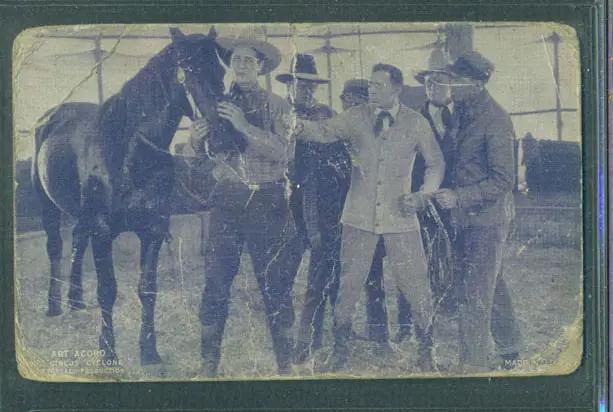
One cannot discuss The Circus Cyclone without mentioning Raven the Horse and Rex the Dog. In the silent era, animals were often billed alongside the human stars, and for good reason. Raven’s 'performance' during the abuse scenes and the subsequent rescue is remarkably expressive. The bond between the cowboy and his horse was a central pillar of the Western mythos, and this film leans into that heavily. The dog, Rex, adds another layer of sentimentality that was a staple of Albert S. Rogell’s directorial style.
Rogell’s direction is functional rather than flashy. He knows how to stage a chase sequence, and the final pursuit of the bank robbers is well-edited, utilizing cross-cutting to build tension between the cowboy’s ride and the mob’s preparation of the noose. It lacks the poetic visual flair of a Murnau or a Griffith, but it possesses a raw, blue-collar efficiency that suits Art Acord’s screen persona perfectly. It’s a film that knows exactly what it is: a Saturday afternoon serial expanded into a feature-length morality play.
Pros:
- Art Acord’s genuine athleticism and screen presence.
- High-stakes, fast-paced final act.
- Interesting blend of circus and Western aesthetics.
- Cesare Gravina’s sympathetic performance as the framed father.
Cons:
- Offensive racial caricatures that hinder modern enjoyment.
- Simplistic, black-and-white morality that lacks depth.
- Some scenes of animal distress may be upsetting to modern audiences.
The Circus Cyclone is a brutal, energetic, and ultimately messy artifact of 1925. It works as a showcase for Art Acord, but it’s flawed by the very era that produced it. If you can navigate the problematic elements, you’ll find a sturdy action-melodrama that hits its marks with the precision of a circus performer. It isn't a masterpiece, but it’s a vital piece of the Western genre's DNA. It’s tough. It’s ugly in parts. But it’s undeniably alive.
"A fascinating collision of sawdust and sagebrush that proves even in the silent era, justice was often found at the end of a fist rather than a gavel."
IMDb —
1934
Community
Log in to comment.