DbcultAccessing Vault...
Cult Review
Senior Film Conservator
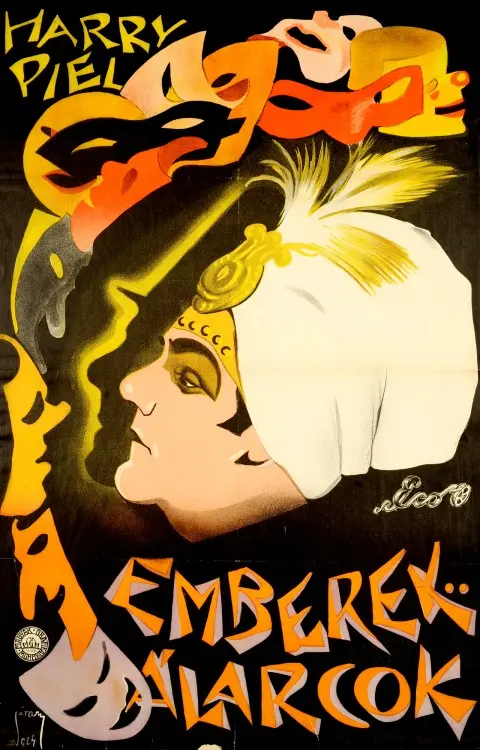
The cinematic tapestry of the Weimar Republic often shimmered with an intoxicating blend of expressionism, social commentary, and thrilling adventure. Amidst this vibrant landscape, 'Menschen und Masken, 1. Teil - Der falsche Emir' emerges as a fascinating artifact, a silent film that, despite its age, still pulsates with a compelling energy. This initial installment, a testament to the era’s fascination with exoticism and high-stakes espionage, plunges viewers into a world where identity is fluid, and trust, a dangerous commodity. It’s a film that demands attention, not merely for its historical significance but for its intricate narrative construction and the enduring power of its performances, particularly from stalwarts like Ruth Weyher and the dynamic Harry Piel.
From its very title, 'People and Masks, Part 1 - The False Emir,' the film broadcasts its central thematic concerns: the interplay between appearance and reality, the deliberate obfuscation of truth, and the perilous dance of hidden agendas. The plot, a meticulously crafted mechanism of suspense, centers on the imminent arrival of a revered Emir, a figure of immense geopolitical importance, whose presence in Europe is meant to cement crucial alliances and, more intriguingly, to unveil an ancient, invaluable artifact. This MacGuffin, a relic steeped in history and power, becomes the coveted prize for a shadowy international syndicate. Led by a character whose sinister charisma is masterfully conveyed by Fred Immler, this organization sets in motion a plan of audacious deception: to replace the legitimate dignitary with a meticulously coached impostor. The stakes are immediately palpable; the true Emir's mission is jeopardized, and the delicate balance of international power teeters on the brink of chaos.
Harry Piel, a name synonymous with German adventure cinema of the silent and early sound eras, takes on a pivotal role here, embodying a former intelligence operative whose past experiences have honed his senses to detect the faintest tremor of falsehood. Piel’s performance is a masterclass in silent-era action heroics, combining physical agility with a keen intellectual curiosity. His character is not merely a brawny figure but a thinking man, whose suspicions are ignited by subtle anomalies—a misplaced accent, an uncharacteristic gesture, a fleeting shadow in the eyes of the 'Emir' that hints at a hidden past. It's this nuanced portrayal that elevates the film beyond a simple chase thriller, embedding it with a psychological depth that was often uncommon for genre pieces of its time. Piel's directorial hand, often guiding his own cinematic vehicles, is evident in the brisk pacing and the clever staging of suspenseful sequences, ensuring that the audience remains perpetually on edge. His approach to action, while perhaps less overtly fantastical than some contemporary serials like The Phantom Fortune, grounds the thrills in a more plausible, albeit heightened, reality, making the stakes feel genuinely immediate.
The intrigue deepens with the introduction of Ruth Weyher’s character, a mysterious dancer whose allegiances remain tantalizingly ambiguous throughout this first installment. Weyher, known for her captivating screen presence and ability to convey complex emotions without uttering a single word, delivers a performance that is both alluring and enigmatic. Her character is not a mere plot device but a living, breathing enigma, her movements on stage and off speaking volumes. Is she an unwitting pawn in the syndicate’s grand scheme, a femme fatale manipulating events for her own inscrutable gain, or a covert operative working to expose the truth? The film cleverly uses her as a narrative pivot, her interactions with both the genuine and the false Emir creating layers of dramatic tension. This kind of multifaceted female character was a hallmark of Weimar cinema, often challenging traditional gender roles and adding a sophisticated layer to otherwise straightforward adventure narratives. Her presence recalls the powerful, often morally grey women who populated films like The Devil-Stone, where female agency drives much of the narrative’s momentum.
The visual language of 'Menschen und Masken' is particularly striking. The cinematography, while adhering to the technical constraints of the silent era, effectively crafts an atmosphere of pervasive suspicion and underlying danger. Shots are often framed to emphasize the claustrophobia of clandestine meetings or the grandeur, yet hollowness, of opulent settings where deception thrives. The use of shadow and light is not merely aesthetic; it's narrative. Shadows cling to figures, obscuring true intentions, while sudden bursts of light reveal fleeting moments of truth or, conversely, highlight the theatricality of the impostor’s performance. The film’s production design, though perhaps not as overtly expressionistic as some of its contemporaries, still manages to evoke a sense of a world on the precipice, where old-world elegance collides with modern-day intrigue. The costumes, particularly those for the 'Emir' and Ruth Weyher's dancer, are exquisite, serving not just as period appropriate attire but as extensions of their characters' personas, reinforcing the themes of disguise and identity.
The film's exploration of identity is its most compelling intellectual contribution. The 'false Emir' is more than just a man in a costume; he is a meticulously constructed persona, a mask worn with such conviction that it threatens to eclipse the very memory of the real individual. This concept of the manufactured self, the ability to project an identity that is entirely alien to one's true nature, resonates deeply, especially in an era grappling with the aftermath of war and societal upheaval. It speaks to the anxieties of a society where appearances could be deceptive, where political figures often wore masks of rhetoric, and where the line between hero and villain was frequently blurred. This thematic richness connects it to other films that explored the fragility of identity, albeit in different genres, such as the comedic chaos of What Happened to Jones, where mistaken identity fuels much of the humor, or the more dramatic explorations of self in films like Az utolsó éjszaka.
Beyond Piel and Weyher, the supporting cast contributes significantly to the film's immersive quality. Fred Immler, as the syndicate's mastermind, projects an air of cold calculation and menace, his every gesture imbued with a quiet, unsettling authority. Friedrich Berger and Ruth Beyer, though perhaps in less prominent roles for this first part, help populate this world of spies and secrets, their performances adding texture and verisimilitude to the narrative. Maria Forescu, a veteran character actress, brings her characteristic intensity to her role, whatever its specific nature, often adding a layer of grounded reality to even the most fantastical plots. The success of a silent film often hinges on the ability of its ensemble to convey character and emotion non-verbally, and in this regard, 'Menschen und Masken' largely succeeds, with each actor contributing to the overarching atmosphere of suspense and intrigue.
The narrative pacing, crucial for a serial or multi-part film, is expertly managed. Part 1 is dedicated to establishing the core conflict, introducing the key players, and slowly but surely tightening the screws of suspense. It’s a slow burn, not in the sense of being tedious, but in its deliberate unveiling of clues and deepening of the mystery. Each scene builds upon the last, adding another layer to the intricate web of deceit. The film doesn't rush to reveal its hand, instead opting for a methodical unraveling that keeps the audience engaged, constantly questioning who is who, and what their true motives are. This measured approach allows for character development and plot complexities to breathe, laying a strong foundation for subsequent installments. The cliffhanger ending, a staple of such serials, is effective, leaving the viewer eager to discover the resolution of the pressing dangers confronting the true Emir and Piel's determined operative.
Watching 'Menschen und Masken, 1. Teil - Der falsche Emir' today offers more than just a glimpse into early German cinema; it provides a valuable insight into the origins of the espionage thriller genre. The tropes that we now take for granted—the double-crossing agents, the international conspiracies, the race against time, the master of disguise—are all present here in their nascent, yet remarkably effective, forms. Harry Piel's contribution to this genre cannot be overstated; he was a pioneer in crafting thrilling narratives that combined adventure with a distinctly European flavor of intrigue. While American serials often focused on purely physical feats, Piel's films frequently incorporated elements of intellectual puzzle-solving and psychological tension, making them distinctively compelling.
The film's historical context also enriches its viewing. Released in a period of significant political and social flux in Germany, the themes of hidden identities and external threats would have resonated deeply with contemporary audiences. The idea of a 'false' leader, an impostor who could sway nations, touched upon very real anxieties. This subtext adds a layer of socio-political commentary to what is ostensibly an adventure film, elevating its status. It reminds us that even seemingly escapist entertainment often carries the echoes of its time, reflecting the fears and fascinations of the society that produced it. The film, in its own way, acts as a mirror to the 'masks' that people and nations wore in the fraught years following the Great War.
Comparisons to other films of the era reveal both its uniqueness and its place within broader cinematic trends. While it shares the adventurous spirit of films like The Catspaw or His Briny Romance, 'Menschen und Masken' leans more heavily into the cerebral aspects of espionage, making the battle of wits as compelling as any physical confrontation. The focus on a specific, high-stakes political deception distinguishes it from simpler adventure narratives. The intricate plot, with its layers of misdirection and revelation, also brings to mind the carefully constructed mysteries of films like The Humming Bird, though with a different thematic emphasis.
'Menschen und Masken, 1. Teil - Der falsche Emir' is a compelling opening act, a testament to the sophisticated storytelling capabilities of early German cinema. It masterfully sets the stage for a grand narrative of intrigue, deception, and heroism. The film’s strengths lie in its well-conceived plot, the magnetic performances of its lead actors, and its evocative visual style. For enthusiasts of silent film, particularly those with an appreciation for the espionage genre, this installment is a captivating experience, offering a rich blend of suspense, character exploration, and historical resonance. It leaves the audience eagerly anticipating the subsequent chapters, a clear indication of its success in building a world that feels both exotic and intimately perilous. The unmasking, both literal and metaphorical, promises to be a thrilling journey, and this first part lays a formidable groundwork for what is surely a captivating saga of human nature behind and beyond the mask.
The enduring appeal of such films lies in their ability to transcend the limitations of their medium. Despite the absence of spoken dialogue, the emotions are clear, the stakes are high, and the human drama is palpable. The expressive acting, the dramatic musical scores (often lost but imagined), and the powerful visual cues combine to create an immersive experience. 'Menschen und Masken' stands as a strong example of how silent cinema could weave complex tales that continue to resonate with modern audiences, proving that a good story, well told, knows no temporal bounds. Its intricate narrative structure and the nuanced performances make it a fascinating piece of cinematic history, inviting viewers to delve into a world where every face might be a mask, and every truth, a carefully constructed illusion.
In its exploration of identity theft and international conspiracy, the film also foreshadows countless thrillers that would follow in subsequent decades. The archetypes established here – the cunning villain, the resourceful hero, the mysterious woman – have become staples of the genre. The film’s ability to build tension through visual cues and character interactions, rather than relying on dialogue, is particularly commendable. It forces the audience to engage more deeply with the narrative, interpreting gestures, expressions, and environmental details to piece together the unfolding drama. This active engagement is a hallmark of great silent cinema, making the experience not just passive viewing, but an interactive deciphering of a visual puzzle. The film solidifies its place not just as a historical curiosity, but as a vibrant, engaging piece of storytelling that continues to captivate.
Community
Log in to comment.