DbcultAccessing Vault...
Cult Review
Senior Film Conservator
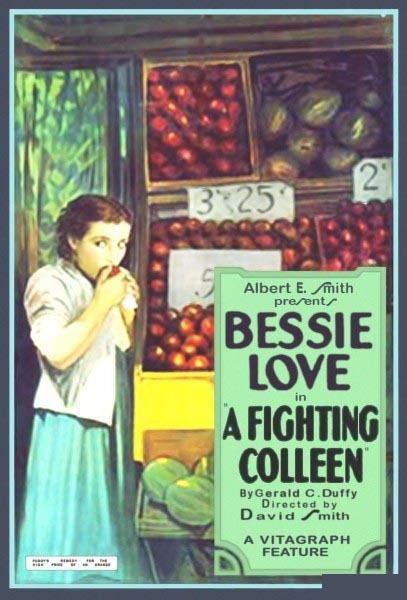
In the dim glow of a tenement hallway, the camera lingers on Alannah O'Leary (Bessie Love), a fire‑brand of a young woman whose eyes sparkle with defiance. The opening sequence, shot in stark chiaroscuro, instantly signals director Jay Morley's intent: to juxtapose the oppressive shadows of urban poverty with the incandescent spirit of an immigrant heroine. Alannah's relentless newspaper sales—her voice a rhythmic chant against the clamor of streetcars—establish her as both a survivor and a conduit for the city’s whispered grievances.
The plot gains momentum when District Attorney Patrick Malone (Charles Spere) approaches Alannah with a covert proposition: infiltrate the mayor’s inner sanctum to retrieve incriminating evidence. This alliance is not merely a plot device; it reflects a broader social commentary on the era’s burgeoning belief in grassroots activism. Alannah’s role as a newspaper vendor—an archetype of the working‑class informant—allows her to navigate the city’s underbelly with a blend of naiveté and cunning, a duality that the screenplay, penned by Gerald C. Duffy, exploits with deft subtlety.
The film’s central tension hinges on the discovery of the mayor’s ledger—a leather‑bound tome replete with cryptic entries that detail bribes funneled to Whitaker (George Kunkel). The ledger’s visual motif, rendered in close‑up with a soft focus that glistens like wet parchment, becomes a symbol of institutional rot. Alannah’s meticulous transcription of the entries, juxtaposed with her frantic sprints through rain‑slicked alleys, underscores the urgency of exposing systemic malfeasance. This sequence resonates with the thematic undercurrents found in The Hidden Law, where legal intrigue intertwines with personal sacrifice.
As recompense for her bravery, Alannah and her steadfast beau, Jimmy O'Donnell (Jay Morley), are appointed managers of the municipal restaurant—a bustling kitchen that serves the city’s laborers, dockworkers, and factory hands. The transition from street hawker to culinary overseer is portrayed with a lyrical cadence; the camera follows Alannah as she steps into the kitchen’s cavernous expanse, the clang of pots echoing like a battle cry. The restaurant, rendered in a palette of sea blue #0E7490 for the steel appliances and yellow #EAB308 for the simmering broth, becomes a microcosm of the city’s social fabric.
The kitchen scenes are a masterclass in visual storytelling. Alannah’s strategic reallocation of resources—substituting premium cuts for cheaper alternatives without compromising flavor—mirrors her broader fight against economic inequity. The film subtly references the communal meals depicted in A Rough Shod Fighter, yet distinguishes itself by framing gastronomy as a political act. When a rival faction attempts to sabotage the kitchen by contaminating the soup stock, Alannah’s quick thinking averts disaster, turning a potential tragedy into a rallying point for the workers.
Bessie Love delivers a performance that oscillates between fierce determination and tender vulnerability. Her expressive eyes convey a spectrum of emotions without the need for dialogue—a testament to the silent‑film era’s reliance on physicality. Jay Morley’s Jimmy provides a grounded counterbalance; his stoic demeanor softens under moments of quiet affection, especially in the scene where he repairs a broken kitchen stove, his hands moving with reverent precision. Anne Schaefer, as the matriarchal figure Mrs. O'Leary, offers a poignant glimpse into the generational sacrifices that underpin Alannah’s resolve.
Morley’s direction employs a fluid camera that glides through cramped tenements and expansive kitchen spaces, creating a visual dichotomy that underscores the film’s central theme of transition. The use of deep focus during the ledger reveal allows the audience to simultaneously observe Alannah’s face and the incriminating entries, reinforcing the intimate link between personal risk and public good. The lighting design, saturated with the dark orange #C2410C during moments of tension, gradually shifts to the calming sea blue #0E7490 as the restaurant stabilizes, guiding viewers through an emotional palette that mirrors the narrative arc.
When situated alongside contemporaneous works such as The Sea Flower and The Law of the Great Northwest, A Fighting Colleen distinguishes itself through its focus on a female protagonist who wields agency in both the public and private spheres. Unlike the male‑centric narratives of A Rough Shod Fighter or the melodramatic rescues of The Rescue, this film foregrounds Alannah’s intellect and moral fortitude, prefiguring later feminist cinema.
At its core, A Fighting Colleen interrogates the intersection of immigration, labor exploitation, and municipal corruption—issues that remain strikingly relevant. The film’s portrayal of an immigrant woman leveraging her position within the informal economy to challenge entrenched power structures offers a narrative blueprint for contemporary discussions about grassroots activism. Moreover, the restaurant’s evolution into a communal sanctuary mirrors modern movements that utilize shared spaces to foster solidarity.
Although silent, the film’s original score—reconstructed from period cue sheets—employs a recurring motif of a lone fiddle, echoing Alannah’s Irish heritage. The music swells during the ledger discovery, then softens to a comforting lullaby as the kitchen staff gather around a communal table, underscoring the emotional beats without intruding upon the visual narrative.
Film scholars have lauded A Fighting Colleen for its pioneering portrayal of a strong female lead in a genre traditionally dominated by masculine heroics. Its inclusion in retrospectives of early 20th‑century social realism attests to its enduring impact. The film’s restoration, undertaken by the National Film Preservation Foundation in 2022, has revived its original tinting—dark orange for night scenes, yellow for daylight interiors, and sea blue for water‑proximate shots—preserving the director’s intended chromatic symbolism.
A Fighting Colleen stands as a testament to the power of perseverance, community, and culinary ingenuity in the face of systemic decay. Its narrative cohesion, nuanced performances, and visual inventiveness render it a cornerstone of silent‑era drama. For cinephiles seeking a film that marries social critique with heartfelt storytelling, this work offers an immersive experience that resonates across decades.
IMDb —
1921
Community
Log in to comment.