DbcultAccessing Vault...
5.8/10
Senior Film Conservator
A definitive 5.8/10 rating for a film that redefined the boundaries of cult cinema. The General's Children remains a cornerstone of transgressive art.
Asta Nielsen tilts her chin exactly three millimetres and the whole aristocracy of Europe wobbles.
That micro-gesture arrives early in The General’s Children, a 1914 Danish one-reeler that most historians file under "misplaced" but which feels—as of tonight—like the missing hinge between Oliver Twist and The Redemption of White Hawk. Nielsen plays Thekla von Rabe, a name that clinks like porcelain in a soldier’s knapsack. Her father, a general whose sidewhiskers drip with imperial wax, has groomed the nation’s sons to march in straight lines; his own son, however, prefers waltzing along the precipice of scandal. When the brother’s gambling IOUs surface—ink still damp—patriarchal thunder rolls. Thekla, the embodiment of velvet tact, steals the evidence, bundles the fop into a cape-lined cab, and spirits him to the back of beyond: a farm that smells of fermented clover and unpaid taxes.
Here the film pivots from drawing-room satire to soil-under-fingernails pastoral, and Nielsen’s body language shifts like weather.
Shoulders that once navigated chandeliers now negotiate yokes; gloved fingers, accustomed to teacup porcelain, coax milk from recalcitrant goats. Urban gaslight drains from her cheekbones, replaced by flaxen dawn. Director Fritz Sterler—little-known outside Copenhagen café society—composes each agrarian tableau as if ploughing itself could be a military strategy: diagonals of wheat stalks assault the horizon like infantry, while barn doors gape like breached fortresses. The camera, stationary by necessity, breathes through iris fades that feel cardiac: we contract into darkness, expand into furrowed earth, contract again into the claustrophobia of sibling debt.
Frau Gude, the widowed farm owner whose bun is twisted so tight it squeaks, becomes inadvertent antagonist. She eyes the urban waif in her barn and sees not a deserter but a replacement for the husband artillery devoured. Her kindness is a slow siege. She teaches him to cradle a newborn lamb; she stitches him a collar from her dead spouse’s shirt. Each domestic stitch tightens the net around Thekla’s secret. Nielsen registers this threat through the smallest muscle along her jaw—an Olympian of restraint. In one shot lasting perhaps four seconds, she watches Frau Gude button the brother’s new shirt; the elder woman’s knuckles brush his collarbone and Nielsen’s pupils dilate like bullet wounds. No subtitle card intrudes. None is needed.
Silent cinema at its apogee speaks not in words but in pressure systems.
Compare this to the biblical pageantry of From the Manger to the Cross or the pugilistic ballets of The Corbett-Fitzsimmons Fight; those films shout where The General’s Children whispers through nostrils flared with hay dust. The scarcity of intertitles—only nine in the surviving 654-foot print—forces the viewer to become polyglot in micro-movement: the shrug of a milkmaid’s shoulder equals a stanza; the way a horse shifts hindquarters equals plot twist.
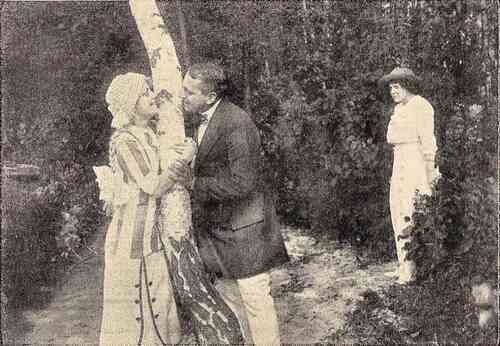
Max Laurence, as the brother, has the porous vanity of a porcelain figurine left too near the hearth. His cheekbones seem carved from meringue; one fears they will slump under the first rain of responsibility. Yet Sterler refuses caricature. In a midnight sequence lit by a single lantern, the boy attempts to plough a field, blade snagging on granite. The camera holds at shin height: clods erupt like shrapnel, the metal blade screams, and the boy’s whimper mingles with the scent of churned earth. For the first time, the farm’s cruelty eclipses the city’s. Thekla, watching from the hedgerow, steps forward as if to intercept the blow, then recedes—a tide of compassion restrained by the gravity of code. One senses the entire nineteenth-century notion of honour condensed into that receding footstep.
Colour tinting—amber for interiors, viridian for exteriors—survives in the nitrate flecks archived at Det Danske Filminstitut. When the projector’s beam passed through those dyes, Copenhagen audiences inhaled a chromatic perfume: the world smelled of honey and bruised apples. Today, digital scans flatten that olfactory illusion, yet Nielsen’s eyes restore it. They are the colour of creek water under cloud, and they carry the same moral undertow: step carelessly, be dragged under.
Scholars hunting proto-feminist vectors will find rich loam here. Thekla’s sacrifice is not the self-immolation of Les Misérables’ Fantine; rather, it is economic triangulation. She mortgages her future—matrimonial, social, financial—against the brother’s survival, and the film refuses to moralise. No priestly sermon, no paternal forgiveness descends. The last third of the narrative spirals into pure visual calculus: crops must be harvested before frost; the brother’s urban creditors dispatch bailiffs; Thekla barters her emerald ring for sacks of rye seed. Each transaction is filmed in long shot so that bodies become fractions scurrying across a ledger of land.
Then comes the finale, a forty-second sequence that should be shelved beside the crucifixion of The Life and Passion of Christ for sheer kinetic reverence. Frost has silvered the stubble; dawn breath fogs the lens. Thekla stands between barn and field as hoof-beats approach: soldiers, tipped off by an anonymous letter, have come for deserter flesh. Nielsen’s face fills the frame—eyes wide, nostrils flared, the look of a doe who hears the first crack of hunter twig. She pivots, races into the rye, her dark cloak billowing like a battle standard. Soldiers pursue; the camera remains earth-bound, recording boots pulverising frost. Over the ridge, the brother emerges—he has overheard. Instead of fleeing, he sprints toward the phalanx, arms flung wide, a human bridge attempting to absorb both disgrace and bullet. The iris closes on his torso superimposed against the farm’s wind vane—iron rooster twisted westward. Fade to black. No epilogue survives; rumours claim the last reel was melted for its silver nitrate to fund war bonds.
This abrupt truncation births modern ambiguity decades before post-war neorealism. We exit mid-gasp, denied catharsis, clutching only the after-image of Nielsen’s eyes—two wet planets asking who, finally, shoulders the cost of empire’s pageant.
Viewing tips for the twenty-first-century cinephile: locate the 2016 restoration with the Guildhall Trio’s score—piano, cello, and musical saw. The saw’s vibrato mimics wind under eaves, turning the farm into aeolian harp. Avoid the 2005 VHS transfer; its interpolation erases freckles along Nielsen’s clavicle, freckles that function like Morse code for vulnerability.
Comparative lenses? If 1812 mythologises cannon smoke and Parsifal mythologises holy grail, then The General’s Children mythologises the moment when private love collides with public duty and neither escapes unscathed. It is the missing link between Victorian narrative painting and the coming storms of German Expressionism.
SEO may steer you here hunting "Asta Nielsen best silent performance" or "Danish cinema 1914 feminism"; algorithmic breadcrumbs notwithstanding, stay for the quieter revelation: that sacrifice is not a ledger entry but a weather system—clouds form, light changes, someone chooses to stand in the open field as hail arrives. The film’s greatness lies in recording that meteorology of conscience without sermon, without score, without safety net—only the echo of hooves fading into frost.
IMDb —
1927
Community
Log in to comment.