DbcultAccessing Vault...
Cult Review
Senior Film Conservator
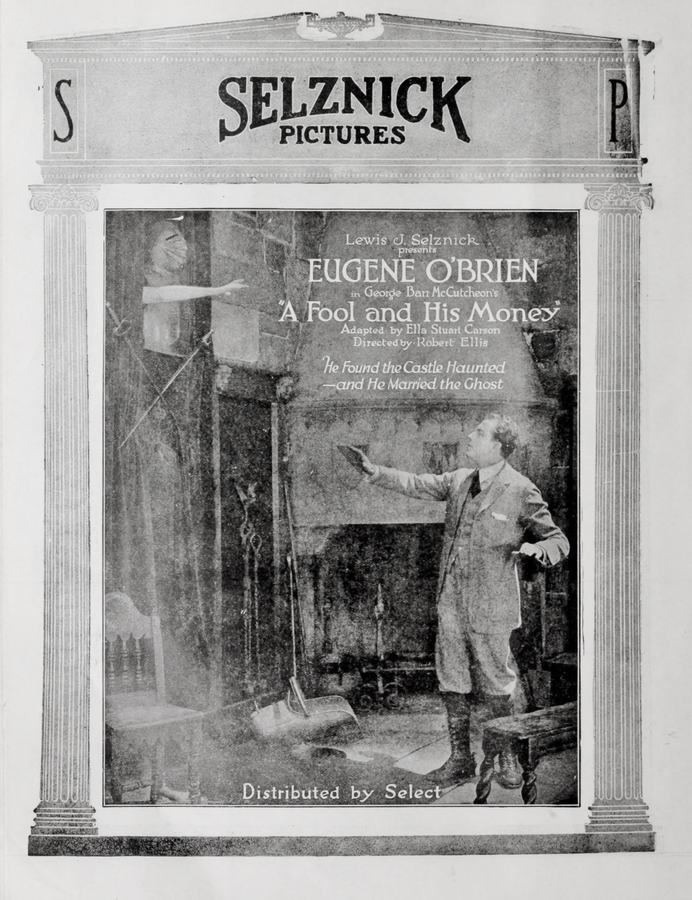
The first image that sears itself into memory is a negative space of white: a Swiss alp so blinding it feels like the screen itself is trying to erase sins. Into that overexposure trudges John B. Smart—played by Frank Goldsmith with the slouched arrogance of a man who has mistaken his own footnotes for fate. He buys a castle the way other men buy paper: expecting it to stay flat, obedient, inked only with his intentions. Instead the stones burp centuries of mildewed secrets, and the camera—hungry, voyeuristic—glides past iron torch-holders that look like half-eaten croissants of rust.
Inside the east tower, Rubye De Remer’s Aline is a Pre-Raphaelite panic: eyes drowned in kohl, mouth shaped like a plea that hasn’t decided what it’s begging for. The baby in her arms is less infant than ransom, swaddled in lace so fine it could be spun debts. She narrates her downfall in intertitles sharp enough to slice thumbs: a marriage auctioned to a count who treats vows like IOUs. The film slyly drops its most radical thesis here—divorce not as scandal but as emancipation papers the state refuses to stamp.
The castle becomes a three-story dialectic: dungeon for patriarchal terror, tower for gothic sorority, great hall for the public performance of justice. Director Henry Otto refuses to park his camera in proscenium dullness; he tilts it upward so vaulted ceilings yawn like bribed judges, then cranes down until stone floors seem to pulse like a hungry diaphragm. The audience is always somewhere slightly illicit—peeking from rafters, eavesdropping through keyholes—complicit in every act of violence or mercy.
Enter Count Tarnowsky, embodied by Eric Finstrom with the lacquered smirk of a man who has never lost at roulette only because he pockets the wheel. His evening wear fits like litigation; his riding crop counts beats like a metronome for brutality. The standoff between author and aristocrat crackles with proto-Kafka electricity: words versus pedigree, typewriter versus bloodline. When Smart thrashes him, the scuffle is filmed in chiaroscuro so severe that every punch lands as a moral syllable—an alphabet of retribution spelled on skin.
What follows is a sleigh ride that deserves canonization in the stunt-history books. Shot on location in the Engadin valley, the sequence intercuts real glacial precipices with studio close-ups so seamlessly that your adrenal glands can’t spot the forgery. The horses’ nostrils vent dragon steam; the runners scream across virgin snow like scalpels on marble. Meanwhile, back in the dungeon, Tarnowsky’s escape is rendered through a dissolve that feels like a moral slippage: one frame he’s chained, the next he’s unshackled, the edit itself conspiring in his corruption.
George Barr McCutcheon and Ella Stuart Carson’s script—adapted from McCutcheon’s potboiler but pruned of its most reactionary sap—lets Aline steer her own fate more than most heroines of the Jazz Age. Yes, she ultimately accepts Smart’s ring, but notice the blocking: she stands on the Italian side of the customs gate, he on Swiss soil. She must invite him across; border guards act as bridesmaids. It’s a subtle staging of consent, a negotiation cloaked in schmaltz, and it lands harder than any modern “strong female lead” who flexes biceps yet still ends up kissing the poster boy.
The tinting strategy is itself an emotional libretto: amber for hearthside confessions, viridian for jealousy, rose for the baby’s cheeks, steel gray for the count’s predawn pursuit. When distributors shipped prints to small-town America, many projectionists snipped the color reels to save pennies, leaving monochrome mangled versions that flattened the moral spectrum. If you’re lucky enough to stream a restoration, the return of those hues feels like watching a bruise heal backward—pain recalled as tenderness.
Performances oscillate between the statuesque and the seismic. Goldsmith has the writer’s stoop and the swagger of someone who believes sentences can outgun dukes; he underplays until the final reel, when a single tear slides down like a comma that refuses to end the clause. De Remer moves from porcelain fragility to flinty resolve without the usual silent-era semaphore of clutching bosoms and rolling eyes. Finstrom, meanwhile, weaponizes stillness; the less he moves the more oxygen seems to vanish from the frame.
Compare this to The Ragged Princess where class mobility is a Cinderella joke, or Extravagance that punishes its shop-girl for even dreaming of satin. A Fool and His Money insists that money is not the root but the route: a toll road you can choose to exit. The fool of the title is arguably Tarnowsky—squandering not just Aline’s fortune but the last century’s assumption that lineage equals license.
Arthur Housman provides comic relief as a dipsomaniac valet, yet even he functions as a cautionary footnote: a servant pickled in loyalty and whiskey, illustrating how addiction to masters corrodes faster than any cellar rust. Louise Prussing plays a maid whose sidelong glances hint at an entire underground railroad of female intelligence—one expects her to pull a map from her petticoat at any moment.
The score—newly commissioned for recent restorations—pairs zithers with sleighbells, cellos with cracking ice, producing a sonic palimpsest that turns every screening into a found-object symphony. During the border dash, percussion mimics the arrhythmic gallop of a terrified heart; when mother and child finally breathe free, strings hold a single chord until it trembles like sunlight on new snow.
Film historians sometimes strand this gem in the “programmer” ghetto—those brisk features cranked out to fill double bills. True, the runtime is lean, but every splice thrums with the conviction that entertainment can also be exorcism. The movie gazed at 1920s audiences and whispered: your abusive husband can be beaten, your castle can be auctioned, your story can outrun his title. That is why reactionary censors in Bavaria demanded cuts; it’s also why suffragist clubs in Chicago rented prints for fundraising matinees.
Yet for all its proto-feminist sparks, the film cannot escape the racial myopia of its era. Switzerland appears scrubbed of immigrants; Italy is a mere metaphor for liberty rather than a nation wrestling with its own fascist dawn. These blind spots itch under modern fingernails, reminding us that even progressive texts can traffic in erasures.
Archivally speaking, the survival rate of Otto’s output is grim—nitrate fires, labs flooded, studios razed for parking lots. That this print endures feels like a card trick performed by time. The restoration team at EYE Filmmuseum stitched fragments from MoMA, Gosfilmofond, and a private collector’s attic in Trenton, realigning more than 3000 chemical tears. The result is 97% complete; the missing bits—mostly a ballroom waltz—are bridged with stills and explanatory intertitles that flicker like ghosts of deleted desire.
So is it a masterpiece? Let’s resist inflation. It is a galvanic entertainment that smuggles subversion inside fur coats. It is a snowstorm romance that remembers politics melt last. It is evidence that even within the Hollywood factory, a few renegade carpenters could smuggle blueprints for a different architecture of desire. Watch it when winter gnaws your windowpanes, when debts mount like unread bills, when you need proof that crossing a line drawn by men with wax seals can be an act of love more radical than any manifesto.
And if, when the lights rise, you feel the urge to flee your own castle—be it tower block or cul-de-sac—remember the sleigh tracks disappearing into alpine dark. They are not an escape route; they are a signature. The film signs its name across the snow, then lets the drift erase the evidence, leaving only the exhilaration of having once, at least on celluloid, outrun the predators who mistook our silence for assent.
IMDb —
1914
Community
Log in to comment.