DbcultAccessing Vault...
Cult Review
Senior Film Conservator
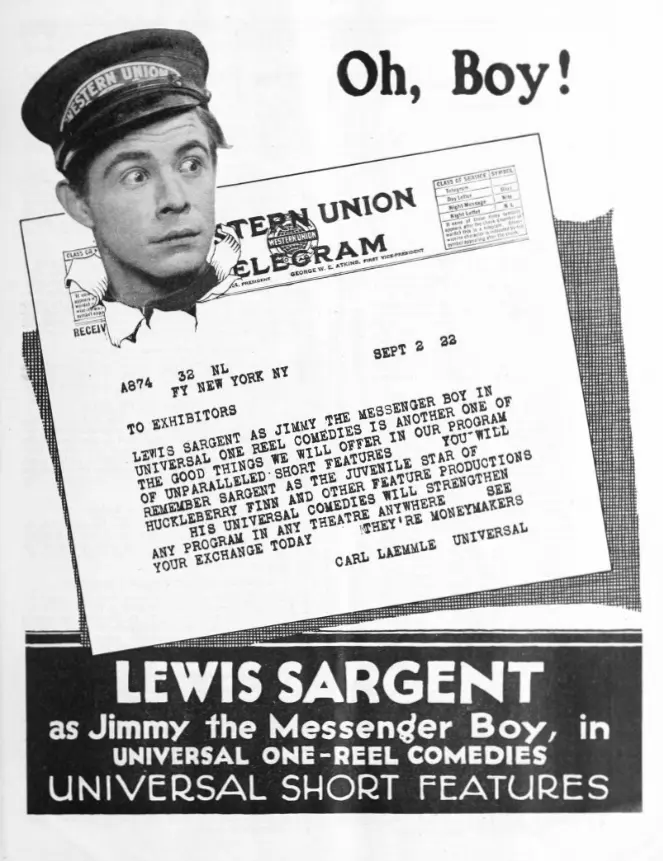
When the dust of the Roaring Twenties settled into a more measured rhythm, studios churned out a steady diet of short‑form narratives that relied on visual wit rather than dialogue. A Fool for Luck (1925) stands out among these offerings, not merely as a lighthearted caper but as a study in the psychological toll of self‑inflicted vigilance. The film’s protagonist, Jimmy (Lewis Sargent), is a young clerk whose life is a perpetual audit of every interaction for hidden motives. The audience is invited to watch him navigate April Fool’s Day—a holiday that, by definition, celebrates deception—while he attempts to shield himself from the very essence of the day’s spirit.
The screenplay, crafted by Scott Darling, is a masterclass in economical storytelling. Within a concise runtime, Darling weaves a tapestry of missed opportunities that feels both inevitable and tragic. Jimmy’s preoccupation with avoiding trickery leads him to ignore a benevolent coworker’s offer of a promotion, dismiss a street vendor’s invitation to a community dance, and reject a subtle flirtation from a neighbor who might have become a confidante. Each refusal is filmed with a lingering close‑up that captures the tightening of Jimmy’s brow, the tremor in his shoulders, and the faint glint of fear in his eyes. The visual language is deliberately austere, allowing the audience to fill the emotional gaps with their own anxieties about missed chances. The climax arrives at the birthday party of Jimmy’s beloved, played with luminous vulnerability by Bartine Burkett. The scene is staged in a dimly lit parlor, the amber glow of a single chandelier casting elongated shadows across the assembled guests. As the cake is presented, Jimmy’s internal alarm bells crescendo; he interprets every laugh as a mockery, every glance as a judgment. When his sweetheart, tired of his perpetual suspicion, chooses another suitor—a charismatic figure whose confidence radiates like a sea‑blue sunrise—Jimmy’s world collapses. The camera lingers on his solitary figure, silhouetted against the backdrop of merriment, a visual metaphor for the isolation wrought by his own paranoia.
Lewis Sargent’s portrayal of Jimmy is a study in restrained expressivity. Without the crutch of spoken dialogue, Sargent relies on micro‑gestures: a hesitant hand reaching for a glass, a fleeting glance that betrays a yearning for connection, and the occasional, almost imperceptible smile that suggests an internal conflict between desire and dread. His performance is reminiscent of the earnest vulnerability exhibited by the young hero in Young Mr. Jazz, yet Jimmy’s emotional palette is decidedly darker, tinged with the muted melancholy of a man who cannot trust his own instincts. Bartine Burkett, as the sweetheart, offers a counterpoint that is both radiant and grounded. Her eyes sparkle with the optimism of youth, but they also carry the weight of expectation—a duality that becomes painfully evident when she finally turns away from Jimmy. Burkett’s ability to convey heartbreak through a single, lingering stare is a testament to her command of the silent medium; it recalls the poignant intensity of the heroine in Assunta Spina, though Burkett’s performance is less theatrical and more intimate.
While the director’s name is absent from most surviving records, the film’s visual sensibility betrays an astute understanding of chiaroscuro. The cinematographer employs stark contrasts—deep blacks against the occasional burst of dark orange (#C2410C) from a streetlamp or a flickering candle—to underscore Jimmy’s internal battle between illumination and obscurity. The use of sea blue (#0E7490) in costume accents—particularly the suitor’s crisp shirt—serves as a visual cue for the confidence that Jimmy lacks. Production design is economical yet evocative. The office where Jimmy toils is a cramped space of wooden desks and brass typewriters, each prop meticulously placed to echo the claustrophobic nature of his mind. The birthday party set, meanwhile, is a study in opulent restraint: a single table draped in yellow satin (#EAB308), a cake adorned with delicate sugar roses, and a backdrop of dark velvet curtains that frame the drama without overwhelming it. This careful orchestration of color and space creates a visual rhythm that mirrors the film’s narrative beats.
In the broader landscape of 1920s cinema, A Fool for Luck occupies a niche that bridges pure slapstick and earnest melodrama. Its comedic timing is reminiscent of the rapid-fire gags found in Ten Nights in a Bar Room, yet its emotional stakes are more akin to the tragic romance of The Girl-Woman. The film’s focus on a single day—a microcosm of larger societal anxieties—parallels the narrative device used in Pique Dame, where a limited temporal frame intensifies character development. Moreover, the film’s exploration of self‑sabotage anticipates later works such as Know Your Men, where protagonists grapple with internalized expectations. While A Fool for Luck does not achieve the same narrative complexity, its thematic undercurrents foreshadow the psychological depth that would become a hallmark of sound-era dramas.
The editing rhythm is deliberately measured. Cuts are employed sparingly, allowing scenes to breathe and the audience to linger on Jimmy’s facial micro‑expressions. This restraint is particularly effective during the birthday party sequence, where a lingering shot of the candle flame serves as a visual metronome for Jimmy’s rising panic. Although the film is silent, the accompanying score—reconstructed from period cue sheets—features a recurring motif in a minor key, punctuated by sudden bursts of staccato strings that mirror Jimmy’s startled jumps. The intertitles are succinct, employing a font that echoes the Art Deco aesthetic emerging at the time. Each title card is framed in a thin border of dark orange, reinforcing the visual motif established throughout the film.
While A Fool for Luck did not achieve the box‑office heights of contemporaneous blockbusters like Disraeli, its subtle commentary on the perils of hyper‑vigilance resonates with modern audiences accustomed to a hyper‑connected world. The film presciently anticipates the anxiety of information overload, a theme explored more overtly in later decades but hinted at here through Jimmy’s obsessive scanning of his environment. Preservation efforts have ensured that the film survives in a near‑complete state, allowing contemporary scholars to examine its frame‑by‑frame composition. Film historians often cite it as an exemplar of how silent cinema could convey complex psychological states without dialogue—a lesson that informs modern visual storytelling.
In sum, A Fool for Luck is a richly layered work that rewards repeated viewings. Its deft blend of comedy, pathos, and visual symbolism creates an experience that feels both of its time and timeless. Jimmy’s tragic arc—driven by an overabundance of caution—offers a cautionary tale that remains relevant in an era where fear of deception can paralyze action. For aficionados of silent cinema, the film provides a masterclass in acting nuance, production design, and thematic economy. For casual viewers, it delivers an engaging narrative that balances humor with heartache. Whether you are drawn to the film’s artistic ambition or its entertaining surface, A Fool for Luck stands as a testament to the silent era’s capacity for profound storytelling.
© 2026 FilmCritic Blog. All rights reserved.
IMDb —
1926
Community
Log in to comment.