DbcultAccessing Vault...
Cult Review
Senior Film Conservator
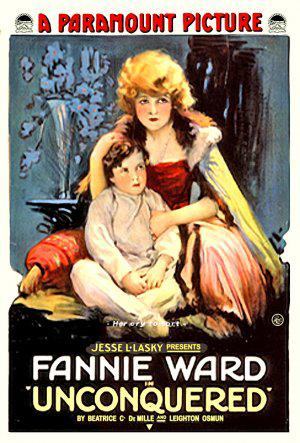
Silence screams louder than words in the amber-tinted reels of Unconquered, a 1917 obscurity that fuses plantation Gothic, divorce-court thriller, and hoodoo-exploitation fever dream into one delirious package. Long misfiled under the bland umbrella of “maternal melodrama,” this picture actually vibrates with subversive tremors: white patriarchy gasping for air while Black spirituality—however caricatured—looms as the moral tectonic plate that will not stay still.
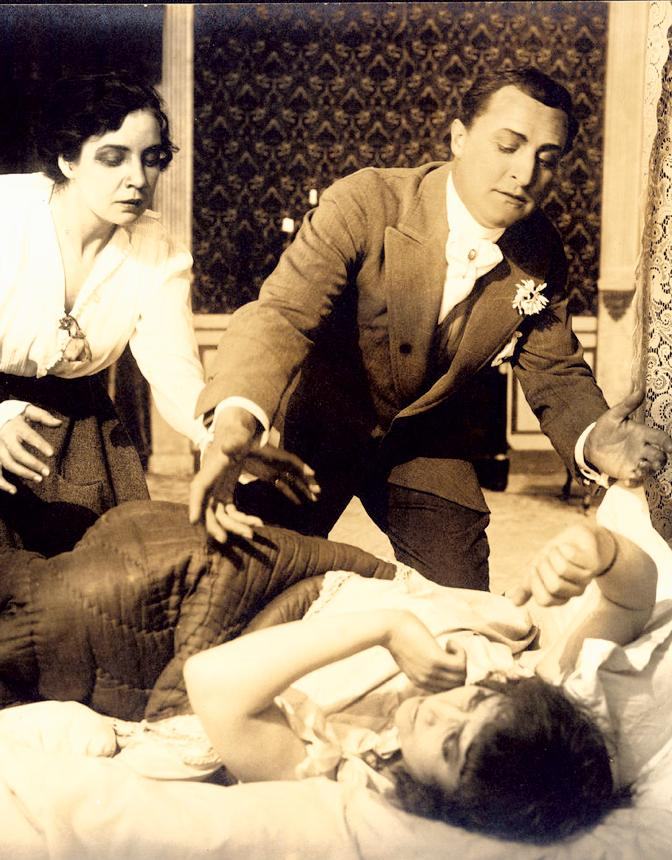
The first third unspools like a humid Flaubert novella: ceiling fans lethargic, champagne flat, civility a thin lacquer over rot. Jane Wolfe’s Mrs. Jackson navigates parlors with the stiff dignity of someone perpetually bracing for a slap; the camera, perhaps sensing the bruises, grants her luminous close-ups that feel like apologies. Jack Dean’s Henry, meanwhile, is all flared nostrils and cuff-linked entitlement, a man who treats marriage as property deed and offspring as heirloom pistol. Their exchanges—rendered through florid intertitles—land like poisoned valentines: “You have poisoned my son’s mind with your mollycoddling.” The line is absurd on paper, yet Dean spits it with such vinegar you half-expect the title card itself to blister.
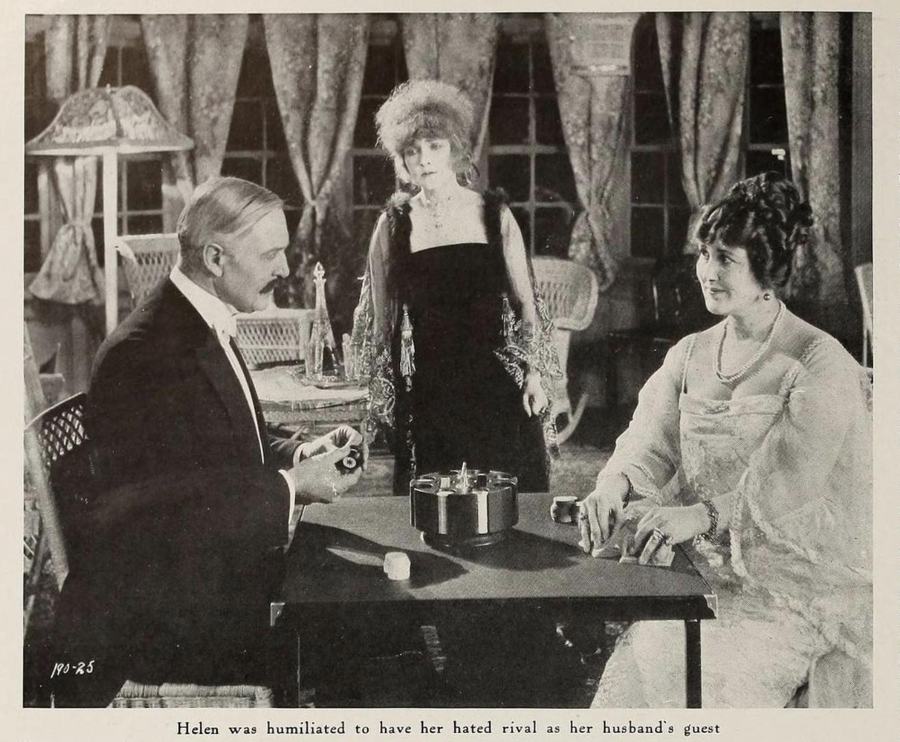
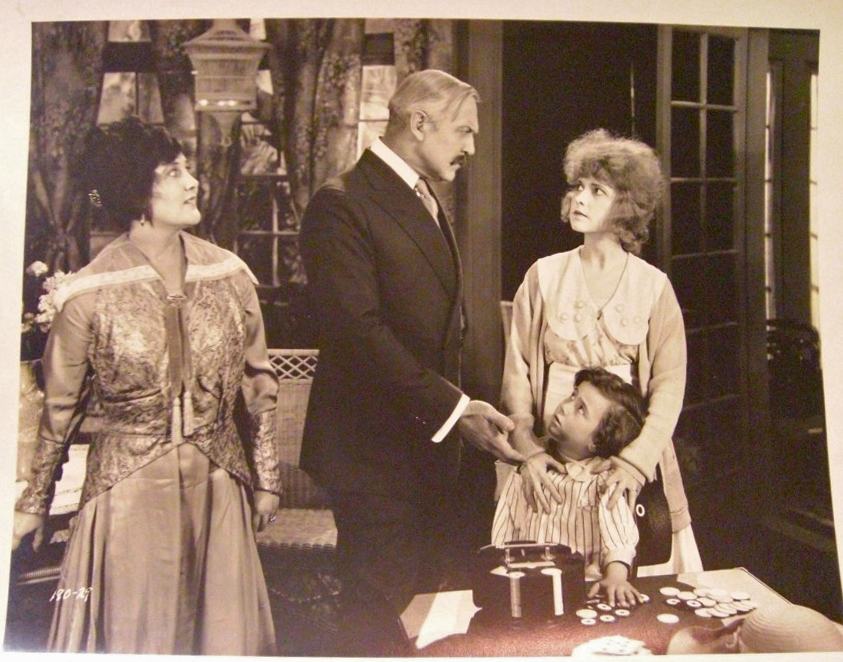
Enter Mrs. Lenning, played by Mabel Van Buren with the languid cruelty of a cat toying with a maimed lizard. She is the film’s chaos engine, a divorce-era succubus who weaponizes affection and gaslights with surgical patience. Watch how she positions herself between father and son in a garden tableau, literally inserting her body into the bloodline. The blocking is silent-era semaphore: power conveyed via who stands center, who must crane necks. In 1917, such spatial rhetoric feels startlingly modern, predating the psychosexual geometry of Camille by nearly a decade.
Once the narrative relocates from drawing-room skirmish to Everglades noir, the tonal whiplash is intoxicating. Spanish moss drips like decaying chandeliers; alligators grunt off-camera, lending sub-bass to the moral opera. Richard Darcier—Hobart Bosworth in gentleman-renegade mode—emerges as the moral counterweight, though the script wisely avoids white-savior pitfalls. Richard’s empathy is reactive, not messianic; he listens, loans a shoulder, then recedes. Their quasi-courtship unfolds in chiaroscuro boat rides, moonlight slicing the swamp into mercury ribbons. It is here that cinematographer James Van Trees sneaks in proto-environmentalist poetry: the wetlands not just backdrop but jury, silently judging the colonizers who trample them.
But the film’s most combustible element is Jake, essayed by Tully Marshall in blackface—a cringe-inducing casting choice even for 1917. Paradoxically, the character is granted narrative agency rarely afforded Black figures in early cinema. Jake’s voodoo isn’t window dressing; it’s narrative fulcrum. The priestess—an uncredited actress whose regal bearing cuts through the stereotype—warns him via trance-induced convulsions: community survival demands blood. The sequence, replete with double-exposed spirits and shimmying silhouettes, rips a page from Vengeance of the Wilds’ ethnographic mysticism, yet pushes further by internalizing the theology rather than merely gawking at it.
When Jake abducts Billy, the film swaps melodrama for chthonic thriller. The cave set—clearly papier-mâché stalactites agleam with studio dew—nonetheless exudes primal dread thanks to low-key lighting that swallows peripheral detail. Mrs. Jackson’s descent into this underworld literalizes maternal substitution theology: she will breach Hades, negotiate with Thanatos, barter her marrow for her child’s future. The cross-cutting between her barefoot pilgrimage and Henry’s posse hacking through sawgrass achieves Griffith-like momentum minus the moral absolutism. Every whip-pan, every iris-in feels like a heartbeat.
The climax—Henry’s last-second epiphany—could have played as cornball repentance, yet Dean underplays it: a single tear, a tremor of recognition that the ledger of cruelty has overdrawn. His gesture of returning Billy is filmed in long shot, emphasizing the landscape’s indifference; humans may reconcile, but the swamp keeps its secrets. Cue the coda: a reconstituted family unit aboard a steamer, sun-shafts baptizing their new union. Richard slips a ring onto Mrs. Jackson’s finger, but the true marriage is between the woman and her own reclaimed autonomy.
Beatrice DeMille and Leighton Osmun’s screenplay pirouettes on paradox: endorsing domesticity while eviscerating its patriarchal scaffolding. Intertitles bristle with proto-feminist barbs—“A mother’s love is not chattel to be mortgaged by man’s law”—that must have rattled 1917 viewers weaned on Mary’s Lamb sentimentality. Yet the writers also perpetuate racialized exoticism, a contradiction the film never resolves, merely weaponizes for tension.
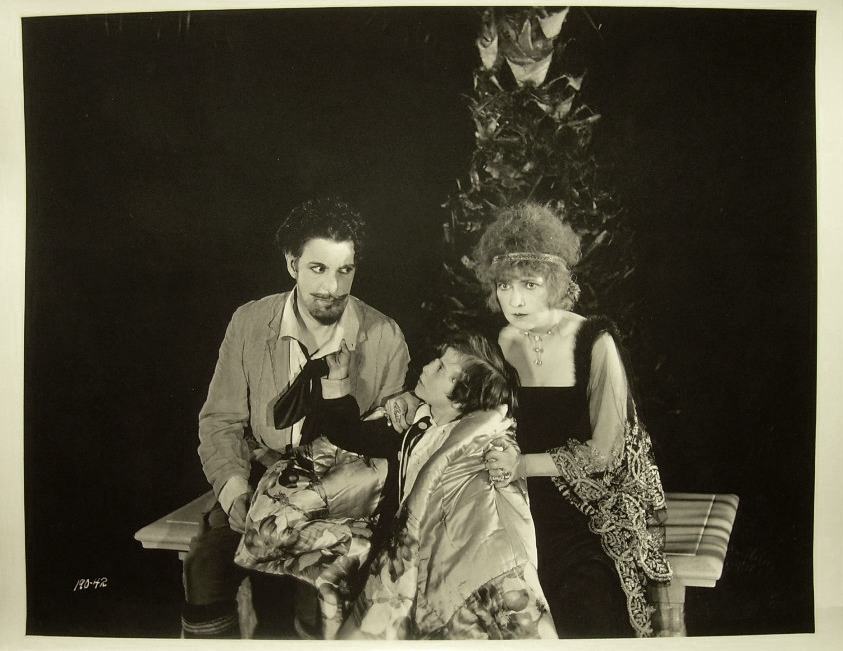
Performances oscillate between Victorian semaphore and modern interiority. Jane Wolfe’s eyes—overlarge, pools of pleading—carry the silent-film burden of telegraphing every micro-emotion. Watch the moment she realizes custody is lost: the camera holds, holds, holds until her pupils seem to dilate beyond capacity, a black hole swallowing hope. Conversely, Hobart Bosworth underacts, letting costume seams and cigarette smoke do the rhetorical lifting. Their juxtaposition creates harmonic tension, like cello bowing against flute.
Technically, the picture teeters between barn-stormer staginess and flashes of avant-garde daring. A superimposed vision of the priestess materializing in Jake’s shack anticipates the spectral montage of Silence of the Dead (1920). The tinting strategy—amber for interiors, viridian for swamps, blood-red for cultic rituals—serves as emotional cue-cards, a silent ancestor to modern color grading. Yet some edits betray nickelodeon haste: a dissolve from daylight courthouse to twilight Everglades smashes chronology like a dropped vase.
How does Unconquered converse with its contemporaries? Unlike the jingoistic pageantry of Britain Prepared, it locates heroism in domestic resistance, not battlefield bravado. Compared to The Flashlight, another 1917 release trafficking in abduction tropes, this film grants its female lead moral and narrative agency rather than reducing her to shrieking victim. And beside Fatal Orgullo’s operatic tragedies, its redemption arc feels almost radical: a woman not punished for desiring autonomy but rewarded with a second, chosen partnership.
Still, modern viewers must grapple with the racial representational politics. Blackface, tribal clichés, and the sacrificial trope leave scars. One could argue the film at least acknowledges Black spiritual coherence—Jake’s crisis is real, his cosmology operative—whereas many silents treated non-white religions as carnival sideshow. Yet acknowledgement via caricature remains damning. Archive curators today might pair this with a post-screening symposium, contextualizing rather than absolving.
Musically, surviving prints often screen with contemporary composers’ improvisations. I attended a 2019 UCLA restoration where a trio deployed prepared piano, swamp-recorded drones, and heartbeat-like taiko. Each crescendo synced to Mrs. Jackson’s cave descent turned the auditorium into communal catharsis; gasps rippled like wind across sawgrass. Such re-scoring underscores that silent cinema remains clay in present-day hands, its meanings re-framed by each era’s anxieties.
In the pantheon of forgotten silents, Unconquered lands somewhere between curio and revelation. Its gender politics prefigure the maternal martyrdom of The Curse of Eve yet grant its heroine victorious exit—a rarity before 1920. Its visual grammar anticipates Southern Gothic cinema decades later, from Night of the Hunter to Beasts of the Southern Wild. And its uneasy racial tableau serves as Exhibit A in the ongoing trial of American entertainment’s complicity with white supremacy even while flirting with Afro-diasporic imagery.
Verdict: see it, sit with it, argue with it. Unconquered is both artifact and mirror—its flicker reveals as much about our 21st-century gaze as about 1917’s moral chaos. Love it or indict it, you won’t shrug it off.
IMDb —
1915
Community
Log in to comment.